
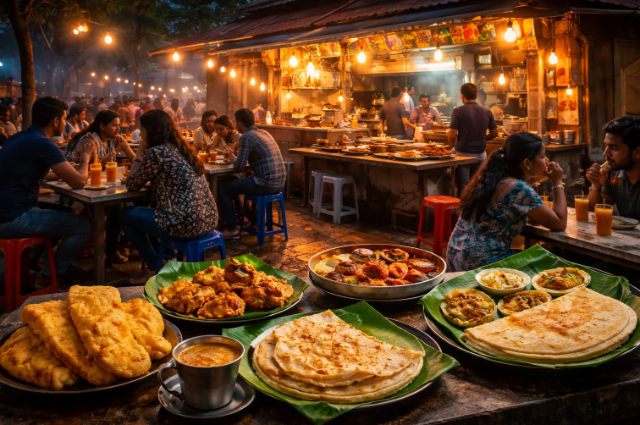
When people visit Kerala, what is the first thing that comes to mind when thinking about food? Well, the answer is simple. For many international travellers, Indian street food evokes both curiosity and caution. Yet evenings in Kerala have a unique charm of their own.
As daylight fades, the streets come alive with the inviting glow of temporary food stalls called thattukadas, bustling roadside eateries where Kerala’s rich culinary heritage blends seamlessly with the rhythm of everyday life. The thattukada perfectly captures the spirit of Kerala’s lively street culture. But one question remains in the mind? What is this thattukadas? Thattukadas are the heart of Kerala's street food scene. These humble, family-run eateries appear on roadsides with temporary stoves and small tables (thattu), serving up a slice of local culinary life. They are beloved for offering highly authentic and flavorful meals that won't break the bank. The inviting sight and smell of fresh food, such as flaky flatbreads being grilled right in front of you, make them impossible to ignore.
A major reason for the popularity of thattukadas is their unmatched affordability. You can get a filling meal for a fraction of the price of a standard restaurant without sacrificing taste or quality. Because they offer delicious local favorites—like crispy dosa, curries, and fried chicken—at such low prices, they attract a wide mix of people, including students, workers, locals, and budget-conscious tourists.
It is a place where people from diverse backgrounds—students, working professionals, and families—come together to exchange conversations, laughter, and enjoy the simple pleasure of freshly prepared food. At a thattukada, the experience goes far beyond the food itself.
The true charm is found in the people and the atmosphere—friends gathered over plates of dosa, families sharing laughter over banana fritters, and solitary travellers enjoying a cup of chai while quietly observing the world pass by. For locals, the thattukada feels like a piece of home, where age-old traditions blend effortlessly with modern life.
While the setup is simple, these stalls are known for fresh food and quick service, making them perfect for travelers. Although some people may initially worry about hygiene, many thattukadas maintain clean practices; the open-kitchen style allows customers to watch the cooking process to ensure it meets their standards. To ensure freshness, it is best to visit stalls with a steady flow of customers, so food doesn't sit out for too long. Regarding regulations, vendors typically register with the FSSAI for a small fee, which ensures they follow basic safety guidelines and provides a level of trust for the consumer.
For visitors, it offers a window into the heart of Kerala, where food serves as a powerful medium of connection and shared experience. Shifting food preferences and the growing attraction to affordable, easily accessible meals have contributed to a sharp rise in the number of thattukadas, or temporary roadside eateries, across the district.
Shifting eating habits and the growing appeal of affordable, easily accessible meals have contributed to a steady rise in the number of thattukadas, or temporary roadside eateries, across the district. According to the latest survey released by the Economics and Statistics Department, 570 new roadside food outlets have been established in the district over the past three years. Before 2000, only 161 such units existed, but the figure has now climbed to 809, based on departmental data.
Officials have highlighted that this rapid expansion of street food stalls is largely beneficial, as they play a crucial role in boosting the local economy by generating employment and sustaining the livelihoods of thousands. The survey also indicates that there are 11,033 such units across the state, with Kollam leading at 1,553 outlets, followed by Palakkad with 1,266 and Thiruvananthapuram with 1,259. Idukki district, in contrast, records the fewest number of units at just 142.
The operating hours of these businesses significantly influence their earnings. Revenue generated by thattukadas comes from multiple sources, including food sales, refreshments and beverages, catering services, and other activities. The combined weekly and monthly income of all such establishments across the state amounts to ₹13,30,63,342 and ₹53,99,61,721, respectively. In Ernakulam district, the average net profit per unit stands at ₹40,67,411 per week and ₹1,62,94,915 per month.
Out of the 1,734 workers employed in thattukadas, 193 hail from other states. In Ernakulam alone, 75 units are operated by owners from outside Kerala, while 86 establishments are run by women. The district also shows diversity in offerings, with 326 eateries serving only tea and snacks, 82 providing exclusively vegetarian food, and 401 specializing in non-vegetarian dishes.
However, the most captivating aspect of Kerala’s food landscape is undoubtedly the thattukadas. These roadside eateries dish out local delicacies bursting with irresistible flavours. While some remain open throughout the day, others come alive in the evening and continue serving till midnight. What makes them truly special is their deep-rooted connection to Kerala’s culinary identity—thattukadas are a unique cultural feature rarely found elsewhere in the country. Below is a selection of Kerala’s classic street food favourites that are sure to delight your taste buds and are commonly enjoyed at these stalls.
Pazham Pori
Pazham Pori, popularly called Ethakka Appam, is a classic banana fritter often enjoyed with a cup of tea. It is a timeless favourite among Keralites and is commonly eaten as a breakfast snack. Ripe bananas are sliced, coated in a batter made of all-purpose flour, turmeric, and salt, and then deep-fried until they turn a rich golden brown. At some thattukadas, this beloved snack is even paired with beef, adding a unique twist to the dish.
Kappa Biryani
Kappa Biriyani is a thattukada speciality that is mainly served as a main course. This is a regional dish with tapioca/kappa as the main ingredient and often combined with masterfully marinated chicken, pork, lamb, or beef. There is also a vegetarian version with chickpeas and grams, but the non-vegetarian version will leave you asking for seconds. The starchy tapiocas, along with meat, give an exotic flavour and taste to this regionally distinct recipe.
Classic Omelette and Bread
Bread and Omelette is a common dish that is served all over the country, but the one served in the thattukadas has a unique presentation style. The egg is mixed with several other ingredients, and the batter is transferred to a hot Tawa. It is very easy to prepare and is also light on the pocket. No wonder classic Omelette and Bread are one of the go-to dishes of the Malayalis.
Parotta Roll
When you think about Parotta, your mind will stray to the roadside thattukadas in Kerala. Nothing can beat the taste of a sumptuous Parotta roll served with chicken Beef or vegetable toppings inside it. These are layered flatbreads with a soft texture and prepared from all-purpose flour (Maida). The unique thing about Kerala Parotta is that they do not have any stuffing like traditional parathas that are available in other parts of India. Satiate your craving with some Parotta dipped in tempting non-vegetarian curry, and you are good to go.
Parippu Vada
Parippu Vada is an iconic street food that is found in the thattukadas. These snacks are best served with a steaming hot cup of tea. Lentils or dal are ground and made into a smooth batter and then mixed with onion, curry leaves, and chillies. It is then deep-fried in hot oil. Munch on those Parippu Vadas on a rainy evening with some tea, and every rain would remind you of this sumptuous and mouth-watering snack.
Ela Ada
Ela Ada is a traditional sweet delicacy of Kerala that you can get in the street-side thattukadas. The jaggery and coconut filling is stuffed in dough made from rice flour and steamed in a banana leaf. The captivating aroma and intense burst of flavours make this recipe one of the favourites for people of all age groups. No wonder, Ela Ada is truly an indulgent feast.
Kappa and Meen Curry
Kappa and Meen Curry are comfort foods that will spice up the plate. It is an absolutely alluring delicacy prepared with succulent fish and boiled tapioca/kappa. The kappa is cooked in coconut gravy containing green chillies, onions, and curry leaves. Thus, many people swear by the Kerala-style fish with the unique combination of tapioca/kappa.
Dosa With Sambar and Chutney
Who can forget this famous South Indian dish? Dosa, the thin, golden crepe prepared from fermented rice and lentil batter, stands as an iconic dish of South Indian cuisine. At a thattukada, it is expertly made—crisp along the edges yet soft at the center. It is typically accompanied by a hot bowl of sambar, packed with vegetables and tangy tamarind flavours. Completing the dish is fresh coconut chutney, blended with grated coconut and green chillies, and finished with a tempering of mustard seeds.
Although most thattukadas are praised for their cleanliness and tasty food, there are occasional cases where hygiene standards may fall short due to infrequent inspections. These are rare exceptions. Many stalls have built strong reputations over the years, consistently serving safe and delicious meals. Loyal customers often return, trusting the hygiene and quality they’ve come to expect.
So, if you're traveling through Kerala, don't miss the chance to eat at a thattukada. Whether you're looking for budget-friendly options, authentic local flavors, or a memorable food experience, these street stalls offer it all. Exploring Kerala’s street food can give you a deeper appreciation of its culinary heritage.