
A woman walks into a bank, opens an account, receives a passbook and returns home. The government records a success. But who keeps the passbook? Who knows the PIN? Who decides whether the money will pay for her daughter's education or somebody else's expenses? The account exists. The woman may still have little control over it.
This is where India's understanding of women's empowerment needs a fundamental correction. We have become increasingly skilled at counting what women receive, but far less attentive to measuring what women can actually decide. A scheme may reach a woman without changing her position inside her household. A livelihood may increase her income without giving her ownership of the land on which she works. A public campaign may teach her to recognise violence without ensuring that someone will stand beside her when she reports it.
The distinction is not merely linguistic. It is the difference between access and agency.
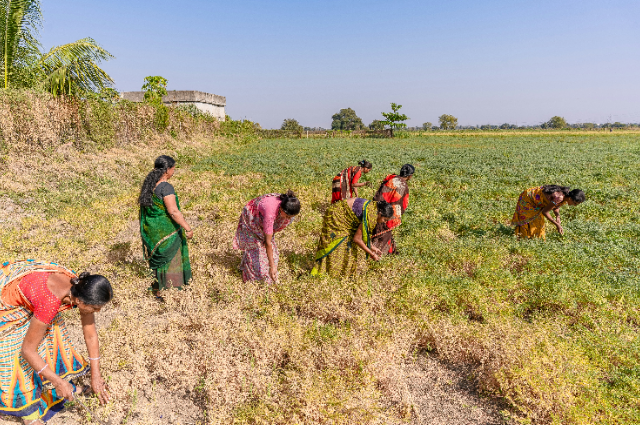
On 25 November 2026, the International Day for the Elimination of Violence against Women, the Ministry of Rural Development is scheduled to launch the fifth edition of Nayi Chetna – Pahal Badlav Ki. Running until 23 December, the campaign will be implemented through the Deendayal Antyodaya Yojana–National Rural Livelihoods Mission (DAY-NRLM). Its theme, From Access to Agency: Empowering Women through Livelihoods and Equal Opportunities for a Viksit Bharat, signals an important shift in emphasis. Rather than limiting gender equality to awareness generation, Nayi Chetna 5.0 seeks to connect women's economic participation with decision-making, safety, institutional support and equal opportunities.
The proposed involvement of 15 Ministries and Departments, alongside a quadripartite agreement involving the Ministries of Rural Development and Women and Child Development, the Department of Justice and the National Legal Services Authority (NALSA), reflects an understanding that women's empowerment cannot be delivered by one department working in isolation. Its proposed Violence-Free Village Initiative and the involvement of Self-Help Groups (SHGs), Village Organisations and Cluster Level Federations could provide the campaign with a substantial grassroots foundation.
But the real test will not be how many meetings are organised, how many banners are displayed or how many villages declare themselves violence-free. It will be whether women acquire greater control over their lives after the campaign moves on.
Beyond the Numbers
India has made significant progress in bringing rural women into organised economic networks. DAY-NRLM, launched in 2011, has built an extensive institutional structure through which women can save collectively, access bank credit, develop enterprises and negotiate with markets.
According to a Ministry of Rural Development update, as of 12 November 2026, approximately 10.13 crore women had been mobilised into 94.40 lakh Self-Help Groups. This is not a marginal achievement. It represents one of the largest organised networks of women's collective participation in the country.
The Lakhpati Didi initiative adds another dimension to this effort. By June 2026, approximately 3.76 crore rural SHG women had been enabled as Lakhpati Didis, according to government figures. An evaluation by the Indian Institute of Management Ahmedabad, covering 6,531 respondents across 17 states and Union Territories, reported increases of 61 per cent in average monthly household income and 61.7 per cent in average monthly savings.
Yet the definition of economic success deserves closer examination. Under the Lakhpati Didi initiative, a woman is recognised on the basis of her household's annual income reaching at least ₹1 lakh, rather than necessarily earning or independently controlling that amount herself. This distinction does not reduce the value of the initiative, but it reminds us that household prosperity and women's personal financial independence are not always the same. A woman may contribute to a family's growing income without having an equal say in how it is earned, saved or spent. The next stage of the initiative should therefore pay greater attention to women's individual earnings, control over financial resources and ownership of productive assets.
These figures deserve recognition. They also invite a more demanding question: does an increase in household income necessarily translate into an increase in women's individual economic power?
Household prosperity and women's autonomy are related, but they are not identical. A woman may contribute substantially to a family's income while remaining excluded from decisions about expenditure, investment and property. An enterprise may carry her name while another family member controls its finances. A loan may reach an SHG, but the woman who assumes repayment responsibility may have little authority over how the borrowed money is used.
Therefore, the next stage of financial inclusion must go beyond opening accounts and extending credit. It must measure individual control over earnings, access to financial information, independent decision-making and the ability to retain and invest income.
The challenge also extends to the nature of employment available to women. According to the Periodic Labour Force Survey 2023–24, India's female labour force participation rate among people aged 15 and above stood at 41.7 per cent under the usual status measure. While this reflects progress in women's participation, participation alone does not tell us whether women have secure employment, fair wages, regular working conditions or control over their earnings. Many women continue to work in agriculture, family enterprises and informal occupations where their labour is essential but their economic position remains uncertain. Empowerment must therefore mean more than bringing women into work. It must also mean creating opportunities for decent employment, fair remuneration, skill development and access to markets. A woman who works deserves not merely recognition for her labour, but a fair share of its economic value.
A woman should not merely become a source of household income. She should become an economic decision-maker in her own right.
The Property Question
There is a difference between earning an income and possessing an asset. Income can disappear with a failed business, a medical emergency or a sudden loss of employment. Land, housing and productive assets, when legally owned and protected, can provide a more durable foundation for independence.
Yet women's access to property remains unequal.
The National Family Health Survey-5 (NFHS-5), conducted during 2019–21, found that 42.3 per cent of women aged 15–49 owned a house alone or jointly, compared with 60.1 per cent of men. For land ownership, the corresponding figures were 31.7 per cent for women and 42.3 per cent for men.
The distinction between individual and joint ownership matters too. An analysis of NFHS data by the United Nations Population Fund found that only around 13 per cent of women owned a house exclusively, while approximately 8.3 per cent owned land exclusively. Joint ownership is valuable, but it does not always guarantee equal authority over the asset.
This is particularly important in rural India, where land is not simply a source of wealth. It determines access to agricultural credit, production, compensation, inheritance and social standing. A woman who cultivates land without holding a recognised title may work as a farmer without enjoying the full institutional recognition available to a landowner.
The problem is not that women lack the capacity to manage property. It is that customary practices, unequal inheritance arrangements, limited legal awareness and family pressure can prevent them from exercising rights that exist in law.
Nayi Chetna 5.0 should therefore encourage more than financial literacy sessions. It should connect women with legal aid, land-record assistance, inheritance awareness and support for registering property in their own names or through genuinely equal joint ownership. State governments and local institutions should make it easier for women to understand and exercise their rights under succession laws.
Empowerment becomes more secure when a woman has something she can legally call her own.
The Unpaid Economy
There is another economic reality that rarely appears in the language of development: the work that women perform without wages.
Cooking, cleaning, collecting water, caring for children, looking after elderly family members and supporting household activities are essential to the functioning of the economy. Yet much of this labour remains invisible in conventional measures of productivity.
India's Time Use Survey 2024 offers an important picture. Among people aged 15–59, 41 per cent of women participated in unpaid caregiving activities for household members, compared with 21.4 per cent of men. Women spent an average of 140 minutes a day on such caregiving, while men spent approximately 74 minutes.
These figures refer specifically to unpaid caregiving, not the entirety of unpaid domestic work. Even within this narrower category, however, the imbalance is unmistakable.
Consider the woman who spends the morning preparing meals, takes care of children and elderly relatives, manages household responsibilities and then attends an SHG meeting or works on a small enterprise. Her economic participation is not taking place in an empty space. It is being added to an already demanding working day.
This is the double burden of women's participation: society encourages women to earn but does not necessarily redistribute the work that prevents them from earning more.
A campaign that seeks to move women from access to agency must confront this contradiction. Men and boys cannot be invited merely to attend awareness programmes. They must become active participants in redistributing domestic responsibilities. Household work should not be treated as a natural female obligation.
Local institutions can help by promoting shared-care agreements, community childcare facilities, accessible care services and discussions that involve husbands, fathers, sons and community leaders. Rural employment programmes and local development planning should also consider the availability of drinking water, sanitation, transport and childcare, because these facilities directly influence women's ability to participate in economic life.
A woman cannot be expected to build an enterprise while society refuses to share the work that occupies her day.
Safety Is Economic Freedom
The freedom to work is incomplete without the freedom to move safely.
A woman who cannot travel to a market after sunset, attend a training programme in another village, visit a bank independently or report harassment without fear does not enjoy equal economic opportunity. Safety is not a separate issue that can be addressed after development. It is one of the conditions that makes development possible.
The NFHS-5 found that 29.3 per cent of ever-married women aged 18–49 had experienced spousal violence. This is a deeply troubling indication that violence is not confined to public spaces or unfamiliar surroundings. For many women, the household itself can become a place of insecurity.
The institutional response must therefore be accessible, coordinated and dependable.
India already has mechanisms that can support this effort. One Stop Centres under Mission Shakti provide medical assistance, legal aid, police support, temporary shelter and psychosocial counselling to women affected by violence. According to the Ministry of Women and Child Development, 991 centres were operational by 30 June 2026, and more than 15.20 lakh women had received assistance since the scheme began.
The Women Helpline 181 also provides a 24-hour channel for support and information.
However, the existence of these services does not automatically guarantee that every woman knows about them, can reach them or trusts the response she will receive. Distance, transport costs, fear of social stigma, family pressure, language barriers and the risk of retaliation can all discourage reporting.
This is where the proposed Gender Resource Centres and Violence-Free Village Initiative under Nayi Chetna 5.0 could become particularly important. Their value will depend on whether they operate as genuine points of assistance rather than temporary campaign structures.
Every village-level mechanism should have clear referral pathways to One Stop Centres, police services, health facilities, legal services authorities and relevant welfare departments. Community volunteers must know where to direct a survivor without attempting to replace trained professionals. Confidentiality must be protected, and survivors must never be pressured into public disclosure or forced reconciliation.
A violence-free village cannot be created by a declaration. It must be built through institutions that respond when violence occurs and communities that refuse to normalise it.
The Unequal Village
The rural woman is not a single social category. Her opportunities are shaped by caste, tribe, class, disability, religion, geography and language. A woman from a well-connected household may reach a bank or government office with relative ease. A Dalit woman facing social discrimination, an Adivasi woman living far from administrative services, or a woman with a disability may encounter barriers that a general awareness campaign cannot resolve.
This is why the rural–urban divide is not the only divide that matters. Inequality also exists within villages, between households and even between women belonging to the same community.
For example, membership in an SHG does not necessarily mean that every woman enjoys equal influence within it. Socially powerful members may have greater access to officials, information and market connections. Women from marginalised communities may attend meetings but remain less influential in decisions. Language barriers can make formal financial and legal information inaccessible. In some areas, distance from banks, digital illiteracy and unreliable internet connections further restrict participation.
The answer is not to abandon collective institutions, but to make them more representative.
SHGs, Village Organisations and Cluster Level Federations should examine whose voices dominate meetings, who controls leadership positions, who receives training and whose enterprises obtain market support. Representation must translate into participation, and participation must translate into influence.
Assam offers a particularly important example of how geography can restrict women's economic opportunities. The World Bank's assessment under the Assam Inland Water Transport Project identified specific barriers faced by women traders using ferry services. In Majuli, women engaged in weaving faced difficulties reaching distant markets because of restricted ferry timings and poor last-mile connectivity. Some women traders also reported reluctance to use ferries because of inadequate approach roads, unreliable services and unsafe conditions for carrying goods. As a result, women weavers could become dependent on traders who collected their products, limiting their ability to reach markets directly and obtain better prices. This reveals an important truth: providing women with skills, credit and enterprise opportunities is not enough if the transport and market systems around them remain inaccessible. In riverine and remote areas, better ferry services, safe transport, reliable market connections and accessible banking facilities must become part of the empowerment agenda. A woman cannot exercise her economic freedom fully if geography continues to decide how far her opportunities can reach.
A campaign that reaches a village but fails to reach its most excluded women has not completed its task.
Beyond Awareness
India's experience with gender campaigns has demonstrated the importance of public awareness. But awareness cannot substitute for institutional accountability.
A woman who learns about her legal rights must also be able to obtain legal assistance. A woman who reports domestic violence must not be forced to return to an unsafe environment because there is no shelter nearby. A woman who starts a business must be able to access credit without depending on informal intermediaries. A woman who enters public life must be protected against intimidation.
This requires a stronger connection between grassroots institutions and formal public services.
The proposed collaboration involving NALSA is particularly relevant. Legal Services Authorities can help connect women with free legal assistance, legal awareness and appropriate remedies. Gender Resource Centres can potentially function as accessible community-level points for information, counselling and referrals, provided they have trained personnel, adequate resources and clear institutional responsibilities.
The campaign should also establish a transparent system for measuring outcomes. Counting the number of awareness meetings is insufficient. More meaningful indicators would include:
- The proportion of women who independently control and operate their bank accounts.
- The number of women receiving legal assistance in inheritance and property disputes.
- The number of women accessing livelihood credit and retaining control over their enterprises.
- The accessibility and response time of violence-related referral services.
- The participation of marginalised women in leadership positions within SHGs and their federations.
- The extent to which men participate in unpaid domestic and caregiving responsibilities.
The campaign should also distinguish between what institutions do and what women actually gain. Organising meetings, enrolling SHG members and conducting awareness programmes are administrative outputs. Greater control over income, improved property ownership, access to legal assistance and meaningful participation in village decisions are measurable outcomes. The long-term impact must be visible in women's greater autonomy, safer communities and a more equal distribution of decision-making power. These three levels of assessment should guide the campaign's monitoring framework. District administrations should publish regular progress reports, supported by independent evaluations and consultations with women themselves. This would ensure that success is measured not merely by the completion of activities, but by the changes those activities create in women's lives.
These indicators would help distinguish administrative activity from actual social transformation.
The government should also publish district-level progress reports and independent assessments. A village should not receive a violence-free label simply because awareness activities have been completed. Such recognition should depend on functioning support systems, community accountability and credible safeguards for survivors. Silence must never be mistaken for the absence of violence.
Men Must Change Too
One of the most important aspects of Nayi Chetna 5.0 is its emphasis on engaging men, boys and young people.
Gender equality is sometimes presented as a project that women must accomplish themselves: women must become educated, financially independent, confident, resilient and aware of their rights. These are important aspirations, but they cannot carry the entire responsibility for social change.
A woman may become financially independent while her family continues to restrict her movement. She may acquire education while being denied a say in marriage decisions. She may establish a business while being expected to perform every household responsibility. The contradiction is obvious: society cannot demand women's transformation while protecting the attitudes that restrict it.
Men must therefore be involved not as occasional supporters of women's empowerment but as equal participants in changing everyday behaviour.
A father must recognise his daughter's right to education and inheritance. A husband must accept that domestic work and childcare are shared responsibilities. A son must learn that respect for women is demonstrated through conduct, not slogans. Community leaders must challenge harassment, child marriage, dowry demands and restrictions on women's mobility rather than treating them as private family matters.
This is also where schools, colleges, youth organisations, religious institutions and local elected representatives can contribute. Gender equality should become part of everyday community education, not merely a subject discussed during an annual campaign.
A society cannot become gender-equal by asking women to become stronger while allowing discriminatory behaviour to remain socially acceptable.
The Measure of Change
Nayi Chetna 5.0 arrives with an important opportunity. Its inter-ministerial approach, extensive SHG network and proposed Violence-Free Village Initiative could help connect economic empowerment with legal protection and community accountability.
But coordination on paper is only the beginning. Fifteen ministries working independently under a common advisory will not necessarily produce fifteen times the impact. Convergence must mean that institutions share responsibilities, exchange information appropriately, resolve service gaps and remain answerable for outcomes.
The campaign should also avoid treating rural women only as instruments of national economic growth. Their worth is not measured by how much income they generate, how many enterprises they establish or how much they contribute to the vision of Viksit Bharat. They possess rights and dignity irrespective of their economic productivity.
Development should expand their choices, not simply increase their responsibilities.
There is a simple way to understand what success would look like. Imagine a woman who can travel to a market without fear, own the land she cultivates, operate her bank account without seeking permission, participate in village decisions, access legal assistance when her rights are violated and return home to a household where care work is shared.
That woman has not merely received the benefits of a development programme. She has acquired a greater ability to shape her own life.
The real measure of Nayi Chetna 5.0 will be found in such changes, not in the number of events conducted between November and December.
A Different Beginning
There is a danger in celebrating women's empowerment too early. Governments may announce schemes, institutions may organise meetings and communities may repeat the language of equality, while the ordinary distribution of power remains largely untouched.
India must resist that temptation.
The next stage of women's empowerment requires more than financial inclusion. It requires financial control. More than employment, it requires ownership. More than awareness, it requires accessible justice. More than representation, it requires decision-making power. And more than asking women to participate in development, it requires changing the social arrangements that make their participation difficult.
Nayi Chetna means a new consciousness. But consciousness must eventually become conduct, and conduct must become institutional practice.
Perhaps the most meaningful question to ask after this campaign is not how many women were reached, but how many women can now make decisions that they could not make before.
When a woman can decide what to earn, what to own, where to go, how to live and what future to build, empowerment has moved beyond a government programme. It has become a lived reality.
India will not achieve a truly developed society merely by bringing women into the existing structures of power. It must also transform those structures so that women can exercise power equally.
References:
- Ministry of Rural Development, PIB (23 November 2026). Nayi Chetna 5.0: launch date, campaign theme, 15-ministry convergence and Violence-Free Village Initiative.- Official Nayi Chetna 5.0 announcement.
- Ministry of Rural Development, PIB (November 2026). DAY-NRLM institutional network: 10.13 crore SHG members and 94.40 lakh SHGs as of 12 November 2026.- DAY-NRLM and SHG network.
- Ministry of Rural Development, PIB (2026). Lakhpati Didi progress and IIM Ahmedabad evaluation covering 6,531 respondents across 17 states and UTs. Lakhpati Didi progress and evaluation.
- Ministry of Statistics and Programme Implementation, PIB (25 March 2026). Time Use Survey 2024: unpaid caregiving participation and time-use differences between women and men.- Time Use Survey 2024.
- Ministry of Health and Family Welfare. NFHS-5, 2019–21: women's ownership of property and experience of spousal violence.- NFHS-5 national indicators.
- United Nations Population Fund (UNFPA). Analytical Paper Series: women's exclusive and joint ownership of land and housing in India.- Asset Ownership Among Women in India.
- Ministry of Women and Child Development, PIB (5 August 2026). One Stop Centres: 991 operational centres and more than 15.20 lakh women assisted by 30 June 2026.- One Stop Centre progress report.
- Ministry of Statistics and Programme Implementation. Periodic Labour Force Survey 2023–24: women's labour force participation.- PLFS Annual Report 2023–24.
- Ministry of Women and Child Development. Women Helpline 181 and its 24-hour support mechanism.- Official Women Helpline information.
- Ministry of Agriculture and Farmers Welfare, Rajya Sabha (13 March 2026). Female operational landholdings: women held approximately 13.9% of operational holdings in the Agriculture Census 2015–16.- Parliamentary answer on women's participation in agriculture.