
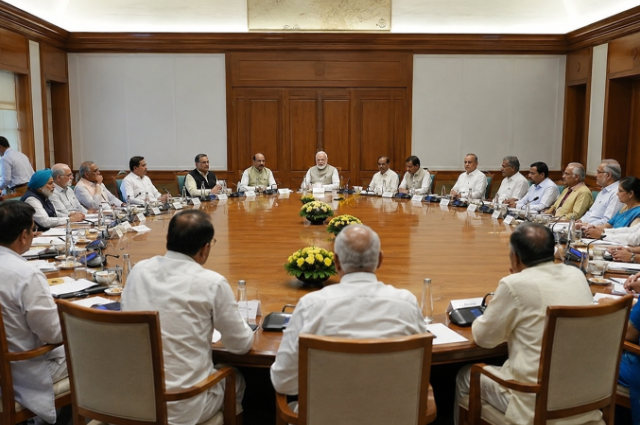
India is a federal country on paper, with clear roles for the Union (Centre) and the States. In practice, though, the two levels often clash. In recent years, the strain on Centre-State relations has grown. Key issues, such as finance devolution, tax sharing, farm laws, centrally-run schemes, and proposals like “one nation, one election”, have all caused friction. States complain the Union is taking too much power and not trusting them with their own subjects. For example, just as India unified its market with GST, states have been facing revenue cuts and delays in promised funds. Likewise, when Delhi rushed through farm reforms without fully consulting major farming states, protests exploded, and the laws were eventually repealed. At the same time, states see new plans like “One Nation, One Election” as ways to weaken their role. All these tensions have highlighted the need to rebuild trust and cooperation between the Centre and States for India’s federal democracy to stay strong.
One immediate flashpoint has been money. Under India’s constitution, a Finance Commission decides how to divide tax revenues. The latest (15th) Finance Commission actually recommended reducing the States’ share of the Union’s tax pool from 42% to 41%. The extra 1% was meant to cover the new Union Territories of Jammu & Kashmir and Ladakh. But for the States, it meant just a bit less money to spend. At a time when state budgets are tight, even one point can matter a lot. Many state leaders have been worried that this cut, however small, makes it harder to fund services like health, schools and roads. One expert pointed out that 28 states would now get a 41% share rather than 42%, which the Centre can use to its advantage. In other words, states feel the tax devolution is not generous enough given their needs.
The Goods and Services Tax (GST) – India’s big tax reform – was supposed to unite the economy. It did help create a common market, but it also became a source of dispute. States agreed in 2017 to merge many local taxes into GST, on the promise that any loss in revenue would be compensated for five years. However, the promised GST compensation has often been late or contested. In mid-2020, for instance, opposition-ruled states formally asked the Centre to release billions in delayed GST payments. They reminded everyone that PM Modi himself had promised to cover their losses for five years. One state finance minister said bluntly that his province had been “starved of funds” and he “had no money even to fight corona” because these GST funds were stuck. More recently, eight opposition-led states warned that new tax cuts could slash as much as 20% of their GST revenue, which they said would destabilise their budgets. (They estimated these cuts would cost states about ₹1.5–2 lakh crore per year.) States felt the Centre was not doing enough to protect their incomes. Clearly, even though GST helped consumers, states saw it as causing severe fiscal stress.
Agriculture is another sore spot. Farming is meant to be a State subject under the Constitution, so many state governments believe Delhi should not have pushed farm reforms without their say-so. In 2020, the Union Government passed three farm laws (to deregulate agricultural markets), but it did so quickly and at times by executive orders. This triggered the biggest farmers’ protests India has seen. Farmers from Punjab, Haryana and other states camped out for a year demanding repeal. As Reuters reported, Parliament finally bowed to the pressure and repealed the laws in late 2021. State leaders like Punjab’s Chief Minister Amarinder Singh were vocal in reminding Delhi that “agriculture is a state subject” and that states have already passed amendments to central laws to protect farmers. He said any reform affecting farmers (who make up over half of India’s workforce) should come only after “extensive consultation” with the states and stakeholders. In short, many states felt the Centre had overstepped into their turf without proper discussion, which badly hurt trust.
The shift from the old Planning Commission to the new NITI Aayog in 2015 was supposed to foster cooperation, but states still complain of top-down decision-making. At the same time, the rise of Centrally Sponsored Schemes (CSS) has given the Union more power over state budgets. Today, a large share of government welfare and development programs are designed and funded by Delhi – often requiring states to chip in matching funds and follow central rules. For example, the Pradhan Mantri Awas Yojana (PMAY) for housing expects states to provide a portion of the money, under guidelines set by the Centre. Analysts note that such schemes now take up a big slice of funds but leave states little flexibility. As one commentary pointed out, Central schemes are “highly centralised” and do not allow states to tailor them to local needs. The article gave an example: Kerala decided not to launch a new central school reform (because it had already met those goals on its own), and the Centre responded by withholding over ₹1,000 crore of education funds under a related scheme. This kind of tussle shows how states sometimes feel punished for exercising local judgment. In short, while Central schemes aim to set minimum standards (in health, schooling, housing, etc.), they can also weaken state autonomy by tying up funds and rules.
Even in social welfare, many programs have shifted to centralised delivery through Direct Benefit Transfers (DBT). Instead of state-run offices handing out subsidies or wages, now money goes straight from the Union’s bank to each person’s account. This has the benefit of curbing fraud and ghost beneficiaries. But states see a downside too: they no longer “own” these programs. For example, flagship schemes like MGNREGA (rural job guarantee) and LPG subsidy are now managed via DBT, which means the Centre largely controls the records and timing of payments. Critics warn that this can make states less able to adjust programs for local conditions, since the policy and funds come from Delhi’s system.
Even proposals like “One Nation, One Election” have become flashpoints. This idea – to hold all state and national elections together every five years – sounds efficient in theory, but many states view it as a power grab. Opponents fear it would subordinate state election cycles to the Centre’s timeline. As one analysis in The Wire warned, forcing all states to align with Union elections effectively treats states as “administrative vassals” who lose their own mandate. In other words, a state could win a five-year term, only to have its life cut short a year later to sync with a national poll. State leaders from both ruling and opposition parties have publicly criticised the proposal as anti-federal, saying it would centralise power and weaken regional voices. This debate reflects a deeper distrust: states worry that “unified” elections could let national issues overshadow local concerns, and reduce the need for separate state governments altogether.
There have been many more recent examples of tension. In Andhra Pradesh, for example, the Union Parliament in April 2026 amended the state’s founding act to name Amaravati its sole capital. The new Andhra government actually supported Amaravati, but one of its MPs still called this process “a drama” and questioned why such a matter needed a law passed by Delhi. This episode, along with ongoing debates in states like Telangana over powers and resources, shows that people increasingly feel the Centre is overriding states on issues they consider their own. Whether it is amending a state’s territory or pushing through a major reform without state consent, the centre’s actions keep raising hackles.
All these frictions have made it clear that India’s federal setup needs repair. Many observers now stress that cooperative federalism must be more than words; it needs real trust and structured dialogue. One key suggestion is to revive and strengthen the Inter-State Council (ISC). The ISC was set up in 1990 on the recommendation of the Sarkaria Commission, but it meets only infrequently. The Sarkaria report had urged a permanent Inter-State (or Inter-Governmental) Council under Article 263, to be the main forum for the Union and States to discuss common policies. If this council were made active again, with regular meetings of the Prime Minister and all Chief Ministers (as intended), it could serve as a much-needed platform for airing grievances and finding compromises. As one analyst put it, India should “encourage constructive dialogue rather than confrontation” between Delhi and the states. Respecting the states’ electoral mandates and allowing issues to be discussed openly in the ISC could go a long way toward rebuilding trust.
On the financial side, Timely and full GST payments are vital. States simply cannot plan budgets when promised funds are delayed. Experts have urged the Centre to simplify the GST structure and ensure compensation flows on time[15]. For example, the federal government could ensure that GST compensation cess (levied to pay states) is allocated quickly and transparently, even if that means borrowing during shortfalls. In fact, during the 2020 COVID crisis, the Centre did borrow money and guarantee payments when GST collections dipped, and even extended an extra tax until 2026 to make up loans. Going forward, it would help if any new tax cuts were paired with clear compensation packages. States themselves have proposed a new levy on luxury goods to fund lost revenue, suggesting that funding should also come from shared sources rather than cutting state budgets directly. The goal should be that no state has to plead for money; rather, regular automatic transfers keep their finances stable.
States also want more financial autonomy in Centrally Sponsored Schemes. Rather than hundreds of one-size-fits-all programs, the Centre and states could agree on broader goals and let each state find its own path. As one analysis noted, about 20% of transfers now go to CSS, and a big chunk of these are quite inflexible. Reducing the number of schemes and giving states a larger block grant would let states adapt spending to local priorities. For example, if a state already does well in a certain area (like Kerala and its schools), it should not be penalised for not joining a new central scheme. In that Kerala case, the Centre should have worked with the state’s own plan instead of freezing its funds. By contrast, allocating funds to states with fewer conditions – or tying state contributions to measurable outcomes – could preserve accountability while giving states more say. Many experts suggest the Union revisit the Finance Commission recommendations on state resources, possibly raising the states’ share or providing extra grants for critical needs. In short, giving states more control over central aid money would reassure them that their needs are a priority.
NITI Aayog itself could be used better as a cooperative forum. The Prime Minister and all CMs meet there by design, and various policy councils exist (for health, education, etc.). However, states have asked for a stronger voice in these bodies. For example, programs like the Aspirational Districts Initiative – aimed at uplifting lagging areas – work best when state governments lead on implementation. Observers suggest that instead of the Centre running things top-down, states should be partners in policy design. In practical terms, this means involving states right from the drafting stage of major reforms, whether on education, health, or agriculture. Punjab’s leader, Amarinder Singh, made this point forcefully for farm laws, but it applies across the board. If states feel heard during lawmaking and planning, the outcome will be stronger buy-in and smoother implementation.
Disputes over natural resources are another test. River water sharing fights (like Cauvery between Tamil Nadu and Karnataka) can fume for decades. The Centre should encourage states to negotiate with each other under its guidance, rather than imposing one-sided solutions. Creating independent tribunals or using the ISC to broker binding compromises can prevent such disputes from blowing up. The key is consensus: when both sides see the agreement as fair, tensions ease. In short, a cooperative approach (rather than a coercive one) is needed whenever state rights are at stake. This was also the recommendation of past commissions like Punchhi (in 2007), which called for more dialogue and better dispute resolution mechanisms among governments.
In some cases, clearer constitutional guidelines could help. Ambiguity over who controls what powers often leads to clashes. For instance, when subjects like agriculture are in the State List, any Union move in that sector should trigger mandatory consultations with states. If that rule had been followed earlier, Punjab’s farming crisis might have been avoided. Moving forward, the Parliament and governors should ensure state opinions are formally sought before altering state subjects. Reaffirming that states have primary responsibility for their own domains would itself be a step toward mutual respect.
The financial relationship also needs constant nurturing. Experts suggest we don’t abandon the spirit of fiscal federalism in the name of efficiency. One idea is to set up a fixed formula or higher minimum share of tax devolution for states, so their budgets are less hostage to year-to-year politics. Alternatively, introducing a mechanism like the Goods and Services Tax Compensation Fund (currently separate) into a more predictable stream could reassure states. Whatever the specifics, the message should be clear: the Centre sees state finances as its business too, and will not starve states of resources needed for schools, hospitals and farms.
Above all, both sides must work as partners, not rivals. As one think-tank wrote, leaders should “encourage constructive dialogue rather than confrontation” and always respect the people’s verdict in the states. In practical terms, this means holding regular Council meetings, joint committees, and active crisis consultations. When central policies are planned, state inputs must be sought early. When states ask for exceptions or help, the Centre should respond positively rather than ignore them. Cooperation could even be celebrated symbolically: initiatives like cooperative federalism week (already held occasionally) could become a reminder that India’s strength lies in its diversity of states.
If these trust-building steps are taken, Centre-State relations can improve greatly. India’s Constitution frames us as “a Union of States,” not a unitary power to be run from Delhi alone. Dr B. R. Ambedkar, the chief architect of our Constitution, warned that “Federalism is not a matter of administrative convenience but one of political necessity”. In other words, giving states real power and hearing their voice is not just a matter of efficiency – it is essential for India’s democracy and unity. By strengthening forums like the Inter-State Council, sharing finances fairly, and involving states in policy, India can ensure that the Centre and States truly work together – just as the Constitution intended. Only then can our federalism flourish, securing political stability and development across the whole country.
Major Centre-State Events (2014-2026)\
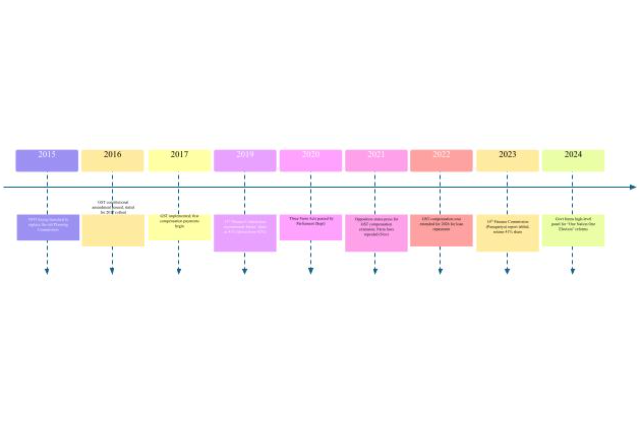
Reform | Year(s) | Centre Action | State Impact | Evidence |
Finance Commission Share | 2020–2026 | Accepted 15th FC’s 41% tax share | Less funds for states; discontent | PRS analysis |
GST & Compensation | 2017–2022 | Unified tax; set up cess for comp.; delayed payouts, borrowed loans | Revenue shortfalls, borrowing needs; some states lose guaranteed income | PRS (comp delays); TOI (shortfall ₹2.59L cr) |
Farm Laws (Agri Acts) | 2020–2021 | Passed 3 liberalising agri laws (Sep 2020), repealed them (Nov 2021) | Mass protests in Punjab/Haryana; States argued that agriculture is a State subject | Reuters on repeal; Punjab assembly |
NITI Aayog Reform | 2015 | Planning Commission replaced with NITI | States complain that NITI centralises the power; weak in mediating federal issues.The | IndiaForum on NITI role |
CSS Expansion & DBT | Ongoing | Grew many flagship schemes (PMAY, health, schools) requiring state co-funding | States must match funds; limited scheme flexibility (e.g., Kerala–PM-SHRI dispute); ₹1.6T CSS idle in states. The | NDTV (CSS constraints) |
One Nation, One Election | 2024–2025 | Cabinet approved a panel to align the election schedules | States worry it undermines Assembly terms; they demanded consultations | NDTV-O’Brien critique; India Today (Shah) |
Sources: Recent government reports and news articles on India’s fiscal and federal issues, supplemented by expert analyses.
Citations
- Amarinder Singh says agriculture is a state subject, states should make laws: 10 key developments | India News - The Times of India https://timesofindia.indiatimes.com
- Does 'One Nation, One Election' Threaten the Federal Structure of the Indian Republic? - The Wire https://m.thewire.in
- Committee Reports https://prsindia.org
- 15th Finance Commission cuts states' share of centralto 41% vs 42% https://www.livemint.com
- Indian opposition-ruled states ask government to pay delayed GST compensation | Reuters https://www.reuters.com
- India's consumer tax cuts at risk of delay as states wrangle over future revenues | Reuters https://www.reuters.com
- India's parliament passes bill to repeal controversial farm laws | Reuters https://www.reuters.com
- India's Public Welfare Hinges On 'Centre Vs State' Dynamics At Play | The Reason Why https://www.ndtvprofit.com
- Amaravati Secures Sole Capital Status as Centre Notifies Amendment Act | DD News https://ddnews.gov.in
- Inter-State Council - Wikipedia https://en.wikipedia.org
- India’s federalism needs a structural reset |ForumIAS https://forumias.com
- What Changes Has The Union Government Recently Introduced In The Domain Of Centre-State Relations? Suggest Measures To Be Adopted To Build The Trust Between The Centre And The States, And For Strengthening Federalism. - PWOnlyIAS https://pwonlyias.com