
Krish Kapoor did not enter journalism out of any great conviction. He had just finished his 12th boards, had time to kill, and someone he barely remembered had told him that newspapers were always looking for “interns.” The word sounded better than what the job actually was. In reality, Krish spent most of his day carrying pages from one desk to another, waiting outside cabins for signatures, and trying to look busy enough not to be given more work. The newspaper itself was new, which meant the chaos hadn’t yet learned how to organise itself. Everyone seemed to be improvising, including him.
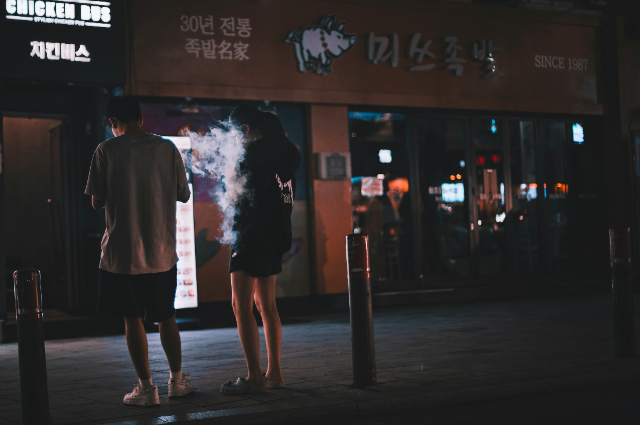
He discovered early on that the smoking zone was the only place where nothing was expected of you. It sat slightly away from the main floor, just enough to feel like a break from whatever passed for work. People gathered there not just to smoke, but to pause. Editors loosened up, reporters dropped their guard, and conversations happened without agendas. Krish didn’t smoke as much as he pretended to, but he stood there often enough to become part of the background. That’s where he met Tony Matthew.
Tony wasn’t particularly friendly, nor was he intimidating. He was just… there. A crime reporter, someone said, which explained the occasional phone calls he would take in a lower voice, slightly turned away from everyone else. He didn’t speak much, but when he did, it was never for effect. He spoke like someone editing his own thoughts in real time, removing anything unnecessary. Krish found himself listening more than he intended to. At some point, Tony noticed.
What followed didn’t feel like mentorship. It felt more like proximity. Tony would occasionally explain why certain stories never made it to print, or why names disappeared between what was said and what was published. He spoke about systems in a way that made them sound less like structures and more like habits. Krish didn’t understand everything, but he understood enough to feel included in something slightly more important than his actual job.
The businessman came up in one of those conversations. On paper, he ran training programs for young people, helping them find jobs abroad. It sounded legitimate, even admirable. Tony, however, spoke about him with a kind of quiet certainty that suggested otherwise. He didn’t present evidence. He didn’t need to. He simply said he needed to make some quick money.
The plan, if it could be called that, was straightforward. Krish would enrol in the course, attend a few sessions, and observe things that might not look like much on the surface. Tony would take it from there. There was no talk of exposing anyone, no mention of law or consequences. It felt less like a crime and more like a workaround. Krish didn’t agree out loud, but he didn’t refuse either. In that space, silence often counted as participation.
The course itself didn’t reveal anything dramatic. It was structured, almost boringly so. Classrooms, trainers, and presentations about opportunities abroad. Krish attended, took mental notes, passed on whatever he thought might matter. Tony listened, asked a few questions, and then did something with that information that Krish was not fully aware of.
For a brief period, there was a sense of movement, like they were part of something that had direction. And then Tony disappeared.
There was no announcement, no explanation. One day he was there, the next he wasn’t. His absence wasn’t dramatic enough to disrupt the newsroom, but it was noticeable in the smoking zone. Krish waited for a few days, then a few weeks. He didn’t ask too many people, partly because he didn’t know who to ask, and partly because the place didn’t encourage that kind of curiosity. Eventually, he stopped expecting Tony to return.
Life resumed its original pace. Waiting, signatures, the occasional tea break that stretched longer than necessary. If anything significant had happened, it didn’t feel large enough to hold onto. It settled into the background, as most things did there.
Bombay arrived without ceremony. A job, a shared apartment, a city that didn’t care where you came from as long as you kept moving. Krish adjusted quickly, mostly because nothing was tying him back. He fell into a routine, and somewhere along the way, into a relationship. It felt right at the time, which was reason enough not to question it.
The end came without warning, but not without clarity. One evening, as he was leaving work, he noticed a car parked slightly away from the main gate. It wasn’t out of place, just positioned in a way that suggested it wasn’t meant to be noticed immediately. He might have ignored it if he hadn’t caught a glimpse of her inside.
For a moment, his mind tried to offer alternatives. Maybe it wasn’t her. Maybe it was someone else. But then she shifted, just enough to remove any doubt. The man in the passenger seat leaned in with the ease of someone who had done this before. She laughed, softly, without hesitation. It wasn’t the kind of laugh Krish was used to hearing from her. It was lighter, less careful.
He stood there longer than necessary, not because he was frozen, but because there didn’t seem to be an appropriate response. The windows were slightly fogged, but not enough to obscure anything. He noticed details he didn’t need to notice - the way her hand moved from the steering wheel, the glance she gave around, more out of habit than concern. The kiss itself was not surprising. What stayed with him was how normal it looked, how easily the moment existed without him.
He left without confrontation. There didn’t seem to be a version of that scene where confrontation improved anything.
The days that followed were predictable in a way that almost felt comforting. Drinking became routine, not dramatic enough to be called a problem, but consistent enough to be noticed by no one in particular. Time passed in a blur that didn’t demand too much from him. At some point, films began to make more sense than real life.
One Friday, he watched one that stayed with him longer than expected. It wasn’t the story so much as the feeling - of speed, of control, of choosing how things end. It presented an idea that felt simple enough to be convincing.
That night, already drunk and not particularly interested in being less so, Krish got on his bike and drove with a clarity he hadn’t felt in weeks.
The crash was immediate.
When he regained consciousness, it was still evening. That detail struck him as oddly inconvenient. People were around him, voices overlapping, someone trying to pull him out of the wreckage. And then, unexpectedly, a familiar face leaned into his field of vision.
Tony.
He looked older, but not in a way that could be measured in years. More like someone who had continued a story that Krish had stepped out of.
Recovery was slow and uneven. His leg didn’t heal the way it was supposed to. His hand followed a similar pattern. His head, however, was fine. That seemed to matter more to everyone else than it did to him. Tony remained present, not constantly, but with enough consistency to make things easier. There were no police complications, no discussions about alcohol, no unnecessary questions. The accident was treated like what it appeared to be.
“It’s just an accident,” Tony said once, and the matter was settled.
Over time, details began to emerge, not as a single explanation but as fragments that formed a pattern. The businessman from years ago had not ignored Tony’s earlier attempt. He had responded in a way that ensured Tony was removed from the equation without attracting attention. An accident, clean and effective. Except it hadn’t been entirely successful.
Tony had survived.
And he had not forgotten.
The businessman, meanwhile, had evolved. What was once a modest operation had transformed into something far more visible. Public life, political ambition, promises of development. By the time Krish understood the extent of it, the man had already become someone people recognised for reasons that had nothing to do with his past.
Tony had spent those years differently. He had been collecting stories — not the kind that made headlines, but the kind that didn’t. Road accidents, inconsistencies, patterns that suggested something more than coincidence. He didn’t frame it as revenge. He didn’t frame it at all.
When he finally involved Krish, it didn’t feel like a request. It felt like a continuation of something that had begun long ago and had simply paused.
The task itself was minimal. A phone call, a slight adjustment in information, a delay that didn’t appear important on its own. Krish didn’t experience it as a decision. It was just something that needed to be done.
At 6:42 pm, he made the call. It was nothing important.
There was a brief moment afterwards when he considered calling again. Not to reverse anything, just to confirm that he had understood correctly. The thought passed quickly. There didn’t seem to be a reason to act on it.
By 7:10 pm, the outcome was already being reported. A high-speed collision on the highway. Fatal. Immediate. The kind of incident that fits neatly into a headline and disappears just as easily.
The name, however, was not the one Tony had been waiting for.
It was his son’s.
Krish met Tony a couple of days later. There was no urgency to the meeting, no sense of resolution. It happened familiarly, over a cigarette, in a space that allowed for silence.
“Not him,” Krish said.
Tony nodded. “No.”
There was no visible reaction, no indication of disappointment or relief. Just an acknowledgement of fact.
They did not discuss it further.
Years later, what remains with Krish is not the accident itself, nor the events that followed. It is time.
6:42 pm.
Because that was the moment when it still felt like nothing important. A small action, a minor adjustment, something that did not carry the weight it would later acquire.
The kind of thing that doesn’t seem like a crime.
Unless you decide to remember it that way.