
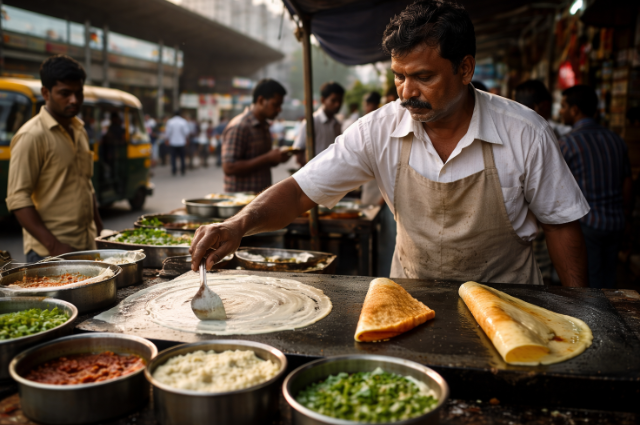
Not every success story starts in plush offices or elite schools. Some begin on dusty streets, with nothing but determination, a dream, and the courage to take the first step. Prem Ganapathy’s story is one such tale—a journey from struggling in Chennai and Mumbai to creating Dosa Plaza, a restaurant chain celebrated worldwide for its innovation and authenticity. His life reminds us that resilience, creativity, and sheer hard work can turn even the humblest beginnings into extraordinary achievements.
Early Life: Lessons in Survival
Prem Ganapathy was born in Nagalapuram, Tamil Nadu, into a modest family. With seven siblings and limited resources, survival was always a priority. Education took a backseat, and like many children from small towns, Prem had to grow up fast. By the time he was a teenager, he understood that to support his family, he would need to fend for himself.
At 17, he moved to Chennai, seeking work. With no particular skills, he took odd jobs—anything that offered a few rupees and a roof over his head. But opportunities were scarce, and ambition was often tested by reality. Undeterred, Prem eventually moved to Mumbai, hoping for a better life. But Mumbai, the city of dreams, was also a city of harsh lessons. An acquaintance promised him work with a modest salary, only to rob him of the ₹200 he had saved. Stranded in a city he barely knew, he could have given up—but giving up was never Prem’s way.
The Struggle Years
With almost nothing, Prem started working in small eateries and bakeries, washing dishes and sweeping floors. He earned ₹150 per month, barely enough for food and shelter, but these jobs were his first taste of the hospitality industry. Over time, he observed how kitchens ran, how customers interacted with staff, and what made food appealing—not just in taste, but in presentation and service. These early lessons would become the foundation of his entrepreneurial journey.
Evenings were spent walking around markets, dreaming of starting something of his own. Prem knew that to rise above his circumstances, he needed to take risks and turn his small insights into action.
The First Step: Selling Dosas from a Handcart
By 1992, Prem had saved enough money to take a bold step. With about ₹1,000 for utensils and cooking equipment and ₹150 for a handcart rental, he began selling idlis and dosas on the streets of Navi Mumbai, opposite Vashi railway station. It was a modest start—just him, a handcart, and a passion for cooking—but Prem did something many others overlooked: he prioritised cleanliness, taste, and consistency.
His food stood out immediately. The aroma of fresh dosas drew office workers, students, and commuters alike. Word spread quickly. What began as a simple street food cart soon became a daily stop for many in the neighbourhood. Prem worked long hours, often preparing batter and chutneys in the small kitchen he rented nearby, while his two younger brothers eventually joined him in the business.
Building a Brand: From Cart to Restaurant
Street vending was never meant to be the end goal. Prem wanted to grow. In 1997, he leased his first restaurant space, a small eatery named ‘Prem Sagar Dosa Plaza’. Transitioning from a handcart to a brick-and-mortar restaurant was challenging. He had to manage inventory, staff, and increasing customer expectations. But Prem’s experience from street vending taught him a key principle: quality and consistency create loyal customers.
Soon, his restaurant gained a reputation for serving authentic South Indian flavours with a modern twist. Unlike other eateries, he offered a clean, well-lit dining space—a small but significant factor that drew families and office-goers alike.
Innovation in Tradition
Prem’s real breakthrough came when he innovated the menu. He didn’t just stick to the classic dosa; he experimented, adding new ingredients and fusions that appealed to younger, urban customers. Over time, Dosa Plaza introduced over 100 varieties of dosas, including Schezwan dosa, paneer chilly dosa, and spring roll dosa. This creativity set his brand apart and gave customers a reason to return again and again.
Prem’s commitment to quality, innovation, and customer satisfaction became the pillars of his brand. He combined traditional cooking techniques with contemporary tastes, showing that respecting tradition while embracing innovation could lead to success.
Scaling Up: Franchises and Global Expansion
As Dosa Plaza grew in popularity, Prem faced new challenges: how to maintain quality across multiple locations and reach a wider audience. He chose franchising, ensuring that every outlet received standardised batter, chutneys, and training. This approach preserved the brand’s identity while allowing rapid expansion.
The first franchise opened in Thane’s Wonder Mall in 2003, and success followed quickly. Today, Dosa Plaza operates over 70 outlets across India and internationally, including in New Zealand, Dubai, Oman, and Australia. Prem Ganapathy had transformed a street food cart into a global culinary brand.
Lessons from Prem Ganapathy’s Journey
Prem’s life is rich with lessons for anyone chasing their dreams:
- Perseverance Against All Odds: From being robbed in Mumbai to working long hours in small kitchens, he never gave up.
- Quality Wins Customers: Even a small cart can attract a following if the food is consistently delicious and the service is attentive.
- Innovation Matters: Respecting tradition while introducing new flavours allowed Dosa Plaza to stand out in a competitive market.
- Adaptability and Learning: Prem learned from colleagues, customers, and even students to refine his craft and business practices.
- Scaling with Vision: Franchising allowed him to grow without compromising quality, showing the importance of strategic planning.
Prem Ganapathy’s journey proves that humble beginnings do not define your future. From struggling teenager to the founder of a global restaurant chain, his life embodies resilience, innovation, and vision. For writers participating in the January 2026 “Real Story” competition, his story offers both inspiration and a powerful example of how determination and creativity can transform lives.
. . .
References: