
When a powerful national leader passes away, there is usually a very specific script that a country follows. The flags are lowered to half. The television stations play sombre music. Huge crowds gather in the capital city to weep and show respect. For most of the world, this is what mourning looks like.
But when the news of Ali Khamenei’s death began to spread, the script didn’t just break; it shattered into two completely different stories.
On one side of the street, you had the official mourning. Thousands of people dressed in black, praying and crying for a man they saw as a holy guardian. To them, he was the person who kept Iran strong against foreign pressure and held their religious values together for decades.
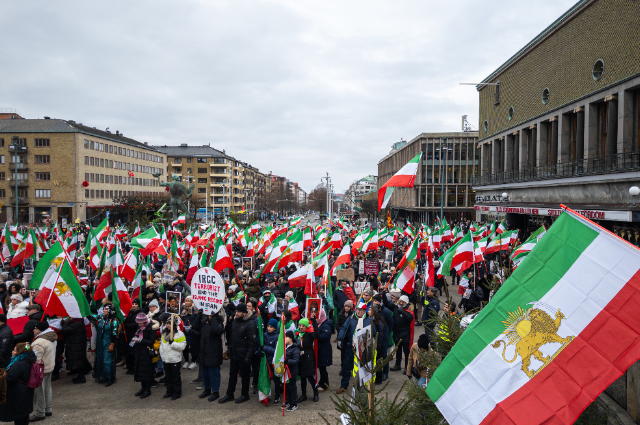
But on the other side, something else was happening. It started quietly. A few car horns honking in a pattern. A few videos on social media show people clinking glasses in their living rooms. In some neighbourhoods, people even set off small fireworks. To an outsider, seeing people celebrate the death of a leader is confusing, even shocking. But to understand it, you have to understand the heavy weight that has been sitting on the shoulders of the Iranian people for a very long time.
Iran is not a simple place to describe. Since the revolution in 1979, it has been run as an Islamic Republic. This means that at the very top, there is a Supreme Leader who has the final word on almost everything. Ali Khamenei took that position in 1989. Think about that for a moment. Most young people in Iran today have never known another leader. He was in power before they were born, while they were in school, and as they became adults. He controlled the police, the military, and the courts. For over thirty years, his face was on the walls, and his rules were the law of the land.
The biggest reason for the divided reaction is a massive gap between the government and the youth. Iran is an incredibly young country. More than half of the population is under the age of thirty-five. These are people who grew up with smartphones and the internet. They see how people their age live in Dubai, London, or New York. They want the same things: good jobs, the freedom to say what they think, and the right to choose what they wear. But for decades, they have lived under very strict social rules.
If a young woman’s headscarf wasn't worn "correctly," she could be picked up by the morality police. If a student posts the wrong thing online, they could face serious trouble.
Over the last few years, this tension reached a boiling point. There were massive protests led by women and young students. They weren't just asking for small changes; they were asking for their basic dignity. The government’s response was often very harsh. Human rights groups like Amnesty International reported that hundreds of people were killed during these crackdowns. When you have a government that responds to protests with such force, it leaves a scar on the heart of the nation. For the families who lost children in those protests, the death of the leader wasn't a tragedy. It felt like a moment where the person responsible for their pain was finally gone.
There is a story of a university student in Tehran that explains this perfectly. When she heard the news, she didn't run into the street to shout. Instead, she went out onto her small apartment balcony and just clapped, quietly, into the night air. She later told a reporter that she wasn't "celebrating death" in a cruel way. She was feeling a sense of relief that she hadn't felt in her entire life. She felt like a heavy stone had been lifted off her chest. At the same time, a few miles away, an older shopkeeper was devastated. He believed that without this leader, Iran would fall into chaos or be invaded by enemies. These two people live in the same city, but they are living in two different versions of reality.
Then there is the economy. This is where the frustration gets very practical. Because of international sanctions and government management, the value of Iran’s money has dropped significantly over the years. Prices for basic things like bread, eggs, and rent have gone up so much that many families can barely survive. Imagine being a brilliant student, working hard to get a degree, and then realising there are no jobs for you. You can’t get married, you can’t buy a house, and you can’t see a future. When people feel like they have no future, they stop feeling a sense of loyalty to the people in charge.
So, what happens now that the leader is gone? This is the big question that has everyone nervous. The Iranian constitution has a process for picking a new Supreme Leader, but it usually happens behind closed doors. There is often a lot of quiet fighting between different groups, like the Revolutionary Guard and the high-ranking religious officials. Some people think the government will pick someone even stricter to make sure they don't lose control. Others hope that this "break" in the cycle will lead to real reforms.
History tells us that these moments are turning points. Sometimes, the system stays the same. But other times, a single event can start a chain reaction. Think back to the fall of the Berlin Wall. It didn't happen because of one big war; it happened because the pressure from ordinary people finally became too much for the walls to hold. Iran is at that kind of crossroads right now.
The world is watching to see which way the country turns. Will the new leadership listen to the millions of young people who are desperate for change? Or will they double down on the old ways? The reactions we saw, the mourning in the mosques and the quiet clapping on the balconies all show us that Iran is a nation struggling with its own identity. It is a country caught between a long history of tradition and a powerful, modern hunger for freedom.
The death of one man has ended an era, but the real story of Iran’s future is only just beginning to be written by the people who remain.
. . .
References:
- Amnesty International Reports on Iran Protests https://www.amnesty.org
- BBC News Coverage on Iran Protests and Political Systemhttps://www.bbc.com
- Human Rights Watch Reports on Iran https://www.hrw.org
- Overview of the Iranian Revolution and political system https://www.britannica.com
- News reports on public reactions after Khamenei’s death https://www.theguardian.com