
The fight for transgender rights in India has never been a straight line. It has been a series of hard-won battles fought in courtrooms and on the streets. For decades, the community lived in a legal vacuum, categorised by a state that refused to see them.
But in 2024 and 2025, it felt like the tide was finally turning. Legal recognitions were expanding, and the conversation was moving toward true inclusion.
However, the introduction of the Transgender Persons (Protection of Rights) Amendment Bill of 2026 has sent a shockwave through the community, with many activists calling it a "legislative betrayal" that undoes years of progress.
To understand why this new amendment is so devastating, you have to look at the history of the struggle.
For a long time, the landmark NALSA v. Union of India (2014) judgment was the North Star for the movement. The Supreme Court of India took a revolutionary stand, declaring that "self-identification" was a fundamental right. It ruled that no person should be forced to undergo medical procedures or physical examinations to prove their gender. It was a moment of pure dignity.
However, the subsequent 2019 Act already began to chip away at that promise by introducing "District Screening Committees."
The community fought back, arguing that having a bureaucrat decide your gender was a violation of privacy. Despite this, the community persisted, successfully lobbying for horizontal reservations in education and jobs in several states. By early 2026, there was hope that the law would finally align with the original spirit of the NALSA judgment.
Instead, the 2026 Amendment has taken several steps backwards. The most controversial part of the new bill is the reintroduction of mandatory medical certification for "gender correction" in legal documents.
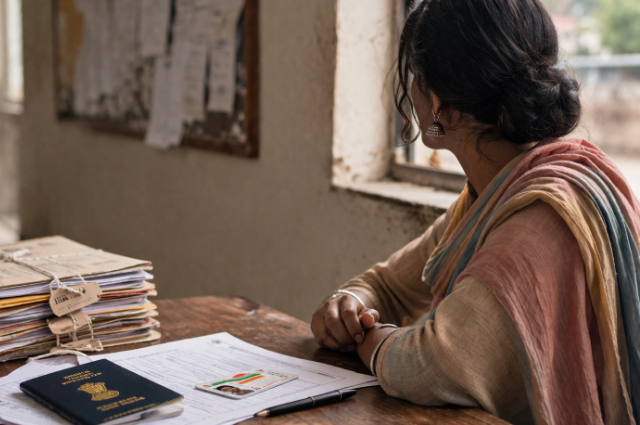
Under the new rules, a person cannot change their gender marker on high-stakes IDs, like passports or birth certificates, without proof of Gender Affirming Care (GAC) or surgery. This effectively puts a "price tag" on identity.
In a country where the majority of the transgender community faces extreme poverty and social exclusion, mandating expensive medical procedures just to exist legally is a form of state-sponsored erasure.
The amendment also introduces a "Family Reconnection" clause.
On the surface, it sounds positive, but activists point out a dangerous flaw: it gives local authorities the power to mandate "mediation" between a transgender person and their biological family.
For many in the LGBTQ+ community, the biological family is often the primary source of violence and "conversion" attempts. By forcing a person back into a domestic space they fled for their safety, the state is prioritising traditional family structures over individual safety and the "chosen families" (such as the Hijra gharanas) that have protected trans people for centuries.
Furthermore, the 2026 Amendment remains silent on the issue of hate crimes. Despite years of data showing that transgender individuals are disproportionately targeted for physical and sexual violence, the new bill does not categorise these as "hate crimes" with enhanced sentencing.
Instead, it maintains a lower penalty for crimes against transgender people compared to the penalties for similar crimes against cisgender women, a discrepancy that the community argues treats their lives as less valuable.
The betrayal felt by the community stems from the fact that this bill was drafted with almost zero consultation from the people it affects.
While the government claims the amendment "
streamlines the administrative process, the community sees it as an attempt to regulate their bodies.
The 2026 Bill shifts the power away from the individual and hands it back to doctors and bureaucrats, returning to a pathological view of gender that the Supreme Court had previously rejected.
As protests grow in cities like Delhi, Bangalore, and Mumbai, the message from the LGBTQ+ community is clear: human rights cannot be conditional.
By making legal identity dependent on surgery and family approval, the 2026 Amendment doesn't protect transgender citizens; it categorises them as second-class residents.
The struggle that began decades ago has entered its most difficult phase yet, a fight not just for new rights, but to prevent the state from erasing the ones they already fought so hard to win.
References:
- https://socialjustice.gov.in
- https://www.scobserver.in
- https://www.thehindu.com
- https://www.amnesty.org
- https://www.livelaw.in