
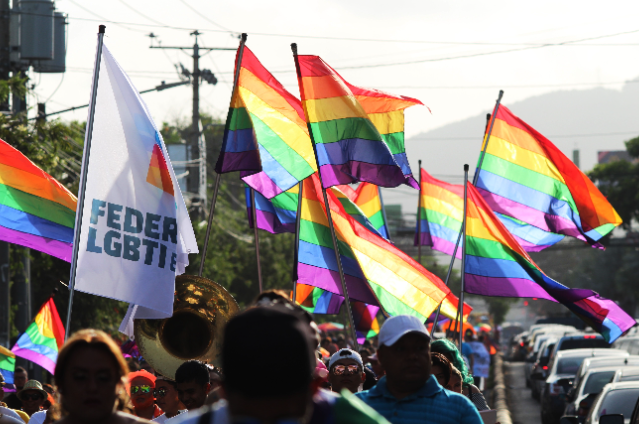
The annual arrival of June transforms urban centres worldwide into a vibrant mosaic of rainbow flags, corporate-sponsored floats, and celebratory parades, an open display of joy and visibility that would have been entirely unthinkable just a few generations ago.
For the millions of individuals who gather to celebrate Pride Month, the prevailing atmosphere is one of hard-won triumph, a collective sigh of relief, and an unyielding assertion of identity.
Yet, beneath the commercialised veneer of modern festivals lies a history that is far more radical, complicated, and contested than the slick marketing campaigns of multinational corporations would suggest. Understanding the true evolution of the LGBTQ+ rights movement requires looking past the sanitised, contemporary narrative to examine the raw friction, the internal ideological battles, and the profound human sacrifices that laid the groundwork for today's visibility. It is a story that began not as an orderly parade for civil rights, but as a chaotic, desperate act of neighbourhood resistance against systemic state violence.
To understand the catalyst of this movement, one must look back to the humid early morning hours of June 28, 1969, in New York City’s Greenwich Village, where the Stonewall Inn stood as a rare refuge for the city's most marginalised souls. Operating in a legal landscape where homosexuality was effectively criminalised, and the state liquor authority routinely revoked licenses from establishments that served gay patrons, the bar was a gritty, mafia-owned establishment operating without a liquor license. Raids by the police department’s vice squad were a routine, humiliating reality of queer life, often enforced by an archaic New York penal statute that mandated individuals wear at least three items of gender appropriate clothing under threat of arrest.
On that particular night, however, the standard script of compliance broke down entirely. As officers began aggressively funnelling patrons into police wagons, a deep-seated frustration boiled over into the streets, ignited by an unidentified butch lesbian who fought back against her handlers and shouted to the onlookers to intervene. What followed was not a polite demonstration but six days of intense civil unrest, street battles, and spontaneous uprisings that shattered the decades-long code of silence and forced the reality of queer existence directly into the American consciousness.
While pop culture has smoothed over the rough edges of the Stonewall riots, turning them into a singular, cinematic moment of liberation, the real history reveals a complex web of actors whose contributions are frequently misunderstood or overshadowed.
For decades, a dominant myth persisted that the physical rebellion was ignited by a single, dramatic act, such as a brick thrown by the iconic Black transgender activist Marsha P. Johnson.
However, historical documentation and Johnson’s own later testimonies reveal a more nuanced reality, showing that she did not even arrive at the scene until the uprising was already well underway and the building itself was ablaze. The true catalyst was a collective, leaderless explosion of rage from the street youth, trans women of colour, and lesbians who bore the absolute brunt of police harassment. The institutional memory of the movement is similarly prone to selective amnesia, particularly regarding how the riots were translated into a recurring global phenomenon.
The creation of Pride Month as an annual, organised tradition is largely due to the tireless organising of Brenda Howard, a bisexual political activist in New York known as the Mother of Pride, who coordinated the Christopher Street Liberation Day March on the first anniversary of the riots and conceptualised the week-long series of surrounding events that eventually evolved into the global calendar observed today.
As the movement gained institutional footing throughout the 1970s, it struggled internally to define its public face, visual language, and ideological boundaries. This internal friction is perfectly mirrored in the evolution of the movement's most famous symbol, the rainbow flag.
Conceived by artist Gilbert Baker in 1978 for the San Francisco Gay Freedom Day Parade, the original design featured eight distinct, hand-dyed colored stripes, each carrying a specific, deeply philosophical meaning ranging from sex and life to harmony and spirit. However, the subsequent mass production of the flag forced a series of abrupt compromises driven by entirely practical, material realities rather than artistic vision. The hot pink stripe was quickly abandoned because the specific fabric was unavailable due to a massive surge in demand following the tragic assassination of openly gay supervisor Harvey Milk.
Shortly thereafter, the turquoise stripe was dropped so that the flag would possess an even number of colours, allowing organisers to split the stripes equally down both sides of major parade routes. This pragmatic simplification of a radical artistic statement reflects a broader, ongoing tension within the movement: the constant balancing act between maintaining its original, expansive ideals and adapting to the structural demands of mainstream visibility.
This search for an affirming visual identity was born out of a darker necessity, as the early movement sought to liberate itself from the painful psychological baggage of twentieth-century state persecution. Before the widespread adoption of the rainbow flag, the primary symbol used by activist groups was the pink triangle, a direct reclamation of the inverted cloth badge that gay prisoners were forced to wear in Nazi concentration camps.
While reclaiming this symbol of fascist terror served as a powerful, defiant act of historical remembrance and resistance throughout the early decades of liberation, the community increasingly hungered for a symbol that pointed toward a hopeful, self-defined future rather than a history of victimisation.
This shift from a badge of mourning to a banner of celebration marked a profound psychological turning point, signalling that the community was no longer merely demanding an end to its persecution but was actively celebrating the inherent beauty and diversity of its own existence.
The transition from a highly criminalised underground subculture to an officially recognised civil rights movement was agonisingly slow and met with fierce institutional resistance at every level of government. In the United States, it took three decades after the Stonewall uprising for the executive branch to grant any form of official recognition to the observance, with President Bill Clinton issuing the first federal proclamations establishing Gay and Lesbian Pride Month only at the turn of the millennium in 1999 and 2000.
These early official declarations were major milestones for a generation that had lived through the terrifying, state-sanctioned neglect of the HIV/ AIDS epidemic of the 1980s and early 1990s. During those dark years, organisations like ACT UP had to convert Pride gatherings into active spaces of mourning and political warfare, marching with empty coffins and staging massive, silent die-ins on metropolitan streets to force an indifferent federal government to fund basic medical research. For these activists, visibility was not a lifestyle choice or a marketing demographic; it was a desperate, literal matter of physical survival.
The contemporary landscape of June presents an entirely new set of ethical dilemmas that divide the community along deep ideological and generational lines. The original organisers of the early liberation marches, who risked police brutality and permanent career ruin simply by walking down a public street, frequently voice profound scepticism regarding the hyper-commercialisation of modern celebrations. The sight of massive police contingents marching in uniform alongside floats sponsored by global defence contractors, oil conglomerates, and major financial institutions is viewed by many radical activists as a fundamental betrayal of the anti-authoritarian spirit of Greenwich Village.
This tension becomes particularly acute when data reveals that several of the corporate entities prominently displaying rainbow logos throughout June simultaneously contribute millions of dollars to political campaigns and legislative bodies that actively work to roll back healthcare access, workplace protections, and civil rights for LGBTQ+ individuals. The debate between viewing Pride as a joyful, mainstream victory celebration or retaining its historical identity as a disruptive anti-establishment protest remains one of the most vital, unresolved conversations within the community.
Ultimately, the true significance of the movement cannot be found in the boardroom strategies of corporations or the sanitised historical narratives of mainstream media. The freedom enjoyed by modern generations to live, love, and express their identity openly is built entirely upon a foundation of immense, collective courage displayed by individuals who had every reason to remain hidden. It is a history written by underground communities who coded their desires through subtle signalling systems like the handkerchief code, by feminists who hijacked national conferences to force the inclusion of lesbian rights, and by street youth who refused to be pushed into the back of a police wagon.
The celebration witnessed today is not an inevitable consequence of social progress, but the direct result of an ongoing, hard-fought struggle against erasure. As the festival lights illuminate city streets each June, they serve as a reminder that the joy, visibility, and legal protections of the present are inextricably linked to a radical legacy of resistance that refused to stay in the shadows.
References :
- https://guides.loc.gov
- https://education.nationalgeographic.org
- https://www.bbc.com
- https://www.naacpldf.org
- https://www.ebsco.com
- https://ccrjustice.org