
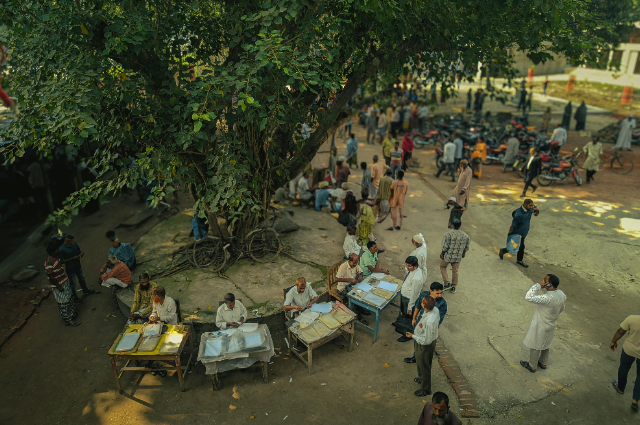
The 2026 West Bengal Assembly Election has not just changed a government, it has rewritten the political identity of Eastern India. From the unprecedented 92.93% voter turnout to a chilling assassination that took place only 48 hours ago, the state is currently suspended between a historic democratic shift and a deep humanitarian crisis.
The results declared on May 4, 2026, confirmed what many thought impossible: the BJP, which had only 3 seats in the state a decade ago, secured a landslide victory with 207 seats.
This victory dismantled the 15-year tenure of Mamata Banerjee’s Trinamool Congress (TMC), which was reduced to 80 seats. The collapse was symbolic and total, epitomised by Suvendu Adhikari defeating Mamata Banerjee in her own seat of Bhabanipur by a margin exceeding 15,000 votes, a staggering outcome for a sitting Chief Minister.
The mandate was fueled by the Special Intensive Revision (SIR) controversy, a pre-election purge that saw 90.66 lakh names deleted from the voter rolls. While the TMC labelled this disenfranchisement by design, the BJP defended it as cleansing the rolls of infiltrators.
Ironically, this purge acted as a massive catalyst for voter participation; millions of citizens, fearing their citizenship was in question, showed up at the booths to prove their existence. The result was a 92.93% turnout, the highest since Indian Independence, turning the election into a literal census of loyalty and belonging.
In the immediate aftermath of the loss, West Bengal faced a constitutional crisis unseen in modern Indian politics. Mamata Banerjee, citing looted mandates and EVM tampering, initially refused to resign.
She argued that the Election Commission and central forces had forcefully defeated her candidates, and for 72 hours, the state’s executive transition remained in limbo.
The deadlock only broke on May 7, 2026, when Governor R.N. Ravi exercised his powers under Article 174(2)(b) of the Constitution to formally dissolve the State Cabinet and the Legislative Assembly. This move effectively ended the TMC’s legal hold on power and paved the way for the BJP’s swearing-in ceremony. Even so, the outgoing CM has maintained a defiant stance, claiming a moral victory for the INDIA bloc and vowing to lead a statewide movement against the new administration.
While the political halls of Kolkata debated legalities, the streets erupted. The term Bulldozer Justice, once confined to the Hindi heartland, made its debut in Bengal on May 6.
In Kolkata’s historic New Market, BJP supporters reportedly used a bulldozer to demolish a TMC union office and a nearby shop, an act that was widely shared on social media as a sign of "Parivartan" (change).
However, the most severe blow to the transition’s legitimacy came with the assassination of Chandranath Rath on the night of May 6. Rath, the executive assistant and trusted aide to Suvendu Adhikari, was returning to his residence in Madhyamgram when his SUV was intercepted by a silver Santro and a motorcycle. Assailants fired nearly 10 rounds at point-blank range, killing Rath instantly and critically injuring his driver.
The forensic recovery of multiple casings, suspected to be from a Glock pistol, points toward a highly premeditated political hit. Adhikari has termed it a targeted state-sponsored murder, while the TMC has demanded a court-monitored CBI probe to ensure the blame isn't unfairly shifted.
As of today, May 8, the state is a patchwork of high security cordons and mourning. At least four other political workers have been killed in districts like Birbhum and Murshidabad. In Sandeshkhali, police officers were targeted in late-night ambushes, leading to massive raids across the island region.
The new government is set to take the oath of office on May 9, 2026, at the Brigade Parade Ground.
The event will be a display of immense political power, but the underlying reality is a state fractured by religious targeting, identity politics, and a legacy of violence that seems to outlive every regime change.
Bengal has moved from the "quiet" of the polls to the "wild" of its aftermath, and the world is watching to see if the new leadership can govern the very volatility that brought it to power.
References:
- https://en.wikipedia.org
- https://www.newsonair.gov.in
- https://timesofindia.indiatimes.com
- https://www.telegraphindia.com