
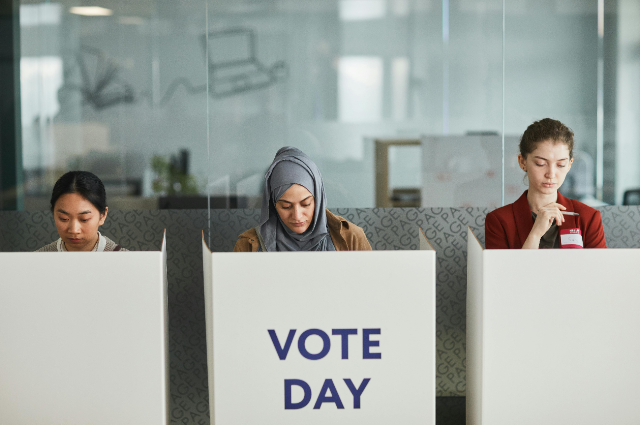
Democracy feels intuitive. More votes should mean victory. If millions of citizens reject all candidates, logic suggests the system should respond. But Indian electoral law works differently. In India, a candidate can technically win an election even if an overwhelming number of voters choose NOTA, “None of the Above.”
This creates a strange but real scenario. Imagine one million voters press NOTA, while a candidate receives only ten votes. That candidate can still legally win.
The paradox sounds absurd at first. But once you understand how elections are structured, the outcome becomes clear.
NOTA was introduced in India in 2013 following a landmark judgment by the Supreme Court of India. The court directed the Election Commission of India to include a NOTA option on electronic voting machines (EVMs) so that voters could express disapproval of all candidates while maintaining ballot secrecy. The decision was meant to strengthen democratic expression and encourage political parties to field better candidates.
However, NOTA was designed as a symbolic choice, not a decisive one.
Under current election rules, NOTA votes are counted but treated as invalid for determining the winner. The winner is simply the candidate who receives the most valid votes among the contestants. NOTA does not trigger re-elections. It does not disqualify candidates. It does not cancel results.
So mathematically, if:
Candidate A gets 10 votes
Candidate B gets 8 votes
NOTA gets 1,000,000 votes
Candidate A still wins.
The logic is procedural rather than moral. Elections choose representatives from available candidates. NOTA records dissatisfaction but does not change the pool of candidates.
This design creates what political scientists call a “non-binding protest vote.” Citizens can express anger, but the system is not obligated to respond.
India has seen multiple elections where NOTA received significant vote shares. In some constituencies, NOTA even ranked third or fourth among options. In a few local body elections, NOTA has received more votes than the margin of victory between candidates. Yet outcomes remained unchanged.
This raises an important democratic question. If large numbers of voters reject all candidates, should the election still produce a winner?
There are two competing perspectives.
One argument says stability matters most. Elections must always produce representatives to ensure governance continues. If NOTA could cancel results, repeated elections might create political paralysis, increase costs, and reduce administrative efficiency.
The opposing argument focuses on accountability. If voters overwhelmingly reject candidates, forcing parties to nominate new ones could improve political quality. Without consequences, NOTA risks becoming merely aemotional expression without structural impact.
The phrase “The 1% Winner” captures this tension. It represents a situation where legitimacy may appear weak even though legality is intact.
Political legitimacy depends not only on rules but on public perception. If citizens believe the system ignores their dissatisfaction, trust may erode over time. Democratic institutions rely heavily on trust.
Interestingly, some countries treat protest voting differently. In a few electoral systems worldwide, blank or rejected votes can trigger re-elections or require minimum thresholds for victory. India chose a more conservative approach focused on continuity rather than disruption.
Another layer of complexity involves voter psychology. Many citizens assume NOTA has the power to cancel elections. Surveys have shown confusion about its actual impact. Awareness campaigns by the Election Commission clarify that NOTA does not affect results, but misconceptions still exist.
There is also debate among legal scholars about whether NOTA should evolve. Some propose reforms such as:
If NOTA gets the highest votes, the election should be repeated with new candidates.
Candidates rejected by the majority NOTA should be barred from contesting again in that constituency.
NOTA thresholds could trigger mandatory party accountability mechanisms.
These ideas remain theoretical. Implementing them would require legislative changes and political consensus.
Critics of stronger NOTA powers also warn about unintended consequences. Organised groups might use NOTA strategically to destabilise elections. Repeated polls could burden taxpayers and the election machinery. India already conducts some of the world’s largest democratic exercises.
The deeper issue is candidate selection. NOTA's popularity often reflects voter frustration with corruption, criminal records, or a lack of credible choices. Strengthening internal democracy within political parties may address root causes more effectively than changing NOTA rules alone.
From a philosophical perspective, NOTA represents an interesting democratic innovation. It acknowledges that participation does not always mean endorsement. A citizen can engage in voting while refusing available options.
That distinction matters psychologically. It transforms abstention into expression.
But expression without consequence has limits.
Democracy operates through incentives. Politicians respond to mechanisms that affect power. If NOTA does not threaten electoral outcomes, its ability to influence candidate quality remains indirect.
Yet even symbolic tools can matter. High NOTA percentages send signals to parties, media, and civil society. They create data about voter dissatisfaction. Over time, such signals can shape political narratives.
The hypothetical “10 votes vs 1 million NOTA” scenario is unlikely in real life because elections usually involve multiple candidates with substantial support bases. But the possibility reveals structural design choices within India’s democracy.
It shows that elections prioritise selecting a representative over measuring approval.
Whether this balance should change remains a subject of debate.
Democracy is not static. Electoral systems evolve as societies change. India introduced NOTA only recently, compared to its long electoral history. Future reforms may redefine its role depending on public demand and political will.
For now, the rule remains simple.
NOTA can speak.
But it cannot decide.
References
- Supreme Court Judgment on NOTA (2013) — People’s Union for Civil Liberties vs Union of India
- Election Commission of India — NOTA Guidelines and FAQs — https://eci.gov.in
- Law Commission of India Reports on Electoral Reforms — https://lawcommissionofindia.nic.in
- National Election Watch & ADR Reports on NOTA Voting Patterns — https://adrindia.org
- The Hindu and Indian Express coverage on NOTA statistics and debates