
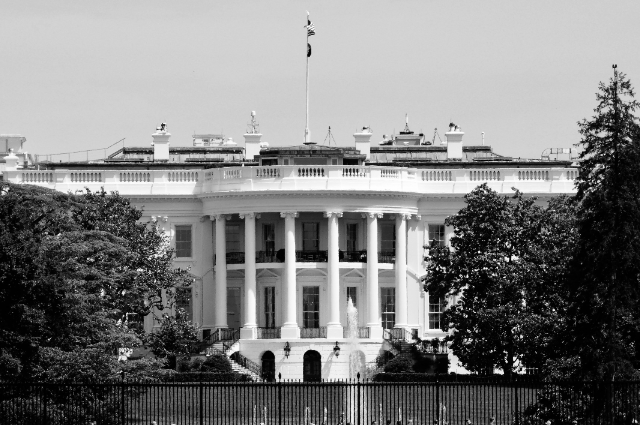
The American political theatre in mid 2026 is defined by a striking paradox: a chief executive operating with an almost entirely unified federal apparatus, yet steering the country through a maze of self-inflicted crises and historic public pushback.
Entering the critical midterm election cycle with a stagnant sixty per cent disapproval rating, President Donald Trump has fundamentally altered the stylistic norms of his second term, relying on a hyper-aggressive governing strategy that explicitly treats public polarisation not as a liability, but as a primary political weapon. This approach has consolidated immense power within the executive branch but has simultaneously pushed domestic economic policy, historic business alliances, and international security frameworks to their absolute breaking point.
At the absolute center of this multi-front struggle is a high-stakes legislative, corporate, and military gamble that has left both Washington and the global community locked in a state of perpetual whiplash.
The battle over domestic economic policy has exposed a severe ideological fracture within the conservative movement itself, anchored by the chaotic rollout of the administration's signature legislative vehicle, the One Big Beautiful Bill Act.
Marketed to working-class voters as a generational economic miracle, the massive package permanently codifies the individual tax brackets of the 2017 Tax Cuts and Jobs Act while adding popular, targeted exemptions for overtime income and tip earnings.
However, the bill's heavy reliance on a historic five trillion dollar increase to the national debt ceiling, alongside sweeping, universal tariffs, has ignited a fierce, public civil war between the White House and tech billionaire Elon Musk.
Having recently exited his high-profile advisory role within the administration, Musk completely discarded diplomatic niceties by publicly denouncing the entire legislative package as a disgusting abomination that will inevitably trigger a severe technical recession before the end of the fiscal year. This public rupture between former close allies highlights a growing structural crisis, as corporate libertarian elites who expected aggressive fiscal austerity find themselves entirely sidelined by an inflationary, deficit-financed populist agenda that critics warn is driving up daily living costs for average Americans while concentrating real relief among the top five per cent of earners.
This same pattern of transactional, ideological disruption has fundamentally re-engineered the mechanics of American humanitarian policy, sparking intense domestic and international fury over a dramatic overhaul of the United States refugee program.
Following a complete, day one freeze on general global refugee admissions that left thousands of vetted applicants stranded worldwide, the administration issued an unexpected executive directive in May 2026, raising the annual refugee ceiling by ten thousand slots.
Crucially, the White House legally ring-fenced these new allocations to be used exclusively for white South Africans of Afrikaner ethnicity, justifying the targeted intervention by declaring an unforeseen emergency involving racially motivated persecution. The policy provoked an immediate and highly embarrassing international backlash, with the South African Foreign Ministry forcefully rejecting the administration's claims of a humanitarian crisis.
More damagingly for the administration's narrative, prominent Afrikaner minority civil society and labour organisations also publicly distanced themselves from the White House's rhetoric, explicitly stating they possessed no data supporting an emergency migration crisis and fiercely preferred building sustainable domestic conditions over participating in an American-engineered exodus, fueling widespread condemnation that Washington has converted a historically non-partisan humanitarian program into an overt instrument of cultural alignment.
On the geopolitical stage, this signature brand of aggressive disruption followed by high-stakes brinkmanship is undergoing its most perilous trial in the volatile waters of the Middle East under the shadow of Operation Epic Fury.
Launched earlier in the year as a massive, joint U.S. Israeli military campaign designed to systematically dismantle Iran's conventional defence capabilities and regional proxy networks, the conflict escalated dramatically when Tehran executed its ultimate countermeasure, deploying advanced naval mines to enforce a total blockade on commercial shipping through the Strait of Hormuz.
The resulting closure cut off roughly twenty per cent of the world's petroleum supply, triggering massive energy market shocks and forcing the administration to rapidly pivot from military dominance to intense, backchannel diplomacy.
While the president has publicly asserted that a comprehensive, two-phase peace deal is largely negotiated to reopen the international waterway and address Iran's nuclear program, his parallel, contradictory statements on Truth Social, warning that he will not rush into a deal, have kept international markets guessing.
This high-intensity standoff underscores the immense volatility of managing global maritime choke points through personalised bravado, leaving the administration caught in a dangerous deadlock between an unyielding Iranian leadership and domestic neoconservative hawks who warn that any premature diplomatic concession would completely undermine the tactical successes of the initial military campaign.
References:
- https://www.brookings.edu
- https://cesran.org
- https://scholarship.law.gwu.edu
- https://www.chapinhall.org
- https://digital-commons.usnwc.edu
. . .