
The case of Harish Rana, decided on March 11, 2026, marks the first time in Indian history that the Supreme Court moved beyond legal theory to grant a family the right to let their loved one go.
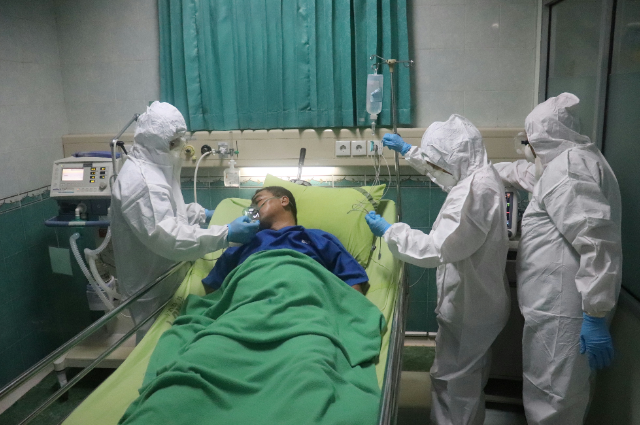
For thirteen years, Harish had existed in a persistent vegetative state, his life sustained entirely by machines and clinically assisted nutrition.
To his parents, the hospital room had become a permanent vigil, a place where love was caught in a painful tug of war with the reality of a body that could no longer recover.
When Justices J.B. Pardiwala and K.V. Viswanathan delivered their unanimous verdict, they weren't just passing a legal judgment; they were answering a question they themselves called "very delicate": the question of who truly has the authority to decide the end of a life that has lost all semblance of dignity.
To understand the weight of this moment, one has to look at the thicket of legal hurdles that usually make such a choice impossible in India.
While the country legalised passive euthanasia in 2018, the actual how-to remained a nightmare of red tape.
Passive euthanasia is the withdrawal of life support, which is very different from active euthanasia, the administration of lethal substances, which remains a criminal act.
Under the current rules, a family must navigate a gauntlet of two separate medical boards, each consisting of three high-ranking practitioners, followed by a final sign-off from a government-nominated doctor. It is a process designed to prevent abuse, but for a family without legal literacy or deep financial resources, it often feels like a wall rather than a bridge.
Even with the 2023 streamlining of these rules, Harish’s parents had to fight their way to the highest court in the land just to exercise a right that was technically already theirs on paper.
The human cost of these delays is staggering, as seen in the decades-long campaign in Karnataka led by activist HB Karibasamma. It took until January 2025 for Karnataka to become the first state to issue a clear administrative circular making the "right to die with dignity" a functional reality for terminally ill patients.
Before this, families were often left in a state of medical purgatory, where doctors were too afraid of legal repercussions to stop treatment, and judges were too hesitant to intervene.
India remains an outlier compared to nations like Spain, Belgium, or Canada, where detailed legislation provides a clear, documented path for end-of-life decisions. Here, we rely almost entirely on the courage of individual judges to interpret the Constitution in a way that balances the sanctity of life with the reality of suffering.
The Harish Rana judgment finally provides a North Star for these silent cases. By allowing the withdrawal of nutrition and hydration for a patient who had no hope of waking up, the Supreme Court acknowledged that a life maintained solely by technology is not always a life that the patient would have chosen for themselves. It highlights the desperate need for more Indians to understand and draft Living Wills, documents that tell doctors exactly when to stop, before the decision falls into the hands of a grieving family and a complex court system.
This verdict doesn't just change the law, it humanises it, acknowledging that sometimes the most profound act of care a society can offer is the mercy of a peaceful goodbye.
References:
- https://www.sci.gov.in
- https://www.thehindu.com
- https://www.livelaw.in
- https://www.scobserver.in
- https://www.ndtv.com/india-news