
When people think of child labour, they often imagine old factories from history textbooks. In reality, child labour today is much less visible but still deeply connected to the global economy. Invisible Child Labour is not a distant problem; it is embedded in everyday products and often hidden by complex supply chains, in India as well as globally. The International Labour Organisation estimates that over 1Ṅṅṅ60 million children worldwide are involved in child labour, and a large number of them work in sectors like agriculture, textiles, mining, and small-scale manufacturing.
One major reason child labour remains hidden is the complex structure of global supply chains. Big brands usually deal directly with large, visible factories, often called first-tier suppliers. These factories are the ones that appear in official reports and are inspected during audits. However, when these factories face pressure to produce more goods quickly and cheaply, they often pass part of the work to smaller subcontractors. These subcontractors may operate from small workshops or even people’s homes. In such places, labour laws are weakly enforced, and children are still working, often in hidden and informal conditions. Because brands focus mainly on their direct suppliers, the deeper levels of the supply chain receive far less attention.
Children become invisible because they are rarely employed directly by multinational companies, instead they work for informal subcontractors, family enterprises, artisan mines, or seasonal collectors whose outputs are mixed and traded before reaching global buyers. Take into account a cosmetics pigment, a blouse, or a phone battery, which passes through several intermediaries, erasing the child’s presence from audit trails.
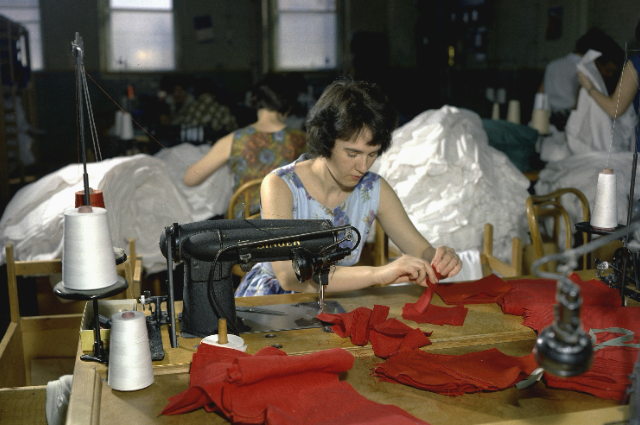
The garment industry is a clear example. Research has shown that while big clothing brands may have policies against child labour, the risk is much higher in the units that sit further down the chain. These units handle tasks like stitching, embroidery, or finishing work. Since they are not officially registered and are rarely inspected, children working there remain largely invisible. Even companies that publicly support ethical sourcing often struggle to monitor these lower tiers effectively.
Agriculture presents similar challenges. For instance, in West African cocoa farming, children often work on family farms, doing tasks such as carrying heavy loads or using sharp tools. This work is sometimes seen locally as children helping their families, which makes it socially accepted even when it is physically demanding or dangerous. At the same time, farmers are paid very low prices for cocoa, which makes it hard for families to rely only on adult labour. As a result, children’s work becomes part of the household survival strategy. This shows how global demand for cheap raw materials can indirectly contribute to child labour.
During times of economic stress, such as the COVID-19 pandemic, families facing income loss relied even more on children’s work to cope. This shows how poverty, lack of social protection, and global sourcing practices combine to increase the risk of child labour.
In eastern India’s mica belt, children collect “dhibra” from illegal pits and sell it into supply chains that feed cosmetics and automotive paint industries; local investigations and NGO projects have repeatedly documented children out of school, being exposed to chemicals and working in hazardous conditions. This illustrates how poverty, informal markets and weak local governance play a major role in invisible child labour.
By the time the finished product reaches big factories and brands, the connection to child labour at the base level is hard to trace. This distance allows companies to say that the problem lies beyond their direct control, even though their sourcing practices influence the prices paid along the chain.
Global estimates show child labour remains widespread despite decades of corporate codes and audits. Three reasons explain the blindness. First, supply-chain complexity: multi- tier subcontracting. Second, economic incentives: brands prioritise cost, speed and scale. Third, governance gaps: weak local enforcement and social protection. These factors combine to make children both visible to local actors and invisible to corporate systems.
Company behaviour plays a role in keeping child labour hidden. Many brands rely on audits and inspections to show they are monitoring working conditions. However, if the prices paid to suppliers are too low, suppliers may feel forced to cut labour costs to survive. In such situations, child labour may continue but be concealed more carefully. Factories can hide underage workers during inspections or keep false records. This means that audits sometimes check documents rather than reflect real everyday conditions. Even many small workshops and home-based units are not officially registered and fall outside regular government inspections.
Companies often present themselves as responsible and committed to solving child labour, but they usually share limited details about specific risks or failures. What often happens is that companies acknowledge the issue in general but do not change the business models that create the pressure leading to exploitation. Having a code of conduct or publishing a sustainability report is easier than paying higher prices or reducing production speed.
This shows that the issue is not isolated but linked to the way modern production systems function.
To truly address invisible child labour, companies need to go beyond basic compliance. This includes taking responsibility for deeper levels of the supply chain, paying prices that allow adult workers to earn enough, and supporting programs that help children stay in school. Working with local organisations, unions, and community groups can also help bring hidden problems to light. Without these broader changes, child labour is likely to remain in the shadows.
In the end, invisible child labour continues not because it is impossible to find, but because the current system makes it convenient to overlook. As long as low cost and fast production remain the top priorities, and responsibility stops at the first visible supplier, children will continue to be part of supply chains that the world prefers not to see.
References
- Cho, S. H., Chakraborty, S., & Mishra, T. (2018). Combating child labour: Incentives and information disclosure in global supply chains. SSRN Working Paper. https://papers.ssrn.com
- Chelliah, J. (2017). Child labour in the supply chain. Human Resource Management International Digest. https://doi.org
- Busquet, M., et al. (2021). A multidimensional perspective on child labour in the value chain: The cocoa value chain in West Africa. World Development. https://doi.org
- Klampfl, G. A. (2025). Child labour prevention and supply chain sustainability: Evidence from German outdoor textile companies. European Journal of Sustainable Development. https://ecsdev.org
- Nayak, R., & Manning, L. (2021). Forgotten children: A socio-technical systems analysis of forced child labour reports from Indian cottonseed farms. Trends in Organised Crime. https://doi.org
- Maksud, A., et al. (2021). Mapping of children engaged in the worst forms of child labour in the supply chain of the leather industry in Bangladesh. CLARISSA Working Paper. https://opendocs.ids.ac.uk
- Ugarte, C., et al. (2020). Child labour and global value chains. CEPR Discussion Paper DP15213. https://cepr.org
- Rubino, M., et al. (2024). Exploring influences on child labour disclosure: The role of sustainability policies and stakeholder engagement. Measuring Business Excellence.
- Wilhelm, M., et al. (2025). Beyond compliance-based governance: The role of social intermediaries in mitigating forced labour in global supply chains. Production and Operations Management.
- International Labour Organisation (ILO) & UNICEF. (2021). Global estimates of child labour: Results and trends. https://www.ilo.org https://www.unicef.org