
Part I — The Photograph
The photograph sat at the bottom of page seven.
Most readers would never have noticed it.
The article itself was about the riot — official death tolls, damaged shops, curfew orders, and political statements. The language was dry and administrative, the kind newspapers often use when too many people have died at once.
Twenty-seven dead. Forty-three injured. Compensation announced. Situation under control.
The children appeared almost accidentally.
I found the image nearly thirty years later in the basement archives of the National Documentation Library in Delhi. The librarian brought out a stack of old newspapers, tied together with a cloth ribbon, and left them beside my desk without comment.
The papers smelled of dampness and dust. Some pages tore when unfolded. Others had browned so deeply with age that they looked burned.
At first, I was searching for reports on the 1993 Noorabad riots. I had no particular interest in the children.
Then I saw the photograph.
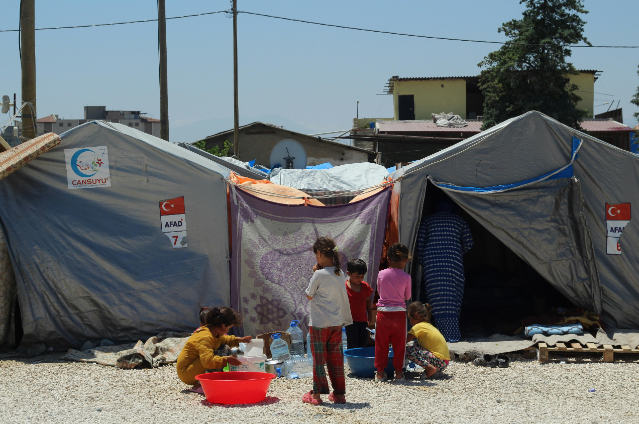
Twenty-three children were sitting beneath a torn tarpaulin outside a relief camp. Some looked half-asleep. One girl held a steel bowl against her chest. A small boy near the front sat barefoot in mud beside an overturned water container.
But another child, standing slightly behind the others, looked directly into the camera.
That was the face I couldn’t leave behind.
He wore a sweater too large for him, dark in the grainy black-and-white print. Years later, I would learn it had been red.
The others looked exhausted. Distracted. Cold.
Only he seemed fully awake.
Not frightened exactly. Just watchful.
The expression unsettled me because it did not belong to a child.
Beneath the image, the caption read:
Displaced children at Camp Number 14, Noorabad.
Nothing else. No names. No follow-up. No indication of where the children went afterwards.
I remember sitting there for a long time under the weak yellow arc lights.
Outside, evening rain had started falling over Delhi.
The riots themselves had mostly disappeared from public memory by then. New governments had arrived. New scandals had replaced old violence. The city had moved on in the efficient way large cities always do.
But something about the photograph resisted being forgotten.
Maybe because the children occupied so little space in the newspaper itself.
Or maybe because I recognised the look in the boy’s eyes.
Years earlier, after the Bihar floods, I had seen the same expression on a child waiting silently in a government hospital corridor beside three covered bodies.
Adults often think children do not fully understand disasters.
The truth is harsher.
Children understand very quickly. What shocks them is watching adults slowly become accustomed to it.
I copied the photograph and slipped it into my notebook.
At the time, I imagined it might become a small detail in a larger essay about memory and communal violence.
I had no intention of searching for the children themselves.
But certain images stay alive after you see them.
A week later, I returned to the archives and asked for additional records related to Camp Number 14.
The librarian looked mildly surprised.
“Most files from that period are incomplete,” he said.
“How incomplete?”
He shrugged.
“Enough to make things easier.”
The camp records filled a single damaged folder.
Inside were photocopied ration lists, handwritten medical requests, police reports, and volunteer notes blurred by water stains. Entire sections had faded into blue shadows.
According to official records, approximately three hundred displaced persons stayed at the camp after the riots.
Approximately.
Even suffering had become an estimate.
One volunteer note mentioned:
large numbers of unaccompanied minors.
Another referred to:
children unwilling to speak after witnessing violence.
No names appeared. Only categories.
Minors. Unknown persons. Transferred bodies.
I kept turning pages.
Near the back of the folder, loosely attached between two reports, I found a handwritten note from a volunteer named Sister Agnes.
Unlike the typed documents, the handwriting felt hurried and personal.
It read:
There are more children here than the registers show. Some arrived alone. Some cannot remember addresses. A little boy in a red sweater keeps asking volunteers to count everyone before sleeping. When I asked him why, he said: “People disappear at night if nobody counts them.”
I stopped reading.
For a moment, the library seemed strangely quiet around me.
I looked again at the photograph.
The boy in the sweater no longer felt archaic. He felt present.
That was the moment the story truly began.
Part II — Camp Number 14
Noorabad is six hours east of Delhi by train, though distances in India are rarely measured in kilometres alone.
They are measured in waiting.
In delayed departures.
In paper cups of chai balanced near open carriage doors.
In station platforms that smell of rust, wet newspapers, and coal smoke long after coal itself has disappeared.
I reached Noorabad on a cold January morning beneath a pale, metallic sky. Fog drifted low across the railway tracks. A few stray dogs slept beside tea stalls near Platform Three while porters moved slowly through the mist carrying luggage on their heads.
At first glance, the city looked ordinary.
That was what unsettled me most.
Traffic moved normally through crowded intersections. Schoolchildren crossed roads carrying bright cartoon backpacks. Rickshaw drivers argued over fares outside the station. Mobile towers rose above neighbourhoods that, thirty years earlier, had seen military barricades and burning shops.
Only the older buildings seemed unable to forget completely.
Sometimes you could still notice blackened patches beneath newer paint. Sometimes, a conversation would pause for a second too long when someone mentioned 1993 aloud.
Camp Number 14 no longer existed officially.
According to municipal records, the camp had operated for “temporary humanitarian purposes” inside a government warehouse near the old transport depot for approximately eleven weeks.
The warehouse itself was gone.
A shopping complex stood there now.
I found it beside a noisy traffic circle lined with pharmacies, electronics stores, and a restaurant advertising FAMILY DINING SINCE 2008 in bright red letters. Motorcycles crowded the pavement where displaced families had once slept beneath leaking tarpaulin sheets.
Nothing there suggested children had once waited in the cold to hear their names called before nightfall.
For two days, I followed paperwork through government offices.
Municipal archives sent me toward police records. Police officers redirected me toward district administration files. District offices pointed me toward “unavailable documents.”
One clerk blamed flooding.
Another claimed the files had been transferred years earlier.
An elderly official finally leaned toward me across a dusty desk and lowered his voice.
“After enough time,” he said, “missing files stop looking unusual.”
He smiled faintly after saying it.
Not proudly.
Not bitterly either.
Just tired.
The first real lead came from a retired Urdu journalist named Haroon Qureshi, who lived above an old printing shop near Jama Masjid Road.
His apartment smelled of tobacco and damp paper. Newspapers were stacked everywhere — on chairs, windowsills, even along sections of the floor. A ceiling fan rotated lazily overhead despite the cold.
“You’re asking about the camps?” he said after studying the photograph for several moments. “Most people stopped asking years ago.”
He adjusted his glasses and pointed toward the children in the picture.
“Camp Number 14 was bad.”
“Why?”
“Too many people. Not enough supervision.” He lit a cigarette with slightly trembling hands. “And too many children arriving alone.”
I asked whether he remembered the boy in the sweater.
Qureshi stared at the photograph again.
Then he shook his head slowly.
“No names survived properly,” he said. “The camps were chaos.”
Smoke drifted toward the ceiling.
“Families searching for relatives. Volunteers coming and going. Police are changing numbers every day.” He paused briefly. “Children moved through those places quietly. After a while, people stopped noticing who belonged to whom.”
He crossed the room and opened an old steel cabinet filled with notebooks tied together using a cloth string.
“I reported for the Noorabad Herald back then,” he said. “The paper closed years ago.”
Inside the notebooks were handwritten interviews, rough camp sketches, casualty estimates, and fragments of testimony gathered during the riots.
One page immediately caught my attention.
At the top, someone had written:
UNACCOUNTED MINORS
Below it were short descriptions.
A girl approximately eight years old. Burn scar on left arm.
Twin boys were found near a railway crossing.
Child answering only to “Munna.”
Boy in red sweater. Refuses shelter transfer.
I looked up.
“Why would he refuse to transfer?”
Qureshi turned another page.
“No idea.”
Then he stopped and looked at me more carefully.
“You should understand something before continuing this search.”
“What?”
“The camps didn’t end when the riots ended.”
Outside, afternoon prayer drifted faintly through the neighbourhood loudspeakers.
Qureshi leaned back in his chair.
“People think relief camps are temporary,” he said quietly. “A few weeks, then everyone goes home.” He shook his head. “But many children never really left those camps. Their lives just continued somewhere else.”
He explained how shelters slowly emptied over the following months.
Some children were reunited with relatives.
Some were taken away by distant family members, and nobody properly verified.
Others entered overcrowded orphan systems.
And some simply disappeared during transfers between camps and state facilities.
“There were rumours too,” he added after a pause.
“What kind of rumours?”
He hesitated before answering.
“Trafficking. Illegal labour.” His voice lowered. “Groups taking children without documentation.”
“Was any of it investigated?”
Qureshi gave a tired laugh.
“Back then? Missing poor children rarely became national concerns.”
I kept writing while he spoke.
At one point, I asked whether any official count of displaced children had ever been completed.
“Officially?” he said. “Probably.”
He tapped the photograph lightly.
“But not like this.”
Before leaving, I showed him the faint chalk words visible beneath the camp wall in the image.
COUNT THEM AGAIN.
His expression changed immediately.
“Where did you see that?”
“Bottom corner of the photograph.”
He leaned closer.
For several seconds, he said nothing.
Then quietly:
“I remember hearing something about that.”
“What?”
“A volunteer who kept recounting children at night.” He frowned, searching his memory. “After a storm, I think a child disappeared.” Another pause. “Maybe more than one.”
The room suddenly felt colder.
“Do you remember the volunteer’s name?”
Qureshi searched through another notebook until loose pages slid onto the floor.
Finally, he stopped at a torn sheet.
Only one sentence remained readable.
Sister Agnes insists the records are wrong. Says at least six children are missing from official lists.
Below it was a date:
17 December 1993.
Six children.
Missing from official records.
I copied the line carefully into my notebook.
As evening approached, Qureshi walked me downstairs to the narrow lane outside the building.
Before I left, he touched the photograph once more.
“You know what frightened me most back then?” he asked.
“The violence?”
He shook his head.
“How quickly people stopped asking about the children.”
That night, I checked into a small hotel near Noorabad station.
Sleep came badly.
Through the thin walls, I could hear televisions playing in neighbouring rooms, train horns echoing across the city, and dogs barking somewhere below the alley outside my window.
Around midnight, I opened the photograph again beneath the bedside lamp.
Twenty-three children.
I counted them slowly.
This time, each face felt separate.
Individuals.
And yet many of them may never have existed officially at all.
I kept thinking about Sister Agnes.
About the missing names.
About the boy in the sweater refusing transfer.
Why would a child remain voluntarily inside a relief camp after the riots ended?
Unless he was waiting for someone.
Or hiding from someone.
The next morning, I returned to the site where Camp Number 14 had once stood.
Near the edge of the parking area, partly hidden behind garbage bins and electrical boxes, a small section of the original warehouse wall remained.
Most people walked past it without looking.
The bricks were dark beneath layers of newer cement.
I stood there listening to traffic for several minutes.
Then I noticed faint white markings beneath the peeling paint.
Almost erased now.
Only fragments remained visible.
But enough survived to read:
…THEM AGAIN.
Part III — The Children Who Vanished
The first child I found was already dead.
Her name was Shabnam.
Or at least that was the name written beneath a faded photograph inside the office of a small orphanage forty kilometres outside Noorabad.
The building stood behind a mosque and a mechanic’s garage at the end of a narrow muddy lane where rainwater had collected in shallow brown pools. A rusted swing hung motionless near the entrance.
Inside, the orphanage smelled faintly of antiseptic, damp walls, and boiled rice.
The caretaker, an elderly woman named Farida Begum, brought tea in cracked porcelain cups while searching through old registers tied together with cloth ribbon.
“You are asking very old questions,” she said softly.
“I know.”
She adjusted her shawl before placing a heavy ledger on the desk between us.
Several pages had been damaged by water. Others were partly eaten away by insects. Dates disappeared midway through sentences. Ink had spread into pale blue stains across entire sections.
Still, one heading remained readable:
TRANSFERRED MINORS — CAMP 14
There were only seven names listed beneath it.
Seven.
I looked at the page again to make sure I had counted correctly.
The photograph showed twenty-three children.
Municipal reports referred vaguely to “large numbers of unaccompanied minors.”
Sister Agnes believed several children had never even entered official records.
Yet here, after everything, only seven names remained.
Farida noticed my expression.
“Most paperwork was never completed properly,” she explained. “Some children arrived sick. Some left suddenly with relatives.”
She paused briefly.
“And some disappeared before records could be made.”
“Disappeared how?”
Her fingers tightened slightly around the edge of the ledger.
“Different people came,” she said.
The answer stayed with me because of how ordinary it sounded.
Different people.
A phrase capable of hiding almost anything.
Farida turned another page carefully.
“Shabnam died here in 1995,” she said. “Tuberculosis.”
Attached beside the entry was a small photograph of a thin girl standing against a blank wall. Her hair had been cut short. She looked directly into the camera without smiling.
I recognised her immediately.
She was the girl holding the oversized steel bowl in the newspaper photograph.
For a few seconds, I couldn’t speak.
Until then, the children in the image had existed partly as symbols — fragments of a forgotten archive, suspended somewhere between investigation and memory.
But now one of them had become painfully real.
A child who had coughed blood inside a rural orphanage.
A child who died before turning ten.
A child reduced to a fading photograph and a damaged ledger entry.
Farida watched my face quietly.
“You knew her?”
“No,” I said.
I looked again at the photograph.
“No one really did.”
Outside the office window, children were playing cricket in the muddy courtyard beside a broken hand pump. Someone shouted after hitting the ball too hard. A younger child began laughing uncontrollably.
The sound drifted into the room strangely unchanged by history.
Farida closed the register gently.
“After the riots, people came asking about compensation,” she said. “Property claims. Political responsibility.”
She sighed.
“Very few asked what happened to the children later.”
I showed her the newspaper photograph.
She adjusted her glasses and leaned closer.
“This girl stayed here only briefly,” she said, pointing carefully. “The twins were transferred somewhere else.” Her finger moved again. “And that boy…”
She stopped at the child in the sweater.
“You remember him?”
“A little.”
She narrowed her eyes slightly, searching through memory.
“Quiet, boy. Didn’t behave like the others.” A pause. “He used to count everyone before sleeping.”
The room seemed suddenly smaller.
“Sister Agnes wrote about that.”
Farida looked up.
“You found her notes?”
“Only fragments.”
She nodded slowly.
“She cared too much.”
There was no criticism in her voice when she said it.
“People like Sister Agnes suffer after disasters,” she continued quietly. “Everyone else moves on eventually. They don’t.”
“What happened to her?”
Farida lowered her eyes toward the ledger.
“I don’t know. She left Noorabad after the camps closed.”
Another witness gone.
Another unfinished trail.
Before leaving, I asked if I could copy the names from the register.
Farida agreed.
I wrote them carefully into my notebook.
Shabnam.
Aamir.
Sajida.
Unknown male child.
Twin 1.
Twin 2.
Kabir.
Only seven names.
Even accounting for transfers, deaths, and reunifications, the numbers refused to make sense.
That evening, I returned to my hotel carrying a kind of unease I could not fully explain.
Most investigations slowly produce clarity.
This one seemed to produce gaps.
The deeper I searched, the less complete everything became.
Missing files.
Missing witnesses.
Missing names.
Missing children.
As though the riots had damaged not only lives, but memory itself.
I spread photocopies across the hotel bed:
camp records,
newspaper clippings,
orphanage lists,
handwritten notes,
casualty reports.
Then I counted the children in the photograph again.
Twenty-three.
One by one.
When I reached the boy in the sweater, I stopped.
Kabir.
For the first time, the face had a name attached to it.
But beside his orphanage entry, written in blue ink, was a short note:
TRANSFER REFUSED
No explanation followed.
I stared at the words for a long time.
How does a child refuse transfer inside a relief system?
And who allowed him to stay behind?
Near midnight, I called Haroon Qureshi.
He answered after several rings, sounding half asleep.
“I found one of the children,” I told him.
A pause followed.
“Alive?”
“No.”
Silence again.
Then quietly:
“That happens more often than the other possibility,”
I asked whether he remembered any volunteers assigned specifically to Camp Number 14.
“Most people didn’t stay long,” he said. “Conditions were terrible. Disease outbreaks. Overcrowding.”
I heard papers shifting on his side of the phone.
“Wait,” he said suddenly. “There was one doctor.”
“What doctor?”
“Government psychiatrist, I think. Sent to evaluate trauma cases.”
He coughed heavily.
“People said he became obsessed with the camp children.”
“Do you remember his name?”
More papers rustled.
Finally:
“Dr Vivek Anand.”
I wrote it down immediately.
“What happened to him?”
“No idea,” Qureshi said. “But I remember hearing arguments after the camp closed. Some officials accused him of creating problems.”
“What kind of problems?”
“He believed children were disappearing during transfers.”
My grip tightened slightly around the phone.
“Was it investigated?”
Qureshi let out a tired laugh.
“This was 1993,” he said. “Missing poor children didn’t become investigations.”
After the call ended, I searched online databases for Dr Vivek Anand.
Very little appeared.
A few conference references from the early 1990s.
One paper about childhood trauma after communal violence.
Then almost nothing.
No hospital affiliations after 1995.
No obituary.
No later publications.
It felt as though he, too, had slowly faded from the record.
Outside my hotel window, fog thickened over the city.
I kept thinking about the line from Sister Agnes’s note:
People disappear at night if nobody counts them.
Perhaps the boy meant it literally.
Or perhaps children in relief camps learn certain truths earlier than adults do.
That once systems become overwhelmed, people stop being individuals.
They become numbers.
Categories.
Administrative burdens.
And eventually, if enough time passes—
absence.
The next morning, I travelled toward the railway settlement where several displaced families had reportedly relocated after the camps closed.
The neighbourhood spread behind Noorabad station in narrow corridors of tin roofs, hanging electrical wires, open drains, and smoke-darkened walls.
Children ran barefoot beside sewage water carrying plastic kites and homemade cricket bats.
An old tea seller pointed me toward a man named Rafiq who had supposedly lived in Camp Number 14 as a child.
“You’re asking about the riots?” he said suspiciously.
“Why now?”
“I’m trying to identify children from the camp.”
The tea seller studied me carefully before answering.
“Some names survive only because nobody says them aloud anymore.”
He directed me toward a bicycle repair stall near the railway crossing.
I found Rafiq sitting beside rusted bicycle frames while trains passed every few minutes, shaking the ground beneath us.
He looked around forty.
Thin.
Quiet.
A scar crossed one eyebrow.
When I showed him the photograph, his hands stopped moving immediately.
For several seconds, he said nothing.
Then quietly:
“Where did you get this?”
“The archives.”
He kept staring at the image.
“That winter,” he said slowly, “was after the fires.”
“You were there?”
He nodded once.
I pointed toward the children.
“Do you remember any names?”
Something changed in his expression then.
Not confusion.
Fear.
Real fear.
A train thundered past behind us.
The sound filled the silence between us.
Finally, almost in a whisper, he said:
“We were told not to remember too much.”
Then he looked directly at the boy in the sweater.
And for the first time since my search began, someone spoke the name aloud with certainty.
“Kabir,” he said softly.
“He counted us every night.”
Part IV — The Boy in the Red Sweater
Rafiq closed his repair shop earlier than usual that evening.
Without saying much, he pulled the rusted shutter halfway down, washed grease from his hands using water from a blue plastic bucket, and nodded for me to follow him toward the railway bridge behind the settlement.
Fog hung low across the tracks.
The winter air smelled of damp earth, smoke, and frying oil drifting from nearby food stalls. Trains passed every few minutes, their windows flashing briefly through the darkness before disappearing again.
Under the bridge, tea vendors had arranged wooden benches beside small charcoal stoves.
Rafiq bought two cups of tea.
For several minutes, he said nothing.
The silence did not feel uncomfortable. It felt necessary.
Some memories seem to arrive only after enough quiet has gathered around them.
Finally, he asked, without looking at me:
“You really want to know what happened to the children?”
“Yes.”
He stared into his tea for a long moment.
“No,” he said softly. “Most people only want stories they can finish listening to.”
I placed the photograph beside him on the bench.
The paper had begun curling at the corners from being handled too often.
Rafiq touched one edge gently.
“We thought this picture mattered,” he said.
“Why?”
“Because somebody finally came with a camera.” A faint smile crossed his face and disappeared. “Children think being seen means somebody will help.”
A freight train thundered overhead, shaking dust loose from the bridge ceiling.
When the noise faded, Rafiq began speaking slowly.
The riots had lasted four days.
By the third night, entire sections of Noorabad were burning unchecked while police barricades sealed roads between neighbourhoods. Families ran through narrow lanes carrying whatever they could save — documents, blankets, jewellery, children.
Some children became separated in the confusion.
Others watched parents disappear into crowds that never returned.
Rafiq was eight years old when volunteers brought him to Camp Number 14.
“I remember the smell first,” he said quietly. “Smoke everywhere. Kerosene. Wet clothes.” He rubbed his palms together absently. “Even weeks later, everything still smelled burned.”
The camp occupied an old warehouse near the transport depot. Hundreds of people lived beneath leaking tarpaulin sheets stretched across iron beams.
Food came irregularly.
Water lines lasted hours.
At night, children cried from fever, hunger, nightmares, or simply because the darkness frightened them.
“But Kabir…” Rafiq stopped for a moment. “Kabir was different.”
“How?”
“He behaved older than the rest of us.”
He pointed toward the photograph.
“That sweater wasn’t his. He found it somewhere after the fires.”
Another train rolled through the fog below the bridge.
“He rarely spoke about his family,” Rafiq continued.
“Did he lose them?”
Rafiq shrugged faintly.
“Everyone lost someone.”
The tea seller returned and silently refilled our cups.
Across the tracks, distorted railway announcements echoed through loudspeakers.
I asked about the counting.
Rafiq nodded slowly.
“Every night before sleeping, Kabir counted all the children.” He paused. “Again and again.”
“Why?”
For a few seconds, he didn’t answer.
Then quietly:
“Because children started disappearing.”
The words landed without drama.
That made them worse.
“Disappearing how?”
“Different reasons.” He kept watching the railway tracks while speaking. “Transfers. Hospitals. Relatives arriving unexpectedly.” He paused again. “At least that’s what we were told.”
“But?”
Rafiq rubbed the scar above his eyebrow.
“But sometimes a child would simply be gone the next morning.”
A train horn sounded somewhere inside the fog.
I remembered the line from Sister Agnes’s note.
People disappear at night if nobody counts them.
“How many disappeared?” I asked.
“I don’t know.” He shook his head slowly. “In camps, numbers changed constantly.” A pause followed. “After a while, nobody trusted the lists anymore.”
He told me about a storm during the second week inside Camp Number 14.
Heavy rain flooded parts of the warehouse. Electricity failed across the district. Volunteers spent most of the night moving families toward higher platforms inside the building.
That same night, a little girl named Meena disappeared.
“She slept near us,” Rafiq said quietly. “In the morning, her blanket was empty.”
“No one found her?”
“Officials said relatives probably took her.”
“But Kabir didn’t believe that.”
Rafiq shook his head.
“He searched the whole camp.”
The charcoal stove beside us hissed softly.
“After that,” he continued, “he started counting everyone before sleeping.”
I asked whether the police investigated.
Rafiq gave a tired laugh.
“You still think poor children disappearing creates investigations.”
There was no anger in his voice.
Only familiarity.
I looked again at the photograph.
Twenty-three children beneath torn tarpaulin sheets.
How many survived?
How many disappeared afterwards?
How many names remained anywhere at all?
Then Rafiq pointed toward the edge of the image.
“See there?”
Near the far corner of the photograph, partly hidden by shadow, stood a tall figure in a raincoat watching the children from outside the shelter.
I had never noticed him before.
“Who is that?”
“Doctor sahib.”
“Dr Vivek Anand?”
Rafiq nodded.
“He came often after Meena vanished.”
“What did he do?”
“Asked questions people didn’t like.”
Rafiq explained that Dr Anand had been sent to evaluate trauma among displaced children. Unlike most officials, he spent long hours inside the camp speaking directly with them.
“He listened,” Rafiq said.
The way he said it made the act itself feel unusual.
According to rumours inside the camp, Anand became disturbed by inconsistencies in the transfer records.
Some names appeared twice.
Others disappeared entirely.
Several children marked as “relocated” never arrived where records claimed they had been sent.
“What happened to him?” I asked.
Rafiq hesitated.
“People said he argued with camp administrators.” He stared down at his untouched tea. “Then one day he stopped coming.”
“Just like that?”
“In those days,” Rafiq said quietly, “people disappeared quietly.”
Fog thickened beneath the bridge.
One by one, nearby vendors began putting out their stoves.
I hesitated before asking my next question.
“What happened to Kabir?”
For the first time that evening, Rafiq’s expression changed completely.
Not fear now.
Grief.
“He stayed longer than most of us,” he said softly. “Even after families started leaving the camp.”
“Why?”
“He said somebody needed to remember who was missing.”
The sentence stayed between us for several seconds.
Then Rafiq continued.
“One night, he made all of us repeat our names before sleeping.” He looked somewhere beyond the tracks now, somewhere far older than the bridge around us. “He said if nobody remembers your name properly, it becomes easier for the world to erase you.”
I thought about identity then.
Documents.
Databases.
Citizenship numbers.
Records.
And yet only thirty years earlier, children had vanished inside relief camps so completely that even their names dissolved.
“What happened to him afterwards?” I asked quietly.
Rafiq lowered his voice.
“When the camp finally closed, volunteers tried sending remaining children to government shelters.” He swallowed hard. “Kabir ran away.”
“Where?”
“No one knew for months.”
Another train approached overhead, making the bridge tremble around us.
Rafiq waited until the noise passed.
Then he spoke almost in a whisper.
“They found him near the old cemetery outside Noorabad.”
My chest tightened.
“Dead?”
Rafiq looked at me for a long moment.
“No.”
A pause followed.
“He was counting graves.”
Part V — Naming the Dead
The cemetery stood beyond the northern edge of Noorabad, where the city slowly gave way to scrubland, abandoned factories, and unfinished housing colonies overtaken by weeds.
Very few people came there anymore.
The caretaker, an old man named Bashir, unlocked the rusted gate shortly after sunrise. His eyes were cloudy with cataracts, and he moved carefully across the damp ground as though memory itself had weight.
Fog drifted low between the graves.
Winter birds moved silently through bare branches overhead.
“You came about the boy?” he asked before I could introduce myself.
The question caught me off guard.
“You remember him?”
Bashir nodded once.
“Some memories stay because nobody else wants them.”
We walked slowly along narrow stone paths cracked by roots and rainwater. Many gravestones no longer carried readable names. Time had worn entire identities away.
Near the far boundary wall, older unmarked graves spread unevenly beneath tall grass.
Bashir stopped there.
“He used to sit here,” he said.
“Kabir?”
“Yes.”
He pointed toward a broken cement platform beneath a neem tree.
“He came almost every evening.”
“Doing what?”
Bashir looked at me strangely for a moment.
“Counting.”
The word lingered quietly in the cold air.
“How old was he?”
“Ten maybe. Eleven.” Bashir adjusted his shawl around his shoulders. “Thin boy. Always wearing that red sweater.”
I sat on the edge of the cement platform while he spoke.
The cemetery smelled faintly of wet soil and distant smoke from brick kilns outside the city. Somewhere beyond the walls, traffic moved through Noorabad as morning slowly began.
“He counted graves?” I asked.
“At first.” Bashir nodded. “Later, he counted names.”
“Names from where?”
“The camps. Hospitals. Newspaper lists.” He paused briefly. “Sometimes he carried scraps of paper in his pockets.”
The numbers again.
Official death tolls.
Transfer records.
Missing persons.
Lists pretending to be complete.
Bashir explained that Kabir began visiting the cemetery after Camp Number 14 closed in early 1994. By then, most displaced families had scattered elsewhere. Some returned cautiously to damaged neighbourhoods. Others disappeared into cities large enough to absorb suffering without noticing it.
But Kabir stayed behind.
Alone.
“He asked difficult questions,” Bashir said quietly. “Wanted to know where unidentified bodies were buried. Asked about hospital records.” He shook his head faintly. “Children should not spend time thinking about such things.”
I thought again about the photograph.
The boy stared directly into the camera while the others looked exhausted or distracted.
Maybe trauma changes children unevenly.
Some become frightened.
Some become silent.
And some begin keeping records.
“What happened to him afterwards?” I asked.
Bashir remained quiet for several seconds.
Then he pointed beyond the cemetery wall toward a row of newer apartment buildings rising through the fog.
“One day he stopped coming.”
That was all.
No dramatic ending.
No official report.
Nobody discovered it.
Just absence.
Like so many others connected to the camps.
“When did you last see him?”
“Summer perhaps.” Bashir shrugged weakly. “Years become difficult to separate at my age.”
I showed him the photograph.
His hands trembled slightly while holding it.
“Yes,” he whispered. “That’s him.”
Then his finger moved carefully toward the other children.
“This girl died during the fever outbreak.” Another face. “That boy left with relatives.” A pause. “The twins disappeared.”
“You remember all this after thirty years?”
Bashir gave a tired smile.
“Someone should.”
The sentence stayed with me long after I left the cemetery.
Someone should.
Not because memory repairs the past.
But because forgetting finishes what violence begins.
By afternoon, I was back inside the municipal archives.
At that point, I understood the story differently.
It was no longer only about one missing child.
It was about erasure.
About the way institutions survive catastrophe by reducing human lives into manageable paperwork.
And how children disappear most easily, because children rarely possess documents of their own. They exist inside records created by adults — and adults lose records constantly.
A clerk reluctantly allowed me to examine burial and hospital transfer files from the winter of 1993.
Most were incomplete.
Pages missing.
Names misspelled.
Entire sections marked UNKNOWN.
Still, over several hours, fragments slowly began connecting.
Shabnam.
Confirmed. Died in 1995.
Twin boys transferred to the Lucknow shelter system. Records were lost afterwards.
One unidentified female child was buried after a pneumonia outbreak.
Kabir:
Nothing after March 1994.
Officially, he simply stopped existing.
That evening, I spread every document across my hotel room floor.
The photograph rested in the center.
Around it:
orphanage records,
volunteer notes,
municipal files,
newspaper clippings,
cemetery lists,
handwritten testimony.
I began writing down every identifiable child’s name inside my notebook.
Not as journalism anymore.
Something else.
Shabnam.
Rafiq.
Kabir.
Sajida.
Meena.
Aamir.
Unknown twins.
Girl with burn scar.
Boy near rice sacks.
One by one.
Outside, Noorabad moved through another winter evening beneath fog and traffic lights. Shopkeepers lowered shutters. Families gathered for dinner. Television anchors argued loudly about newer crises already replacing older griefs.
The city continued normally.
But inside the hotel room, twenty-three children still sat beneath a torn tarpaulin sheet from 1993.
Waiting to be counted again.
Near midnight, my phone rang.
It was Rafiq.
His voice sounded tense.
“There’s someone you should meet,” he said.
“Who?”
“A woman from the old camp.” A brief pause followed. “She knew Sister Agnes.”
“Where?”
“Saint Mary’s Clinic. Tomorrow morning.”
Before ending the call, he added quietly:
“She says Kabir left something behind.”
I barely slept.
At dawn, I looked at the photograph again beneath the weak yellow hotel lamp.
And for the first time, I noticed something I had somehow missed before.
Near Kabir’s hand, partly hidden in shadow, he was holding a small notebook against his chest.
Dark-colored.
Worn at the edges.
As though protecting it.
The next morning, fog covered Noorabad heavily enough to erase entire streets. Rickshaw headlights drifted through the whiteness like dim lanterns.
Saint Mary’s Clinic stood behind an old church near the civil lines district. Paint peeled from the walls. Moss spread across damp stone steps.
Rafiq waited outside beside an elderly woman wrapped in a grey shawl.
“She volunteered at the camp,” he said quietly.
The woman studied me carefully.
“You are writing about the children.”
It wasn’t a question.
“Yes.”
She nodded once.
“Then perhaps this should belong with the story now.”
From inside her cloth bag, she removed an object wrapped carefully in newspaper.
A notebook.
Small.
Dark-colored.
My breath caught immediately.
The same notebook from the photograph.
Its corners were burned slightly. Water stains had warped the cover.
For several seconds, I could only stare at it.
“Where did this come from?” I asked quietly.
The woman’s eyes filled with sadness.
“Kabir gave it to Sister Agnes before he disappeared.”
My hands trembled slightly as I opened it.
Inside were rows of names written in uneven childish handwriting.
Some incomplete.
Some crossed out.
Some repeated several times.
At the top of the first page, written in large letters, Kabir had written:
COUNT THEM AGAIN.
Below it:
BECAUSE EVERY TIME THEY COUNT US, SOMEONE GOES MISSING.