
That engineering college in Roorkee—yeah, that was the dream. Honestly, it turned out to be the toughest challenge I’ve ever faced.
I landed there as a research scholar. My whole life revolved around labs and machines; reports piled up, samples everywhere, formulas swirling in my head day and night. Most days, I’d lose track of time in the lab. Machines always humming, that sharp, chemical smell—after a while, I just got used to it.
I stayed in a cramped dorm room. Just a bed wedged between two walls, a tiny wardrobe, and a window that caught the sunset behind the trees. Free evenings? Pretty rare. My guides would call me over to their homes all the time. Always the same reasons—discussing research, looking at new results, or fixing up a report. That’s just how things worked in our field. Most guides managed their students this way, with a gentle nudge or a quiet word.
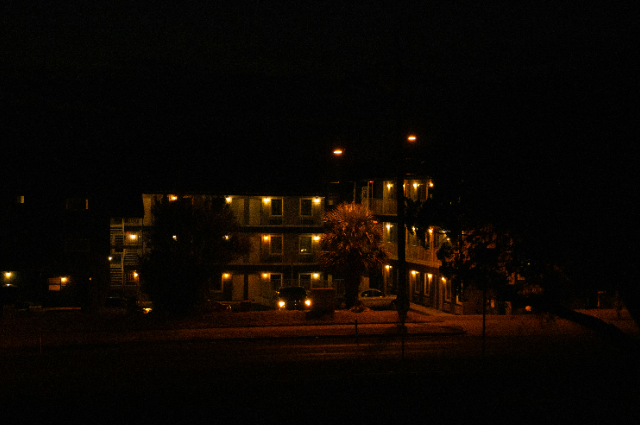
My guide’s house sat about two kilometers from campus. The road there was dead straight but lonely. Old mango and blackberry trees lined both sides, their twisted branches arching overhead to form a green tunnel. When it rained, the smell of wet leaves and earth hit you—strangely fresh, almost electric. Summer was different. The same road felt heavy, like it was holding its breath.
Sometimes, a breeze would set the leaves whispering. Frogs and insects sang from the bushes, making the quiet feel even deeper. The yellow streetlights barely worked, flickering and half-lit, letting the darkness settle in a little more.
Every evening on that road, my feet just sort of took over, moving faster without me really thinking about it. If a bicycle bell rang somewhere nearby, I’d freeze for a second—heart thudding in my chest—then try to calm myself: “It’s fine, someone else is here. I’m not alone.” Still, for some reason, that empty feeling stuck around.
At first, I was honestly scared of that path. Over time, the fear faded into routine. Same old trees, same dust, same heavy darkness—after a while, it all just blended
into my life.
But for the past ten days, something’s been off. The night that used to feel peaceful now feels sharp and strange. Evenings, when I’d leave the guide’s place, it’d be close to seven, and the road would be almost empty. Sometimes a horse would wander past, or a dog would bark way off somewhere. The moonlight slipped through the trees and spilled across the road, and there was this weird, damp smell of mangoes and blackberries hanging in the air.
That path used to just feel lonely. Now, it’s like it’s watching me—like it’s awake.
Sometimes I swear there’s someone behind those trees, keeping pace with me, matching my steps.
At first, I chalked it up to my mind playing tricks on me. Research, exhaustion, being alone—maybe it all just got to me. But then one evening, something happened that shattered any hope of sleep.
Same routine: I left the guide’s house with his notes about my report, and stuffed my notebook in my bag. The night felt even quieter than usual. Wind whispered through the leaves. Somewhere, I heard footsteps that weren’t mine. Then everything went silent.
I picked up my pace.
But the faster I walked, the brighter the shadows seemed behind me. My heart was hammered. I tried to reassure myself—“It’s nothing, just leaves moving.” But then—
I forced myself to turn around.
There, under the mango tree, standing in the thin moonlight, was a shadow. Not quite a person, not quite a ghost. It looked half-finished, like a face you can almost see in fog.
He didn’t move. Just stared at me. No anger in his eyes—just this odd, desperate look, like he wanted to tell me something but couldn’t get the words out.
I didn’t run. We just stared at each other for a few seconds. Fear, shock, and this weird rush of pity all tangled up inside me. And then, in a blink, he was gone.
When I finally got back to the hostel, everyone was asleep. The whole place was dark.
I kept telling myself, “It was nothing, just tricks of the light.”
But later, after I turned off my own light and lay down to sleep, I couldn’t shake the feeling that someone was sitting right by my feet.
There was this faint trace of someone’s breath hanging in the air.
The room was so quiet, I could hear my heart thumping—faster, somehow unfamiliar. I rolled over, searching, but of course, nobody was there. And yet, suddenly, I just knew that shadow had slipped in. It was right here with me.
It had been a month since I’d come back to the hostel.
Then one morning, out of nowhere, a call from home. My father’s voice sounded heavy, worn. “Baba is very ill, son… He doesn’t have much time left. Come for two months.” Just like that, everything inside me went loose, as the ground had shifted. I got permission from my guide, packed my bag, and caught the train the next day.
When I left Roorkee, the sky was hazy, and the wind was cool on my face.
I stared out the train window, watching the world drift by, and all I could think was, “So much left behind… Vivek, that lab, the unfinished paper, those words I never managed to say.”
When I finally reached home, nothing felt the same.
The basil plant out in the courtyard had withered away. Dust coated the walls. My mother looked older, with tired lines under her eyes.
Baba lay on the cot, eyes shut, his breathing ragged.
I took his hand, carefully. He smiled, just a little, as he recognized me from somewhere far away. He didn’t say anything else.
Those last days dragged on—heavy and silent, broken only by the low voices of relatives. Time stood still.
I felt like I was falling apart from the inside.
After Baba was gone, everyone unraveled in their own ways.
One evening, my mother sat beside me. “Anamka, I have something to say… Don’t get upset.” I nodded, head down. “Go ahead, Mother.”
She softened her voice, “There’s a boy. He’s from our caste, in the Indian Foreign Service. He’s one of our own—he even says he met you once when you were little.”
I just listened, quietly.
She went on, “He’s a good boy. Polite, well-mannered. Has a stable job. Finish your PhD, and life with him will be comfortable. Not everyone gets such a chance.”
I said, barely above a whisper, “But Mother, I love someone else.” She looked startled. “Who?”
I hesitated, then, “Vivek… Professor Vivek Rastogi.” For a second, the whole room froze.
Then Mom sucked in a breath. “Are you out of your mind? He’s so much older. What will people say?” Dad finally spoke up. “Anamka, focus on your studies. Fathers arrange these things. Vivek teaches at your college—his name, his family, everything’s different. You’re just his student. Life isn’t built on books, it’s built on society.”
Those words hurt. I tried to explain, “Mom, Vivek isn’t a bad person. He respects me, and he knows how hard I work. He went to IIT. He’s a professor.”
Mom cut me off. “You call this a companion? It’s just infatuation. You’re still a child. You think it’s love, but it’s not. And society will never accept this.”
That night, I cried alone in my room for hours. Baba’s photo smiled down from the wall, so calm. I kept thinking, “If he were here, maybe he’d understand me.”
The wind whipped through the courtyard, scattering neem leaves everywhere. The sound of them hitting the ground took me straight back to the road to Roorkee.
But then, everything flipped.
My parents didn’t mince words. “Our honor comes first. You have two options: jump off the roof and end your life, or marry the boy we’ve chosen.”
That was it. No real choice at all.
I didn’t want to die, so marriage it was.
When I shared the news with a couple of friends, it didn’t stay a secret for long. Word got around the college fast.
Back then, I’d always find some excuse to pop into the computer department—theses, printing, whatever. That’s where Vivek taught. We started seeing more of each other, growing closer bit by bit.
We spent about four years together, but I was upfront with him from the start. “We only get married if our parents say yes. If not, then no wedding.” Vivek just nodded and said, “I’ll wait.”
But the night it all came to a head, the air at home felt thick enough to choke me. Mom, Dad, a handful of relatives—they all sat in the living room, sipping tea like it was just another evening. Except it wasn’t. I stood off to the side, feeling like I was on trial.
Dad’s voice was cold. “If you don’t leave that boy, then either jump from the roof, or marry the guy we picked.”
It felt like I’d been struck by lightning. Their eyes held no warmth, just fear, as my life mattered less than their reputation.
Right then, I wanted the ground to open up and swallow me. But I didn’t want to die. So I gave up.
They said, “Fine, do as you wish.”
They looked triumphant, like they’d just won some battle. I had no fight left.
My mind blanked out. My studies, my dreams—gone. I was just a body doing what I was told.
When I went back to college days later, everything felt off, like the place didn’t recognize me anymore.
I told a few friends what really happened—maybe so I wouldn’t have to carry it all alone, maybe just because I needed someone to know. But secrets don’t last long in college. Soon, everyone knew.
When Vivek heard about my marriage, it broke him.
At first, I tried to lose myself in work, research, classes, and guiding students. But every day, I felt a little more hollow.
And then, one day, it all stopped.
Vivek, who always seemed so steady, just came undone. He ended his life alone in his hostel room.
The police came and searched the place.
No note, no clear reason—just him, gone, and a half-finished word scratched on the wall. But I didn’t need an explanation. I already knew why.
It was me. Later, I found out he’d destroyed everything between us—letters, photos, whatever proof we had. Not a trace left. Not even his name. No one could ever connect me to him.
Even when he died, I somehow came out untouched.
He called me one last time. Not from his phone, but from some
old PCO. His voice was weirdly calm, like he’d already made up his mind about everything.
“Many congratulations on your wedding, Anamika.”
I couldn’t say anything at first. In the end, I just managed,
“Vivek… sorry. Take care of yourself.” He gave this soft laugh
and hung up.
That was it. That was the last time.
After he left, college felt different. People kept glancing at me,
almost like they wanted to ask something. But no one ever did.
Only one person actually said anything—Seema, Vivek’s cousin.
Seema was doing research with us. From the start, she hated
the idea of Vivek together. She never hid it, either.
I remember fighting with her so many times in the lab. Her voice would shake, she’d get so angry—
“If you can’t marry my brother, stop messing with his feelings,
Anamika! He’s simple. He’s not for people like you. You’re just
stringing him along—and one day he’ll break.”
I tried to explain, over and over—“I never lied to Vivek. I told him from the beginning that if my family didn’t agree, it was never
going to happen.”
But Seema never softened. Her eyes were always hard, full of blame. She would almost shout, “You know how crazy he is about you! If he doesn’t get you, he’ll either lose his mind or finish himself off! You’re ruining his life. He’s thirty-seven, and you’re still keeping him tangled up in hope!”
Her words stung back then. Now, looking back, I think she saw what I refused to admit. Maybe she was right. Vivek lost himself—love stripped away everything else. He’s gone. And he left this deep, ongoing silence inside me.
Now, when the wind moves through the trees, I feel like he’s still here. Not really gone. Just this shadow, once behind me, now living somewhere inside.
I was sitting alone in a corner of the canteen. There was a cup of tea in front of me, cold and pointless. My head was spinning—guilt, regret, emptiness. Everything reminded me of Vivek. His voice. His laugh. Those last words—“Take care of yourself.”
I couldn’t get them out of my head. Over and over, I asked myself, “Am I the reason he’s dead? Did I do this to him?”
Lost in all that, I didn’t notice someone standing in front of me. I looked up—it was Seema. She smiled, but there was nothing warm in it. Only bitterness.
She stared at me and said, almost spitting the words, “Hello, murderous beauty. You got what you wanted. You’ve eaten my brother alive.” She shook her head. “I warned you so many times, but who cared?”
Her voice was sharp, hurting, laced with anger and pain. Everyone in the canteen was staring. I tried to say something, but Seema cut me off.
“These brothers are so strange! Parents give up everything to educate them, and dream that one day their son will be their support. Then, as soon as he turns thirty, he’s possessed by the ghost of love. He forgets his parents, their dreams, their loneliness. And then, right when it’s all slipping away, some dangerous beauty shows up, wraps him around her finger, and pushes him towards death.”
She slammed her hand on the table. The cup rattled—I flinched. Her eyes were red—maybe from crying, maybe just exhausted. But she didn’t stop.
“Before he died, my brother should’ve thought about his parents. He could’ve at least told them, 'Mom, Dad, get used to living
alone now. Burn all those dreams you had. Just like you burned his life.'”
Now her voice was trembling. The anger was gone, replaced by tears.
"Girls like you," she said, "who consider themselves modern,
wanting to be foreign in everything—
You fall in love, but run away from responsibility. You never tell
your parents that you love someone. If you love them so much, then have the courage to get married. No matter what the world says, whether your parents believe it or not,
at least don't ruin anyone's life!"
I just sat there silently. The words seemed stuck in my throat.
There was no point in even trying to explain. Every excuse, every reason, seemed meaningless.
I bowed my head. The cup of tea was now soaked with my tears.
Seema's words, memories of Vivek, and the same sentence echoed over and over again—"Take care of yourself."
How could I handle myself now?
Everything I had inside me had been shattered.
My health was deteriorating daily. I lost sleep, and I didn't feel hungry. A strange restlessness lingered within me, a feeling that wouldn't leave me.
Now I was beginning to believe that the shadow—the one I sometimes saw at night, in the mirror, or in a crowd—
was Vivek.
Sometimes his shadow would appear behind the door,
Sometimes his footsteps would be heard outside the room.
Sometimes his voice—"Anamka, take care of yourself"—would echo in my ears, as if he were right there, somewhere nearby.
Now the situation was such that he was visible even in the light. Sometimes a glimpse of him on a professor's face,
sometimes his eyes in a friend's smile. Everything had become blurred. The distinction between reality and illusion had vanished.
That's why I started to distance myself from everyone.
The campus crowds, the hostel noise—everything felt like a burden.
Now I would often go and sit under an old tree—the same tree under which Vivek and I used to talk for hours, dreaming of research.
Now that the tree had become a refuge for me.
Sitting there, I could talk to myself without any fear.
Even today, I sit under the same tree.
Dry leaves were blowing in the wind, and light clouds floated in the sky. I closed my eyes—and that same face appeared before me, Vivek's face, which seemed to never disappear. Suddenly, someone appeared before me and shouted, "Congratulations, murderous beauty!"
I was stunned. It was Seema.
This time, she was even angrier than before. Her eyes were filled with hatred, her face was tense with pain, and her voice was laced with venom. She shouted again, "You won again! This time, you killed not just my brother, but his mother as well.
Did you hear? When Vivek's father left Bareilly to collect his belongings, his mother killed herself at home!"
A jolt of electricity ran through my body. I couldn't even move.
Seema continued, "His body hung from the fan for three days. When his parents returned, they took him down.
The poor woman pined for her son until the last moment.
People told me she had a picture of Vivek and you in one hand, and a photo of a small child in the other."
Now her voice was shaking, but there was fire in her eyes.
"Poor mother!" she taunted.
"Mothers are strange.
As soon as a son grows up, they nurture thousands of dreams for him. They think the son will become their support, a daughter-in-law will come, the house will be filled with happiness... But when that same son falls in love and dies, mothers burn down their entire inner world!"
Now I couldn't hear anything. Every word rang like a hammer in my ears. “He had your picture in his hand…”
This statement sank like a stone into my heart.
I looked at Seema—there was no hatred in her eyes now, only exhaustion. Her anger began to flow into tears.
She said, “You won't understand, Anamka, what a mother loses when her son leaves. She lives, but every breath becomes a burden.
You lost Vivek, but he lost everything.” Then she turned and quietly walked away. I was still sitting under the tree. The air had become heavy.
I felt Vivek right here, beside me.
His shadow flickered somewhere through my tears.
And then, very softly, I whispered, “Vivek, if your shadow is real… then take me with you.”
Hearing this news, everything inside me seemed to stop. Seema's words—"Vivek's mother committed suicide..."—repeatedly echoed in my mind.
A sharp headache arose, and strange sounds began ringing in my ears. Everything was spinning. Darkness began to appear before my eyes. It felt as if my breathing was stopping. Somehow, I composed myself and sat down on the ground, leaning against the trunk of a tree.
When I closed my eyes, the same face appeared before me—Vivek's mother. Her gentle smile, her white sari, her eyes filled with affection… a deep pang arose in my heart.
I had met her only once, but that meeting seemed to be imprinted on my heart forever. I still remember that day.
I was returning from Lucknow to Roorkee. It was a night train, but I learned it would arrive late in Bareilly. After waiting for hours, the train finally arrived in Bareilly—and then an announcement came at the station, "This train has been canceled today."
I stood there, lost in a city that felt completely unfamiliar. Night had settled in, and I couldn’t figure out where to go next. Out of nowhere, it hit me—Vivek’s from Bareilly. Why not just head to his place? I hesitated for a second. I’d never been there before, so I felt awkward, but somewhere deep down, I also felt drawn to the idea. I grabbed a rickshaw and handed the driver Vivek’s address.
By the time I got there, evening had already slipped in. Someone opened the door, and I found myself face-to-face with a woman whose beauty caught me off guard. She smiled at me, and it wasn’t just polite—it was warm, familiar, almost like she’d known me for years. Her hair fell in thick waves to her shoulders, her eyes were lined with kohl, and her face had this strange, gentle glow. The kind of person you can’t help but notice.
A little flustered, I stumbled out the words, “Are you… Vivek’s… sister?”
She burst out laughing, a full, ringing laugh that somehow made the whole room brighter. “No, dear, I’m Vivek’s mother. People get confused all the time. When I’m out with Vivek, they think I’m his older sister. And with his father, I look like his eldest daughter,” she said.
I couldn’t help laughing too as she led me inside. The drawing room looked lovely—light yellow curtains, pretty paintings, a little temple in the corner with a lamp flickering softly.
But then something stopped me in my tracks: my own photo, framed and hanging on the wall. I just stared. I couldn’t even get any words out. She noticed and smiled. “Vivek put that up. He always said you were his most promising student. Sometimes he talks about you for hours—about your work, your dedication… and your smile, too.”
I could feel my cheeks burning. Honestly, I had no idea what to say.
That night, she fed me with such genuine love that I belonged right there in her family. There was a simple comfort in it, something old and familiar, like a song that tugs at your heart. While we ate, she suddenly asked, almost offhand, “Vivek praises you a lot, son. Are you both just research fellows, or is there something more?”
I froze for a second. Her eyes were gentle, but there was something deep there—like she knew everything, even if she said nothing. Quietly, I answered,
“He’s… a wonderful person, Aunty. A really good friend.”
She just smiled and said, “If a friendship is true, it only grows stronger. Just don’t hurt anyone, son. And never leave anyone alone.”
I didn’t really get what she meant back then. But now—now that I’ve heard he’s gone—her words keep coming back to me, echoing over and over.
That night, I dreamed about Vivek’s mother. She wore a white sari, looked so peaceful and calm, still smiling. But her eyes were wet with tears. She said, so softly, “Anamka, let him rest now.”
I woke up with a start. The room felt cold, and it was like something was lurking outside the window. Sometimes it felt like Vivek was still there, watching me in silence, waiting. Inside, it always felt like there was a fight going on—a part of me that was still alive, and a part that had vanished somewhere. My mind started going numb. Hours would go by, and I’d just stare at the wall. Sometimes I thought I saw Vivek’s shadow there. Sometimes, even my own shadow felt strange.
Eventually, I went to see a psychiatrist. Dr. Mehra—over fifty, eyes full of something I can’t name—sat with me and listened, not interrupting, not even a flicker of expression. When I finished, he was quiet for a while, then said, “Anamka, your heart’s tired of all this pain. You need time. You need medicine. I’ll prescribe something, but more than that, you need to let go of what’s weighing you down.”
I sat there, silent.
He went on, “I want you to try something. Write the whole story out, everything from the beginning until now. Put it all on paper. Then ask yourself—why do you blame yourself? Do you really think you caused Vivek’s death? Or was it just one of those moments where nobody could have changed anything?”
I said quietly, “But Doctor, I need to see Vivek’s father. I have to apologize. There are things I need to say.”
Dr. Mehra shook his head. “Not now, Anamika. He’s broken, too. Sometimes, when two broken people meet, they just break each other even more.”
But I couldn’t stop myself. I felt restless, like something inside just wouldn’t let me be. I had to go. I needed to meet Vivek’s father.
A few days later, I took the train from Roorkee to Bareilly. The journey felt endless, but time seemed to blur. At every stop, I felt Vivek’s memory in the air. Sometimes it felt like he was right there, sitting next to me, grinning. Sometimes, I’d catch a glimpse of him outside the window, saying, “Anamka, don’t go…”
Yet I was going to atone for myself, to begin my end.
When the train reached Bareilly, evening had fallen. It was slightly cold, and the sky was hazy. I took a taxi and gave him his address. With every turn, my heart began to pound. I began to feel scared—I didn't know what would happen, what I would say. I found the same old door outside the house—where Vivek's mother had once welcomed me with a smile. Now, dry neem leaves were flying. There was a strange silence in the house—as if life had left it.
With trembling hands, I rang the bell. A few moments later, the door opened. Vivek's father was standing in front. His face was covered with a month-old beard, his eyes were deeply tired, and his lips were pursed. It seemed as if his body was there, but his soul was lost somewhere. Just a walking sorrow—a man who had lost everything.
There was no identity in his eyes. Just a broken trust, which no longer existed in anyone.
I somehow managed to go inside. The same drawing room. Everything was the same, only now, instead of the smell, there was silence. There was still my picture on the wall—the one Vivek's mother had shown me that day, smiling. Now, there was only dust around it.
With great difficulty, I said, "Uncle... how are you?"
He remained silent. He slowly sat down on the sofa, his head bowed. His shoulders began to shake. Tears began to flow silently—but his voice remained calm.
I tried to approach him, but it felt as if my feet had become frozen. With every step,
memories of Vivek, his words, his laughter flashed before my eyes.
It felt as if I uttered one more word, everything would fall apart. I whispered, "Uncle... forgive me."
His tears grew stronger. He simply said, "If he were alive... then perhaps I would be alive too."
At that moment, it felt like there wasn't a human being in front of me, but a mirror of my guilt. I was looking at myself in it—broken, lost, and forever bound to Vivek's memories.
The dust in the air outside clung to my face. As soon as I opened the door, the Bareilly afternoon sun scorched me. To be honest, a fire was already burning inside me—and it was lit by me, not someone else.
With weary steps, I crossed the road and got into the first rickshaw I saw. The voice was mine, but it sounded as if it came from somewhere far away—it softly said,
"Go to the railway station."
The rickshaw started moving. Its iron wheels creaked on the road, as if my soul was about to scream. The city's streets, every turn, every face—everything reminded me of Vivek.
Every elderly man I passed, I saw traces of Vivek in him—the same beard, the same dull eyes, the same silence that was too heavy for words. If I closed my eyes for a moment, the moment I opened them, I would see Vivek's mother's face on every elderly woman—that smile that now remained only in my memories.
The Rakshasa seemed to be on an endless journey, and I was losing myself in it. My lips moved reluctantly, very slowly—then suddenly, it all burst out. I muttered to myself, "My foolish love has killed three people... three people..."
Maybe the Rakshasa man heard, maybe not. He didn't dare to look back. I felt, now it wasn't the outside world, but the guilt within me that was speaking—a voice that would never stop.
I covered my face with my hands. Tears flowed on their own, and each hiccup deepened the cracks in my heart. The station building was drawing closer—this is where people begin their journey, and perhaps I was approaching where their journey ends.
As I stepped onto the crowded platform, it felt as if the entire city was staring at me, studying my crime. I leaned against a pillar—my breath ragged, my vision
blurred.
A low, trembling voice within me—fake—
“I wish… my foolishness had remained only love, and not reached murder…”
And then—amid the noise of the crowd, the train whistle, and the rushing life—I was left alone, lost in the noise of my mistake.