
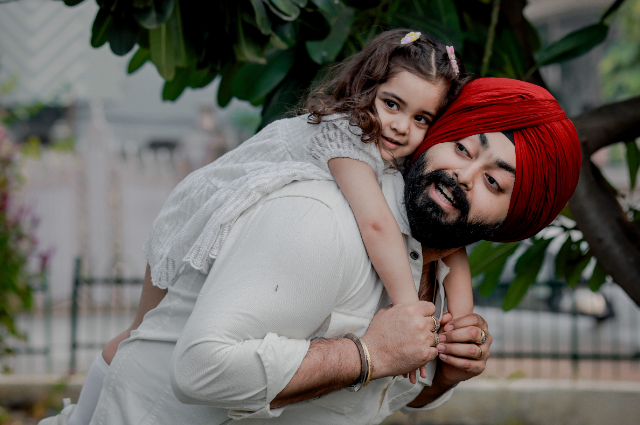
The room was warm, filled with the afternoon sunlight that filtered through the linen curtains, but the atmosphere between us was cold and brittle. It was three years ago, just before my daughter, Priya, moved to another city for her new job. She was sitting at the edge of the sofa, hands clasped tightly in her lap, telling me that she felt completely overwhelmed, that she wasn't sure if she was ready for the move, and that the pressure in her head felt like a weight she could no longer carry.
I listened for less than twenty seconds before I reached for my notebook.
I spent thirty-five years working in financial accounts and administration. In my professional life, when a problem presented itself, I broke it down into constituent parts. I identified the bottleneck, calculated the risk, created a checklist, and executed a solution. That was how I maintained order. That was how I provided for my family. That was how I proved my love.
So, as my daughter sat there trembling with anxiety, I interrupted her. I gave her a neat, five-point plan. I spoke about budget management, housing leases, daily commute efficiency, and the importance of establishing a routine during the first fortnight. I spoke with the calm, measured authority of a man who believed that clarity of mind can dissolve any emotional storm if you simply apply enough logic to it.
When I finished speaking, I looked at her, expecting relief.
Instead, I saw a quiet, devastating closure behind her eyes. She stood up, smoothed her dupatta, smiled a thin, polite smile that belonged to a stranger, and said, "Thank you, Papa. You're right."
She left the next morning. And for two years, our conversations remained polite, functional, and completely hollow.
I had spent my life solving problems. I did not realise that some human problems become worse when we try too hard to solve them.
When you are a father, particularly a father of my generation, you are conditioned to view yourself as a shield. You believe your primary duty is to protect your children from hardship, error, and discomfort. If they bring you a struggle, you view it as an assignment—an emergency that requires your immediate intervention.
What nobody tells you is that when a child—even a grown child—comes to you with a bruised heart, they are rarely asking for an architect. They are asking for a witness.
When I gave Priya that five-point plan, I wasn't actually trying to help her; I was trying to manage my own discomfort. I could not bear to see my daughter in pain, and because I could not bear it, I tried to erase the pain with advice. My neat, logical solutions were not a bridge to her world; they were a wall I built to protect myself from the feeling of helplessness. I wanted to fix the situation quickly so that I could stop feeling anxious.
In doing so, I communicated something unintentional but deeply painful: Your feelings are an inconvenience that can be managed with better organisation.
The realisation did not arrive in a sudden, dramatic flash. It came slowly, through the quiet observations of retirement.
When you retire, and the daily noise of professional responsibility subsides, your mind begins to revisit past scenes with a startling, unvarnished clarity. You re-examine old conversations not as the central actor who was trying to win or fix things, but as an observer watching a tape play back in slow motion.
I remembered the way her knuckles were white from gripping her hands together. I remembered the small tremble in her voice that dropped an octave when she realised I wasn't actually listening to what she was feeling, but merely waiting for her to stop talking so I could speak. I remembered how she had stopped mid-sentence when I reached for my pen.
She hadn't needed a lesson in logistics. She already knew how to manage a lease and calculate a commute; she was an intelligent, capable adult. What she had needed was a father who would sit beside her, look her in the eyes, and say: "It is terrifying to step into the unknown. It is natural to feel fragile right now. I am here, and even if it goes wrong, you are not alone."
She needed me to hold the space for her pain without trying to tidy it up.
Instead, I gave her a lecture on efficiency.
A few months ago, Priya came back home for a short weekend visit.
The dynamic between us had remained careful for a long time—marked by predictable phone calls every Sunday where we discussed the weather, her health, my garden, and the news, but never anything that touched the surface of our inner lives. We were living in a comfortable, polite distance.
On Saturday evening, after dinner, she was sitting at the dining table, looking through some old family photographs. I made two cups of cardamom tea, brought them over, and sat down opposite her.
For a long time, neither of us said anything. The kitchen clock ticked with its steady, unhurried rhythm.
She picked up a photograph of herself from her school days—a picture taken on a sports day where she had finished last in a race and was fighting back tears.
"I remember that day," she said softly, staring at the small print. "I was so ashamed."
Three years ago, I would have immediately stepped in. I would have told her that school races don't matter, that she had excelled in academics instead, and that she should look at how far she had come since then. I would have tried to engineer the sadness out of the memory.
This time, I kept my hands folded on the table. I resisted the powerful, ingrained urge to fix the moment.
"You looked so small and disappointed that afternoon," I said gently. "It must have felt very heavy to stand there in front of everyone."
She looked up from the photograph, slightly startled. For a second, her eyes searched my face, as if checking whether this was another prelude to advice.
"It was," she said, her voice dropping. "I felt like I had let you down."
The sentence hit me with a quiet, physical impact. All those years ago, while I thought I was teaching her resilience, she was carrying the burden of my expectations.
"You never let me down, Priya," I said. "Not then. And not three years ago when you were leaving for your new job."
She went still. The tea in her cup was steaming slowly between us.
"Three years ago," I continued, feeling the tightness in my chest that comes with admitting a long-held truth, "you sat on that sofa and tried to tell me how frightened you were. And instead of listening to you, I gave you a lecture on how to live your life. I was foolish. I thought that if I gave you answers, it would make you safe. I didn't understand that all you wanted was for me to hear you."
She didn't interrupt me. She didn't offer a quick, polite brush-off like "It's okay, Papa." She simply listened, her eyes filling with a quiet, shiny stillness.
"I cannot change how I acted that day," I told her. "I cannot take back the silence that followed or the years we spent talking only about small, safe things because you felt I couldn't be trusted with your real thoughts. I am so sorry."
There is a foolish belief we hold when we are younger that an apology is a tool for negotiation. We apologise because we want the other person to say, "It doesn't matter," so that we can be released from our guilt. We treat an apology as an attempt to rewrite the transcript, to clean the slate, to fix the past just as we once tried to fix the present.
But sitting across from my daughter that evening, listening to the quiet settling of the house around us, I understood something fundamental.
Sometimes an apology is not an attempt to change the past.
It is simply an admission that we finally understand it.
It is a declaration that the blind spot has finally been cleared, that the arrogance of our good intentions has finally given way to empathy, and that we are finally willing to stand in the truth of what happened without trying to defend ourselves.
Priya reached across the table and placed her hand over mine. She didn't say that my advice three years ago had been useful. She didn't pretend that I hadn't made a mistake.
She simply squeezed my hand, took a sip of her tea, and began to tell me about her life—not the logistical details of her salary or her apartment, but the quiet fears she had been carrying, the small joys she had found, and the doubts she still wrestled with in the quiet hours of the night.
I didn't reach for a pen. I didn't offer a single solution.
I just sat there in the warm evening light, listening to my daughter, grateful beyond words that I had finally learned how to be her father.