
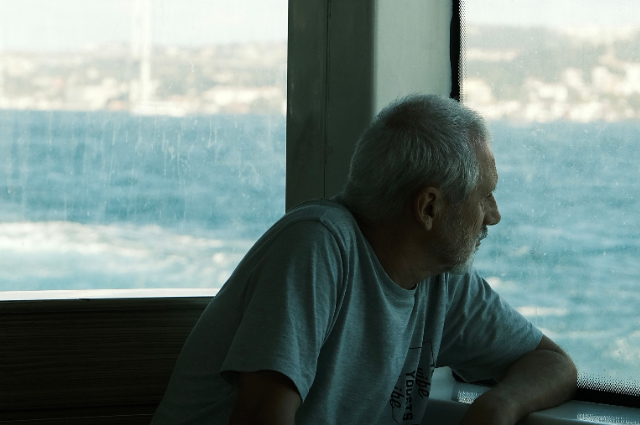
The Quiet Negotiation
The second stair has a slight squeak, a soft pine groan I never noticed until my knees did. On a Tuesday morning, raining with the dull persistence of early November, I stepped down toward the kitchen with a mug of tea in one hand and realised I was holding the handrail with the other. Not for balance in a panic, but as a silent, routine precaution.
For sixty years, stairs were merely an inclination, a temporary angle between where I was and where I wanted to be. I took them two at a time in my twenties, took them without looking in my forties, and took them for granted in my fifties. But that morning, halfway down the landing, my left knee gave a faint, stiff twitch—not painful, just an announcement. We need a second, it said.
Nobody prepares you for the subtle shift from instinct to negotiation. You do not wake up one morning suddenly fragile; instead, your body gently petitions you for new terms of service. You begin to assess distances before standing. You look at a low sofa and calculate the leverage required to rise from it with grace. You check the weather not to decide what to wear, but to anticipate how the damp air will settle into your lower back.
The strangeness lies in how normal it feels once you accept it. At first, there is a small, prideful resistance—an impulse to march up the hill at the old pace, to lift the heavy suitcase without asking for a hand, to pretend the eyes do not need a little more light to read the small print on the back of the medicine bottle. But the resistance is tiring. The real transition happens when you stop arguing with your joints and start listening to them.
I sat at the kitchen table that morning, the tea steaming into the cool room, and realised that extra time is not a penalty. It is a tempo. In youth, speed is a point of pride; in later years, deliberate pace is a form of attention. I take the stairs one step at a time now. The house looks slightly different when you don't rush through it.
The Unpacked Suitcase
The suitcase sat open on the bedroom rug for three days. It was a simple trip: three hours on the morning train to visit an old college classmate in a town I had visited a dozen times before. In my forties, I would have packed twenty minutes before leaving for the station, throwing in a folded shirt, a toothbrush, and a paperback without a second thought.
This time, I stood over the open canvas case, holding two different sweaters, immobilised by a quiet, unfamiliar hesitation.
What if the platform steps at the junction are steep? What if the taxi is late and I am left standing in the cold? What if my stomach acts up away from my own kitchen? What if the guest room bed is too low?
The hesitation was not fear, exactly. Fear has a sharp edge and a loud voice. This was more like a heavy, unseen dust that had settled over the idea of departure. Travelling alone had always meant freedom; suddenly, it felt like an administrative task requiring a contingency plan for every hour between departure and return.
I did go on the trip. But the train ride was different. I spent the first hour watching the telephone poles flicker past, conscious of the distance stretching between myself and the familiar rhythms of my home. I noticed how many young people rushed past me on the platform, their backpacks slung over one shoulder, completely unbothered by the crowd or the speed of the world around them. They moved with the unthinking confidence of people who belong everywhere.
I used to belong everywhere too. Now, I belong more specifically in certain places, under certain conditions. That is the truth nobody tells you about travelling alone after sixty: the geography of the world doesn't change, but your internal map acquires borders you didn't draw yourself. When I arrived at my friend’s house and sat in his armchairs, we laughed about the old days, but we both made sure to take our evening pills at eight o'clock precisely. We had both brought our own small rituals along in our bags, invisible luggage that weighs more than the clothes.
The Shift in the Garden
It was mid-afternoon on a Sunday when my daughter came to visit. She stayed for an hour and twenty minutes—I know because I looked at the clock on the mantel when she arrived and again when the front door clicked shut.
She was vibrant, full of news about a project at work, a leaked pipe in her kitchen, and a school schedule for her youngest that sounded like a military campaign. She drank her coffee while standing by the counter, sorting through her purse, checking her phone three times while answering my questions about her week. When she gave me a quick, warm hug at the door, she smelled like clean laundry and cold autumn wind.
"I'll call you Thursday, Dad," she said, her keys already in her hand. "Don't forget to take that box from the hallway into the cellar."
Then she was down the driveway, her car engine turning over, her life sweeping her away before the air in the hallway had even settled.
When your children are young, you spend decades longing for twenty minutes of silence. You dream of a door that stays closed, a morning without demands, an evening where your time belongs entirely to you. You build your life around their noise, their emergencies, their endless, urgent needs.
And then, so quietly you barely notice when the shift completes, they become guests in the life you built for them.
You watch them manage their own domestic storms with the same frantic energy you once had. You realise that you are no longer the shelter; you are the harbour they visit when the sea is calm enough to dock for a moment. They love you deeply, but their minds are filled with tomorrow, next week, next year—horizons that stretch far ahead of them. Your horizon is closer, quieter, and far less crowded.
I went back inside, picked up her empty coffee mug, and washed it by hand. The house was quiet again. The silence was no longer something I had conquered; it was simply the room I lived in.
The Uncalled Numbers
In the drawer of my side table lies a small, black cloth-bound address book with yellowing edges. It was written by hand over thirty years, the ink shifting from dark blue ballpoint to black gel pen as the decades passed. Some names have three different addresses crossed out with neat lines; others have a single landline number with an area code that hasn't been used in fifteen years.
Last month, looking for the number of a local plumber, my thumb flipped past the letter M.Miller, Arthur.
Artie and I shared a desk in an office in 1984. We drank terrible machine coffee, complained about management, and spent two weeks every summer camping by the river with our families. For ten years, we spoke every Tuesday. For the next ten, we spoke on birthdays and New Year’s Eve.
I looked at his number—a number I once knew by heart—and realised I hadn't dialled it in six years.
I didn't call him that day. Why? Because the gap had grown too wide to bridge with a casual "How have you been?" To bridge it would require explaining six years of quiet living, six years of minor health scares, six years of watching the world change through a window. It felt too heavy a task for an afternoon phone call.
Nobody warns you about the slow, silent archive that your phone book becomes. Old friends do not usually leave your life in a dramatic cloud of disagreement. They simply drift behind the horizon of daily routine. You assume they are there, living their parallel lives, until one day you realise that the person who shared your youth has become a name on a piece of paper, a voice you can recall with perfect clarity but haven't heard in a decade.
We think of loss as something sharp—a bereavement, a sudden departure. But the most common loss in old age is soft and slow, like paper fading in the sun. You hold the book, you see the name, and you realise that some conversations are finished not because they ended, but because everyone simply ran out of things to say across the distance.
The Desk of Measurements
On the corner of my desk, where I once kept folders of project proposals and travel itineraries, a small plastic tray sits now. It contains three bottles of prescription medication, a small digital blood pressure monitor with a grey cuff, and a folder of thick white paper from the regional clinic.
Last week, I spent an hour reading a medical summary detailing my cholesterol levels, bone density, and the modest, persistent enlargement of an organ I had spent sixty-five years completely ignoring.
When you are thirty, your mind is occupied by grand architecture: where you will live, what you will accomplish, who you will become, what legacy you might leave behind. You construct long, elaborate sentences about the future.
In your seventies, the vocabulary becomes remarkably specific and surprisingly physical. You learn words like systolic, creatinine, and inflammation. A good day is no longer defined by a breakthrough at work or a spectacular triumph; a good day is defined by a stable reading, a clear scan, an absence of the dull ache that spent three weeks lingering in your left side.
There is an absurdity to it that nobody mentions in polite company. You sit in waiting rooms with six other people your age, all staring at the vinyl floor, all holding similar folders, all waiting for a person in a white coat to translate your internal biology into a set of numbers that will determine your plans for the spring.
The danger—and it is a subtle one—is letting the measurements become the narrative. It is easy to spend your morning monitoring yourself, treating your body like an unreliable antique engine that might blow a gasket at any moment. You can become an accountant of your own decline if you aren't careful.
I closed the clinic folder, placed the blood pressure monitor back in its box, and pushed the tray to the edge of the desk. The numbers were acceptable. The sun was out. It was time to stop reading about my blood and go look at the trees.
The Clarity of 1968
Yesterday, I could not remember where I had left my reading glasses. I spent twenty minutes looking through the pantry, under the sofa cushions, and on the shelf by the door, only to find them sitting on the sideboard next to the bread box.
Yet, as I stood in the kitchen holding those glasses, I could see with absolute, sparkling clarity the green paint peeling off the radiator in my third-grade classroom in 1968. I could remember the exact smell of the wet wool coats hanging in the cloakroom on a rainy Thursday in October, the sound of the chalk squeaking against the blackboard, and the specific texture of the cheap grey eraser that always smudged the paper instead of cleaning it.
This is perhaps the strangest room in the house of age: the memory works backwards.
The present arrives like a watercolour painted on wet paper—soft, blurred, easily washed away by the next hour’s distractions. What did I eat for lunch on Tuesday? I would have to look at the soup cans in the recycling bin to be sure. But 1974? 1974 is rendered in hard, bright enamel.
I can recall the song that was playing on the car radio when I drove my first rust-pitted sedan over the bridge into the city—the exact pattern of light on the dashboard, the smell of cheap gasoline and old foam upholstery, the cold air coming through the drafty vent on the floor.
It feels, at times, like living in a house where the front windows are covered in heavy velvet curtains, while the back door stands wide open to an ancient garden illuminated by midsummer sun. The past does not feel behind me; it feels adjacent to me, separated only by a thin layer of afternoon light.
Young people think the elderly live in the past because they are nostalgic. They don't understand that the past simply becomes louder as the present quietens down. It isn't a choice to remember; it is a landscape that rises to meet you when the noise of daily ambition stops obscuring the view.
The Weight of an Ordinary Word
On Thursday, I went to the hardware store to buy six brass screws for a kitchen drawer handle that had worked itself loose.
The man behind the counter was named Harold. He is perhaps ten years younger than I am, with greying hair at his temples and a pencil tucked behind his right ear. The transaction should have taken thirty seconds: six screws, two dollars, a printed receipt.
Instead, we spoke for twenty-five minutes.
We spoke about the quality of modern brass compared to the hardware made in the sixties. We spoke about the oak tree near the bus stop that had lost a heavy branch in last month's storm. We spoke about how hard it is to find a decent pair of leather work gloves these days.
Neither of us had anywhere urgent to be. There was no one behind me in line. The shop was warm, smelling of cedar oil, machine grease, and dry cardboard.
When you are young, conversation is often a transaction or a performance. You speak to convince, to impress, to secure an outcome, to establish your position in the room. You move through small talk quickly so you can get to the "important" part of the interaction.
When you grow older, you realise that the small talk was the important part.
An ordinary conversation with a stranger—an exchange about the weather, the thickness of a piece of timber, or the right way to prune a hydrangea—is a vital wire stretched between two isolated points. It anchors you to the day. It confirms that you are here, standing on this floor, breathing this air, sharing a small slice of human attention with another person who is also navigating the afternoon.
I left the hardware store with my six brass screws in a small brown paper bag, feeling remarkably light. I hadn't solved any great problems. I hadn't made any money. I had simply spent twenty minutes exchanging simple, unpretentious sentences with another human being. It was the best part of my week.
The Texture of Solitude
There is a distinction that took me nearly sixty-five years to understand: the profound difference between being alone and being lonely.
In my youth, an empty house felt like a void that needed to be filled immediately. If an evening opened up without plans, I felt a vague, restless anxiety—a sense that life was happening elsewhere, behind lit windows in other parts of the city, and that I was somehow missing the performance.
Now, my house is quiet for long stretches. The clock on the kitchen wall ticks with a firm, rhythmic beat that fills the ground floor. The ice maker in the refrigerator drops a fresh cube every two hours with a small, startled splash.
Yet, on most days, this solitude does not feel empty. It feels solid. It has a physical texture, like old linen or worn oak.
Loneliness is the desire for someone else to enter your room and fix the atmosphere. It is a hunger for distraction from your own mind. But true solitude—the kind that settles into your bones after you stop fighting it—is simply space. It is the room in which you finally have time to finish a thought without being interrupted by the world’s demands.
I sit in the armchair by the east window at five o'clock, watching the light fade from the garden. The trees turn into dark silhouettes against a cool violet sky. I do not feel abandoned by the world; I feel as though the world has simply lowered its voice so I can hear what is happening inside my own head.
Loneliness is a cold wind that blows through an open door. Solitude is closing the door, turning on the small brass lamp, and realising that the company inside the room—yourself, your memories, your quiet observations—is entirely sufficient for the evening.
The Art of the Shared Load
The lawnmower refused to start on a Saturday in May. I pulled the cord five times, six times, feeling the familiar, sharp pull across my shoulder blade that warned me to stop. Twenty years ago, I would have spent three hours in the driveway with a wrench and a dirty spark plug, determined to force the machine into submission through sheer willpower and sweat.
Instead, I stood in the driveway, wiped my forehead, and looked across the low hedge at my neighbour, Mark, who was washing his car. He is thirty-eight, with the broad shoulders and easy posture of a man who still thinks his body will last forever.
"Mark," I called out, my voice slightly hesitant. "Do you have five minutes?"
He came over immediately, took the cord, gave it one powerful, smooth pull, and the engine roared to life with a cloud of blue smoke. He smiled, slapped the handlebar, and said, "She just needed a little leverage, Arthur. Call me whenever it acts up."
I thanked him, feeling a tiny, residual sting of embarrassment in the back of my throat.
We are raised on a diet of self-reliance. We are taught that adulthood means carrying your own bags, fixing your own engines, solving your own problems, and never becoming a burden to the people around you. Independence is praised as the ultimate virtue of a mature life.
What nobody tells you is that absolute independence in old age is a form of vanity.
Asking for help is not a declaration of defeat; it is an act of trust. When I asked Mark to pull that cord, I was not surrendering my dignity. I was allowing him to perform a small, simple act of neighbourliness that brought us closer together than three years of polite waving across the driveway ever had.
Learning to say "I cannot reach that," or "This is too heavy for me," or "Would you mind driving me to the clinic?" requires a quiet kind of courage. It requires putting down the armour of self-sufficiency and accepting that human beings are meant to lean on one another as the ground grows uneven.
The Ink and the Table
I began writing this on a cold Tuesday afternoon when there was nothing else to do.
I bought a simple lined notebook with a marbled cardboard cover from the pharmacy down the street and sat at the dining room table with a fountain pen I hadn't used since my daughter’s graduation.
I didn't begin with grand literary ambitions. I simply wanted to record the precise shade of blue the sky turns just before the streetlights click on in November. Then I wrote about the smell of my grandfather’s cellar in 1965. Then I wrote about the sound of my wife’s slippers shuffling across the kitchen linoleum on Sunday mornings.
As the pen moved across the page, something remarkable happened to the quiet in the house.
Writing is not merely a way of recording life; it is a way of doubling it. When you sit with a piece of paper and describe an ordinary incident from your afternoon, the incident stops being a momentary flash of time and becomes a solid object you can turn over in your hands.
The notebook became a companion. It did not interrupt me. It did not offer unsolicited advice about my blood pressure or tell me to stay warm. It simply sat on the dark wood table, open and patient, waiting for whatever small observation I chose to deposit between its lines.
In youth, we write to be read by others. We want applause, agreement, or recognition. In old age, if you are fortunate, you write simply to converse with the day you just spent. You write to tell the paper: I saw this. I was here. It mattered enough to put down.
The Turn
For a long time, when I was in my thirties and fifties, I viewed old age as a long, slow retreat—a gradual surrender of territory, strength, ambition, and relevance. I saw it as a tragedy written in slow motion, a process of watching doors close one by one until only a small, dim corridor remained.
I was wrong.
Growing old is not the tragedy I once imagined. The tragedy would be reaching old age without having learned how to live differently.
The tragedy would be standing at sixty-five or seventy, demanding that your body perform like twenty, demanding that your children remain in your kitchen, demanding that the world continue to pay you the same frantic attention it pays to the young and the ambitious. The tragedy would be clinging so tightly to the life you had that you have no hands left to receive the life that is waiting for you now.
Old age requires a different art form altogether. It is not the art of building; it is the art of pruning. It is the practice of letting go of the noise so you can hear the music that was always playing underneath.
A Final Observation
I am older now.
I walk a little slower, taking the stairs with a deliberate, quiet cadence that respects the limits of my knees.
I forget a few things—a name at a dinner party, the location of my glasses, the exact reason I walked into the guest room three minutes ago.
I worry about things I never worried about before—damp weather, steep steps, icy pavements, and the subtle, unpredictable shifts in my own physiology.
But I have also discovered something I did not know when I was young
Life does not become smaller with age.
We simply begin to notice the things that were always there: the extraordinary warmth of an ordinary cup of tea; the deep, unspoken comfort of a house that has settled into its evening silence; the intricate pattern of light on the living room floor at four o'clock; the immense, quiet privilege of having lived long enough to watch the story unfold this far.
The world was never as loud or as urgent as we thought it was. We were just moving too fast to see how steady it really is.