
Why the Indian Independence Movement Still Matters
On the midnight of August 15, 1947, as the clock struck twelve in Delhi, the Indian tricolor fluttered for the first time over a free nation. The moment was jubilant, yet bittersweet. Freedom had been won over nearly two centuries of British rule, but the subcontinent was scarred by communal violence and the trauma of partition. Barely a year later, the assassination of Mahatma Gandhi, the spiritual father of the nation, underscored that independence was not the end of struggle—it was the beginning of a new chapter fraught with challenges, moral questions, and the heavy task of nation-building.
The scale of British rule in India was immense. By the mid-19th century, the British East India Company had effectively controlled vast swaths of the subcontinent, exploiting its resources, taxing its people, and reshaping social and economic structures for imperial gain. Following the 1857 Revolt, direct Crown rule, known as the British Raj, centralized authority and institutionalized policies that often disregarded local customs and traditions. India became the jewel in the crown of the British Empire, but this wealth came at the expense of the Indian masses, who endured economic deprivation, famines, and social restrictions.
The independence movement was therefore far more than a political transition. It was a mass social transformation. Millions of ordinary Indians—farmers, students, artisans, and women—participated in campaigns that challenged colonial authority, often at the risk of imprisonment, injury, or death. It reshaped identities, fostered a sense of national unity, and demanded new visions of justice, equality, and governance.
Central to this struggle were profound tensions and choices: nonviolence versus revolution, political negotiation versus civil disobedience, Hindu-Muslim unity versus communal division, and the vision of a united India versus the inevitability of partition. These debates, often bitter and painful, revealed the complexity of freedom—not merely as independence from foreign rulers, but as the creation of a just, inclusive society.
Understanding the Indian independence movement is therefore crucial today. It is a story of courage, sacrifice, moral conviction, and the relentless pursuit of justice. It reminds us that freedom is hard-won, fragile, and inseparable from the responsibilities of citizenship and coexistence in a diverse society.
Roots of Resistance: Early Opposition to British Rule (1857–1885)
The Indian struggle for independence did not begin with Mahatma Gandhi; it was a century-long evolution rooted in resistance to exploitation, loss of sovereignty, and social transformation under colonial rule. The foundations of opposition were laid during the era of the East India Company, whose expansion across the subcontinent reshaped political, economic, and social structures. By the early 19th century, the Company had seized control of vast territories through conquest, alliances, and treaties, systematically undermining local rulers. Traditional economies were disrupted as British policies favored cash crops over subsistence farming, imposed heavy taxation, and created a trade imbalance that drained India’s wealth while enriching Britain. Artisans and small traders suffered as imported British goods flooded local markets, setting the stage for widespread discontent.
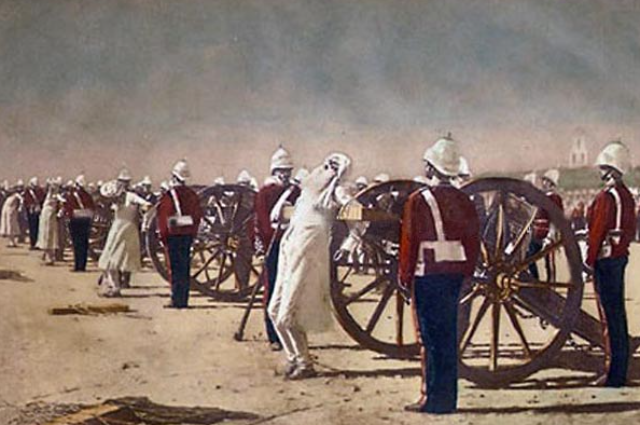
The first large-scale uprising against British authority was the Revolt of 1857, often called the Sepoy Mutiny or India’s First War of Independence. Its causes were both immediate and structural. The immediate spark was the introduction of the Enfield rifle, whose cartridges were rumored to be greased with cow and pig fat, offending Hindu and Muslim religious sensibilities. Beneath this, deeper grievances had accumulated: resentment over harsh taxation, displacement of traditional elites, exploitation of peasants, and the erosion of local autonomy. Leaders like Rani Lakshmibai of Jhansi, Bahadur Shah Zafar, Tantia Tope, and Nana Sahib became symbols of defiance, while countless ordinary soldiers and civilians joined the revolt. Although the uprising was ultimately suppressed through brutal force, it shook the British administration and revealed the latent national consciousness spreading across the subcontinent. The rebellion also exposed the vulnerability of the East India Company, demonstrating that rule based solely on military dominance and economic extraction was unsustainable.
In the aftermath, the British government abolished the Company and assumed direct control over India through the Government of India Act of 1858. Queen Victoria was proclaimed Empress of India, and the colonial administration sought to consolidate authority while promising protection for Indian customs and elites. Despite the veneer of stability, resentment simmered, particularly as reforms often favored the English-educated urban elite rather than the broader population.
During this period, a new class of educated Indians began to emerge, benefiting from colonial educational institutions and Western ideas. Lawyers, journalists, and teachers exposed themselves to liberal thought, constitutionalism, and political philosophy, laying the intellectual foundation for modern nationalism. Figures like Dadabhai Naoroji, whose “Drain Theory” highlighted the economic exploitation of India by Britain, began to articulate a coherent critique of colonial rule. Social reform movements also gained momentum, addressing issues such as caste discrimination, women’s rights, and education, linking social awakening with political consciousness.
By the mid-1880s, these threads of economic grievance, intellectual engagement, and social reform converged, creating fertile ground for organized political action. The Indian National Congress, founded in 1885, was the culmination of this evolving resistance—a platform where educated Indians could seek reform, demand representation, and gradually transform scattered protests into a coordinated struggle for self-rule. This period demonstrates that Indian nationalism was not spontaneous; it was the product of decades of resistance, reflection, and gradual mobilization against a foreign power that dominated every aspect of life.
Birth of Organized Nationalism: The Indian National Congress (1885–1905)
The formation of the Indian National Congress (INC) in 1885 marked the beginning of organized political nationalism in India. Before the INC, resistance to British rule was largely localized, fragmented, or limited to intellectual critique. The INC provided a platform for educated Indians to articulate grievances, coordinate political strategies, and pursue reforms within a constitutional framework. The initiative was largely driven by Allan Octavian Hume, a retired British civil servant, who envisioned the INC as a “safety valve” to channel Indian discontent through dialogue rather than rebellion. Its first session, held in Bombay in December 1885, was attended by 72 delegates, predominantly English-educated elites drawn from urban centers across India.
From its inception, the Congress was dominated by moderate leaders who believed that gradual reform and loyal cooperation with the British could secure political concessions. Figures such as Dadabhai Naoroji, Gopal Krishna Gokhale, and Pherozeshah Mehta emphasized reasoned petitions, dialogues with colonial authorities, and public awareness campaigns rather than mass agitation. Their early demands were practical and measured: Indians sought representation in legislative councils, the right to access higher civil services, fair taxation, and economic reforms to redress British exploitation. Moderates argued that political empowerment, combined with social reform and education, would prepare India for eventual self-governance.
Economic critique became a cornerstone of INC strategy, most notably through Dadabhai Naoroji’s Drain Theory. Naoroji argued that Britain was systematically draining India of its wealth through taxation, trade policies, and repatriation of profits by British companies. He presented extensive data showing that India’s resources were being transferred abroad, impoverishing its population while enriching the imperial power. This theory resonated widely and helped shift nationalist discourse from purely political grievances to economic injustice, highlighting the structural exploitation inherent in colonial rule.
Despite these efforts, the limits of moderate politics became increasingly evident by the turn of the century. British authorities often ignored petitions and offered minimal concessions, while the vast majority of India’s population—peasants, workers, and marginalized communities—remained outside the sphere of organized politics. The moderates’ reliance on elite negotiation and incremental reform could not address pressing social issues, communal tensions, or the deep resentment generated by economic hardship. Furthermore, their methods lacked immediacy and mass mobilization, leaving discontent unchanneled and sometimes erupting in localized revolts.
By the early 1900s, these limitations gave rise to a new generation of assertive nationalists, often labeled “extremists”, who believed that the pace of reform was too slow and that more direct action—including strikes, protests, and boycotts—was necessary. Leaders such as Bal Gangadhar Tilak, Lala Lajpat Rai, and Bipin Chandra Pal began to challenge the moderates’ philosophy of patient dialogue, advocating a more confrontational approach to British authority. This ideological tension set the stage for a broader, more dynamic independence movement in the early 20th century, demonstrating that Indian nationalism was evolving beyond petitions and petitions alone, toward a mass-based struggle that could eventually transform society.
Assertive Nationalism and the Swadeshi Era (1905–1919)
By the early 20th century, the limitations of moderate politics became increasingly apparent. While the Indian National Congress had created a forum for dialogue, its reliance on petitions and negotiations yielded only minor reforms. The British administration’s continued disregard for Indian aspirations fueled impatience and a more assertive nationalism began to emerge. A defining moment came in 1905 with the Partition of Bengal, orchestrated by Viceroy Lord Curzon. Officially justified as an administrative measure to make governance more efficient, the partition divided Bengal into Hindu-majority West Bengal and Muslim-majority East Bengal. Indians, however, widely perceived it as a classic “divide and rule” tactic designed to weaken nationalist sentiment by fostering communal divisions.
The response was immediate and unprecedented. Intellectuals, students, and local leaders launched the Swadeshi Movement, which promoted the boycott of British goods and the revival of indigenous industries. The movement emphasized the use of Indian-made textiles, support for local artisans, and self-reliance in daily life. Streets were lined with rallies and public meetings, and activists organized protests, picketing, and the burning of foreign cloth. The Swadeshi Movement also encouraged the establishment of Indian-owned enterprises, schools, and newspapers, creating a socio-economic dimension to nationalism. It became a tool for both political mobilization and social empowerment, spreading awareness beyond urban elites to students, workers, and rural communities.
This era also saw the rise of extremist leaders who advocated a more confrontational approach. Figures like Bal Gangadhar Tilak, Lala Lajpat Rai, and Bipin Chandra Pal rejected the moderates’ reliance on dialogue and incremental reform. Tilak’s famous slogan, “Swaraj is my birthright, and I shall have it,” captured the growing impatience of the Indian populace. These leaders encouraged public demonstrations, mass mobilization, and assertive nationalist education, inspiring the young generation to actively challenge colonial authority. Their efforts sometimes escalated into revolutionary activity, as groups began to explore political violence as a method to confront British power. Organizations like the Anushilan Samiti and later the Hindustan Socialist Republican Association in Bengal and Punjab took up armed resistance, targeting government officials and symbols of colonial authority. While controversial, these actions demonstrated that Indian nationalism was diversifying into multiple strategies: negotiation, mass mobilization, and revolutionary activism.
The period also witnessed the formation of the All-India Muslim League in 1906, reflecting the increasing political consciousness among Muslims and concern over Hindu-majority dominance in the nationalist agenda. Initially focused on protecting Muslim interests within British India, the League’s emergence marked the beginning of a gradual communalization of Indian politics. Though Hindu and Muslim leaders had collaborated during earlier campaigns, differences over representation, education, and religious autonomy became increasingly pronounced. The combination of British policies, such as separate electorates introduced in the Morley-Minto Reforms (1909), and rising communal awareness laid the foundation for political separation that would later culminate in the demand for Pakistan.
Between 1905 and 1919, India’s nationalist movement shifted decisively from petitions to protest. It was no longer a struggle confined to elite negotiation; it had become a mass-based movement encompassing civil disobedience, boycotts, and revolutionary activism. The Partition of Bengal and the Swadeshi Movement demonstrated the potential of unified public action, while the rise of extremist leaders and revolutionary groups highlighted the growing impatience with colonial rule. At the same time, early signs of Hindu–Muslim political division revealed the complex social realities that Indian leaders would need to navigate in the decades ahead. This period set the stage for the transformative leadership of Mohandas K. Gandhi and the subsequent campaigns of nonviolent resistance, signaling a new phase where ordinary Indians would take central stage in the struggle for independence.
Gandhi Enters: Mass Politics and Nonviolent Resistance (1915–1922)
When Mohandas Karamchand Gandhi returned to India from South Africa in 1915, he brought with him not only years of experience in civil rights activism but also a powerful philosophy that would transform the independence struggle: Satyagraha, the “force of truth.” Gandhi’s method emphasized nonviolence, moral courage, and mass participation, allowing ordinary citizens—from peasants to students—to directly confront colonial authority without resorting to armed rebellion. Unlike previous leaders, who had largely relied on petitions, elite negotiation, or occasional revolutionary acts, Gandhi envisioned a movement where moral authority and public conscience could challenge imperial power, reshaping the nature of politics itself.
Gandhi’s early campaigns demonstrated his unique approach. In Champaran, Bihar (1917), he led a successful movement on behalf of indigo farmers who were being exploited by British planters through oppressive sharecropping contracts. Gandhi employed investigation, dialogue, and nonviolent mobilization, encouraging farmers to organize petitions, hold meetings, and assert their rights without violence. Similarly, in Kheda, Gujarat (1918), he championed peasants facing crop failure and oppressive taxes, persuading colonial authorities to suspend tax collection. These campaigns were remarkable not only for their success but also for their inclusive nature, bringing women, villagers, and workers into active political participation.
The Ahmedabad Mill Workers’ Strike (1918) further demonstrated Gandhi’s ability to negotiate between opposing forces while maintaining the moral high ground. He balanced workers’ demands for better wages with appeals to management, framing labor disputes as part of a larger struggle for justice. Through these campaigns, Gandhi showed that civil resistance, when grounded in ethics and mass mobilization, could challenge colonial authority effectively.
The first major nationwide confrontation occurred with the Rowlatt Act of 1919, which allowed the government to detain political activists without trial. This draconian legislation sparked outrage across India, particularly among educated urban populations, students, and the press. Gandhi responded with satyagraha campaigns, calling for hartals (strikes) and nonviolent protest, signaling the first large-scale mobilization of urban and rural populations together.
Tragically, the government’s brutal repression culminated in the Jallianwala Bagh Massacre (April 13, 1919) in Amritsar, Punjab. British troops under General Dyer fired on an unarmed crowd of men, women, and children, killing hundreds and wounding over a thousand. The massacre shocked India and the world, galvanizing nationalist sentiment and demonstrating that British rule could no longer claim moral legitimacy. The emotional impact was profound: Gandhi called it a “terrible warning” and intensified his call for mass non-cooperation.
In 1920, Gandhi launched the Non-Cooperation Movement, which urged Indians to boycott British schools, courts, and government institutions; refuse to pay taxes; and withdraw from British-controlled industries. Millions of people across India participated, from lawyers and students to peasants and women. It was the first time that nationalist sentiment had been channeled on such a massive scale, and it united diverse social groups under the banner of nonviolent resistance. The movement demonstrated that political struggle could be both ethical and mass-driven, challenging the notion that only violent revolution could confront empire.
However, the movement was suspended in 1922 following the Chauri Chaura incident, in which a local protest escalated into violence and police were killed. Gandhi, committed to the principle of nonviolence, recognized that mass movements must uphold ethical discipline. He called off the campaign, arguing that India was not yet ready for full-scale civil disobedience without maintaining moral restraint. This decision was controversial but underscored Gandhi’s belief that means and ends could not be separated—freedom won through violence would betray the very ideals of the struggle.
Between 1915 and 1922, Gandhi’s leadership fundamentally transformed Indian nationalism. He shifted the movement from elite petitioning to mass civil action, introduced ethical frameworks into political strategy, and demonstrated that ordinary people could become agents of change. This era also laid the foundation for the larger campaigns of the 1930s and 1940s, setting a precedent for inclusive, nonviolent resistance that would define India’s fight for independence while inspiring anti-colonial movements worldwide.
Civil Disobedience and the Demand for Complete Independence (1922–1935)
The period between 1922 and 1935 marked a decisive escalation in India’s struggle for independence. Following the suspension of the Non-Cooperation Movement in 1922, Indian nationalism entered a phase of strategic planning, ideological consolidation, and intensified mass mobilization, preparing the ground for the demand for complete sovereignty. One of the landmark moments was the Purna Swaraj declaration of 1929, adopted by the Indian National Congress at its Lahore session. For the first time, Congress unequivocally demanded complete independence from British rule, rejecting dominion status or gradual reforms as insufficient. Jawaharlal Nehru, as president of the session, called on Indians to pledge allegiance to this cause, and the declaration set a symbolic date of January 26, 1930, for observing Independence Day across India. This move signified a shift from reformist objectives toward direct political confrontation with the colonial government.
The most iconic episode of this era was the Salt March of 1930, a 24-day, 240-mile journey from Sabarmati Ashram to the coastal village of Dandi, led by Mahatma Gandhi. The march protested the British monopoly and taxation on salt, a basic necessity for every Indian. Gandhi’s act of making salt illegally symbolized both the moral and practical dimensions of civil disobedience, turning a mundane commodity into a powerful instrument of political resistance. The march drew thousands of followers along the route, captured global attention, and generated unprecedented international media coverage, highlighting the Indian struggle as a moral fight against imperial injustice. Following the march, protests erupted nationwide, including picketing of liquor shops, boycotts of British goods, and widespread refusal to pay taxes. Gandhi and tens of thousands of Indians were arrested, underscoring the sacrifices demanded by nonviolent civil resistance.
Women played a prominent role in this period, breaking social conventions to participate actively in political agitation. Leaders like Sarojini Naidu, Kamaladevi Chattopadhyay, and Kasturba Gandhi mobilized women for marches, rallies, and picketing, while countless ordinary women joined the boycott of foreign goods, reinforcing the movement’s mass character. The involvement of women not only expanded the reach of civil disobedience but also challenged prevailing social norms, linking the nationalist struggle to the broader quest for gender equality.
Simultaneously, the British government attempted negotiation through the Round Table Conferences (1930–1932), convened in London to discuss constitutional reforms and India’s future governance. While these conferences provided a platform for dialogue, they achieved limited results. Fundamental disagreements persisted regarding representation, federal structures, and minority rights, reflecting the challenges of reconciling Indian aspirations with imperial interests.
In 1935, the British Parliament passed the Government of India Act, the most significant reform before independence. The Act introduced provincial autonomy, expanded franchise, and restructured legislative councils, but it fell short of granting real sovereignty. Key powers remained with the Viceroy and central government, and the reforms failed to satisfy nationalist demands. While moderate in intent, the Act demonstrated Britain’s recognition of India’s political awakening and the inevitability of further demands for full independence.
This period firmly established civil disobedience as the central tool of the nationalist movement. By combining mass participation, moral authority, and symbolic actions, Gandhi and Congress created a framework for sustained political struggle. The era demonstrated that Indian nationalism was no longer a debate among elites; it had become a mass movement with global visibility, capable of challenging imperial power while remaining committed to nonviolence. These campaigns also strengthened the organizational capacity of Congress, built networks of activists across regions, and laid the foundation for the next decisive phase of the independence struggle in the 1940s.
Parallel Paths: Revolutionaries, Socialists, and Subhas Chandra Bose (1930–1940)
While Gandhi’s philosophy of nonviolence dominated the mainstream independence movement, India’s struggle for freedom was multifaceted, encompassing revolutionary activism and socialist ideologies that challenged both colonial authority and conservative strategies within Congress. The 1930s witnessed the rise of young revolutionaries who believed that moral persuasion and civil disobedience alone were insufficient to dismantle imperial power.
Among the most celebrated figures was Bhagat Singh, whose daring acts of defiance inspired a generation. A member of the Hindustan Socialist Republican Association (HSRA), Singh and his colleagues embraced targeted violence against British institutions as a tool for political awakening. Their 1928 assassination of British officer J.P. Saunders and subsequent acts of protest, including the 1929 bombing of the Central Legislative Assembly in Delhi, were carefully designed to avoid civilian casualties while sending a bold message against oppression. Bhagat Singh’s eventual execution in 1931 at the age of 23 transformed him into a martyr, symbolizing the sacrifice and courage inherent in the revolutionary path. His writings and ideas, including the call for socialism, inspired widespread admiration and debate.
Concurrently, socialist thought began influencing Congress ideology, particularly through leaders like Jawaharlal Nehru and Subhas Chandra Bose. Nehru advocated for economic planning, industrialization, and social equality, arguing that political independence must be accompanied by social and economic transformation. Bose, however, went further, becoming a symbol of radical action within Congress. Frustrated by the slow pace of nonviolent methods, Bose sought direct confrontation with colonial authority. During World War II, he formed the Indian National Army (INA) in collaboration with Japan, aiming to liberate India through armed struggle. The INA recruited thousands of Indian soldiers, trained them militarily, and sought to advance into India to challenge British forces directly. Though ultimately unsuccessful militarily, Bose’s efforts had a profound psychological and political impact, inspiring nationalist sentiment and influencing post-war negotiations for independence.
This period highlights the ongoing debate within the independence movement over strategy. While Gandhi insisted that lasting freedom must be achieved through nonviolence, revolutionaries and radicals argued that moral restraint alone could not dismantle a violent, entrenched colonial system. Socialists emphasized the need for structural change to accompany political liberation. Together, these parallel paths enriched the independence movement, creating a spectrum of approaches—from ethical mass mobilization to armed resistance—that broadened public engagement, intensified British pressures, and demonstrated that the demand for Indian sovereignty was both urgent and inescapable.
Ultimately, these diverse strategies—nonviolent resistance, revolutionary activism, and socialist reform—converged in purpose if not in method. They laid the groundwork for the decisive movements of the 1940s, when Britain’s weakening global position and India’s intensified political mobilization would finally culminate in independence.
World War II and the Final Confrontation (1939–1945)
The outbreak of World War II in 1939 marked a critical turning point in India’s struggle for independence. Without consulting Indian leaders, the British Raj declared India to be at war with Germany, treating it as a colony obligated to supply men, resources, and support. This unilateral decision infuriated Indian political leadership, highlighting the lack of sovereignty under colonial rule. In protest, the Indian National Congress resigned from provincial governments, rejecting British authority while signaling the widening gap between rulers and the ruled.
The war intensified public discontent and created conditions for a decisive confrontation. In August 1942, Gandhi and the Congress launched the Quit India Movement, demanding an immediate British withdrawal. The movement mobilized millions across the subcontinent in protests, strikes, and acts of civil disobedience. The British responded with mass arrests, detaining Gandhi, Nehru, and most Congress leadership, and ruthlessly suppressing dissent. Yet, the movement persisted underground, with volunteers organizing secret communications, sabotage of government operations, and local uprisings. Quit India demonstrated that the Indian people were willing to confront imperial power even in the absence of their leaders, signaling the irreversibility of the demand for independence.
The war years were also marked by immense human suffering. Economic strain and wartime mismanagement led to the Bengal Famine of 1943, which claimed an estimated 2–3 million lives. The famine intensified resentment toward British policies, exposing the Empire’s prioritization of military and strategic needs over human welfare in India. Public outrage fueled nationalist sentiment, reinforcing the perception that British governance had become both unjust and incapable of addressing India’s needs.
Meanwhile, the activities of the Indian National Army (INA), led by Subhas Chandra Bose, captured the imagination of the Indian public. Composed of former Indian soldiers captured by the Japanese in Southeast Asia, the INA sought to liberate India through armed struggle. Though militarily defeated, the INA trials of 1945–1946 ignited widespread sympathy and protests across India. Soldiers were celebrated as heroes, and these events unified Indians across communal and regional lines, demonstrating broad support for independence and pressuring the British government politically.
By 1945, Britain emerged from the war weakened economically, militarily, and politically. The Empire’s ability to maintain control over India had eroded, while nationalist pressure—both moral and practical—had intensified. The combination of mass civil resistance, economic strain, public mobilization in support of the INA, and Britain’s post-war exhaustion made Indian independence inevitable. What had once seemed a distant aspiration now approached realization, setting the stage for the historic transfer of power in 1947.
Partition and Freedom: Triumph and Tragedy (1946–1947)
The final years of British rule in India were marked by both jubilation and heartbreak, as the long-sought independence was achieved alongside a tragic division of the subcontinent. By the mid-1940s, communal tensions between Hindus and Muslims had escalated sharply. Political disagreements, fueled in part by British “divide and rule” policies, gave rise to widespread communal violence. Riots, targeted attacks, and local clashes became increasingly frequent, particularly in Punjab, Bengal, and the United Provinces, creating an atmosphere of fear and insecurity among ordinary citizens.
The All-India Muslim League, led by Muhammad Ali Jinnah, capitalized on these divisions, demanding a separate nation for Muslims—Pakistan—to safeguard what it described as the political and cultural rights of India’s Muslim population. The League’s call for a distinct homeland gained momentum in the wake of Congress’s growing dominance and fears among Muslims of marginalization in a Hindu-majority independent India. By 1946, the League had effectively presented a non-negotiable demand for partition, leaving the British administration and Indian leaders with few viable options to preserve unity.
Faced with escalating violence and political deadlock, the last British Viceroy, Lord Louis Mountbatten, proposed a rapid plan for independence and partition. The Mountbatten Plan of June 1947 outlined the division of British India into two dominions—India and Pakistan—along religious lines. Bengal and Punjab were partitioned, princely states were given the choice to join either dominion, and a boundary commission was established to determine precise borders. While the plan promised political sovereignty, it offered little in terms of preparation for the human and social upheaval that would follow.
The Indian Independence Act 1947, passed by the British Parliament on July 18, legally enacted the transfer of power. On August 14–15, 1947, India and Pakistan formally came into existence as independent dominions. In Delhi, Bombay, Calcutta, and across the subcontinent, citizens celebrated the end of British colonial rule with unprecedented enthusiasm—flags were hoisted, songs were sung, and processions filled the streets. Independence was the fulfillment of decades of struggle, the victory of sustained political, social, and moral resistance.
Yet this joy was inseparable from tragedy. The partition triggered the largest mass migration in human history, with 10–15 million people displaced. Hindus and Sikhs fled from Pakistan to India, while Muslims moved in the opposite direction. The migration was accompanied by horrifying communal massacres, including killings, abductions, and attacks on trains carrying refugees. Punjab and Bengal became epicenters of violence, leaving hundreds of thousands dead and countless families uprooted. Entire communities that had lived together for centuries were torn apart, leaving scars that persist in memory and culture to this day.
The contrast between celebration and chaos defined the birth of independent India. On one hand, the nation achieved sovereignty, democracy, and self-determination; on the other, it confronted human suffering on a massive scale. Independence was both a triumph and a test—triumph in the realization of decades-long aspirations, and a tragic reminder of the costs of colonial policies, communal discord, and the limits of political compromise.
This period underscores that freedom is rarely simple or purely joyous. India emerged as a sovereign nation, but the partition highlighted the profound human consequences of hurried political decisions and communal division, setting a complex stage for nation-building in the decades to follow.
Gandhi’s Assassination and the Moral Aftermath (1948)
Mahatma Gandhi, often called the “Father of the Nation”, spent the final years of his life striving to heal the wounds left by partition. He tirelessly worked to quell communal violence, touring riot-torn regions, pleading for reconciliation between Hindus and Muslims, and appealing to the conscience of both political leaders and ordinary citizens. Gandhi’s approach was rooted in his unwavering belief that nonviolence and moral courage were essential to the survival of the newly independent nation.
Tragically, his efforts made him a target for extremists who opposed his philosophy and vision. On January 30, 1948, Gandhi was assassinated by Nathuram Godse in New Delhi, as he walked to a prayer meeting. Godse, a Hindu nationalist, held Gandhi responsible for what he perceived as excessive concessions to Muslims. The assassination stunned India and the world. Millions mourned the loss of a leader whose life had been devoted to justice, truth, and the moral guidance of his countrymen. Streets emptied in shock, government offices closed, and spontaneous memorials sprang up across India and abroad.
The reaction was not only emotional but also deeply reflective. Gandhi’s death symbolized the fragility of unity and the ethical challenges of the post-independence era, highlighting the dangers of extremism, intolerance, and political polarization. Yet, even in death, Gandhi’s influence endured. His legacy as a moral force in politics inspired leaders and movements worldwide—from civil rights campaigns in the United States to anti-colonial struggles across Asia and Africa. His philosophy of Satyagraha, the power of nonviolent resistance rooted in truth and conscience, continued to guide political action, reminding nations and individuals alike that ethical principles could shape history as profoundly as political power.
Gandhi’s assassination marked the symbolic end of an era in India’s freedom struggle. While the nation had achieved political sovereignty, his death served as a solemn reminder that independence was not merely a matter of territory or legislation, but a continuous moral endeavor requiring vigilance, compassion, and commitment to justice.
Legacy of the Independence Movement
The Indian independence movement left a profound and enduring imprint on the political, social, and cultural fabric of the subcontinent. The most tangible legacy was the Constitution of India, adopted on January 26, 1950, which enshrined the principles of democracy, secularism, fundamental rights, and equality before the law. The Constitution was a direct reflection of the ideals fought for during the struggle: popular sovereignty, civil liberties, and social justice. It institutionalized the vision of a pluralistic nation, seeking to reconcile the diverse religious, linguistic, and cultural communities that had been torn apart during partition.
Beyond India’s borders, the independence movement inspired global anti-colonial struggles. Leaders such as Nelson Mandela in South Africa, Kwame Nkrumah in Ghana, and Aung San Suu Kyi in Myanmar drew lessons from Gandhi’s philosophy of nonviolent resistance and mass mobilization. The movement demonstrated that colonial powers could be challenged through moral authority, civic organization, and persistent activism, leaving a blueprint for decolonization across Asia and Africa.
The political culture within India itself was also permanently shaped by the freedom struggle. The ideals of mass participation, ethical leadership, and the centrality of civic responsibility continue to influence political discourse, electoral practices, and public activism. Movements for social reform, women’s empowerment, and labor rights often trace their lineage to campaigns during the independence era, highlighting the interconnection between political liberation and social transformation.
Yet the legacy is not without tension. Ongoing debates about nationalism, secularism, and unity in diversity reflect the unfinished nature of the struggle. Questions about the balance between majority rule and minority rights, regional autonomy, and the interpretation of constitutional ideals continue to evoke discussion and sometimes conflict. These debates illustrate that independence was not merely a historical event but a living process of negotiation and moral responsibility.
Finally, the independence movement remains central to Indian identity. Its narratives of sacrifice, courage, and ethical struggle continue to resonate across generations, shaping cultural memory, education, literature, and public commemoration. Monuments, anniversaries, and civic rituals honor the heroes of the movement, while the principles they championed continue to inform the nation’s aspirations. The movement serves as a constant reminder that freedom is both a right and a duty, requiring vigilance, participation, and a commitment to justice.
In essence, the legacy of India’s independence movement is not confined to history books. It is a living foundation for India’s democracy, societal values, and global influence, continually guiding the nation as it navigates the complexities of modern governance, diversity, and ethical responsibility.
Conclusion – Freedom, Division, and the Meaning of Independence
The story of India’s independence is both a triumph and a cautionary tale. On August 15, 1947, millions celebrated the end of British colonial rule—a victory decades in the making, achieved through courage, sacrifice, and steadfast commitment to justice. Yet this triumph came at a staggering human cost. The partition displaced 10–15 million people, ignited communal violence, and left scars that continue to shape the subcontinent’s collective memory. The joy of sovereignty was inseparable from grief, highlighting that freedom is never without sacrifice.
Independence also revealed the unfinished nature of nation-building. Political liberation did not automatically resolve social inequities, regional disparities, or communal tensions. The challenge of creating a just, democratic, and inclusive society became the responsibility of successive generations. The Constitution of India laid the legal and moral foundations, but the broader project of equality, unity, and social justice remains ongoing. The independence struggle teaches that political freedom is inseparable from ethical governance, civic responsibility, and societal cohesion.
Moreover, the legacy of independence extends beyond history—it is a living responsibility. Citizens inherit not only the rights won through struggle but also the duty to safeguard pluralism, uphold justice, and engage actively in democratic life. The moral and political lessons of leaders like Gandhi, Nehru, and countless unnamed freedom fighters continue to resonate, reminding India that sovereignty is not merely a historical milestone but a continuous endeavor to balance liberty with accountability.
In essence, Indian independence was far more than a transfer of power from one government to another. It was the culmination of decades of struggle, a testament to human resilience, and a reminder that freedom is both precious and fragile. As India moves forward, the task remains to honor that legacy—not only by commemorating the past but by living its principles in the present, ensuring that independence remains meaningful for all its people.
References
- https://www.britannica.com
- https://www.britannica.com
- https://en.wikipedia.org
- https://en.wikipedia.org
- https://en.wikipedia.org
- https://en.wikipedia.org