
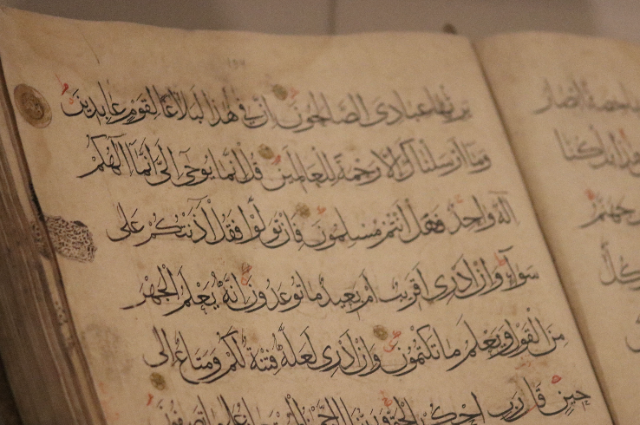
Is your perception of Islam limited to the arid deserts of the Arabian Peninsula? Is its story limited to the ink of Arabic and Persian books, in your opinion? Get ready to have your perspective altered. The Muhammad Avatara by Ayesha Irani is more than just a translation of a book; it is a translation of a whole world, a c tapestry in which the Prophet Muhammad is a familiar visitor rather than a faraway character in the lush, green heart of Bengal.
Ayesha A. Irani’s The Muhammad Avatāra is a landmark contribution to the study of South Asian Islam and vernacular religious literature. It advances a provocative and original thesis: early modern Bengali Islam was not formed exclusively from elite Persianate or Arabic models, but through vernacular translation—translation not just of language, but of full-fledged sacred histories, devotional practices, and cultural memory. At the heart of this research lies Saiyad Sultān's seventeenth-century Bangla epic, the Nabīvaṃśa ("Lineage of the Prophet"), a grand retelling of salvation history that presents the Prophet Muhammad as both universal messenger and local avatāra. Irani makes a compelling case that this epic made Islam local for Bengali readers by telling the Prophet's life in id from purāṇic narrative and devotional poetry.
Published by Oxford University Press in 2020, the book stretches to 352 pages and is the first full-length English study of the Nabīvaṃśa. Saiyad Sultān, a Sufi poet who lived in Arakanese-held Chittagong in the early to mid-1600s, wrote in Bangla to help his contemporaries understand, believe, and be interested in Islamic stories. According to Irani, the Nabīvaṃśa demonstrates how Bangla developed into a language of Islamic education and piety at a time when religious authorities still held Arabic and Persian in high regard. Echoing Sheldon Pollock's seminal study of the migration of sacred traditions into regional languages, the book engages in broader discussions on the localisation of Islam in South Asia by placing this epic within broader currents of translation and vernacularization.
The architecture of Irani’s argument rests on several interwoven strands. First, she theorises translation in a capacious sense—not as literal equivalence, but as cultural and devotional practice. Sultān’s reworking of Qurʾānic stories into Bangla drew on resources such as avatāra theory, dharma ethics, bhakti affect, and pāñcālī metrical forms. Second, she shows how the epic tells the tale of creation, fall, prophecy, and redemption in Bangla, culminating in Muhammad as the Muhammad-avatāra. Third, she situates the Nabīvaṃśa within transregional networks of Islamic narratives, noticing similarities with the tradition of Qiṣaṣ al-Anbiyāʾ (Tales of the Prophets), specifically by al-Thaʿlabī (d. 1035), al-Kisāʾī (11th c.), and al-Ṭabarī (d. 923). Finally, she adds a census of manuscripts that reveals the work's widespread distribution among Bangladeshi archives, as well as its absorption into pīr networks and lay piety, to bolster her textual thesis with codicological data.
The chapters roll out with remarkable philological richness and historical scope. The initial discussion of "Nūr Muḥammad in Bengal's Mirror" analyses the pre-existing Light of Muhammad and its rendering into Bangla cosmological vocabulary. The following chapter, "The Nabīvaṃśa and the Making of Islamic Community," shifts from text to society and illustrates how vernacular prophetology helped to make Islamic identities at the Bengal borderlands. In this chapter, Irani puts her research into conversation with Richard Eaton's The Rise of Islam and the Bengal Frontier, 1204–1760 (1993), expanding Eaton's socio-ecological accounts of Islamization by introducing narrative persuasion and literary devotion as just as important drivers of religious transformation. The focal chapter on "Purāṇa–Korān Salvation History" illustrates the integration of Qurʾānic and purāṇic tropes, highlighting how Sultān appropriated avatāric descent, dharmic genealogy, and Bangla poetic register to present the prophetic chain. Later chapters, “An Avatāra’s Descent into Disgrace” and “Constructing the Prophet for Bengal,” examine the Prophet’s miracles, the miʿrāj (ascension), and polemical episodes, showing how Muhammad is constructed as both cosmic saviour and regional avatāra whose honour demanded constant defence. The concluding reflections on “Historiography, Translation, and Conversion” crystallise Irani’s methodological claim: translation itself was not peripheral but central to the Islamization of eastern Bengal.
Irani’s research rests on a broad and well-chosen base of sources. The Nabīvaṃśa itself is carefully read against the backdrop of Qurʾānic exegesis and the Qiṣaṣ al-Anbiyāʾ tradition. Al-Thaʿlabī’s ʿArāʾis al-majālis fī qiṣaṣ al-anbiyāʾ (d. 1035), al-Kisāʾī’s prophet tales (11th c.), and al-Ṭabarī’s Tārīkh and Tafsīr (9th–10th c.) are especially important comparanda. Comparative insights come from Tony K. Stewart’s Witness to Marvels (2019), which highlights Sufi literary imagination in South Asia; Eaton’s 1993 macro-history of Islam in Bengal; and Pollock’s The Language of the Gods in the World of Men (2006), which theorises vernacularization in South Asia. The book also builds on Irani’s own doctoral dissertation (University of Pennsylvania, 2011), now matured into a sophisticated monograph.
The Muhammad Avatāra's contributions are significant. One, its fusion of philological accuracy with historical breadth is standard-setting: close analysis of verse is always interlinked with issues of community, worship, and performance. Second, it firmly re-situates Bangla as a language of Islamic thought, displacing the natural tendency to valorise Arabic and Persian over vernacular sources. Third, it redirects conversion away from being an impersonal demographic phenomenon toward being an experiential process of narrative persuasion through which audiences heard Muhammad's narrative in terms meaningful and familiar to them.
Concurrently, there are some limitations that solicit further discussion. The dependence on one epic, though remarkable, threatens to limit our view of Bengali Muslim literary culture. Comparative readings across other puthi works, miʿrāj texts, and subsequent prophet cycles would better illuminate. The interpretive decision to present Muhammad as an "avatāra" is risky and insightful, but also contentious: does the category help to explain vernacular prophetology, or does it threaten to efface theological distinctions? Irani largely settles this tension by demonstrating how the word operated pedagogically within its own time, but the controversy will continue to be rich for scholars. Lastly, although the manuscript appendix is a priceless resource, additional study on performance and remembrance—how communities now remember or revise Nabīvaṃśa tropes in mawlid performances, shrine cultures, or waʿẓ sermons—would enhance the reception history of the text.
Ultimately, Irani’s study illustrates with great force the triad of translation, devotion, and cultural memory. It demonstrates that in Bengal the Prophet’s story was not a distant echo imported from the Arab heartlands, but a vernacular voice that resonated deeply within Bangla cosmology, performance, and imagination. For the Bengali reader, it is remarkable to witness how a seventeenth-century pīr-poet was able to transform Muhammad into both an omnipresent prophet and a local avatāra, thus fashioning a common religious idiom between communities. For the broader community of scholars, the book provides a template for how vernacular evidence can recast the history of Islamization and devotional practice. In this way, The Muhammad Avatāra joins Eaton, Stewart, and Pollock as a foundational work on South Asian Islam, but stakes out a distinctive place for itself by inserting Saiyad Sultān's Bangla epic into the international discussion of prophetology, literature, and translation.
References,
- Irani, Ayesha A. The Muhammad Avatāra: Salvation History, Translation, and the Making of Bengali Islam. Oxford University Press, 2020/2021.
- Irani, Ayesha A. “Sacred Biography, Translation, and Conversion: The Nabīvaṃśa of Saiyad Sultān and the Making of Bengali Islam, 1600–present.” PhD diss., University of Pennsylvania, 2011.
- Eaton, Richard M. The Rise of Islam and the Bengal Frontier, 1204–1760. University of California Press, 1993.
- Stewart, Tony K. Witness to Marvels: Sufism and Literary Imagination in South Asia. University of California Press, 2019.
- Pollock, Sheldon. The Language of the Gods in the World of Men. Columbia University Press, 2006.
- Al-Thaʿlabī. ʿArāʾis al-majālis fī qiṣaṣ al-anbiyāʾ. 11th century.
- Al-Kisāʾī. Qiṣaṣ al-anbiyāʾ. 11th century.
- Al-Ṭabarī. Tārīkh al-rusul wa-l-mulūk; Jāmiʿ al-bayān.