
West Bengal occupies a strategically important position in eastern India, connecting the Bay of Bengal with the economic hinterland of Bihar, Jharkhand, the northeastern states and neighbouring countries. Yet its industrial potential has not consistently translated into employment opportunities, higher per capita income or sustained manufacturing expansion. The controversy surrounding Tata Motors’ Nano project in Singur remains a powerful symbol of the difficulties associated with land acquisition, industrial policy and investor confidence. At the same time, developments in shipbuilding, logistics, digital infrastructure and food processing suggest that the state’s economic prospects deserve a more nuanced assessment. This article examines West Bengal’s emerging opportunities through five interconnected dimensions: agricultural supply chains and Gulf food security, maritime connectivity and the proposed Tajpur port, submarine telecommunications infrastructure, defence-oriented shipbuilding, and labour migration. Drawing on official economic and industrial reports, it argues that infrastructure investment alone cannot guarantee economic transformation. The decisive challenge is to convert strategic advantages into productive employment, stronger local enterprises, technological capabilities and higher household incomes. West Bengal’s future therefore depends not merely on attracting capital, but on building institutions capable of turning investment into broad-based economic development.
The Paradox of Economic Potential
West Bengal’s economic story is often presented through two competing narratives. The first emphasises industrial decline, the departure of major manufacturing projects and the migration of workers to other Indian states. The second points towards the region’s agricultural productivity, strategic location, established engineering capabilities and access to international maritime trade. Neither narrative, taken independently, adequately explains the state’s present position.
The controversy surrounding Tata Motors’ Nano project in Singur became a defining episode in this debate. In 2008, the company announced the relocation of its Nano manufacturing project from West Bengal to Sanand, Gujarat, following prolonged conflict over land acquisition and the withdrawal of the project from Singur. The episode damaged investor confidence and intensified political disagreement over the relationship between industrialisation, agricultural land and the rights of local communities.
However, treating Singur as the sole explanation for West Bengal’s subsequent economic performance would be analytically insufficient. Industrial development also depends on infrastructure, access to finance, administrative efficiency, labour productivity, business conditions and the wider national economy. The more important question is whether the state can address these structural challenges while developing sectors in which it already possesses competitive advantages.
According to the Comptroller and Auditor General of India’s State Finances Audit Report for 2024–25, West Bengal’s Gross State Domestic Product at current prices reached approximately ₹18.15 lakh crore, compared with ₹7.97 lakh crore in 2015–16. The state recorded nominal growth of 9.91 per cent in 2024–25. Nevertheless, its reported per capita income of ₹1,63,467 remained below the national figure of ₹2,05,324. These figures illustrate an important distinction: an expanding state economy does not automatically imply comparable improvements in average income or economic opportunity.
West Bengal’s challenge is therefore not simply to achieve growth, but to make growth more productive, employment-intensive and inclusive.
Agricultural Wealth and the Emerging Food-Security Connection
One potentially significant opportunity lies in the relationship between eastern India’s agricultural economy and the food-import requirements of Gulf countries. Nations such as the United Arab Emirates, Qatar and Saudi Arabia operate in climatic conditions that constrain domestic agricultural production. Their dependence on international food markets creates an incentive to diversify suppliers, storage facilities and transport routes.
West Bengal has several relevant advantages: fertile alluvial plains, extensive rice cultivation, substantial vegetable production, fisheries, established trading networks and proximity to the Bay of Bengal. These resources could support agricultural processing, cold-chain logistics, seafood exports and the distribution of selected food products to overseas markets.
The opportunity, however, should not be reduced to the assumption that Gulf investors are preparing to purchase Bengal’s agricultural output on a large scale. Such a conclusion requires verified investment agreements, procurement contracts and trade data. Announced interest, exploratory discussions and operational investments are different categories and should not be treated as interchangeable.
The economic objective should be to establish a reliable chain connecting farmers, processors, exporters, ports and overseas buyers. This requires modern warehouses, refrigerated transport, quality certification, traceability systems and predictable export procedures.
Without these facilities, agricultural abundance may coexist with low farm-gate prices, post-harvest losses and limited value addition. A farmer who sells unprocessed produce captures only a portion of the final market value. By contrast, a regional economy that processes, packages, certifies and exports agricultural products can create employment in food technology, transport, packaging, quality control and commercial services.
The distribution of benefits also matters. If large companies control procurement and logistics while small producers remain price-takers, foreign investment may increase trade without substantially improving rural incomes. Cooperative marketing, transparent contracts and accessible processing facilities are therefore essential components of an effective food-security partnership.
The Maritime Economy and the Strategic Importance of Tajpur
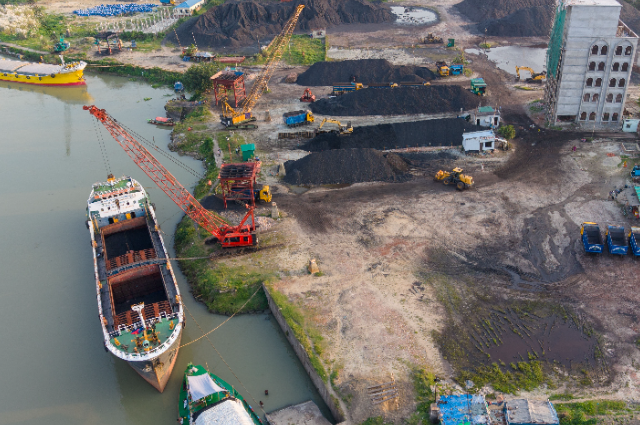
West Bengal’s geographical position gives it a natural interest in the development of maritime trade. Kolkata and Haldia serve important commercial functions, but riverine navigation and port-access conditions impose operational constraints on certain classes of vessels. These limitations make port efficiency, cargo handling and connectivity significant determinants of regional competitiveness.
The proposed greenfield port at Tajpur, in Purba Medinipur, has consequently attracted considerable attention. Its potential significance extends beyond the state itself. If commercially viable and supported by adequate transport infrastructure, it could serve cargo originating in West Bengal, Jharkhand, Bihar and other parts of eastern and northeastern India, as well as selected cross-border trade.
A deeper-water port could potentially accommodate larger vessels, improve cargo-handling efficiency and reduce dependence on transhipment through external hubs for suitable shipping routes. Nevertheless, a port does not automatically eliminate the cost advantages enjoyed by established regional competitors. Shipping lines consider total logistics costs, sailing schedules, cargo volumes, hinterland connectivity and the availability of reliable return cargo.
The project’s implementation history also illustrates the difference between infrastructure announcements and realised economic capacity. West Bengal’s e-procurement portal listed a 2025 tender for developing the Tajpur greenfield port through a design, build, finance, operate and transfer arrangement. The listing demonstrates that the project entered a formal procurement process; it does not, by itself, establish that construction has commenced or that the port will become operational on a particular date.
For Tajpur to become an economic catalyst, policymakers must coordinate port development with railway links, highways, industrial clusters, customs facilities and environmental safeguards. Coastal ecosystems, fishing communities and local livelihoods cannot be treated as secondary concerns. Poor planning could generate environmental costs and displacement without producing the promised economic returns.
The relevant measure of success is not the size of the proposed investment alone. It is the reduction in logistics costs, the growth of cargo volumes, the creation of sustainable employment and the extent to which local businesses participate in the resulting trade network.
Digital Infrastructure: From Geographic Location to Technological Capability
The digital economy introduces a second dimension to West Bengal’s strategic position. Internet connectivity depends on physical infrastructure, including fibre-optic networks, submarine cables, landing stations, data centres and electricity systems. These assets can influence the speed, resilience and cost of digital communication.
A submarine cable landing facility on the eastern coast could strengthen international connectivity between eastern India and other Asian markets, depending on the cable route, capacity, operational arrangements and onward terrestrial connections. Such infrastructure could improve the region’s attractiveness for cloud services, enterprise technology, digital commerce and selected data-intensive industries.
However, claims about a specific investment amount, completion date or guaranteed reduction in latency must be supported by official project documents and technical specifications. A proposed cable landing station should not be described as an operational facility merely because construction has been announced.
The same distinction applies to the proposed expansion of the Bengal Silicon Valley technology hub in New Town, Kolkata. Technology parks can attract businesses, but their economic contribution depends on actual occupancy, investment realised, firms established and jobs created rather than the total value of projects announced.
Data centres also present challenges. They require substantial and reliable electricity, cooling systems, water-management arrangements, cybersecurity provisions and high-capacity connectivity. Their direct employment requirements may be modest relative to their capital investment, although construction, maintenance and associated digital services can create additional jobs.
For this reason, West Bengal should connect digital infrastructure development with university-industry collaboration, technical education, apprenticeships and support for local technology enterprises. Otherwise, the state may host valuable infrastructure while the most highly paid technical positions go to workers trained elsewhere.
The deeper lesson is that connectivity creates an opportunity, not a technological ecosystem by itself. Local skills, research capacity and entrepreneurship determine how much value remains within the regional economy.
Shipbuilding and Defence Manufacturing: Evidence of Industrial Continuity
The idea that West Bengal has lost all capacity for large-scale industrial production is contradicted by the continuing activities of Garden Reach Shipbuilders & Engineers Limited (GRSE), a defence public-sector enterprise based in Kolkata.
GRSE manufactures naval vessels and commercial ships, undertakes engineering work and participates in export-oriented shipbuilding. Its operations demonstrate that advanced manufacturing can continue in the state despite the difficulties associated with its broader industrial transition.
The company’s official disclosures reported an order book of approximately ₹22,680.75 crore as of 31 March 2025. This represented a substantial pipeline of contracted work and reflected demand for naval and other shipbuilding projects.
Such activity has implications beyond the shipyard itself. Shipbuilding relies on networks of suppliers, engineering services, steel fabrication, electrical systems, machinery, maintenance and skilled labour. These relationships can support wider industrial development if local firms possess the technological capacity and commercial reliability required to participate.
Yet a large order book must not be confused with an equivalent contribution to state income or employment. Contract values are realised over time, and the extent of local sourcing, employment generation and value addition requires separate measurement. A defence shipyard can be nationally important without automatically generating a broad manufacturing revival across the surrounding economy.
The policy opportunity is to connect established engineering institutions and industrial enterprises with smaller suppliers, technical institutes and research organisations. Supplier-development programmes, certification support and investment in advanced manufacturing skills could help more regional firms enter maritime and defence-related value chains.
GRSE therefore represents neither proof that West Bengal’s industrial problems have disappeared nor evidence that industrial decline is irreversible. It demonstrates that important manufacturing capabilities remain available for expansion.
The Labour-Migration Paradox
Perhaps the most revealing contradiction in West Bengal’s economic position is the relationship between investment potential and the movement of workers outside the state.
Labour migration is not inherently evidence of economic failure. People move to pursue higher wages, education, professional advancement and better living conditions. Migration can also generate remittances, new skills and business networks. The central issue is whether workers have meaningful choices or must leave because suitable local employment is unavailable.
If West Bengal develops ports, logistics facilities, technology parks and industrial enterprises but continues to experience significant outward migration for routine employment, the distribution and quality of its economic growth deserve closer examination.
A new port may create construction work, but those jobs may be temporary. A data centre may require substantial capital without employing a very large permanent workforce. A shipyard may offer high-skilled positions that local workers cannot access without specialised training. Agricultural exports may increase revenues while leaving farmers exposed to volatile prices.
These differences demonstrate why headline investment figures are inadequate measures of development.
A more useful framework would track the number of permanent jobs created, average wages, the proportion of positions filled by residents, apprenticeship completion rates, female labour-force participation, the survival of small enterprises and changes in real household income.
The state must also improve the protection of migrant workers. Portable social-security benefits, accessible registration systems, occupational safety, legal assistance and reliable wage-payment mechanisms can reduce vulnerability. At the same time, investment in local manufacturing, services and skill development can expand the range of opportunities available to workers who wish to remain in West Bengal or return after working elsewhere.
The objective should not be to prevent migration, but to ensure that migration is a choice rather than a necessity imposed by a shortage of decent work.
Beyond Singur: Land, Institutions and Investor Confidence
Singur continues to influence discussions about industrialisation because it exposed the political and social complexity of acquiring land for large manufacturing projects. Its significance extends beyond the fortunes of one company. It raises a fundamental question: how can governments attract industrial investment without undermining the livelihoods and property rights of existing communities?
Land acquisition is particularly difficult in densely populated regions where agriculture, housing, transport and commercial activities compete for limited space. A development strategy that assumes land can be acquired cheaply and rapidly may underestimate both legal requirements and the social consequences of displacement.
Conversely, treating every industrial proposal as incompatible with agricultural interests can restrict opportunities for employment and technological development.
A more credible approach requires transparent land records, prior consultation, fair compensation, rehabilitation arrangements, independent environmental assessment and clear procedures for resolving disputes. Governments can also prioritise the redevelopment of existing industrial sites, underused land and brownfield facilities where appropriate, rather than relying exclusively on large greenfield acquisitions.
Investor confidence depends on more than land availability. It is also influenced by the predictability of regulation, the speed of administrative decisions, access to electricity, transport reliability, taxation, labour relations and the enforcement of contracts.
West Bengal should therefore avoid framing the Singur experience solely as a historical stigma imposed by political opponents. The more productive response is institutional learning: establish clear rules, communicate them consistently and ensure that both investors and affected communities can rely on them.
Public Finance and the Quality of Growth
Large infrastructure projects require substantial public and private resources. Their long-term viability depends on fiscal discipline, realistic demand projections and the capacity to maintain completed assets.
The Comptroller and Auditor General reported that West Bengal recorded a revenue deficit of ₹39,727 crore in 2024–25, equivalent to 2.19 per cent of GSDP, while its fiscal deficit stood at ₹61,924 crore, or 3.41 per cent of GSDP. Outstanding liabilities reached 38.66 per cent of GSDP. The report also noted persistent revenue deficits during the preceding decade.
These figures warrant attention, but they do not justify the simplistic conclusion that welfare expenditure is inherently wasteful or that social protection alone explains the state’s industrial difficulties. Welfare programmes can support nutrition, education, health, household consumption and social stability. Their value must be assessed through their outcomes, coverage and fiscal sustainability.
The relevant policy question is whether the state can maintain essential social protection while expanding productive public investment and improving the efficiency of expenditure.
Infrastructure spending should be evaluated against measurable economic benefits: travel-time reductions, lower freight costs, improved market access, additional private investment and employment outcomes. Similarly, welfare programmes should be assessed through indicators such as educational attainment, health outcomes, household security and access to public services.
This approach avoids a false choice between social justice and economic growth. A productive economy requires both physical infrastructure and a healthy, educated workforce.
A Practical Development Strategy for West Bengal
West Bengal’s economic renewal would benefit from a coordinated strategy built around five priorities.
First, the state should establish an integrated maritime and logistics programme linking Kolkata, Haldia and any future Tajpur port development with railways, highways, inland waterways and industrial clusters. Investment decisions must be based on independently assessed cargo demand, financial viability and environmental impact.
Second, agricultural development should move beyond the sale of raw produce. Food processing, fisheries, cold storage, export certification and digital market access could improve value addition while creating opportunities for small businesses and rural workers.
Third, digital infrastructure should be linked to local technological capability. Universities, technical institutes, employers and start-ups should collaborate on apprenticeships, applied research, cybersecurity, cloud computing and artificial intelligence. Public authorities should publish verified figures on actual investment and employment rather than relying exclusively on projected announcements.
Fourth, established industrial capabilities, including shipbuilding and engineering, should support a wider supplier ecosystem. Small and medium-sized enterprises need access to finance, modern equipment, quality certification and skilled personnel if they are to benefit from large industrial contracts.
Fifth, the government should adopt a transparent investment-monitoring framework. For major projects, public reporting should distinguish between proposed investment, signed commitments, financial closure, construction, commercial operation and realised employment. This would help citizens and policymakers assess whether promised economic benefits are materialising.
These priorities should be accompanied by stronger urban planning, reliable electricity, environmental protection and labour safeguards. Economic development will be more durable when its benefits extend beyond a small number of large firms.
An Eastern Gateway, Not an Imitation of Qatar or Singapore
West Bengal does not need to become another Qatar or Singapore to achieve economic success. These economies possess different demographic structures, institutional arrangements, geographic advantages and resource endowments. Direct comparisons can generate useful questions, but they cannot substitute for a development strategy suited to Bengal’s own circumstances.
The state already possesses several important assets: a large domestic market, agricultural resources, established educational institutions, a strategic position on the Bay of Bengal, a major urban centre in Kolkata and specialised industrial capabilities such as shipbuilding. These strengths provide a foundation, but not a guarantee, for economic transformation.
The central challenge is to connect these assets. Agricultural production must be linked to processing and export markets; ports must be connected to efficient inland transport; digital infrastructure must be supported by skilled workers; and large industrial enterprises must create opportunities for local suppliers and communities.
Equally important, the state must confront the gap between economic output and household prosperity. Rising GSDP, foreign investment announcements and large industrial order books are meaningful indicators, but they cannot alone demonstrate that workers are earning better wages, young people are finding suitable employment or rural communities are sharing in new economic opportunities.
The legacy of Singur should therefore be understood neither as an irreversible curse nor as a problem that can be erased through a handful of mega-projects. It is a reminder that industrial development requires credible institutions, social legitimacy and sustained implementation.
West Bengal’s future will depend on whether it can transform its geographical advantages into productive capacity and translate that capacity into better lives for its people. Its most realistic ambition is not to imitate another economy, but to become a more competitive, inclusive and internationally connected eastern gateway for India.
. . .