
The ballot box is said to be the ultimate e in a democracy, as it is here that the voice of a billionaire is said to be equal to that of a poor citizen of the country. However, for millions of Persons with Disabilities (PwDs) around the world, the "secret ballot" is a paradox that is neither secret nor easily accessible. While international conventions such as the UN Convention on the Rights of Persons with Disabilities (UNCRPD) ensure equal participation of persons with disabilities in such electoral processes, the reality on ground in 2026 is a complex scenario of physical barriers, digital barriers, and social prejudices. To understand electoral rights fully, we cannot simply talk of the physical act of inserting a paper into a slot; we have to understand the systemic framework that makes a person "fit" to lead and yet deny them the right of choice. This is not simply a logistical issue; it is a constitutional crisis of epic proportions that challenges the very sincerity of democracy.
Suffrage Through a Disability Rights Lens: The Equality Mandate
In the past, the right to vote for persons with disabilities has been considered within the framework of the "charity model," in which the accommodation of the needs of persons with disabilities has been considered optional, a matter of goodwill, and granting "special favors." The reinterpretation of the right to vote within the framework of disability rights requires a paradigm shift to the Social Model of Disability, which considers disability not an individual medical defect but the failure of society to accommodate the diverse needs of its human population. The disability, in this case, is not the visual impairment or the physical disability but the staircase leading to the polling booth, the absence of tactile or Braille voting, and the condescending attitude of the poll workers who assume that the disabled person needs a representative to speak on their behalf. Under the UNCRPD, the state is not only encouraged but legally bound to ensure that the right to vote is exercised by the PwD in an effective manner, fully, and equally with others, within the framework of the right to political participation, under Article 29. This includes the entire process, from the accessibility of the campaign materials to the physical layout of the voting booth, to the guarantee of the right to a "secret" ballot, which is annihilated if the disabled person has to tell a third party their choice so that the third party can mark the ballot on their behalf, thus reducing the citizenship of the blind person to a second-class citizen.
Guardianship vs. Citizenship: The Legal Capacity Crisis
Perhaps the most "hidden" and insidious barrier to political participation in the current democracy is the anachronistic connection between legal capacity and the right to vote. Within many countries around the world, individuals under legal guardianship, particularly those with intellectual, developmental, and psychosocial disabilities, automatically and reflexively lose the right to vote. The loss of the right to vote for these individuals is often buried within the "sound mind" stipulations of the country's constitution and is a legacy of the nineteenth-century legal system that automatically equated individuals with intellectual and developmental disabilities with the inability to make political choices. The current law operates on the basis of a "blanket" provision: if you need assistance with managing your finances and making healthcare decisions, you are not considered to have the capacity to make a political decision. The 2024-25 global legal trend has, however, witnessed a massive pushback against this "civil death." The recent landmark judgments from European and Latin American countries have begun to break the automatic connection between guardianship and the right to vote, stipulating that the right to vote is a fundamental human right and not predicated on the ability to demonstrate intelligence, which would be required for making a political decision—intelligence tests that would not be required of neurotypical individuals. Citizenship in the 21st century requires a move towards Supported Decision-Making, where the individual receives the necessary support and tools to make a decision, rather than the automatic revocation of the individual's fundamental human right to be a citizen of the body politic.
Digital Democracy or Digital Divide? The E-Voting Dilemma
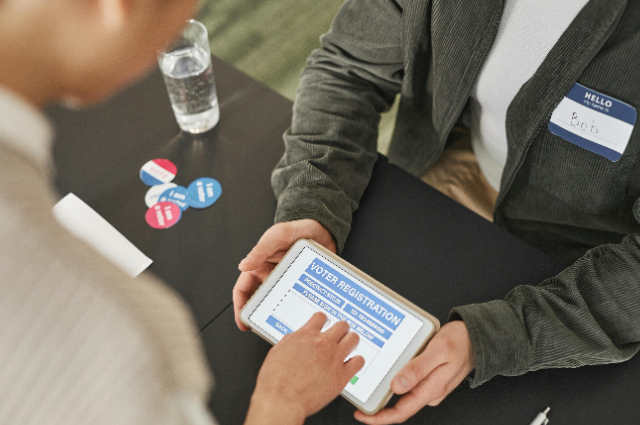
As nations are moving ahead with a rapid shift towards Electronic Voting Machines (EVMs), internet voting systems, and even biometric registration systems, a new dimension of exclusion is being witnessed under the umbrella of "progress." The glittering promise of technology is its independence—the prospect of a person with limited motor skills voting through eye-tracking technology or a visually impaired person voting through audio-based systems. However, what is also being witnessed is that technology is also offering new barriers of exclusion in its own right. The "hidden thing" of this technological revolution is the Digital Divide—the statistics of 2025 clearly show that PwDs are less likely to own high-end assistive technology or even access high-speed internet access in developing nations. Moreover, even as governments are procuring voting software and systems, it is also being witnessed that they are not adhering to strict "Web Content Accessibility Guidelines" (WCAG) requirements, making it difficult for people with cognitive processing differences to access voting systems within a stipulated time frame. The "smart" voting kiosk is also being set up at a height that is beyond the reach of people in wheelchairs or even does not have haptic feedback for people with low vision. The push for Digital Democracy is also being examined for its inclusiveness and not just its efficiency as a tool of voting.
From Tokenism to Transformation: A Constitutional Mandate
Too often, accessibility at the polls is treated as an afterthought, something to be quickly checked off a to-do list—a ramp thrown in at the end of the process, or a single “disabled-friendly booth” in a country of millions. That is tokenism, and it misses the point that the real issue is the systemic exclusion of people with disabilities from the political process in the first place. A poll worker who “offers to mark the ballot for you” may think they are being helpful, but they are quietly undermining the autonomy and privacy of the voter. It is not until we think about this process in terms of a fundamental shift, a shift that begins long before election day with a fundamental shift in structure and approach based on Universal Design, with all polling places designed to be accessible to all people, whatever their state of ability or disability, that we can truly say we are on the path to change. It is not until we think about this process in terms of a fundamental shift, a shift that begins long before election day with a fundamental shift in structure and approach based on Universal Design, with all polling places designed to be accessible to all people, whatever their state of ability or disability, that we can truly say we are on the path to change. It is not until we think about this process in terms of a fundamental shift, a shift that begins long before election day with a fundamental shift in structure and approach based on Universal Design, with all polling places designed to be accessible to all people, whatever their state of ability or disability, that we can truly say we are on the path to change. In addition to this, there is an urgent need to open up the data on voter turnout among people with disabilities. In most countries, there is no official data on this, and so the struggle will remain invisible, and the state will be able to claim that the election was “free and fair” while millions of people are left behind at the doorstep of the polling station.
The Data: The Pulse of 2025-2026
The human cost of all these challenges is evident in the news cycle of 2025 and early 2026, which reflects a world in the midst of a gradual process of democratic revolution. In India and Southeast Asia, there has been an expansion of "Home Voting" options for those with severe disabilities, but this has created concerns about "family coercion," in which the household head influences the ballot, highlighting the necessity to provide mobile and independent voting booths to safeguard voter privacy. In the United States and European Union, recent lawsuits have focused on the accessibility of mail ballots, in which ballots that cannot be read or filled out at home in isolation are in violation of civil rights. We are also seeing more "Plain Language" voter guides that simplify the dense political platforms of parties in easy-to-read terms that are more accessible to people with intellectual disabilities, which has inadvertently increased voter turnout among all demographics...
In conclusion, the ballot box is more than just a ballot box; it is the tangible representation of our social contract. By withholding the right to a secret ballot, to cast a ballot independently, and to make an informed choice, we are, in effect, kicking the disabled person out of our community of the governed. As we have seen, the barriers are not just physical, but also conceptual, embedded in our very concept of competency and in our current digital technologies. When we look to the world in 2026, we are at a crossroads: one path leads to “Digital Apartheid,” reinforcing the old barriers with new technologies, while the other path leads to Radical Accessibility, in which we treat our disabled voters not as a problem to solve, but as our constituents to serve.
The things that remain unseen, the disenfranchisement of guardianship, ballots in plain language, or the lack of accessibility in our touch-screen voting systems, are the cracks in the very foundation of our democracy. Fixing them is not charity work; it is our constitutional obligation. A democracy that requires a fitness test on its most vulnerable citizens is not a democracy at all, but a meritocracy for the able-bodied. By removing the barriers to voting, we do not just lift millions of people with disabilities out of their second-class status, we create a more robust, more intuitive, and more patient voting system that will benefit our seniors, our low-literacy voters, and our digitally marginalized citizens as well.
Toward a New Electoral Architecture
To bridge this gap between legal commitment and change in reality, nations should strive for a holistic approach that is known as Inclusive Sovereignty. This is a journey that will involve:
The removal of outdated "Unsound Mind" provisions and replacing them with Supported Decision-Making, ensuring that individuals still have the right to vote regardless of status.
The requirement that technology be universally accessible, ensuring that each and every electronic voting platform is equipped with screen readers and tactile feedback from the very first line of code.
The decentralization of voting systems beyond the single-day, single-place model and into secure and accessible voting systems that bring voting to people rather than requiring people to go to voting stations.
The measurement of a civilization by the silent dignity of voters in the booth, making choices without regard to physical and cognitive differences. The silence of voters is a hallmark of a voting experience that is inclusive and represents democracy at its finest; it is a hallmark of failure when it represents exclusion and casting aside millions of people who are told they are not welcome at the table of democracy. The road to 2030 and beyond must be paved with the notion that access is a silent requirement of freedom and liberty itself. It is only when every person is able to cast a ballot that governments will be able to claim true legitimacy.
Accessibility is something that everyone will benefit from. This is because it is clear that the right to vote is not something that is granted by the state and is therefore subject to notions of "utility." The right to vote is part of human dignity and something that is intrinsic and fundamental to each and every person. The fixing of a failing electoral system for PwDs is not something that is helping a minority; it is something that is helping the very foundations of democracy itself.
"The measure of a democracy is not how many people can vote, but how many people the state empowers to vote. Access is the silent prerequisite of liberty."