
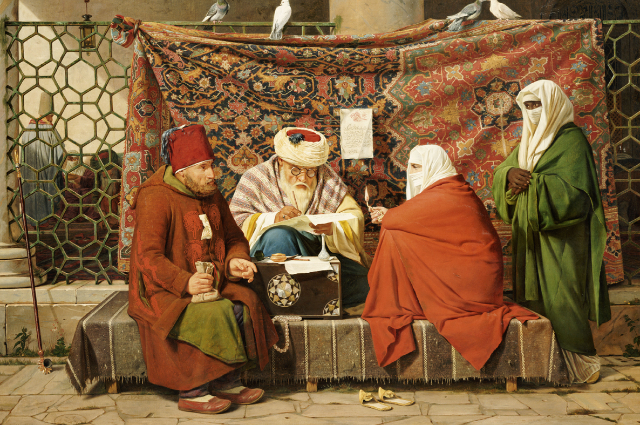
Islamic law makes the husband the obligor and the bride the sole owner of the marital payment known as mahr. Yet among Bengali Muslims in West Bengal, a transfer running in the opposite direction, known as joutuk or jahez (dowry), has become a socially accepted custom (ʿurf). This article argues, first, that dowry as a demanded, stipulated or customarily obligatory transfer from the bride’s side is prohibited by the Qurʾān, the Sunna and the classical Ḥanafī tradition, and that its custom is a corrupt ʿurf (ʿurf fāsid) which, under the settled rules of uṣūl al-fiqh, cannot create a valid legal norm. Second, it examines the transformation in West Bengal, using Murshidabad, Birbhum, Malda, and neighbouring districts as illustrative sites, and draws on census, survey, and crime data alongside socio-economic literature. Third, it argues that the displacement of mahr by dowry weakens women’s Sharīʿah-guaranteed economic position and supplies a transactional logic through which post-marital extortion and domestic violence are sustained. The article concludes that reviving the authentic institution of mahr and delegitimising dowry through scholarly, communal and legal channels offers a culturally rooted route to reducing violence against women.
The Qurʾān commands the husband to give women their marital gift “as a free and willing gift” (niḥla). Mahr (dower) is therefore a transfer from groom to bride, owned by her alone. In much of Muslim South Asia, however, a second transaction has grown up alongside it, and in many households has overshadowed it: a payment or bundle of goods demanded from, or customarily expected of, the bride’s family. Anthropologists and economists have long treated this practice as a “groom price” that rises with the groom’s education, employment and status. Scholarship on dowry among Indian Muslims specifically is thinner. Abdul Waheed observes that discussion of dowry in India has largely been confined to non-Muslim communities. He argues that among Muslims, the practice has been coercive rather than voluntary for a long time.
This article addresses a gap between three bodies of work. Legal-theological writing explains what mahr is but rarely asks why it has been displaced. Socio-economic studies explain why dowry persists but treat Islamic law as background. Research on violence against women documents dowry-related abuse but rarely engages the juristic argument that the practice is void under the Sharīʿah. The central claim here is that this juristic argument is not merely theological. If dowry is an ʿurf that contradicts a textual rule, then its normative force is nil, and the communities that practise it do so against, not through, their own legal tradition. That reframing matters practically, because it equips religious leaders to challenge dowry from within the tradition rather than as an external, secular imposition.
The article proceeds in eight steps. Section 2 sets out the method and key terms. Section 3 establishes the textual and juristic foundations of mahr. Section 4 shows that dowry is prohibited, and Section 5 shows why custom cannot validate it. Section 6 turns to West Bengal and its districts. Section 7 examines the link to violence against women. Section 8 outlines reform, and Section 9 concludes.
Method, Definitions and Scope
The study adopts a qualitative socio-legal approach. The juristic analysis rests on close reading of Qurʾānic verses, canonical ḥadīth, and the Ḥanafī fiqh tradition, principally al-Marghīnānī’s al-Hidāya, whose chapter on dower supplies much of the argument below. The district analysis draws on the 2011 Census, the National Family Health Survey (NFHS), National Crime Records Bureau (NCRB) reporting and peer-reviewed or institutional studies. The article does not report original interview data. Where district-level evidence specific to dowry is unavailable, this is stated, and the point is framed as a hypothesis for the fieldwork that the broader project envisages with women, scholars and community leaders.
Three terms require definition. Mahr (also ṣadāq, ṣaduqa) is the property obligatory on the husband by the marriage contract or by its consummation. Dowry (joutuk in Bengali, jahez in Urdu and Arabic jihāz) here means property or money demanded by, promised to, or customarily expected by the groom or his family as a condition or consideration of the marriage, flowing from the bride’s side. This is distinct from a voluntary gift from parents to their daughter, which the Sharīʿah permits and which remains her property. ʿUrf denotes a practice prevalent in a community and accepted by its reasonable members.
Mahr in the Sharīʿah: Textual and Juristic Foundations
The Qurʾānic and Prophetic basis
The Qurʾān treats mahr as a duty bound to marriage and addressed to men. Verse 4:4 commands men to give women their ṣaduqāt, and adds that if women freely remit part of it, men may enjoy it. Verse 4:24 calls the payments ujūr (“due compensations”) and describes them as an obligation (farīḍa). Verses 2:236–237 regulate the half-dower on divorce before consummation, and 2:229 forbids the husband to take back what he has given. Verses 4:20–21 forbid him from taking back even a qinṭār (a large sum) once given. In every verse, the payer is the husband and the owner is the wife.
The Prophetic practice confirms both the obligation and its modest scale. In the well-known narration from Sahl b. Saʿd, the Prophet told a prospective groom to seek a mahr even if it were only an iron ring. Another report states that the most blessed marriage is the one with the lightest burden. The Sunna thus pairs a firm duty with a low threshold, so that cost does not become a barrier to marriage.
The Ḥanafī analysis of mahr
The Hidāya supplies a precise account of the juristic nature of mahr. Its central proposition is that mahr is obligatory first as a right of the Sharīʿah, to display the dignity of the marital relationship (ibānatan li-sharaf al-maḥall), and becomes the wife’s own right in its continuing state. Three consequences follow. First, marriage is valid even if no mahr is named, because mahr is a consequence of the contract and not its pillar; yet the mahr is owed regardless, and a stipulation excluding it is ineffective. Second, the legal minimum under the Ḥanafī school is ten dirhams, reasoned by analogy with the theft threshold, so that the payment “has weight”; the Shāfiʿī school disagrees and allows anything that can be a price. Third, the wife may refuse herself to the husband until the prompt portion is paid, and the husband may not prevent her from leaving his house or visiting her family until it is paid.
These rules form a coherent protective structure. Mahr gives the wife a claim that survives divorce and death, since it is a debt payable out of the husband’s estate, and, while prompt, a lawful bargaining position in the marriage. The Ḥanafī texts also protect it against pressure: where parties dispute whether items sent were gifts or part of mahr, the husband’s word prevails because he is the one transferring ownership, but the text adds a safeguard excluding prepared food and items obligatory on him such as the wife’s clothing. The tradition thus anticipates, and limits, the confusion of gifts with dower.
Dowry under the Sharīʿah: Prohibition and Invalidity
The argument that dowry is unlawful does not rest on a single proof-text. It rests on four convergent lines of reasoning: the Qurʾānic assignment of direction and ownership, the prohibition on unjust appropriation, the Ḥanafī doctrine of void conditions, and the Prophetic example.
Direction and ownership of the marital transfer
As shown in Section 3, the Qurʾān consistently makes the husband the payer. Classical exegetes reading 4:4 note that in pre-Islamic practice a bride’s guardian sometimes kept her marital payment, and that the verse was revealed to restore the money to the woman herself. Dowry reverses the assigned direction. The Hidāya uses the phrase qalb al-mawḍūʿ (“inversion of the subject-matter”) when rejecting a stipulation that the free husband serve his wife as dower, reasoning that marital service owed by the husband contradicts the purpose of the contract. By analogy, a stipulation turning the marital transfer into an extraction from the bride’s side inverts the same structure.
Unjust appropriation and the absence of consent
The Qurʾān prohibits consuming property “among yourselves by falsehood,” and permits only trade by mutual consent (tarāḍin). The Prophet declared, in his farewell sermon, that the blood and property of Muslims are sacred to one another. A dowry demanded as the price of a groom’s consent is extracted under social compulsion: the bride’s family has no genuine freedom to refuse without risking the marriage. The most direct Qurʾānic analogue is 4:19, which forbids husbands to constrain (taʿḍulūhunna) wives to take part of what they gave them. Post-marital pressure on a wife to bring more property from her parents is the same conduct in a different form.
Void conditions and the legal consequence
Muslims are bound by their stipulations except a condition that makes lawful what is unlawful or unlawful what is lawful. The Hidāya applies a parallel principle to marriage. Where a groom takes a wife on a condition not permitted, such as accepting wine as mahr, the marriage remains valid and the invalid condition lapses. Applying the rule to dowry produces a clear legal result: a demand for dowry as a condition of marriage is a void condition. The marriage is valid; the demand is not. Property taken under it is held without right and should be returned to the payer.
The Prophetic example and the objection from Fāṭima’s trousseau
The Prophet’s own practice contains no demand for property from a bride’s family. The best-documented marriage, that of ʿAlī and Fāṭima, involved mahr from ʿAlī, reportedly his armour, with modest household items prepared for the couple. Defenders of dowry frequently invoke this episode as jahez-e-fāṭimī; Waheed identifies the argument and rejects it. The objection fails on three grounds. The items were few and simple. They were a voluntary provision by a guardian, not a condition demanded by a groom. And the groom had himself paid mahr. Parents may give their daughters gifts, and that gift is her property; what the Sharīʿah rejects is the demand, the stipulation and the customary obligation.
Urf and Its Limits: Why a Corrupt Custom Creates No Law
A common defence holds that even if dowry lacks scriptural support, it is a long-standing local custom, and the jurists accept custom as a source. The premise is correct, and the conclusion does not follow. The jurists accept custom within limits that dowry does not satisfy.
The juristic status of custom
Custom enjoys real authority in Ḥanafī and wider Sunni methodology. Maxims such as “custom is the arbiter” (العادة محكمة) and “what is established by custom is like what is established by text” (الثابت بالعرف كالثابت بالنص) appear in the codified Majalla. Custom may interpret ambiguous terms, fix amounts left unspecified, and, for the Ḥanafīs, even specify a general text. But jurists consistently divide custom into the valid (ʿurf ṣaḥīḥ) and the corrupt (ʿurf fāsid). A custom is corrupt if it makes lawful what the Sharīʿah forbids or forbids what it permits.
Conditions for a valid custom
The classical and modern sources converge on four conditions: the custom must be prevalent and consistent; it must be in existence when the act occurs; the parties must not have stipulated otherwise; and it must not contradict a definitive text or a principle of the Sharīʿah. Ibn ʿĀbidīn, the leading late Ḥanafī authority on the subject, affirms that custom prevails only where no text addresses the matter, and that it yields where it conflicts with an explicit one. Dowry fails the fourth condition. It cannot be a specification of a general text, because no general text permits an extraction from the bride’s family; the texts address the direction and ownership of marital payment in specific terms (Section 4.1). A custom that reverses a textual rule is the paradigm of a corrupt custom.
Consequences of invalidity
Three consequences follow. First, prevalence is irrelevant. Custom can be widely practised and still lack legal force; the question is not how many adopt it but whether it is consistent with the sources. Second, the practice cannot generate rights: a groom’s family acquires no entitlement from custom, and the bride’s family owes no obligation under it. Third, the custom can be reformed. Jurists accept that custom changes with time and place, so abandoning a corrupt custom is consistent with the tradition’s own logic. Reform is thus not an external demand but the application of an internal standard.
A remaining objection invokes necessity (ḍarūra): families who refuse dowry may fail to marry their daughters. The doctrine of necessity permits the prohibited only when real harm cannot otherwise be averted, and only to the extent required. A social inconvenience arising from a custom that the community itself sustains is not a necessity in this sense; the burden falls on the community to change its expectations.
West Bengal: Historical Context and District Evidence
Historical formation
Richard Eaton’s study of Islam in Bengal shows that the Muslim population grew in a frontier agrarian society in which local practice and Islamic norms interacted over centuries. Two non-exclusive explanations for dowry’s rise recur in the literature. The first stresses emulation of upper-caste Hindu marriage practice in a region where Muslims and Hindus have long lived in proximity, a process often framed through M. N. Srinivas’s concept of Sanskritisation. A study of dowry among Bangladeshi Muslims reaches a similar conclusion in its own context, observing that part of the practice was imported from Hindu cultures of India across generations. The second explanation is Waheed’s: he argues that coercive dowry has roots in North Indian Muslim social structure and elite lifestyles, so that the practice cannot be traced only to Hindu influence. Both explanations point to social, not scriptural, origins.
Economic analysis adds a further mechanism. In a model developed with data from Bangladesh and with West Bengal as a comparison case, Chowdhury, Mallick and Roy Chowdhury treat dowry as a groom price and mehr as a conditional payment that deters inefficient divorce, and show that mehr responds more strongly than dowry to income shocks. Ambrus, Field and Torero find that in Bangladesh dowry rose after legal changes that altered the cost of divorce and polygamy, and that mehr was typically payable only on divorce, which weakened its role as a transfer at the time of marriage. These findings support the view that the practical meaning of mahr has narrowed to a deferred promise, while dowry has become an immediate payment.
State-level indicators
According to the 2011 Census, West Bengal had 24,654,825 Muslims, about 27 per cent of the state’s population. The fifth National Family Health Survey (2019–21) found that around 42 per cent of women aged 20–24 in the state had married before 18, and that 26 per cent of women aged 18–49 had experienced physical violence, with the husband being the most common perpetrator among ever-married women. West Bengal also recorded the highest number of cases of cruelty by husband or relatives in the country in recent NCRB reports: 19,952 in 2021 and 22,431 in 2022. These data are not disaggregated by religion, so they cannot by themselves show the share attributable to Muslim households; they establish only the scale of the state-wide problem within which the district evidence must be read.
District evidence
The table below assembles the most reliable figures available for selected districts. Dowry-specific, religion-disaggregated district data are not published in the sources consulted, so the table uses demographic and child-marriage indicators as proxies for the marriage-market conditions in which dowry operates.
District | Muslim share (2011) | Key indicator | Relevance to the argument |
Murshidabad | 66.27% (4,707,573) | Child marriage reported at 39.9% in NFHS-4; child sex ratio 968 against 956 for the state (Census 2011) | Muslim-majority district; early marriage and girls’ labour (beedi rolling) tied to marriage prospects |
Malda | 51.27% (2,045,151) | Studies document socio-economic correlates of girl child marriage | Muslim-majority; border district with high early marriage |
| Uttar Dinajpur | About 50% | No district indicator reviewed here | Muslim-concentrated; priority for fieldwork |
| Birbhum | 37.06% (1,298,054) | Rural poverty ratio above Murshidabad’s 46.12% (HDR 2004) | Significant Muslim minority; deprivation heightens vulnerability to marriage-market pressure |
| South 24 Parganas | 35.6% | No district indicator reviewed here | Significant minority; comparative site |
| North 24 Parganas | 25.82% | No district indicator reviewed here | Peri-urban and rural mix; urban comparison |
Sources: Census of India 2011 (district Muslim shares); NFHS-4 as reported in Village Square; Government of West Bengal, West Bengal Human Development Report 2004. See the notes to Section 6.3.
Murshidabad. Murshidabad, with a Muslim share of 66.27 per cent, is the state’s principal Muslim-majority district. NFHS-4 reportedly placed it at the top of the national chart for child marriage, with 39.9 per cent of cases, while the district also has a child sex ratio of 968, above the state’s 956. The same report describes girls in villages such as Muskinagar rolling beedis from the age of six or seven because earning improves their marriage prospects. These facts are consistent with a marriage market in which a bride’s economic value, her earnings or her family’s payment, influences the terms of the match. A recent regional study likewise links early marriage in Murshidabad to restricted agency for women. Whether dowry demands operate alongside or in place of girls’ earnings, and how large they are, are questions that only fieldwork in blocks with high Muslim concentration, such as Domkal and Raninagar, can answer.
Birbhum. Birbhum’s Muslim population of 1,298,054 forms 37.06 per cent of the district. The West Bengal Human Development Report 2004 recorded the rural poverty ratio of Murshidabad at 46.12 per cent and noted that Purulia, Bankura and Birbhum had higher ratios. In a district where rural deprivation is severe, a dowry obligation is likely to function as a heavy debt on the bride’s family, and a groom’s family has greater leverage to press for more. That is a reasoned expectation rather than a measured finding; Birbhum should be treated as a priority site for testing it.
Malda and other districts. Malda has a Muslim share of 51.27 per cent, and a study from the district has examined socio-economic factors associated with girl child marriage and its effect on pregnancy outcomes. Uttar Dinajpur is also close to an even split, and South and North 24 Parganas contain large minorities. Across these districts, the dominant pattern in the available evidence is early marriage combined with low female education, a combination that, in the economic literature, usually raises vulnerability to unfavourable marriage terms.
A cross-border comparison is instructive. Bangladesh, which shares language, ecology and history with these districts, is often noted as a Muslim-majority country in which dower is rarely observed in practice and dowry is almost universally practised. The Bengali Muslim experience across the border suggests that what is occurring in West Bengal is neither isolated nor religiously mandated, but part of a regional pattern.
Dowry, the Erosion of Mahr and Violence against Women
The causal link between dowry and violence against women operates through at least three mechanisms. The first is extraction. Where marriage is organised as a transaction, demands do not end at the wedding. A husband or in-laws may press for additional payments, and violence or neglect becomes a tool of bargaining. The Indian legislature recognised this when it criminalised cruelty in connection with dowry demands and created the offence of dowry death.
The second mechanism is the devaluation of mahr. Where mahr is nominal, deferred or remitted under social pressure, the wife loses precisely the instruments the Sharīʿah provides: a debt owed to her, a lawful basis for withholding herself until the prompt portion is paid, and an asset on divorce or widowhood. Ambrus, Field and Torero’s finding that mehr in Bangladesh was usually payable only on divorce illustrates how a protective institution can lose force when its timing is moved to the end of the marriage. Where a dowry has been paid, and mahr has not, the wife enters the marriage with no recognised financial claim in her own right and a family under financial strain.
The third mechanism is the legitimation of the transaction. When a payment is socially normalised, those who suffer its consequences find it harder to name the abuse as wrong. This is where the argument of Sections 4 and 5 becomes practically significant. If community members and religious leaders accept that dowry is merely a custom, they may regard it as neutral. If they accept that it is a corrupt custom, void under the Sharīʿah, then demanding it is itself an act of wrongdoing.
Indian law already assumes the distinction the juristic argument requires. The Dowry Prohibition Act 1961 defines dowry by reference to property given in connection with marriage, but the definition expressly excludes dower or mahr in the case of persons to whom Muslim Personal Law applies. Statute and Sharīʿah therefore agree that mahr is lawful and that dowry is not. The gap lies in enforcement and in social legitimacy: Muslim families who pay dowry rarely complain, because they are participants in a transaction regarded as illegal on both counts, and Muslim wives may be reluctant to invoke criminal remedies against husbands and their families. This is a hypothesis that requires empirical testing; NCRB data do not record the religion of complainants.
Towards Reform: Reviving Mahr and Delegitimising Dowry
If the juristic argument is sound, reform should proceed from within the tradition. Five measures follow from the analysis.
First, scholars and imams in the districts studied should state clearly, in Friday sermons, marriage ceremonies and madrasa teaching, that dowry is prohibited and that a condition of dowry is void while the marriage stands. This is not a new ruling; it applies the established Ḥanafī rule on void conditions. Second, the marriage-registration process should record mahr meaningfully. Muslim marriages in Bengal are registered under the Bengal Muhammadan Marriages and Divorces Registration Act 1876, and qāḍīs who solemnise them can ensure that the nikāhnāma states the amount and the prompt portion and that the amount reflects the husband’s means rather than a token. Third, the prompt portion should be paid at or soon after the wedding, restoring the wife’s lawful leverage under the Ḥanafī rule on withholding herself.
Fourth, community norms should treat voluntary gifts to daughters as a matter of the daughter’s own property, distinct from any payment to the groom’s family. A family that gives gifts, and a groom’s family that declines to demand anything, are both acting within the tradition. Fifth, the legal system should be used rather than avoided: the Dowry Prohibition Act and the provisions on cruelty are available, and the Muslim Women (Protection of Rights on Divorce) Act 1986 secures property given at marriage. State programmes that delay girls’ marriage, such as Kanyashree, address the early-marriage conditions that weaken a bride’s bargaining position and can be complemented by religious messaging. Each measure carries a research counterpart: fieldwork on which households pay, which refuse, and what happened to those who refused.
This article has argued that dowry among Bengali Muslims is not an Islamic institution but a corrupt custom. The Qurʾān assigns the marital transfer to the husband and its ownership to the wife. The prohibition on taking property without genuine consent, the Ḥanafī doctrine that a void condition lapses while the marriage stands, and the Prophetic example converge on the same result. Under the rules of uṣūl al-fiqh, a custom that contradicts a textual rule cannot create a valid norm, however widespread it is. That the practice is nonetheless entrenched in districts such as Murshidabad, Birbhum and Malda is a fact about society, not about the Sharīʿah.
The district evidence reviewed here establishes the setting more securely than it establishes the causal chain. High Muslim concentrations, persistent early marriage, rural deprivation and state-wide levels of reported cruelty define the conditions in which a transactional marriage market can thrive. The direct link between dowry demands and violence among Muslim households in these districts has not been measured in the sources consulted, and should be tested through interviews with women, scholars, qāḍīs and community leaders. The article’s contribution is to supply the juristic framework for that research and to show that delegitimising dowry is a task the tradition itself demands.
References:
Primary Islamic Sources
- Aḥmad b. Ḥanbal. Musnad al-Imām Aḥmad b. Ḥanbal. Beirut: Muʾassasat al-Risāla.
- Abū Dāwūd, Sulaymān b. al-Ashʿath. Sunan Abī Dāwūd. Beirut: al-Maktaba al-ʿAṣriyya.
- Abū Sunna, Aḥmad Fahmī. al-ʿUrf wa-l-ʿĀda fī Raʾy al-Fuqahāʾ. Cairo: Maṭbaʿat al-Azhar, 1947.
- al-Bukhārī, Muḥammad b. Ismāʿīl. Ṣaḥīḥ al-Bukhārī. Beirut: Dār Ibn Kathīr.
- al-Ḥākim al-Naysābūrī. al-Mustadrak ʿalā al-Ṣaḥīḥayn. Beirut: Dār al-Kutub al-ʿIlmiyya.
- Ibn ʿĀbidīn, Muḥammad Amīn. Nashr al-ʿUrf fī Bināʾ Baʿḍ al-Aḥkām ʿalā al-ʿUrf. In Majmūʿat Rasāʾil Ibn ʿĀbidīn. Beirut: Dār Iḥyāʾ al-Turāth al-ʿArabī, n.d.
- Ibn Nujaym, Zayn al-Dīn. al-Ashbāh wa-l-Naẓāʾir ʿalā Madhhab Abī Ḥanīfa al-Nuʿmān. Beirut: Dār al-Kutub al-ʿIlmiyya.
- Ibn Saʿd, Muḥammad. al-Ṭabaqāt al-Kubrā. Beirut: Dār Ṣādir.
- al-Jaṣṣāṣ, Abū Bakr Aḥmad b. ʿAlī. Aḥkām al-Qurʾān. Beirut: Dār Iḥyāʾ al-Turāth al-ʿArabī.
- Majallat al-Aḥkām al-ʿAdliyya. Ottoman civil code, 1869–1876.
- al-Marghīnānī, Burhān al-Dīn ʿAlī b. Abī Bakr. al-Hidāya Sharḥ Bidāyat al-Mubtadiʾ. Kitāb al-Nikāḥ, Bāb al-Mahr. Beirut: Dār Iḥyāʾ al-Turāth al-ʿArabī.
- Muslim b. al-Ḥajjāj. Ṣaḥīḥ Muslim. Beirut: Dār Iḥyāʾ al-Turāth al-ʿArabī.
- al-Nasāʾī, Aḥmad b. Shuʿayb. Sunan al-Nasāʾī. Aleppo: Maktab al-Maṭbūʿāt al-Islāmiyya.
- al-Qurṭubī, Muḥammad b. Aḥmad. al-Jāmiʿ li-Aḥkām al-Qurʾān. Cairo: Dār al-Kutub al-Miṣriyya.
- al-Suyūṭī, Jalāl al-Dīn. al-Ashbāh wa-l-Naẓāʾir fī Qawāʿid wa-Furūʿ Fiqh al-Shāfiʿiyya. Beirut: Dār al-Kutub al-ʿIlmiyya.
- al-Ṭabarī, Muḥammad b. Jarīr. Jāmiʿ al-Bayān ʿan Taʾwīl Āy al-Qurʾān. Cairo: Dār Hajar.
- al-Tirmidhī, Muḥammad b. ʿĪsā. Sunan al-Tirmidhī. Cairo: Muṣṭafā al-Bābī al-Ḥalabī.
Secondary Literature
- Ambrus, Attila, Erica Field and Maximo Torero. “Muslim Family Law, Prenuptial Agreements, and the Emergence of Dowry in Bangladesh.” Quarterly Journal of Economics 125, no. 3 (2010): 1349–1397.
- Anderson, Siwan. “The Economics of Dowry and Bride Price.” Journal of Economic Perspectives 21, no. 4 (2007): 151–174.
- Chowdhury, Shyamal, Debdulal Mallick and Prabal Roy Chowdhury. “Natural Shocks and Marriage Markets: Evolution of Mehr and Dowry in Muslim Marriages.” IZA Discussion Paper No. 10675. Bonn: Institute of Labour Economics, 2017.
- Eaton, Richard M. The Rise of Islam and the Bengal Frontier, 1204–1760. Berkeley: University of California Press, 1993.
- Fakhr al-Dīn, Muḥammad. al-Mahr fī al-Mujtamaʿ al-Bangladīshī al-Muslim fī Mīzān al-Qurʾān: Dirāsa Taḥlīlīya. M.A. thesis, International Islamic University Malaysia, n.d.
- Haldar, Mousumi, and Walid Masud. “Early Marriage and Its Impact on Women Empowerment: A Study with Special Reference to Murshidabad District, West Bengal.” Iconic Research and Engineering Journals 9, no. 10 (2026): 3454–3456.
- Kamali, Mohammad Hashim. Principles of Islamic Jurisprudence. 3rd ed. Cambridge: Islamic Texts Society, 2003.
- Roy, Avijit, and Pradip Chouhan. “Exploring the Socioeconomic Factors Associated with Girl Child Marriage and Its Impact on Pregnancy Outcomes: A Study from Malda District of West Bengal.” Wolters Kluwer Medknow, 2022.
- Srinivas, M. N. Religion and Society among the Coorgs of South India. Oxford: Clarendon Press, 1952.
- Srinivas, M. N. “Some Reflections on Dowry.” Delhi: Oxford University Press for the Centre for Women’s Development Studies, 1984.
- Waheed, Abdul. “Dowry among Indian Muslims: Ideals and Practices.” Indian Journal of Gender Studies 16, no. 1 (2009): 47–75.
- al-Zarqāʾ, Muṣṭafā Aḥmad. al-Madkhal al-Fiqhī al-ʿĀmm. Damascus: Dār al-Qalam, 1998.
- al-Zuḥaylī, Wahba. Uṣūl al-Fiqh al-Islāmī. Damascus: Dār al-Fikr, 1986.
Statutes and Case Law
- Bengal Muhammadan Marriages and Divorces Registration Act, 1876 (Bengal Act I of 1876).
- Bharatiya Nyaya Sanhita, 2023, ss. 80, 85–86.
- Danial Latifi v. Union of India, (2001) 7 SCC 740.
- Dowry Prohibition Act, 1961 (as amended in 1984 and 1986).
- Hamira Bibi v. Zubaida Bibi, (1916) 43 Indian Appeals 294.
- Indian Penal Code, 1860, ss. 304B and 498A (repealed and replaced by the Bharatiya Nyaya Sanhita, 2023).
- Muslim Women (Protection of Rights on Divorce) Act, 1986.
Reports, Data and Press
- Government of West Bengal, Development and Planning Department. West Bengal Human Development Report 2004. Kolkata, 2004.
- Hoque, Samad. “Every Hour 52 Crimes against Women Cases Registered in India in 2022.” The Tribune, 4 December 2023.
- International Centre for Research on Women and UNICEF. District-Level Study on Child Marriage in India: What Do We Know about the Prevalence, Trends and Patterns? New Delhi: ICRW, 2015.
- International Institute for Population Sciences and ICF. National Family Health Survey (NFHS-5), 2019–21: West Bengal. Mumbai: IIPS, 2021.
- Ministry of Women and Child Development, Government of India. Parliamentary reply on Crime against Women (citing NCRB, Crime in India 2022). https://eparlib.sansad.in
- Office of the Registrar General and Census Commissioner, India. Census of India 2011, Primary Census Abstract: West Bengal.
- UNFPA India. Child Marriage in West Bengal: Key Insights from the NFHS-5 (2019–21). New Delhi: UNFPA India, 26 July 2022.
- “Beedi Rolling Robs Murshidabad Girls of Their Childhood.” Village Square. Accessed 22 October 2026. https://villagesquare.in
- “West Bengal Tops in Domestic Violence by Husband, In-Laws, NCRB Data Shows.” Deccan Herald, 2022. https://www.deccanherald.com