
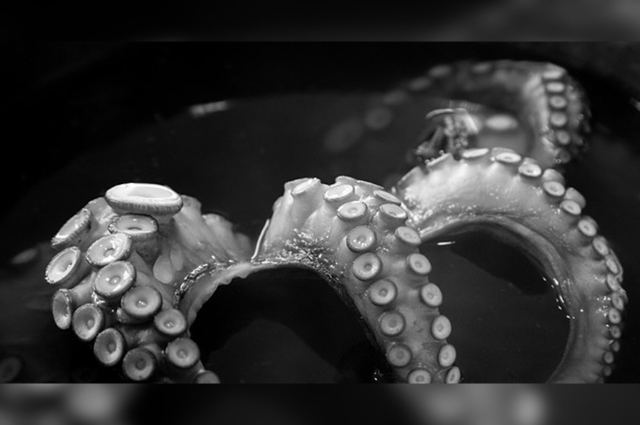
Image by Iris KlLöpper from Pixabay
Introduction: Into the World of Deep-Sea Giants
For centuries, the deepest parts of the world’s oceans have stirred the human imagination, inspiring stories of monstrous beings lurking beyond the reach of sunlight. Among these mysteries, none have captivated the human mind more profoundly than the giant squid (Architeuthis) and the colossal squid (Mesonychoteuthis). These enormous cephalopods—rarely seen and poorly understood—have long stood at the boundary between legend and science. Sailors once described tentacled beasts capable of dragging entire ships beneath the waves, and ancient cultures wove tales of colossal sea serpents and krakens that ruled the abyss.
Yet behind the dramatic folklore lies a scientific reality even more intriguing. Although they are among the largest invertebrates on Earth, both giant and colossal squids inhabit depths so extreme that observing them alive was nearly impossible for most of human history. Until the early 21st century, all knowledge of these elusive creatures came from decomposed carcasses washed ashore, damaged specimens hauled up accidentally by fishing nets, and indirect evidence such as the beaks found in the stomachs of sperm whales. Only in recent decades—through advanced submersibles, deep-sea cameras, and patient expedition work—have researchers captured the first images and videos of these mysterious giants in their natural habitat.
This article explores what modern science has revealed about these remarkable animals. It examines their true size and biology, their ecological role in the deep sea, the challenges involved in studying them, and the myths that have shaped their place in human culture. Together, these insights bring us closer to understanding the awe-inspiring giants that still roam the unseen world beneath the waves.
The Evolution of Cephalopod Giants
The giant squid and colossal squid are the most dramatic examples of a long evolutionary story within cephalopods—a group that has existed for more than 500 million years. Early cephalopods, ancestors of modern squids, octopuses, and cuttlefish, once dominated ancient oceans with external shells, but over time these structures became internalised or disappeared entirely. This shift allowed for greater mobility, stealth, and adaptability, paving the way for the streamlined predators we recognise today. Among the more than 300 known squid species, only a few evolved the extreme size found in Architeuthis and Mesonychoteuthis, raising the question: Why did some squids become giants?
One explanation lies in deep-sea gigantism, a phenomenon in which animals living at great depths grow larger than their shallow-water relatives. The cold, high-pressure environment of the deep ocean slows metabolism, allowing long lifespans and the accumulation of biomass. In the absence of sunlight, vision and large sensory organs become essential, contributing to the giant squids’ enormous eyes—among the largest in the animal kingdom. These adaptations help them detect predators and prey in the near-total darkness of the mesopelagic and bathypelagic zones.
The divergence between giant squid (Architeuthis) and colossal squid (Mesonychoteuthis hamiltoni) likely developed from distinct ecological pressures. While both occupy deep waters, colossal squids evolved in the frigid, predator-rich Southern Ocean, where bulk and strength offered advantages. Giant squids, by contrast, developed extraordinarily long feeding tentacles suited for striking prey across greater distances.
Within the vast diversity of modern squids—ranging from tiny pygmy species to massive deep-sea hunters—giant and colossal squids represent extreme evolutionary endpoints. Their immense size, unique adaptations, and elusive behaviour reflect millions of years of selective pressures in one of Earth’s harshest environments, highlighting the remarkable path cephalopods have taken from ancient shelled creatures to today’s deep-sea titans.
Anatomy of a Leviathan: Biological Features of Giant and Colossal Squids
Body Structure and Physiology
Giant and colossal squids possess body plans that represent the peak of cephalopod adaptation. Their anatomy is centred around the mantle, a muscular, torpedo-shaped chamber that houses most internal organs, including the gills, digestive system, reproductive organs, and a powerful set of jet-propulsion muscles. The skin of the mantle is smooth and often mottled with chromatophores, enabling limited colour change despite their deep-sea habitat. At the posterior end, paired fins provide stabilisation and manoeuvrability, while bursts of speed are achieved through jetting water forcefully through the siphon.
Extending from the head are eight arms and two specialised tentacles. The arms are shorter and lined with strong suckers that aid in grasping prey, while the tentacles—particularly in giant squids—can reach extraordinary lengths. These tentacles terminate in clublike ends covered in rows of powerful suckers ringed with chitinous, serrated teeth. In colossal squids, many of these suckers are replaced by rotating hooks, making them formidable predators capable of securing struggling prey even in near-total darkness.
At the centre of the arms lies the mouth, containing a sharp beak made of chitin—the hardest material in the cephalopod body. Similar in form to a parrot’s beak, it slices prey into manageable pieces. Behind the beak is the radula, a tongue-like organ covered with tiny, recurved teeth that shred food before it enters the digestive tract. Together, the beak and radula form one of the most efficient feeding mechanisms in the deep sea.
Nervous System, Eyes, and Senses
The neurological sophistication of these squids is one of their most remarkable features. Cephalopods possess the most advanced nervous systems among invertebrates, and both giant and colossal squids have highly developed neural networks coordinating motor control, camouflage responses, and sensory processing. Their brain, although small relative to their body size, is complex and protected by a cartilaginous cranium.
Perhaps their most extraordinary adaptation is their eyes—the largest of any known animal. Giant and colossal squid eyes can measure 25–30 centimetres across, roughly the size of a dinner plate. These enormous organs capture even the faintest light, allowing the squid to detect bioluminescent flashes and the approach of predators such as sperm whales. The retina, optic nerve, and lens structure closely parallel those of vertebrate eyes, representing convergent evolution at its finest.
In the deep sea, where sunlight cannot penetrate, these sensory structures offer critical advantages. Their eyes can detect silhouettes at great distances, while specialised photoreceptors enhance motion detection. Though their intelligence is not as well understood as that of octopuses, their sophisticated sensory systems suggest a high level of behavioural adaptability in an environment where survival depends on keen perception.
Internal Shell and Buoyancy
Unlike their ancient ancestors with external shells, modern squids possess a lightweight internal structure known as the gladius, or pen. In giants and colossals, this chitinous, feather-shaped support runs the length of the mantle, anchoring muscles and maintaining body rigidity without sacrificing flexibility.
Equally crucial to their deep-sea survival is their buoyancy system. Both species rely on ammonium-rich tissues within their mantles, making their overall density slightly lower than seawater. This adaptation provides near-neutral buoyancy, allowing them to hover effortlessly in the water column with minimal energy expenditure—an essential strategy in an ecosystem where food may be scarce, and energy must be conserved.
Metabolism and Muscle Composition
Life in the deep sea presents unique physiological challenges, and giant cephalopods show clear metabolic adaptations. Their muscles are built for short, powerful bursts of speed, used primarily for ambush hunting or escaping predators. However, their overall metabolic rate is relatively low, consistent with the cold temperatures and limited oxygen availability of the depths they inhabit.
Deep-water pressure also shapes their biology. Their tissues contain few air spaces, reducing the risk of compression at depth. Enzymes and cellular structures are adapted to function efficiently under high pressure, slow currents, and low temperatures. As large predators, they balance size with energy constraints, relying on stealth, patience, and efficient buoyancy rather than sustained high-speed pursuit.
How Big Do They Really Get? Confirmed and Controversial Size Evidence
The question of how large giant squids (Architeuthis dux) and colossal squids (Mesonychoteuthis hamiltoni) can grow has captivated scientists, sailors, and storytellers for centuries. Yet determining the true maximum size of these elusive animals is far more complex than simply measuring washed-up carcasses. The deep sea distorts bodies, the animals are fragile, and reliable measurements are extremely rare. As a result, the line between scientific fact and maritime exaggeration has historically been blurry. Modern research, however, has brought remarkable clarity.
Verified Scientific Measurements
The largest giant squid measured with rigorous scientific documentation reaches about 12–13 meters (39–43 feet) in total length. Many early reports claimed masses of nearly 1 ton, but confirmed weights are much lower: typically 150–275 kg. The misconception about “ton-sized” giant squids largely comes from sailors’ accounts and poorly preserved specimens.
A crucial nuance is the difference between mantle length and total length. The mantle—the muscular cone-shaped body—rarely exceeds 2–2.5 meters, while the extremely elongated tentacles can add many additional meters. Since tentacles can stretch, shrink, or tear, scientists emphasise mantle size and weight as more reliable indicators.
The colossal squid, on the other hand, holds the record for the heaviest invertebrate ever discovered. The famous specimen captured in 2007 by a New Zealand fishing vessel weighed a remarkable 495 kilograms—nearly half a ton—despite measuring shorter than most giant squids. Its mantle length approached 2.5 meters, but the total length was closer to 4–5 meters. Unlike the giant squid, colossal squids have stout bodies, thick limbs equipped with swivelling hooks, and far more muscle mass, making them significantly bulkier even if they are shorter overall.
Problems With Measuring Dead Squids
Accurate measurements are notoriously difficult because squid bodies change dramatically outside their natural, high-pressure habitat.
Tentacle shrinkage is a major issue. Once an animal dies and its tissues lose internal tension, the tentacles rapidly contract; mantle tissues may also stiffen or collapse. Conversely, tentacle stretching can occur during handling or decomposition. In the past, fishermen often measured carcasses after they had been hanging for hours, conditions that allow tissues to elongate unnaturally.
Another problem involves freezing and thawing. Early 20th-century museum specimens were often kept packed in ice or preserved using harsh chemicals, altering their length by as much as 20–30%. Modern preservation techniques reduce this distortion but do not eliminate it entirely.
Because of these challenges, scientists now rely more on mantle measurements, beak size, and mass to estimate true body proportions. These metrics remain stable even when the rest of the body deteriorates.
Unverified and Legendary Claims
Throughout the 1800s and early 1900s, newspapers and ship logs frequently reported colossal monsters 20–30 meters long, with some exaggerations stretching into the fantastical. Many such sightings involved misidentified whales, drifting masses of kelp, or squids measured after extreme decomposition.
Scientists today consider these reports unreliable for several reasons:
- Lack of physical specimens or photographic evidence
- Measurements taken by untrained observers
- Obvious decomposition artefacts that can drastically inflate the apparent size
- Confusion between tentacles and other debris
However, a small number of claims have sparked scientific curiosity, especially those involving unusually large beaks. Since beaks do not shrink or distort after death, they provide clues to maximum potential size. A few beaks recovered from sperm whale stomachs suggest squids slightly larger than any recorded intact specimen—perhaps mantles nearing 3 meters and weights potentially exceeding 600 kg for colossal squids. Yet even these interpretations are conservative, as beak size varies widely within species.
Overall, while the ocean may still hide individuals larger than any found so far, there is no concrete scientific evidence for 20–30 meter squids.
Which Is Truly Larger: a Giant or a Colossal?
The answer depends on what we mean by “larger.”
- The giant squid is longer—Its extended feeding tentacles can push its total length beyond 12 meters, making it visually more “Kraken-like.”
- The colossal squid is heavier and more powerful—Its robust body, thicker arms, and massive hooks give it a bulkier, more intimidating profile. The colossal squid’s maximum mass (nearly 500 kg) far exceeds any confirmed giant squid.
If size is measured by length, the giant squid wins. If size is measured by weight, mass, and overall body strength, the colossal squid dominates.
Together, they occupy the extremes of cephalopod evolution: one optimised for reach and mobility, the other for power and predation in the frigid Antarctic depths.
Habitat and Deep-Sea Ecology: Where These Giants Live
Giant and colossal squids inhabit some of the most remote and inhospitable environments on Earth—regions so dark, cold, and pressurised that direct human observation remains extremely limited. Yet through carcass distribution, deep-sea trawls, tagging studies of predators, and rare live footage, scientists have pieced together a remarkably detailed picture of where these enigmatic giants live and how they survive.
The giant squid (Architeuthis dux) has a truly global distribution, occurring in all major oceans except the polar extremes. Most confirmed records come from the North Atlantic—particularly Newfoundland, the Azores, and the coasts of Spain and Norway—but they have also been found in the Pacific, the Indian Ocean, and waters around New Zealand and Japan. Their typical depth range lies between 600 and 1,200 meters, a zone known as the mesopelagic to upper bathypelagic layer, where faint sunlight barely penetrates, and temperatures hover near freezing. Here, stable cold temperatures and high pressure shape their physiology, while abundant deep-water fish such as grenadiers, hoki, and deep-sea sharks form part of their food web.
The colossal squid (Mesonychoteuthis hamiltoni), by contrast, has a far more restricted habitat. It is found exclusively in the frigid waters of the Southern Ocean, particularly around Antarctica and the Ross Sea. These squids inhabit even greater depths, often between 1,000 and 2,200 meters, where temperatures can fall below −1°C—a range few large animals can tolerate. Their distribution overlaps with major runs of Antarctic toothfish and large predatory fish, which likely form a significant part of their diet. The near-permanent darkness, immense pressure, and ice-driven currents of this environment have driven the evolution of the colossal squid’s stout, muscular body and energy-efficient lifestyle.
Both species occupy crucial roles in the deep-sea food web, acting as both predators and prey. As mid-to-top predators, they feed on deep-water fishes, crustaceans, and other cephalopods. However, they are famously preyed upon by sperm whales, whose deep-diving behaviour overlaps perfectly with the squids’ habitat range. The circular scars observed on whale skin testify to violent encounters, suggesting that even these enormous whales must fight to subdue their prey.
Surviving in these low-light ecosystems comes with many challenges. At depths where sunlight does not penetrate, both squids rely on large, highly sensitive eyes, capable of detecting bioluminescent flashes or faint silhouettes. Their bodies contain ammonium-rich tissues, allowing them to float effortlessly without expending energy. Slow metabolisms, flexible feeding strategies, and extraordinary sensory adaptations allow them to thrive in ecosystems characterised by scarcity and unpredictability.
Although much of their world remains uncharted, these adaptations demonstrate how giant and colossal squids have mastered some of the harshest environments on the planet, making them iconic inhabitants of the deep.
Predators and Prey: The Sperm Whale vs. the Squid
The deep-sea rivalry between sperm whales and giant squids is one of the most iconic predator–prey relationships in nature. Though long romanticised as titanic battles in the darkness, the reality is a complex interplay of anatomy, strategy, and evolutionary arms races. Evidence gathered over centuries—from whalers’ observations to modern biological sampling—reveals how these colossal encounters unfold far below the ocean’s surface.
Evidence of Battles in the Deep
Much of what we know about these interactions comes from sucker scars etched into the skin of sperm whales. These scars, often in circular patterns, match the size and spacing of giant and colossal squid suckers, indicating close combat during hunts. The marks appear most frequently around the whales’ heads and jaws, suggesting that squids fight vigorously as the whale attempts to capture them.
Another critical line of evidence comes from squid beaks found in sperm whale stomachs. Beaks, made of tough chitin, resist digestion and accumulate over a whale’s lifetime. Some whales have been found with hundreds to thousands of beaks, confirming that squids are a staple of their diet. In the case of colossal squids, their large beaks occasionally suggest individuals heavier than any whole specimen recovered intact.
The encounter itself is a clash of senses. Sperm whales rely on powerful echolocation, emitting high-frequency clicks that help them map the darkness and detect prey at great distances. Squids, lacking such advanced sensory tools, use evasive manoeuvres, rapid jet propulsion, and sometimes the strategy of remaining still—letting the whale’s sonar “see” less movement. Despite this, the whale’s sensory advantage and sheer size generally allow it to overpower even the largest squids.
What the Squid Eats
While they are prey to whales, giant and colossal squids are also formidable predators. Their diet consists primarily of deep-sea fish, crustaceans, and smaller squids, making them mid-to-top predators within the mesopelagic and bathypelagic layers. Their long tentacles, lined with serrated suckers or swivelling hooks, allow them to seize fast-moving prey with precision.
In the near-total darkness of their environment, they rely on ambush tactics rather than pursuit. By drifting silently or hovering neutrally buoyant, they can lunge forward using jet propulsion when potential prey comes close. Though giant and colossal squids themselves do not produce bioluminescence, many of their smaller relatives do—and their prey often does as well. Squids use these faint flashes as cues to detect movement or to identify disturbances in the water.
The Balance of Power
Despite their intimidating size and weaponry, giant and colossal squids almost never “win” against sperm whales. The whales outweigh them by tens of tons, possess far greater strength, and have evolved specifically for deep diving and large-prey hunting. For the squid, resistance is more about survival long enough to escape, not about defeating the predator.
Yet this predator–prey dynamic is ecologically essential. Sperm whales help control squid populations, while the abundance of squids supports whale survival across global oceans. Their interactions represent a long-standing evolutionary equilibrium—an ongoing arms race in the dark, where each species shapes the other’s evolution. Far from myth, this relationship is one of the most dramatic and scientifically grounded stories unfolding in the deep sea.
The Quest to See Them Alive: Scientific Breakthroughs
The giant squid and colossal squid remained among the most mysterious animals on Earth for centuries, known almost entirely through fragments—carcasses, tentacles, and the exaggerated tales of sailors. Their elusiveness created an aura of myth around them, but it also presented one of marine biology’s greatest observational challenges: capturing proof of these deep-sea giants alive in their natural habitat.
Early Attempts and Failures (Pre-2000)
Before the 21st century, the scientific understanding of giant and colossal squids was frustratingly fragmentary. Most early descriptions came from mariners who encountered carcasses floating at sea or washed ashore. These remains were often damaged, distorted, or partially decomposed from the immense pressure changes of the deep ocean. Sailors' accounts—some exaggerated into legends of monsters attacking ships—only muddied the waters further.
Attempts to observe them directly were hampered by three core obstacles: light, depth, and pressure. Giant squids typically inhabit depths between 600 and 1200 meters, while colossal squids live even deeper in the frigid Southern Ocean. Traditional cameras and lights scared them away or failed to reach these depths, and early submersibles lacked both endurance and the ability to remain silent in an environment where animals are highly sensitive to disturbance. For more than a century, scientists had little more than glimpses and gut contents from whales to piece together their existence.
First Photographs and Live Encounters
Everything changed in 2004, when Japanese researchers led by Tsunemi Kubodera and Kyoichi Mori achieved a milestone: the first photographs of a living adult giant squid. Using a baited line system equipped with automated cameras at nearly 900 meters depth, the team captured over 500 images of a giant squid attacking the bait. Although the squid eventually escaped—leaving a tentacle behind—these photographs were the first undeniable proof of a live giant squid in its natural habitat.
The next breakthrough came in 2012, when a multinational team filmed the first high-definition video of a giant squid near Chichi Island in the North Pacific. Using a specially designed submersible and ultra-sensitive cameras, the crew documented the squid moving gracefully, displaying its silver-gold colouration, and hunting in the deep. The footage stunned the world, transforming the giant squid from an enigma into a real, living animal.
Meanwhile, progress in colossal squid research was slower. In 2007, New Zealand fishers captured a living colossal squid at depth in the Ross Sea. Although it died during the ascent due to pressure changes and temperature shock, the specimen provided unprecedented anatomical detail. Its size—4.2 meters long and 470 kg—made it one of the largest intact invertebrates ever examined.
The most dramatic update came in 2025, when marine biologists captured the first confirmed video of a living juvenile colossal squid. Filmed at depth using baited, ultra-low-light cameras, the footage showed a small but unmistakable Mesonychoteuthis individual navigating Antarctic waters. It was a landmark moment, proving that the species could be recorded alive without harming it.
Modern Deep-Sea Technology
Today’s technological advancements have transformed deep-sea observation. Manned submersibles, equipped with quiet electric propulsion and pressure-proof glass spheres, allow researchers to reach depths exceeding 1000 meters. Baited remote camera systems remain essential, using bioluminescent-mimicking lures to attract squids without emitting startling light.
Perhaps the greatest innovation has been ultra-low-light and infrared-sensitive sensors, capable of detecting movement in near-total darkness without interfering with animal behaviour. In addition, autonomous underwater vehicles (AUVs) can patrol remote regions for days, scanning for large cephalopods using sonar and passive optical systems.
Despite these advances, significant challenges remain. The deep ocean is vast, and giant squids are solitary, mobile, and unpredictable. Extreme pressure limits exploration time, and even the most advanced equipment can only cover a fraction of their habitat.
Still, humanity has crossed a threshold. After centuries of mystery, science has finally begun to reveal the living giants that move through the twilight zones of our oceans—proof that even in the modern age, the deep sea keeps its secrets well.
Cultural Impact: Myth, Literature, and Media
For thousands of years, giant tentacled creatures have haunted human imagination. Long before science confirmed the existence of giant and colossal squids, civilisations across the world envisioned immense sea monsters lurking beneath the waves. These myths, fueled by fear of the unknown and encounters with mysterious carcasses, laid the foundation for the cultural fascination we still hold today.
Ancient Myths and Sea Legends
Among the most enduring myths is the Norse Kraken, described as a monstrous creature capable of dragging ships into the depths. Sailors in northern Europe often reported whirlpools and strange tentacled shapes rising from the water—likely encounters with large squids or whales, exaggerated into legend. In some accounts, the Kraken was said to be as large as an island, with tentacles long enough to pull entire vessels apart.
Across the Pacific, Polynesian cultures told stories of colossal sea demons and tentacled spirits that threatened voyagers. These tales often served as navigational warnings, blending spiritual belief with ocean knowledge. In medieval Europe, fear of the unknown deeply inspired illuminated manuscripts and sailor chronicles depicting grotesque, many-armed beasts lying in wait for passing ships.
These myths captured a universal theme: the ocean’s vastness and darkness symbolised danger, and tentacled creatures embodied the chaotic, unpredictable power of the sea.
Literature and Art
The giant squid’s most famous literary appearance came in Jules Verne’s 20,000 Leagues Under the Sea (1870). The dramatic battle between Captain Nemo’s Nautilus and several enormous squids set the cultural template for how these animals would be imagined for generations—ferocious, intelligent, and enormous. Richard Fleischer’s 1954 film adaptation immortalised this scene, becoming one of cinema’s most iconic creature sequences.
Another influential depiction appeared in Frank T. Bullen’s The Cruise of the Cachalot (1898), which vividly described battles between sperm whales and giant squids. These accounts, though embellished, helped solidify the image of squids as deep-sea titans locked in eternal conflict with whales.
Art museums and natural history institutions further shaped public perception. Elaborate dioramas, particularly the one at the American Museum of Natural History, presented dramatic reconstructions of squid-whale combat, blending scientific knowledge with artistic imagination.
Film, Television, and Modern Pop Culture
Modern media continues to portray giant squids as mysterious and sometimes terrifying creatures. They appear in films, anime, video games, and documentaries, often exaggerated for dramatic effect. Some depictions show them attacking submarines or battling kaiju-sized monsters, reinforcing old myths more than scientific reality.
Documentaries, by contrast, have gradually shifted toward accuracy, especially after the first live footage of giant squids in 2004 and 2012. These glimpses helped replace myth with wonder—portraying the animals not as villains but as extraordinary, elusive giants of the deep.
The giant squid remains a powerful cultural symbol: a reminder that even in the age of high technology, the ocean still holds mysteries capable of inspiring awe, fear, and imagination.
Why These Creatures Still Matter: Science, Conservation, and Mystery
Despite their rarity and the difficulty of observing them alive, giant and colossal squids hold immense scientific value. As apex or near-apex predators of the deep sea, they occupy a unique position in Earth’s largest yet least-understood ecosystem. Studying them provides insights not only into their biology but also into the broader health of the oceans they inhabit.
Deep-sea environments are among the most fragile on Earth, sensitive to shifts in temperature, oxygen levels, and nutrient availability. Because giant and colossal squids live in these extreme zones, they act as biological indicators of ecosystem change. Shifts in their distribution—such as unusual strandings or changes in population hotspots—may reflect deeper changes happening across the ocean. Understanding their behaviour and physiology helps scientists track the effects of climate change, particularly the warming and deoxygenation of midwater habitats, which could alter prey availability or force squids into new ranges.
Their importance also extends to marine food webs. Squids are a crucial link between smaller fish and crustaceans and large predators such as sperm whales, sharks, and deep-diving mammals. A decline in squid populations would ripple through the ecosystem, affecting species that depend on them for sustenance. Similarly, a sudden increase could signal disruptions in fish populations or ocean currents. In this way, giant squids silently help scientists monitor the balance of life in the deep sea.
Yet, despite growing knowledge, enormous mysteries remain. Scientists still do not know how giant or colossal squids reproduce, how long they live, how far they migrate, or even their global population sizes. Their apparent rarity may reflect their elusive behaviour rather than actual scarcity, making them difficult to protect under conventional conservation frameworks.
The quest to understand these enigmatic creatures continues to push the boundaries of marine science. Each new sighting, specimen, or technological breakthrough contributes to a clearer picture of life in the abyss. Ultimately, giant and colossal squids matter not only because they are extraordinary animals but because they remind us how much of our planet remains unexplored—and how essential it is to study and protect the deep sea before its secrets disappear.
Conclusion: The Last Unseen Giants of Earth
Across centuries, the giant squid and colossal squid have drifted between myth and science—once feared as sea monsters, now recognised as remarkable survivors of the deep. Through the combined efforts of mariners, biologists, deep-sea explorers, and modern technology, we have begun piecing together their story. We now understand their anatomy, their predators, their habitat, and their role in the ocean’s vast food webs. We have photographed them alive, filmed their movements in dark waters, and studied their bodies in unprecedented detail. Step by step, science has illuminated beings once thought to be nothing more than legends.
And yet, what we know may only scratch the surface. These squids inhabit a realm that remains largely inaccessible—a world of crushing pressure, eternal darkness, and cold expanses deeper than any mountain on Earth is tall. Many basic questions remain unanswered: How do they reproduce? How long do they live? How many exist across the planet? Do they migrate with the seasons? Even the full extent of their size continues to be debated. The most fundamental mysteries persist, not for lack of interest, but because the deep sea fiercely guards its secrets.
In this sense, giant and colossal squids stand at a rare crossroads between ancient mystery and modern discovery. They symbolise how the world’s greatest enigmas can endure even in an age of satellites, supercomputers, and deep-sea robots. They remind us that our planet is still wild, still unexplored, still filled with creatures that challenge our imagination.
As technology advances and exploration continues, humanity will undoubtedly encounter these giants more often. But for now, they remain among Earth’s last unseen titans—ambassadors of the abyss, drifting silently in a place where light never reaches. Their presence is a reminder that the ocean still hides wonders beyond our understanding, and that our journey to discover them has only just begun.
References & Source Links
Scientific Literature & Research Institutions
- Smithsonian National Museum of Natural History – Giant Squid Fact Sheet
- NOAA (National Oceanic and Atmospheric Administration) – Giant Squid Information
- Te Papa Tongarewa Museum (New Zealand) – Colossal Squid Research
- Royal Society Publishing – Giant Squid Discovery Papers
Peer-reviewed Studies
- Kubodera & Mori (2005) – First Live Photographs of Giant Squid (Proceedings of the Royal Society B)
- O'Shea (2003) – Morphology & Ecology of Architeuthis dux
Marine Science Organisations
- MBARI (Monterey Bay Aquarium Research Institute) – Deep-sea Cephalopod Research
- Woods Hole Oceanographic Institution – Cephalopod Biology
Books & Academic References
- “Kraken: The Curious, Exciting, and Slightly Disturbing Science of Squid” — Wendy Williams (Publisher page)
- “Cephalopods: A World Guide” — Mark Norman (Publisher page)
Documentaries / Media Backed by Scientific Teams