
Image by Tumisu from Pixabay
Introduction: Why the “Divided Brain” Idea Fascinates Us
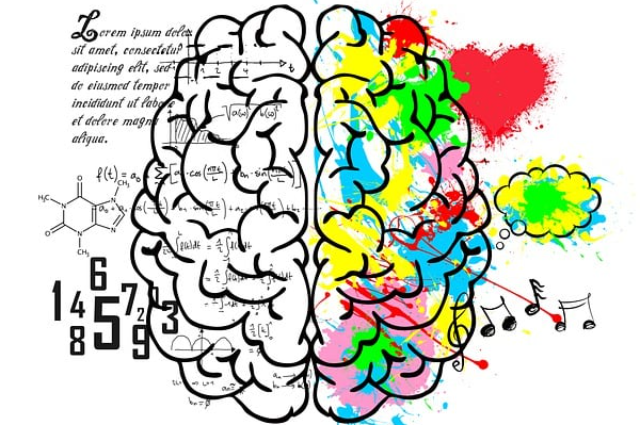
Many of us have likely heard it at some point: some people are “left-brained,” logical and analytical, while others are “right-brained,” creative and intuitive. This simple dichotomy has permeated popular culture to the point that it feels almost natural. From personality quizzes and educational strategies to self-help books and social media posts, the notion that our abilities, preferences, and even personalities are determined by one dominant side of the brain is everywhere. Teachers might encourage students to “tap into their right-brain creativity,” while career guides suggest that analytical thinkers excel in finance or engineering because of their supposed left-brain dominance. These ideas are compelling because they offer a tidy, seemingly scientific explanation for human diversity, and they give people an easy framework to understand themselves and others.
The brain is a powerful symbol. It controls thought, emotion, memory, and decision-making, making it an ideal canvas on which to project personality traits. Explaining why some people are more logical and others more imaginative through hemispheric dominance is intuitively appealing. It promises insight into the mysteries of human behaviour while implying that self-improvement or personal growth can be achieved simply by “activating” the right side or balancing the two halves. This allure has fueled a small but influential industry of books, courses, tests, and therapies designed to optimise or awaken the “weaker” hemisphere.
But does this popular conception hold up under scientific scrutiny? Are we really left-brained or right-brained, or is the reality more complex? Modern neuroscience paints a very different picture. While early research revealed some specialisation of functions in each hemisphere, no evidence exists to support the idea that a person’s personality or intellectual style is dominated by one side of the brain. Instead, our cognitive abilities arise from intricate networks that span both hemispheres, working together seamlessly.
This article explores the origins of the left-brain/right-brain myth, examines the scientific evidence behind it, and highlights the real structure and functioning of the brain. Far from being a simple split between logic and creativity, the human brain is a dynamic, integrated system whose complexity is far more fascinating—and more empowering—than any oversimplified stereotype.
Origins of the Left-Brain / Right-Brain Myth
The idea that the two hemispheres of the brain control distinct aspects of personality and thought has roots in both early neurological research and the natural human desire to simplify complex phenomena. Observations about brain asymmetry date back to the 19th century, when scientists began noting that injuries to specific areas of the brain produced predictable deficits in behaviour or cognition. In the 1860s, French physician Paul Broca discovered that damage to a specific region in the left frontal lobe—later named Broca’s area—resulted in speech difficulties, establishing a connection between the left hemisphere and language. Shortly thereafter, Carl Wernicke identified another left-hemisphere region critical for understanding language. These findings introduced the idea of functional specialisation: different parts of the brain perform different tasks.
Throughout the late 19th and early 20th centuries, further research reinforced the notion of hemispheric differences. Observations of patients with unilateral brain injuries suggested that the right hemisphere might be more involved in spatial awareness and visual processing, while the left seemed dominant in analytical reasoning and verbal communication. These discoveries laid the foundation for later interpretations about personality and cognitive styles, although at this stage, the scientific evidence pertained primarily to localised function rather than broad personality traits.
The next major leap came in the mid-20th century with the work of Roger Sperry and colleagues. In the 1940s and 1950s, surgical procedures to sever the corpus callosum—the bundle of nerve fibres connecting the hemispheres—were performed to treat severe epilepsy. These “split-brain” operations revealed fascinating insights: when the hemispheres were disconnected, each could process information independently. Sperry’s experiments demonstrated that the left hemisphere excelled at language and analytical tasks, while the right hemisphere performed better on spatial and nonverbal tasks. His research, which earned a Nobel Prize in 1981, established that the hemispheres had specialised strengths.
However, the translation of these nuanced scientific findings to the public led to oversimplification. Popular culture embraced a dichotomous view: the left brain became synonymous with logic and rationality, the right with creativity and intuition. Books, magazines, and educational materials began framing people as “left-brained thinkers” or “right-brained dreamers,” implying that these traits were fixed and determined by brain anatomy. Self-help industries capitalised on this narrative, offering exercises, games, and therapies designed to “balance” the brain or strengthen a weaker hemisphere. Media coverage further amplified these ideas, often ignoring the caveat that split-brain findings applied to unusual surgical patients rather than the general population.
In truth, modern neuroscience has shown that both hemispheres are deeply interconnected and that no one is strictly left- or right-brained. Nevertheless, the myth persists because it is simple, intuitive, and flattering—a convenient story for explaining human diversity. Understanding its historical origins highlights not only the genuine discoveries of neuroscience but also the ways scientific findings can be distorted when filtered through the lens of popular culture.
What Brain Lateralisation Actually Means
While the popular imagination frames the left and right hemispheres of the brain as competing forces—logic versus creativity—the scientific reality is far more nuanced. Brain lateralisation refers to the tendency of certain cognitive processes to rely more heavily on one hemisphere than the other. It does not, however, imply that one hemisphere dominates an individual’s personality or intellectual abilities. Rather, lateralisation is a reflection of specialisation: different regions of the brain are optimised for different types of processing, yet nearly all complex tasks require the coordinated work of both hemispheres.
Left Hemisphere Specialisations
For most people, the left hemisphere plays a dominant role in language-related tasks. Broca’s area, located in the left frontal lobe, is crucial for producing coherent speech, while Wernicke’s area in the left temporal lobe supports language comprehension. Beyond language, the left hemisphere tends to excel at sequential processing, symbolic reasoning, and analytical problem-solving. For instance, tasks such as performing arithmetic calculations, following step-by-step instructions, or programming a computer typically engage left-hemisphere circuits more intensely. These patterns, however, represent tendencies rather than absolutes: the right hemisphere can often assist, and in some individuals, partial compensation occurs if left-hemisphere regions are damaged.
Right Hemisphere Specialisations
The right hemisphere contributes more prominently to spatial awareness, facial recognition, pattern perception, and interpreting emotional tone. For example, reading maps, judging distances, recognising faces, and interpreting gestures or vocal intonations rely heavily on right-hemisphere processing. Additionally, creative tasks such as drawing or navigating three-dimensional environments often require right-hemisphere engagement. Yet again, the right hemisphere does not operate in isolation; even tasks thought to be “creative” or “intuitive” benefit from analytical processing in the left hemisphere.
Everyday Integration of Hemispheres
In reality, nearly all everyday cognitive functions require cross-hemisphere collaboration. Speaking, for instance, demands left-hemisphere language production, right-hemisphere interpretation of prosody and emotion, and constant communication between the two via the corpus callosum, the thick bundle of nerve fibres connecting the hemispheres. Similarly, problem-solving in science, music composition, or sports requires the interplay of sequential, analytical reasoning with spatial and emotional processing. This integrated activity underscores that lateralisation is not a rigid divide but a flexible network that enhances efficiency and precision.
Role of the Corpus Callosum
The corpus callosum is central to this integration. Acting as a communication highway between the hemispheres, it allows information processed in one side of the brain to be shared and coordinated with the other. Split-brain studies have shown that severing this connection creates striking effects, such as a person being unable to verbally identify an object seen only by the right eye (processed by the right hemisphere). These findings illustrate that although lateralisation exists, true cognitive function depends on collaboration between the hemispheres.
Conclusion
Brain lateralisation explains why certain tasks are more efficiently processed in one hemisphere, but it does not create rigid personality types. Left-brain and right-brain labels oversimplify a far more intricate system in which both sides continuously cooperate. Understanding this allows us to appreciate the brain as an integrated, dynamic organ where analytic and creative capacities are not competitors but partners, working together to support the richness of human cognition.
Why No One Is Truly “Left-Brained” or “Right-Brained”
The notion that individuals are inherently “left-brained” or “right-brained” has captured the popular imagination for decades, yet contemporary neuroscience demonstrates that it is a neuromyth. Modern brain imaging techniques, such as functional magnetic resonance imaging (fMRI) and positron emission tomography (PET), allow scientists to observe real-time brain activity across thousands of individuals. These studies consistently show that complex cognitive and creative tasks engage networks spanning both hemispheres, rather than relying exclusively on one side. For instance, language processing, once thought to be predominantly left-hemisphere, often involves right-hemisphere regions for interpreting context, intonation, and emotional nuance. Similarly, spatial and artistic tasks recruit left-hemisphere structures for planning, analysis, and symbolic reasoning.
A landmark study conducted at the University of Utah in 2013 analysed the brain scans of over a thousand participants to assess hemispheric connectivity and functional asymmetry. Researchers found no evidence of individuals being strongly left- or right-brain dominant. While there were subtle tendencies—some tasks activated one hemisphere slightly more—these differences did not correlate with personality traits, creativity, or intelligence. In other words, the simplified “logic versus creativity” framework has no anatomical or functional basis. The brain is better understood as an interconnected system of networks, where multiple regions coordinate across hemispheres to perform virtually all cognitive functions.
This integrated view is particularly evident in activities often stereotyped as “right-brained,” such as creative arts. Artistic creation is not purely an emotional or spontaneous process; it requires careful planning, structural reasoning, and iterative problem-solving. A painter designing a complex composition or a musician arranging harmonies engages both spatial-intuitive networks in the right hemisphere and analytical-planning circuits in the left hemisphere. Likewise, mathematics—a discipline commonly associated with left-hemisphere logic—is profoundly creative. Solving abstract problems, discovering patterns, and inventing proofs involve intuition, visualisation, and abstract reasoning that rely on right-hemisphere contributions. These examples highlight that the division of labour is functional, not absolute, and that creativity and logic are intertwined rather than mutually exclusive.
Clinical evidence further challenges the left/right-brain personality myth. Patients with damage to one hemisphere—due to stroke, trauma, or surgical intervention—rarely lose entire domains of function such as creativity or analytical ability. Instead, the brain often adapts, redistributing cognitive tasks across remaining networks. This remarkable plasticity underscores the resilience and integrative nature of cognition, where both hemispheres collaborate dynamically, and no single side dictates personality or intellectual capacity.
In conclusion, the scientific consensus is clear: no person is strictly left-brained or right-brained. While certain hemispheric tendencies exist for specific functions, cognitive, creative, and emotional capacities emerge from cross-hemisphere networks rather than isolated regions. The myth persists because it simplifies the brain’s complexity into easily digestible labels, but it fails to reflect the true, fascinating reality: human intelligence and creativity rely on the coordinated interplay of the entire brain, not one dominant hemisphere. Understanding this integrated architecture not only debunks the myth but also illuminates the richness and adaptability of human cognition.
The Psychology Behind the Myth’s Popularity
Despite overwhelming scientific evidence debunking the notion of left-brained or right-brained personalities, the idea remains widely accepted in popular culture. Understanding its persistence requires examining the psychological and social factors that make such myths appealing. Humans have a natural desire to categorise themselves and others, seeking identity labels that simplify the complexity of thought, behaviour, and emotion. The left/right-brain framework offers an easy, intuitive way to explain personality differences: logic versus creativity, analysis versus intuition. By assigning people to one side of the brain or the other, it satisfies our urge for clear, digestible labels in a world of intricate human cognition.
This tendency is not unique to the left/right-brain myth; it mirrors the popularity of personality tests such as the Myers-Briggs Type Indicator (MBTI). While MBTI and similar assessments purport to identify personality types, their scientific validity is limited. Yet people frequently embrace these categorisations because they are flattering and vaguely accurate. The psychological phenomenon underlying this acceptance is known as the Barnum or Forer Effect, which occurs when individuals accept general, positive statements as personally meaningful. For example, a statement like “You are analytical in some situations but also highly creative in others” is broad enough to resonate with most people, creating a sense of personal insight even if it lacks empirical foundation. The left/right-brain narrative functions in much the same way: it offers a flattering, seemingly scientific explanation for a person’s strengths, weaknesses, and interests.
Simplicity also plays a crucial role. Human cognition struggles with complex, distributed systems, such as the brain, which consists of billions of neurons interacting in dynamic networks. Oversimplified explanations that assign personality traits to a single hemisphere are cognitively comfortable, allowing people to make sense of themselves and others without grappling with complexity. Cultural and educational reinforcement amplifies this effect. Teachers, self-help authors, and media outlets often reference the left/right-brain dichotomy, embedding it in curricula, articles, and motivational content. Over time, this repetition normalises the idea, making it seem factual even in the absence of scientific support.
Moreover, the myth is emotionally appealing. Identifying as a “creative right-brain thinker” or a “logical left-brain strategist” validates personal identity and offers a sense of agency—people may believe they can improve themselves by strengthening their “weaker” hemisphere. This narrative aligns with broader cultural themes of self-improvement and personal development, which further cements the myth in the public consciousness.
In summary, the left/right-brain myth persists not because of scientific evidence, but because it exploits human desires for categorisation, simplicity, and flattering self-perception. Psychological mechanisms like the Barnum Effect, combined with media reinforcement and cultural storytelling, make the myth intuitively satisfying. While alluring, this oversimplification obscures the reality of the brain’s complex, integrated networks, which are responsible for the full richness of human thought, creativity, and emotion.
The Brain as an Integrated System, Not a Battlefield
Modern neuroscience emphasises that the human brain is not a battlefield between two competing hemispheres but a highly integrated, dynamic network. Cognitive functions—including learning, creativity, problem-solving, and emotional regulation—emerge from the coordinated activity of distributed networks that span both hemispheres, rather than from isolated regions or dominant sides. Understanding the brain as a system of interconnected circuits offers a more accurate and empowering view than the oversimplified left-brain/right-brain narrative.
A key factor in this integration is neural plasticity, the brain’s remarkable ability to reorganise itself in response to experience, learning, or injury. Plasticity allows neurons and neural networks to adapt, forming new connections and strengthening existing ones. This flexibility ensures that cognitive and creative functions are resilient and adaptable, rather than rigidly tied to one hemisphere. For example, after a localised injury, other regions of the brain often compensate, illustrating the distributed nature of cognition.
Everyday tasks demonstrate the necessity of cross-hemisphere cooperation. Problem-solving involves analysing information (traditionally associated with the left hemisphere) while simultaneously recognising patterns, envisioning outcomes, and considering multiple perspectives (right-hemisphere strengths). Language comprehension requires not only left-hemisphere syntax and vocabulary processing but also right-hemisphere interpretation of tone, context, and emotional nuance. Emotional regulation, too, relies on the interplay between hemispheres, integrating rational appraisal with affective processing. These examples underscore that balance and integration, rather than unilateral dominance, enable complex cognitive and emotional capacities.
Creativity is another domain that illustrates integrated brain function. Artistic expression, musical composition, scientific innovation, and mathematical insight all demand cooperation between analytical and intuitive processes. The left hemisphere contributes structure, planning, and logical analysis, while the right hemisphere provides imagination, spatial reasoning, and holistic perception. Isolating one hemisphere as “creative” or “logical” fails to capture this interdependence.
Recognising the brain as an integrated system also has practical implications. In education, it encourages teaching strategies that develop multiple skills simultaneously, fostering both analytical reasoning and creative thinking. In personal development, it reframes self-improvement as strengthening networks and connections, rather than “activating” a single side of the brain. In clinical contexts, understanding hemispheric cooperation aids rehabilitation, therapy, and cognitive training.
In conclusion, the brain thrives on collaboration between its hemispheres, not competition. Cognitive abilities, creativity, and emotional intelligence are products of distributed, flexible networks that work in concert. Appreciating this holistic perspective allows us to move beyond limiting myths and embrace the full complexity and adaptability of the human mind.
Anatomy of Protection: Understanding the Meninges
Understanding the human brain extends beyond exploring cognitive function and hemispheric specialisation; it also requires an appreciation of its structural protection. The brain, despite its central role in controlling thought, sensation, and movement, is a delicate organ highly susceptible to injury. To safeguard it, evolution has provided multiple layers of defence, including the skull, cerebrospinal fluid, and most importantly, the meninges—three membranous layers that envelop the brain and spinal cord.
The meninges serve as a critical protective system, acting as both a cushion and a stabilising framework. Their primary function is to shield neural tissue from mechanical damage, anchor the brain within the cranial cavity, and maintain a controlled environment for cerebrospinal fluid circulation. They also provide pathways for blood vessels that nourish the brain and spinal cord, forming an integrated support system between soft neural tissue and the rigid skull.
The innermost layer, the pia mater, is an extremely thin membrane that tightly adheres to every contour of the brain and spinal cord, following the intricate folds known as gyri and sulci. Rich in blood vessels, the pia mater delivers oxygen and nutrients directly to neural tissue while creating a delicate barrier that separates the brain from the cerebrospinal fluid. Its intimate contact with the surface of the brain makes it essential for sustaining neuronal health.
Above the pia mater lies the arachnoid mater, a fine, web-like membrane that does not cling to the brain’s surface as closely as the pia. The space between these two layers—the subarachnoid space—contains cerebrospinal fluid (CSF), which acts as a shock absorber, protecting the brain from sudden jolts and movements. Fibrous strands called arachnoid trabeculae connect the arachnoid to the pia mater, helping to suspend the brain within the CSF and prevent it from colliding with the skull. Additionally, specialised structures known as arachnoid villi project into dural venous sinuses, allowing CSF to drain back into the bloodstream, thereby regulating fluid balance and pressure.
The outermost layer, the dura mater, is a dense, tough membrane that adheres closely to the inner surface of the skull. Composed of fibrous connective tissue, the dura protects against external impacts and houses large venous channels called dural sinuses, which return deoxygenated blood from the brain to the heart. The dura also forms partitions, such as the falx cerebri and tentorium cerebelli, which physically stabilise the brain and prevent excessive movement within the cranial cavity. In the spinal column, the dura mater creates the epidural space, providing additional cushioning and serving as a route for nerves and blood vessels.
Together, the three meningeal layers—pia mater, arachnoid mater, and dura mater—form a comprehensive defence system, integrating mechanical protection, vascular support, and fluid regulation. By bridging the delicate neural tissue and the hard bony skull, the meninges enable the brain to function safely within a dynamic and sometimes hazardous environment. Understanding this anatomy is crucial not only for medical professionals but also for anyone seeking to grasp how the human body maintains and safeguards its most vital organ.
The Three Meningeal Layers in Detail
The meninges, composed of the pia mater, arachnoid mater, and dura mater, form a multilayered protective envelope around the brain and spinal cord. Each layer contributes uniquely to safeguarding neural tissue while supporting cerebrospinal fluid circulation and vascular structures. Understanding the specific anatomy and function of these layers provides insight into the delicate balance between protection and flexibility that the central nervous system requires.
Pia Mater
The pia mater is the innermost meningeal layer, a thin, delicate membrane that adheres closely to the surface of the brain and spinal cord. Its intimate contact allows it to follow every fold and groove, including gyri and sulci, creating a seamless protective interface between the neural tissue and the cerebrospinal fluid. The pia mater is highly vascular, containing numerous small blood vessels that penetrate the brain and spinal cord to supply oxygen and nutrients directly to neurons. This close association with neural tissue not only supports metabolism but also forms part of the blood-brain barrier, regulating the passage of substances from blood into the central nervous system. The pia mater’s fine structure ensures that it can protect the brain while allowing efficient exchange of fluids and nutrients.
Arachnoid Mater
Situated above the pia mater, the arachnoid mater is a thin, translucent membrane that loosely envelopes the brain. Unlike the pia, it does not follow the brain’s convolutions closely. The subarachnoid space lies between the arachnoid and pia mater, filled with cerebrospinal fluid (CSF). This fluid cushions the brain, absorbs shocks, and provides a medium for nutrient transport and waste removal. Fibrous strands called arachnoid trabeculae extend from the arachnoid to the pia mater, suspending the brain within the CSF and preventing it from striking the skull. Additionally, arachnoid villi (or granulations) protrude through the dura mater into dural venous sinuses, allowing CSF to drain into the venous system and maintaining intracranial pressure. The arachnoid mater thus plays a critical role in CSF circulation, combining structural support with fluid regulation to ensure both stability and nourishment.
Dura Mater
The dura mater is the outermost and toughest meningeal layer. Composed of dense fibrous tissue, it adheres to the inner surface of the skull and provides the brain with mechanical protection against external impacts. The dura forms structural partitions, such as the falx cerebri, which separates the two cerebral hemispheres, and the tentorium cerebelli, which acts as a roof over the cerebellum. These septa stabilise the brain within the cranial cavity, limiting excessive movement that could damage delicate neural structures. Embedded within the dura are dural venous sinuses, large channels that collect deoxygenated blood from the brain and return it to the heart. In the spinal canal, the dura also creates the epidural space, providing cushioning and pathways for nerves and blood vessels.
Functional Cooperation of All Three Layers
The meninges function not as isolated barriers but as an integrated system. The pia mater ensures intimate vascular contact and metabolic support, the arachnoid mater suspends the brain in cerebrospinal fluid and regulates fluid drainage, and the dura mater provides tensile strength, stabilises the brain’s position, and houses critical venous channels. Together, these layers protect the brain mechanically, chemically, and physiologically, allowing it to function safely within a hard skull while remaining adaptable to changes in pressure, movement, and metabolic demands.
By understanding the detailed anatomy of the meninges, we gain insight into how the brain is both shielded and nourished, highlighting the elegance of its protective architecture. This knowledge is crucial for clinical applications, from neurosurgery and spinal anaesthesia to the management of traumatic injuries and neurological disorders.
Cerebrospinal Fluid: The Brain’s Invisible Shield
Surrounding the brain and spinal cord, cerebrospinal fluid (CSF) is a clear, colourless liquid that performs multiple vital functions. Although it is often overlooked compared to the brain’s tissue or meninges, CSF is essential for protection, nourishment, and waste management in the central nervous system.
CSF is primarily produced by the choroid plexus, a network of specialised cells located within the brain’s ventricles. Adults typically have about 120–150 millilitres of CSF circulating at any time, and the body produces approximately 500 millilitres daily, ensuring constant replenishment. From the lateral ventricles, CSF flows through the third and fourth ventricles and enters the subarachnoid space surrounding the brain and spinal cord. This circulation forms a cushioning layer, allowing the brain to float within the skull, reducing the risk of injury from sudden movement or impact.
Beyond mechanical protection, CSF also plays a key role in nutrient transport and waste removal. It carries oxygen, glucose, and other vital substances to neural tissue while removing metabolic byproducts, including carbon dioxide and harmful molecules. By maintaining a stable chemical environment, CSF helps neurons and glial cells function optimally. The subarachnoid space, supported by the arachnoid trabeculae, ensures that the brain remains suspended within the fluid, preventing it from pressing against rigid cranial structures while facilitating this exchange of nutrients and waste.
A critical component of CSF circulation is the arachnoid granulations—fingerlike projections of the arachnoid mater that extend into the dural venous sinuses. These granulations allow CSF to drain from the subarachnoid space into the bloodstream, regulating intracranial pressure and preventing fluid accumulation. Dysfunction of this drainage system can lead to conditions such as hydrocephalus, where excess CSF increases pressure inside the skull, potentially damaging brain tissue.
CSF also has important clinical applications. In spinal anaesthesia, anaesthetic agents are introduced into the subarachnoid space to block nerve transmission for surgical procedures. Analysis of CSF via lumbar puncture can diagnose neurological conditions such as meningitis, where infection leads to inflammation of the meninges, or subarachnoid haemorrhage. Additionally, monitoring CSF pressure helps clinicians manage traumatic brain injury, tumours, and other disorders affecting intracranial dynamics.
In essence, cerebrospinal fluid functions as the brain’s invisible shield, combining shock absorption, nutrient delivery, and waste removal in a continuous cycle. Its interplay with the meninges ensures that the brain is both protected and physiologically supported, highlighting the elegant and intricate design of the central nervous system. Without CSF, the delicate structures of the brain and spinal cord would be far more vulnerable to injury and dysfunction.
Clinical and Educational Implications
Understanding the brain’s true complexity is not merely an academic exercise—it has direct implications for both education and medicine. Neuromyths, such as the belief that individuals are strictly “left-brained” or “right-brained,” can inadvertently harm learning environments. When students are labelled as “not logical” or “not creative” based on oversimplified hemispheric stereotypes, teachers may limit opportunities for skill development or fail to encourage balanced cognitive growth. Such misperceptions can hinder motivation, reinforce self-doubt, and reduce the potential for holistic learning.
Recognising that cognitive abilities emerge from integrated, cross-hemisphere networks encourages educational strategies that cultivate multiple skills simultaneously. Activities that combine analysis, spatial reasoning, language, and creativity reflect how the brain naturally functions, fostering adaptability and critical thinking. Teaching with this integrated perspective ensures that students develop not only domain-specific expertise but also flexible problem-solving abilities, creativity, and emotional intelligence.
In medicine, understanding the structure and function of the meninges and cerebrospinal fluid (CSF) is equally vital. Knowledge of the pia mater, arachnoid mater, dura mater, and CSF pathways underpins clinical procedures such as lumbar punctures, spinal anaesthesia, and neurosurgical interventions. It is also essential for diagnosing and managing conditions like meningitis, hydrocephalus, or traumatic brain injuries. Misunderstanding these systems could lead to clinical errors or suboptimal patient care.
Ultimately, promoting evidence-based neuroscience literacy bridges the gap between scientific knowledge and practical application. By dispelling neuromyths and emphasising accurate anatomical and functional understanding, educators, clinicians, and the public can make informed decisions, optimise learning, and improve health outcomes. Appreciating the brain as an integrated, dynamic system empowers both teaching and medical practice, replacing limiting stereotypes with scientifically grounded insight.
Conclusion: Rethinking the Brain Beyond Simple Labels
The popular notion of “left-brained” and “right-brained” personalities is a compelling story, but it is ultimately a myth. Modern neuroscience makes it clear that no individual is strictly dominated by one hemisphere; rather, human thought, creativity, and emotion emerge from complex networks that span both sides of the brain. Oversimplified labels obscure this intricacy, reducing the richness of human cognition to an appealing but inaccurate dichotomy.
Far from being divided, the brain is a masterclass in integration and cooperation. Its hemispheres work in tandem, blending analytical reasoning with spatial perception, logic with intuition, and language with emotional understanding. Even the delicate protective architecture of the meninges and the fluid dynamics of cerebrospinal fluid exemplify this coordinated functionality, demonstrating that safety, nourishment, and flexibility depend on seamless collaboration. The elegance of the human brain lies not in unilateral specialisation, but in the synergy of its parts, each contributing to a resilient and adaptive whole.
Rejecting the left-brain/right-brain myth invites a more curious and evidence-based approach to understanding ourselves. It encourages education that nurtures all aspects of cognition, medical practice that respects anatomical and functional realities, and personal growth grounded in the brain’s true capacities. By embracing integration over division, we can appreciate both the scientific wonder and practical potential of the brain.
Ultimately, the brain’s greatest strength is not in isolated specialisation, but in integration—a dynamic, cooperative system that enables humans to think, create, and adapt in ways far richer than any simple label could ever capture.
References for Brain Function & Left‑Right Brain Myth
General myth debunking
- Left brain vs. right brain: Differences, functions, and theory — Medical News Today (explains that the idea of left‑ vs right‑brain dominance lacks scientific evidence). Medical News Today: Left brain vs. right brain myth explanation
- The Brain Divide: A Hemispheric Hoax? — BrainFacts.org (describes hemispheric differences and why the popular left/right brain narrative is misleading). BrainFacts.org: Brain hemispheric hoax article
Scientific imaging evidence
- An Evaluation of the Left‑Brain vs. Right‑Brain Hypothesis with Resting State Functional Connectivity MRI — PLoS One study showing lateralisation of some functions but no dominant hemispheric personality type. PLoS One 2013 neuroimaging study on hemispheric dominance
Education and myth persistence
- Brain hemispheres and education: Left, right, and wrong — UNESCO/IBRO report on neuromyths and implications in education. UNESCO Science of Learning briefing on brain hemispheres
- Left‑Brain vs Right‑Brain: Truth or Myth? — ScienceNewsToday analysis on why the myth persists and its appeal. ScienceNewsToday: Left brain vs right brain myth overview
References for Meninges & Cerebrospinal Fluid (CSF)
Cerebrospinal Fluid (CSF)
- Cerebrospinal fluid — Wikipedia summary of CSF production, circulation, and anatomy. Wikipedia: Cerebrospinal fluid article
- Cerebrospinal fluid flow: Anatomy and functions — Kenhub overview of CSF production by the choroid plexus and circulation pathways. Kenhub: CSF anatomy and circulation
- Cerebrospinal fluid outflow: a review… — PubMed article on CSF drainage mechanisms via arachnoid villi and lymphatics. PubMed review on CSF outflow and arachnoid granulations
Meninges structure & function
- Arachnoid trabeculae — Wikipedia entry describing the connective strands between arachnoid and pia mater within the subarachnoid space. Wikipedia: Arachnoid trabeculae
- Arachnoid granulation — Wikipedia description of arachnoid villi that allow CSF reabsorption into venous blood. Wikipedia: Arachnoid granulation
- Falx cerebri — Wikipedia explanation of a dural fold that partitions the cerebral hemispheres and supports venous drainage. Wikipedia: Falx cerebri (dura mater fold)
- Reimagining the meninges from a neuroimmune perspective — Journal article on arachnoid mater anatomy and CSF roles. Journal of Neuroinflammation article on arachnoid and meninges
Supplemental Context on Hemispheric Function
- Brain Hemispheres – General Psychology — Overview of lateralisation, corpus callosum, and myth context. General Psychology overview of the brain hemispheres