
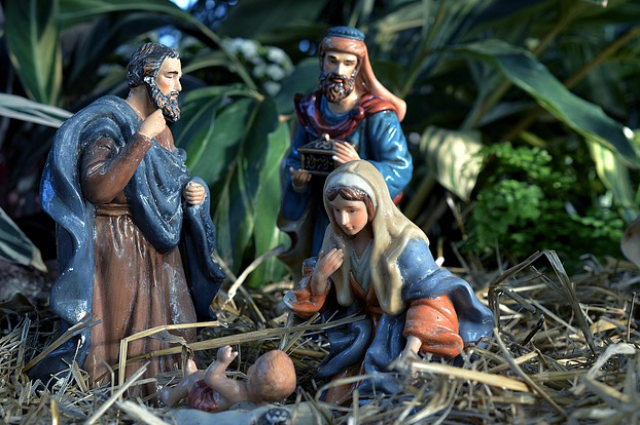
Image by ErikaWittlieb from Pixabay
Introduction: Why the Birth Date Matters
The birth of Jesus Christ is one of the most influential events in human history, shaping cultures, calendars, art, and belief systems across centuries. Yet the actual date of this event—so central to global tradition—is far from certain. Determining when Jesus was born is not a trivial curiosity; it opens a window into the historical realities of the ancient world, the accuracy of early Christian writings, and the ways religious traditions evolve.
The question intersects multiple disciplines. History provides political timelines and archaeological evidence from Roman Judea. Biblical studies analyse the Gospel narratives for clues about rulers, censuses, and cultural customs. Astronomy assesses whether unusual celestial events described in ancient texts may correspond to known astronomical phenomena, such as comets or planetary conjunctions. Theology and cultural studies explore how early Christians interpreted the Nativity story and how later societies shaped it into the celebration we now know as Christmas.
December 25, widely recognised as Christmas Day, was not identified as the date of Jesus’ birth until centuries after the events described in the Gospels. Its selection was shaped by symbolic calculations, theological reasoning, and possibly the desire to align Christian observances with existing Roman festivals. Modern scholars increasingly question the historical accuracy of this date, pointing instead to clues that suggest a different season—and even a different year—entirely.
This article examines what the combined evidence from history, scripture, archaeology, and scientific analysis reveals about the true timing of Jesus’ birth, offering a clearer, more realistic understanding of the Nativity.
The World Into Which Jesus Was Born
To understand the circumstances and timing of Jesus’ birth, it is essential to first understand the world he entered—an era marked by political tension, cultural complexity, and profound religious expectation. Jesus was born during the rule of the Roman Empire, a vast power stretching across Europe, North Africa, and the Middle East. Within this empire lay the small, troubled region of Judea, governed by Herod the Great, a client king appointed by Rome. Herod’s rule (37–4 BCE) was characterised by immense architectural achievements and intense political paranoia. His reputation for eliminating perceived threats—real or imagined—forms a crucial backdrop for Matthew’s account of the massacre in Bethlehem, and helps narrow down the timeframe of Jesus’ birth.
Socially and religiously, 1st-century Palestine was a society in anticipation. Many Jews longed for a Messiah, a divinely anointed leader who would restore independence, justice, and spiritual renewal. Various groups—the Pharisees, Sadducees, Essenes, and Zealots—offered competing visions for how God’s kingdom would come, reflecting deep divisions and heightened hopefulness. Ordinary daily life revolved around agriculture, family labour, synagogue gatherings, and strict observance of the Jewish law. Roman taxation and administrative practices also shaped society, making events like censuses significant markers in historical reconstruction.
The geography of the region grounds the Nativity narrative in specific locations. Nazareth, a small, obscure village in Galilee, was the home of Mary and Joseph—a place so insignificant that ancient sources barely mention it. Bethlehem, a Judean town with strong Messianic associations as the City of David, becomes the focal point of both Gospel birth accounts. Its proximity to Jerusalem (about 9 km) makes it historically plausible for Joseph’s family to travel there for administrative or religious reasons. Jerusalem, the political and spiritual heart of Judea, housed the Temple, served as Herod’s power base, and played a central role in Roman control.
Understanding the political instability under Herod, the social landscape of messianic expectation, and the geographical setting not only provides cultural depth but also helps scholars evaluate the plausibility of key details in the Gospel narratives. Features such as the census, the journey from Nazareth to Bethlehem, and the presence of shepherds gain clearer meaning once placed in their real historical context—making this background essential for reconstructing the Nativity timeline.
Gospel Accounts: What Matthew and Luke Actually Say
The birth of Jesus is described in only two of the four canonical Gospels—Matthew and Luke—, yet their accounts provide the foundational material for Nativity traditions. While both portray the same central event, they differ in setting, sequence, and emphasis. Understanding these differences is essential for reconstructing a historically plausible timeline.
Matthew’s Account
Matthew situates the birth of Jesus firmly within the final years of Herod the Great, whose reign ended in 4 BCE. Herod’s presence is not merely background; he becomes a key actor whose fear of a potential “King of the Jews” influences the narrative’s direction. Matthew’s Gospel opens with Jesus’ birth already implied, then introduces the arrival of the Magi, foreign astrologers who interpret celestial events as signs of a royal birth. Their journey begins with observing the Star of Bethlehem—a phenomenon that has inspired centuries of astronomical speculation, ranging from planetary conjunctions to comets and novas.
A crucial detail in Matthew’s narrative is that the Magi do not arrive at the moment of Jesus’ birth. Instead, they come to a “house,” not a stable, suggesting that some time—possibly months—has passed since the birth. This temporal gap becomes important when Herod, attempting to eliminate the perceived threat, orders the slaughter of all male infants in Bethlehem two years old and under. Scholars interpret this as evidence that Herod estimated Jesus’ birth to have occurred up to two years prior to the Magi’s arrival. This detail anchors the Nativity somewhere between roughly 6–4 BCE, depending on Herod’s death date and how literally one reads the age range.
From Matthew’s account, historians extract several chronological indicators:
- Jesus was born before Herod’s death (traditionally 4 BCE).
- A notable astronomical event may have occurred around that time.
- The Holy Family remained in Bethlehem for an extended period before fleeing to Egypt.
These clues form the backbone of many historical reconstructions of the Nativity timeline.
Luke’s Account
Luke provides a more detailed narrative of the circumstances surrounding Jesus’ birth, but introduces its own chronological challenges. According to Luke, Mary and Joseph travel from Nazareth to Bethlehem because of a census ordered by Caesar Augustus when Quirinius was governing Syria. This reference is problematic because the well-attested census of Quirinius took place in 6 CE, about a decade after Herod’s death. Scholars have debated whether Luke refers to an earlier, undocumented census or employs broader terminology for Quirinius’ administrative authority.
Luke emphasises the humble setting of Jesus’ birth: there is no room at the inn, leading Mary to place the newborn in a manger. The first to receive news are neither kings nor scholars but shepherds, who are visited by angels. The detail that shepherds were “living out in the fields” watching their flocks has often been interpreted as evidence for a warmer season, as livestock typically remained outdoors only during spring or autumn.
Luke also includes post-birth rituals in accordance with Jewish law. Jesus is circumcised on the eighth day, and after a period of purification—traditionally 40 days—the family travels to Jerusalem to present him in the Temple. Unlike Matthew, Luke implies that the family returns to Nazareth shortly thereafter, with no mention of the flight to Egypt.
Luke’s account provides several historical anchor points:
- The birth is linked to a Roman administrative event (a census).
- The presence of shepherds suggests a non-winter timeframe.
The family appears to travel frequently and lawfully, indicating no immediate threat from Herod at this stage.
Comparing Matthew and Luke
Although both accounts centre on Bethlehem as the birthplace of Jesus, their differences in chronology, movement, and emphasis have generated debate for centuries. Matthew implies a prolonged stay in Bethlehem followed by flight from a murderous king; Luke describes a short visit and a peaceful return to Nazareth. Matthew highlights royal symbolism—Magi, a star, prophecies—while Luke focuses on humility, poverty, and divine revelation to ordinary people.
These are not contradictions so much as theological portraits shaped for different audiences. Matthew, writing for a Jewish readership, emphasises prophecy fulfilment and Jesus’ Davidic kingship. Luke, writing for a broader Greco-Roman audience, stresses universal salvation, divine intervention, and social reversal.
Historians reconcile the accounts by focusing on overlapping details:
- Jesus was born in Bethlehem.
- His family was connected to Nazareth.
- Herod was alive at the time.
- The birth generated both political concern (in Matthew) and local awe (in Luke).
Together, the two Gospels provide a composite picture rich enough to analyse historically, yet diverse enough to reflect the theological concerns of early Christianity.
Establishing the Year of Jesus’ Birth
Determining the actual year of Jesus’ birth requires piecing together evidence from political history, Roman administrative records, astronomy, and ancient textual analysis. While no single source provides an exact date, the convergence of multiple strands of evidence enables scholars to narrow the possibilities with surprising precision.
Dating Through Herod the Great
The most important historical anchor for dating Jesus’ birth is the reign of Herod the Great, the ruler of Judea at the time of the Nativity, according to Matthew’s Gospel. Herod’s death provides the earliest “cut-off point” for Jesus’ birth, since Matthew clearly states that Jesus was born during Herod’s lifetime and that the Holy Family fled to Egypt shortly before Herod died.
The Traditional 4 BCE Date
Most historians place Herod’s death in 4 BCE, based primarily on the writings of the Jewish historian Flavius Josephus. Josephus notes that Herod died shortly after a lunar eclipse and before the Passover Feast. A partial lunar eclipse visible over Judea occurred on March 13, 4 BCE, fitting Josephus’ timeline. This became the standard date in most historical reconstructions.
The 1 BCE Alternative
Some scholars argue for a later date—1 BCE—based on additional astronomical data and reinterpretations of Josephus’ text. A total lunar eclipse on January 1 BCE better fits some of Josephus’ narrative details, including the number of events that occurred between the eclipse and Passover. Supporters of this view argue that a later death date extends Herod’s life closer to when Roman records show census activity in the region.
Implications for Jesus’ Birth
- If Herod died in 4 BCE, Jesus must have been born no later than early 4 BCE, and likely between 6 and 4 BCE.
- If Herod died in 1 BCE, Jesus’ birth could extend into 3–2 BCE.
Because the majority of scholarship still supports the 4 BCE date, the most widely accepted birth window is 6–4 BCE.
The Quirinius Census Problem
Luke’s Gospel links Jesus’ birth to a census under Quirinius, the Roman governor of Syria. The problem is that the historically documented census under Publius Sulpicius Quirinius occurred in 6 CE, roughly a decade after King Herod’s death—creating a chronological conflict between Matthew and Luke.
Historical Sources on Quirinius
Roman historical records (Tacitus, Josephus, and inscriptions) indicate that.
- Quirinius became governor of Syria in 6 CE.
- He conducted a tax census in Judea that year.
- This event triggered widespread unrest, including the revolt of Judas the Galilean.
Why Luke’s Census Is Problematic
If Jesus was born during the 6 CE census, it contradicts Matthew’s clear statement that Herod the Great was still alive at the time of the birth.
Scholarly Theories to Reconcile the Accounts
- An Earlier, Undocumented Census
Some argue that Augustus may have ordered a broader imperial registration around 8–6 BCE. Luke may be referring to this earlier administrative process rather than the specific 6 CE census. - Two Periods of Authority for Quirinius
A minority of scholars propose that Quirinius may have held earlier military or administrative authority in Syria before his formal governorship, allowing Luke’s wording to be interpreted more flexibly. - Broad Interpretation of “Governor”
The Greek term hegemon used by Luke can refer to various levels of leadership, not necessarily the formal title of “governor.” Thus, Quirinius may have been a high-ranking official involved in oversight without being the official governor.
Although none of these theories fully resolves the tension, most historians conclude that Luke’s reference likely points to an earlier administrative process, even if the formal 6 CE census is the best-documented one.
Astronomical Clues: Star of Bethlehem Theories
Matthew’s mention of the Star of Bethlehem has long intrigued astronomers and historians. Various celestial events around Jesus’ probable birth window offer potential explanations.
Jupiter–Saturn Conjunction (7 BCE)
A rare triple alignment of Jupiter and Saturn occurred in May, September, and December of 7 BCE. In ancient astrology, Jupiter symbolised kingship, Saturn was associated with the Jewish people, and the constellation Pisces held Messianic significance. This alignment could have been interpreted by eastern astrologers (Magi) as heralding the birth of a Jewish king.
Comet of 5 BCE
Chinese astronomical records describe a bright comet visible for over 70 days in 5 BCE. Comets were often seen as heralds of major events and could have guided the Magi from the East. Some scholars find this timing compelling because it fits with Herod’s reign.
Nova of 4 BCE
Chinese records also mention a possible nova—a “new star”—in 4 BCE, which would align even closer to the traditional 4 BCE death of Herod.
Alignment with Matthew’s Narrative
While no single theory is universally accepted, all three possibilities—7 BCE conjunction, 5 BCE comet, and 4 BCE nova—fall within the historically likely birth window.
Scholarly Consensus
Based on the convergence of political history, gospel chronology, and astronomical evidence, most scholars conclude that Jesus was born between 6 and 4 BCE. Some extended estimates place the window slightly broader, between 7 and 2 BCE, depending on whether one supports a later date for Herod’s death.
A common misconception is that Jesus was born in 1 AD, but this date results from a 6th-century calculation error by the monk Dionysius Exiguus, who miscalculated the reign of Herod and the years of Roman rulers. Because there is no “year 0” in the traditional calendar, the dating gap becomes even more pronounced.
In sum, the historical evidence overwhelmingly points to a birth several years earlier than the calendar suggests—a conclusion widely accepted in modern scholarship.
Was Jesus Born in December? Analysing the Season
For many people, Christmas and winter are inseparable—snow, cold nights, and the celebration of Jesus’ birth on December 25. Yet historians and biblical scholars overwhelmingly agree that Jesus was almost certainly not born in December. The question is not about undermining tradition; rather, it is about reconstructing historical reality. To do this, we examine climate, cultural habits, and Roman administrative patterns that point toward a much more plausible season for the Nativity.
Climate & Shepherd Evidence
One of the most practical clues comes directly from Luke’s Gospel: “Shepherds were living out in the fields, keeping watch over their flocks at night” (Luke 2:8). In Judea’s climate, this detail is far from trivial.
Winter in the hill country around Bethlehem—located roughly 750 meters above sea level—is cold and rainy. Night temperatures commonly fall into the low single digits Celsius (mid-30s to 40s Fahrenheit). During the rainy season, sheep were typically brought into shelters rather than kept in open fields.
By contrast, shepherds regularly stayed in open fields during spring (for lambing season) and autumn (post-harvest grazing), when temperatures were mild and predictable. This is why many scholars argue that Luke’s mention of outdoor, nighttime shepherding makes a winter birth unlikely. Even if exceptional circumstances might occasionally keep shepherds outside in winter, the natural reading of Luke’s detail fits far more comfortably with warmer seasons.
Census Timing
Luke also describes a census that required Joseph and Mary to travel from Nazareth to Bethlehem. Although Josephus and Roman records offer no direct confirmation of this particular census, what we know about Roman administrative practice helps illuminate the likely timing.
Roman censuses typically occurred during seasons favourable for travel—spring or autumn—because censuses depended on people’s physical presence in towns or ancestral regions. Winter travel was difficult, risky, and largely avoided. Roads became muddy, daylight was shorter, and the weather was unpredictable. For a pregnant woman to undertake a 90-mile journey through hilly terrain in midwinter would have been highly unusual unless absolutely unavoidable.
Given these logistical realities, Luke’s note about mandatory travel fits more naturally with a milder season, reinforcing the argument against a December birth.
Birth Season Theories
Spring Hypothesis (March–April)
Many scholars favour a spring birth, the season associated with lambing. This matches well with the shepherding detail and with symbolic links early Christians later drew between Jesus as the “Lamb of God” and Passover themes. Some astronomical theories—such as the 7 BCE Jupiter–Saturn conjunction—also place the Magi’s journey near this period. A springtime birth aligns neatly with Jewish cultural rhythms, agricultural cycles, and Roman census feasibility.
Autumn Hypothesis (September–October)
Another strong possibility is autumn. During the Feast of Tabernacles (Sukkot), large numbers of Jews travelled to Jerusalem and its surrounding areas, which may explain Bethlehem’s overcrowded lodging. Autumn weather is mild, perfect for field-grazing flocks. Some scholars also link John the Baptist’s conception and birth timeline (calculated from Zechariah’s priestly service) to an autumn birth for Jesus, usually around September.
Why December Is Historically Unlikely
The December 25 date does not come from the Bible or early Christian eyewitness memory. It emerges centuries later, shaped by theological symbolism and the Christianization of Roman festivals like Sol Invictus. While meaningful liturgically, it conflicts with climate, census logistics, agricultural cycles, and the internal indicators found in Luke.
Thus, although the exact day cannot be proven, history strongly favours spring or early autumn—not winter—for the birth of Jesus.
Why December 25 Became Christmas
Early Christian Silence on the Date
One of the most striking realities about early Christianity is that no one recorded Jesus’ birth date. The New Testament gives no day, month, or even year. Early Christian writers of the 2nd and 3rd centuries—such as Clement of Alexandria, Origen, Irenaeus, and Tertullian—never mention December 25 and, in fact, offer numerous alternate theories ranging from March to April to May. Some writers even opposed celebrating Jesus’ birthday altogether, viewing birthday festivities as a pagan custom associated with kings and emperors.
This silence tells us two things: (1) the exact date was not preserved through tradition, and (2) celebrating Christmas was not an early Christian priority. Instead, theological emphasis focused on Jesus’ ministry, death, and resurrection. Christmas as a liturgical celebration began to gain momentum only in the late 3rd and 4th centuries, well after the apostles and early church communities. Thus, December 25 did not arise from preserved memory but from theological, symbolic, and cultural developments centuries later.
The Symbolic Calculation Theory
One major scholarly explanation for December 25 is known as the “computus” or symbolic calculation theory. Early Jewish and Christian thinkers held a tradition known as “integral age”—the belief that prophets were conceived on the same date they died. Because early Christians calculated Jesus’ crucifixion to have occurred on March 25 (according to a Roman calendar), they concluded that His conception must also have occurred on March 25, making His birth nine months later:
March 25 + 9 months = December 25.
This symbolic reasoning appears in the writings of early theologians such as Augustine and in the North African Christian tradition. Importantly, this theory does not rely on historical evidence but on a theological worldview that valued symmetry and cosmic order. The logic was meant to express Christological meaning, not historical accuracy.
Thus, December 25 emerged first as a calculated theological date, not necessarily one based on eyewitness memory or historical documentation.
Influence of Roman Festivals
A more popular explanation is that December 25 was chosen to Christianize existing Roman festivals. During the late Roman Empire, two major celebrations occurred in the second half of December:
- Saturnalia (Dec 17–23) – a well-loved festival of feasting, gift-giving, and public celebration.
- Sol Invictus (“Unconquered Sun”) – celebrated on December 25, honouring the rebirth of the sun after the winter solstice.
After Emperor Aurelian elevated Sol Invictus in AD 274, December 25 became a prominent solar feast. Early Christians, especially in Rome, may have strategically chosen the same date to proclaim Christ as the true “Sun of Righteousness” (a reference to Malachi 4:2) and to contrast Christian theology with pagan sun worship.
This does not necessarily mean Christmas = “pagan holiday renamed,” but rather that the early Church often repurposed culturally significant dates to provide Christian meaning and identity. It was both a practical adaptation and a theological statement: Christ is the true light entering the world.
Modern scholars generally agree that December 25 gained traction due to a combination of symbolic interpretation and cultural competition with Roman festivals, rather than historical memory.
Spread of December 25 in Christian Tradition
December 25 first appears as a Christian feast in Rome around AD 336, during the reign of Constantine. From there, it spread gradually:
- The Western Church adopted December 25 relatively early.
- The Eastern Churches—especially in Egypt, Syria, and the Byzantine world—initially favoured January 6 (Epiphany) as the celebration of both Jesus’ birth and baptism.
- Over the next few centuries, liturgical calendars merged, and December 25 gained dominance across Europe.
By the Middle Ages, December 25 was universally accepted in the West and had largely been adopted by the East as well, though some Eastern traditions still give January 6 a central place.
Alternative Traditional Dates Across Christian Worlds
January 7 (Orthodox Churches)
Many Eastern Orthodox churches celebrate Christmas on January 7, but not because they believe Jesus was actually born on that day. The difference arises from the use of the Julian calendar, which is currently 13 days behind the Gregorian calendar used in most of the world. When the Western Church adopted the Gregorian reform in 1582 to correct calendar drift, many Eastern churches rejected the change, viewing it as a Latin-Western innovation with no authority over their tradition.
Thus, when they celebrate December 25 on the Julian calendar, the equivalent date on the Gregorian calendar is January 7. Churches following this older system include the Russian, Ethiopian, Georgian, and Serbian Orthodox communities. Their celebration preserves an ancient liturgical rhythm rather than a historical claim about Jesus’ actual birth date.
January 6 (Armenian Apostolic Church)
The Armenian Apostolic Church remains unique among major Christian traditions in celebrating both the Nativity and Epiphany on January 6, known historically as “The Feast of Theophany.” This practice reflects some of the earliest Christian liturgical customs.
Before the Western Church separated the festivals, many Christians commemorated Jesus’ birth, baptism, and the visit of the Magi on the same day. Armenia, isolated from the later Roman liturgical shifts, preserved this ancient form. For Armenians, January 6 remains theologically coherent: it emphasises not only Christ’s birth, but His manifestation to the world—first in Bethlehem and later at the Jordan River.
Other Historical Proposals
Various early Christian writers proposed alternative dates based on symbolic reasoning, local tradition, or scriptural interpretation. April 20 and May 20 appear in early sources such as Clement of Alexandria, who noted competing Christian opinions. Other suggestions included March 25, April 6, and even late May or early June.
These dates faded because they lacked widespread adoption and did not gain theological or cultural momentum. Over time, the Western Church standardised December 25, while the East centred on January 6—leaving most alternative proposals as historical footnotes rather than living traditions.
Cultural Evolution of the Nativity Story
The Nativity story familiar to most modern readers is not simply the biblical account—it is a cultural tapestry woven from Scripture, later Christian imagination, artistic interpretation, and regional traditions. Over two millennia, this story has expanded far beyond what Matthew and Luke describe, becoming a rich symbol of faith, hope, and cultural identity.
Additions Beyond Scripture
Many beloved elements of the Nativity narrative do not appear in the Bible. The idea of Jesus being born in a wooden stable, surrounded by oxen and donkeys, is derived largely from later Christian interpretation and from apocryphal texts like the Protoevangelium of James (2nd century). Luke only mentions a manger—a feeding trough—implying an animal shelter, but not necessarily a stable.
Similarly, the tradition of the three wise men visiting the manger comes from artistic tradition, not Scripture. Matthew mentions Magi, but does not state how many, and notes they visited Jesus in a house, not a stable—likely weeks or months after His birth. The number “three” comes from the three gifts: gold, frankincense, and myrrh.
Artistic Interpretations and Their Influence
Christian art from the 4th century onward profoundly shaped the Nativity’s imagery. Medieval paintings standardised features such as Mary in blue robes, Joseph as an elderly guardian, and a peaceful stable illuminated by divine light. Renaissance artists added emotional depth and symbolism, embedding theological ideas through colour, gesture, and composition. These images became so embedded in Christian consciousness that they effectively defined how the world visualises the Nativity.
Role of Apocryphal Writings
Texts outside the canon—such as the Protoevangelium of James, the Arabic Infancy Gospel, and the Infancy Gospel of Thomas—introduced stories about Mary’s upbringing, the miraculous nature of Jesus’ birth, and supernatural events surrounding His childhood. While not considered authoritative, these writings heavily influenced medieval legends, liturgical dramas, and early Christian imagination.
Global Cultural Expressions
Around the world, the Nativity is celebrated with regional symbolism:
- Latin America: elaborate nacimientos (Nativity displays) and "Las Posadas" reenact the journey of Mary and Joseph.
- Europe: living cribs, carols, and dramatic pageants reinforce local interpretations.
- Africa: portrayals often depict Jesus and the Holy Family in African traditional dress.
- Asia: Christian communities incorporate local art styles, patterns, and materials in Nativity scenes.
Through these evolving traditions, the Nativity has become a universal story—rooted in Scripture but enriched by centuries of faith and culture.
What We Can Say with Confidence
After examining historical records, scriptural evidence, calendar systems, astronomical data, and the evolution of Christian tradition, scholars converge on several key conclusions about the birth of Jesus. Although the exact date cannot be pinpointed, the available information allows for a historically grounded reconstruction of the most probable scenario.
First, Jesus was almost certainly born between 6 and 4 BCE. This timeframe is anchored primarily in the reign of Herod the Great, who died in 4 BCE according to the majority of historical and archaeological evidence. Since Matthew places Jesus’ birth before Herod’s death, the Nativity must fall within these years. Additional theories suggesting a later date exist but lack strong support compared to the Herodian chronology.
Second, while December 25 has become central to Christian tradition, historians agree that Jesus was not born on that day. The selection of December 25 arose centuries later through symbolic reasoning and its alignment with Roman festivals, making it a meaningful theological date but not a preserved memory of the actual birth.
Third, environmental and cultural data point to a birth in either spring or autumn, not midwinter. Shepherds watching their flocks at night, Roman census practices, and Judean climate patterns all support a mild-weather period. Either season fits the narrative better than December’s cold, rainy conditions.
Finally, scholars broadly acknowledge that the traditional Christmas date evolved through a mixture of theological symbolism, liturgical development, and cultural adaptation, rather than historical documentation. Early Christians did not prioritise commemorating Jesus’ birth, and the date became standardised only when the church sought a meaningful moment in the calendar to celebrate the incarnation.
In sum, while the exact day remains unknown, historical research allows for a clear, evidence-based understanding of when Jesus was most likely born—and why the world celebrates that birth on a later, symbolically chosen date.
Conclusion: Why the Search Still Matters
The quest to determine the true date of Jesus’ birth is far more than an academic puzzle. It reminds us that Jesus was a real historical figure, born into a specific cultural, political, and geographical setting. He did not emerge from myth or legend, but from the lived reality of first-century Judea—a world shaped by Roman rule, Jewish expectation, and the complexities of ancient society. Historical inquiry anchors the Gospel narratives in this context, helping us appreciate the depth and authenticity of the story behind Christianity’s central figure.
For scholars, the search has profound implications for biblical studies and archaeology. Understanding timelines, political figures such as Herod and Quirinius, and ancient record-keeping sharpens our interpretation of the Gospel accounts. Archaeological discoveries—such as inscriptions, census evidence, ancient astronomical observations, and Judean social customs—continue to shed light on the world of Jesus’ birth. Each piece of data strengthens the connection between Scripture and history, allowing the Nativity story to be read with both faith and intellectual rigour.
At the same time, the distinction between historical fact and theological meaning is essential. Christmas is celebrated on December 25, not because that date is historically accurate, but because it carries deep symbolic value within the Christian tradition. The theological heart of the Nativity—God entering the world in humility—transcends calendars and chronology. Historical investigation does not diminish the spiritual message; instead, it enhances it by illuminating the real world into which the story unfolded.
Ultimately, the ongoing interest in Jesus’ birth date reflects a timeless human impulse: the desire to understand our beginnings, anchor our beliefs in history, and explore how faith and fact meet. Whether approached academically or devotionally, this search continues to inspire scholars and believers alike, offering new insights into a story that has shaped civilisations for two millennia.
References (Scholarly & Historical Sources)
Primary Historical Sources
- Josephus, Flavius. Antiquities of the Jews. Translated by William Whiston. (Key source for Herod the Great, census practices, and Judean history.)
- Tacitus, Cornelius. Annals. (Roman political and administrative context.)
- Suetonius. The Twelve Caesars. (Roman imperial background, Augustus’ reign.)
- The Holy Bible — Gospels of Matthew and Luke. (Primary textual accounts of Jesus’ birth.)
Early Christian Writings & Apocrypha
- Protoevangelium of James (2nd century). (Influence on Nativity traditions about Mary and the birth narrative.)
- Infancy Gospel of Thomas.
- Clement of Alexandria. Stromata. (Early Christian date theories of Jesus’ birth.)
- Augustine. On the Trinity; Sermons. (Explanation of the “integral age” symbolism behind March 25 → December 25.)
Modern Academic Works
- Brown, Raymond E. The Birth of the Messiah: A Commentary on the Infancy Narratives. (Most comprehensive scholarly analysis of Matthew & Luke.)
- Ehrman, Bart D. Jesus: Apocalyptic Prophet of the New Millennium. (Historical Jesus context.)
- Evans, Craig A. Jesus and the Remains of His Day. (Archaeological and historical background.)
- Vermes, Geza. The Nativity: History and Legend. (Historical evaluation of the Nativity accounts.)
- Talley, Thomas J. The Origins of the Liturgical Year. (Explains why December 25 became Christmas.)-
Scholarly Articles
- Hijmans, Steven. “Sol Invictus, the Winter Solstice, and the Origins of Christmas.” Journal of Early Christian Studies.
- Finegan, Jack. “The Chronology of the Birth of Jesus Christ.” Handbook of Biblical Chronology.
- Marshall, I. Howard. “Luke’s Census and the Question of Historical Accuracy.” New Testament Studies.
Astronomical & Chronological Studies
- Hughes, David W. “The Star of Bethlehem Mystery.” Nature.
- Molnar, Michael R. The Star of Bethlehem: The Legacy of the Magi. (Astronomical theory involving Jupiter and royal star symbolism.)
- Chinese Imperial Astronomical Records (Han Dynasty). (References to nova/comet events around 5–4 BCE.)
Cultural & Artistic Sources
- Jensen, Robin M. Understanding Early Christian Art. (How art shaped the Nativity imagery.)
- Miles, Margaret. A Complex Delight: The Secularisation of the Season of Christmas. (Cultural evolution of Christmas traditions.)