
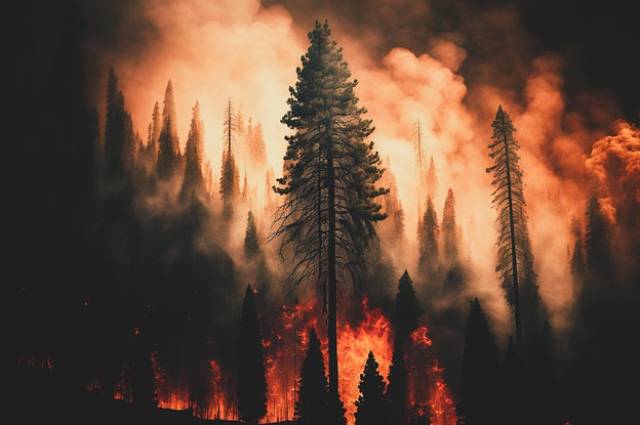
Image by Chil Vera from Pixabay
A Summer That Turned Catastrophic
In the sweltering heat of mid-January 2026, the skies over Chile’s south-central heartland turned an ominous orange-grey as smoke billowed like dark clouds over cities and towns. Sirens wailed through the humid afternoon air while families packed hastily into vehicles, clutching pets and treasured belongings, fleeing ahead of advancing flames that devoured forests and homes alike. By the time night fell, entire neighbourhoods resembled charred skeletons, and a profound sense of shock spread as tens of thousands of residents found themselves uprooted and uncertain of what lay ahead.
The inferno began to rage on 16 January 2026, igniting dozens of wildfires across the Biobío and Ñuble regions — landscapes of rolling hills, forest plantations and coastal communities roughly 500 kilometres south of the capital, Santiago. Within days, the blazes had grown into a sprawling network of monstrous fire fronts, fanned by searing temperatures, strong winds and years of abnormally dry conditions. By late January, authorities confirmed that the fires had scorched more than 45,000 hectares of land, compelling an unprecedented 50,000-plus evacuations and leaving at least 21 people dead, with scores injured and hundreds of structures destroyed. Hundreds of homes were reduced to ash, and entire communities faced the grim task of rebuilding from blackened remnants of what once was.
This disaster matters not only because of its immediate toll on life and property, but because it starkly illustrates how the impacts of climate extremes, land-use patterns and human vulnerability intersect with devastating force. What began as scattered flames became an emblem of a broader crisis — one in which climate stress, drought, and rapid urban encroachment into fire-prone landscapes turned what might have been manageable blazes into a catastrophic event with national and global reverberations. With every plume of smoke and every evacuation order, Chile’s wildfire tragedy echoes the escalating pattern of extreme fire seasons seen around the world — from the forests of Australia and California to Mediterranean Europe — underscoring that such disasters are no longer rare exceptions, but emerging norms in a warming climate.
Where and How It Happened: Geography of the Disaster
The 2026 wildfires ravaging Chile erupted in the Biobío and Ñuble regions, two adjacent administrative areas in central-southern Chile, roughly 500 kilometres south of the capital, Santiago. These regions sit at a geographic crossroads where the country’s Mediterranean climate — warm, dry summers and mild, wet winters — transitions into the cooler, rainier zones further south. It was in this ecosystem of dense forests, coastal hills and valleys that fire conditions grew extreme in mid-January 2026, setting the stage for one of the most destructive wildfire seasons in recent Chilean history.
Biobío and Ñuble encompass a varied landscape. Their terrain includes rolling coastal hills and slopes, forest plantations and the urban–wildland interface — areas where towns and cities directly border wild vegetation. This blend of human settlement and flammable countryside is especially susceptible to wildfire spread. In particular, the Concepción metropolitan area, a major urban centre in Biobío, lies amid such mixed land cover, making its fringes vulnerable as fires advanced. Towns like Penco, Lirquén and suburban districts around Concepción were among the hardest hit.
The urban–wildland interface is a crucial part of understanding why this region burned so intensely. In areas where residential neighbourhoods sit adjacent to forests or plantation lands, fires can leap from vegetation to homes and back, creating complex fire behaviour that is hard to contain. Academics have pointed out that much of the Province of Concepción — which includes Lirquén, Penco and other municipalities — is characterised by extensive, continuous forest cover abutting built environments. According to university researchers, nearly 90% of the province’s territory is considered at risk of wildfires due to this pattern of land use.
Beyond land use, terrain and weather played a decisive role. The coastal hills and valleys create channels for winds to funnel inland, accelerating the spread of flames once ignited. During the critical days of the 2026 fires, winds along the Biobío coast were reported to be strong, sometimes exceeding 50 km/h, pushing fire fronts rapidly across landscapes already dried by weeks of extreme heat and low humidity. These conditions, combined with sloping terrain, helped fires race uphill and leap across ridges, overwhelming firefighting lines.
Satellite imagery from programs like the Copernicus Emergency Management Service captured the scale of the burn scars and smoke plumes as the disaster unfolded. High-resolution images showed massive areas rendered dark or orange as flames consumed vegetation and woodlands, while smoke columns stretched out over coastal waters late into January 2026. These visual data were crucial for emergency mapping and for understanding how quickly the fires grew across topographically varied terrain.
This combination of terrain complexity, vegetation type and proximity to settlements — along with high temperatures and dry winds — helps explain why the Biobío and Ñuble regions emerged as a wildfire hotspot during this event. In recent years, fire seasons in central-southern Chile have intensified, and the 2026 fires struck right where natural and human systems most closely interlock.
Causes Under Investigation: Nature, Negligence, or Intent?
Understanding the terrible scope of the 2026 Chile wildfires means looking beyond the flames to the complex interaction between climate, vegetation, land use and human activity. While the official cause of the disaster remains under investigation, experts agree that no single trigger explains the event. Instead, multiple factors combined to create conditions ripe for widespread conflagration — and almost all point to how human influence has amplified natural hazards.
- Climate & Weather Factors
One of the clearest drivers of the 2026 fires was the extreme weather pattern that Chile experienced in January. In the days leading up to the outbreak on 16 January 2026, temperatures in Biobío and Ñuble soared past 38 °C (100 °F) under a prolonged heat wave, while winds of 40–50 km/h (25–30 mph) pushed smoke and flames rapidly across dry vegetation. These conditions delayed firefighting efforts and made containment difficult.
Scientists point to Chile’s long-running megadrought — a period of rainfall deficits extending more than a decade — as a foundational risk factor. Such extended dryness leaves soils and forests exceptionally parched, dramatically increasing fire susceptibility. Researchers studying Chile’s fire regime note that recent extreme fire seasons (including massive events in 2017 and 2023) coincided with persistent heat waves and drought conditions far outside historical averages.
Wind dynamics also played a crucial role. Strong, shifting winds — sometimes driven by regional atmospheric conditions associated with Pacific climate oscillations like La Niña and ENSO variability — ventilated active fire fronts, rapidly spreading embers across fuel-rich areas. Winds essentially oxygenate fires, “transferring more heat in the direction of the wind and increasing fire intensity,” according to global fire ecologists.
These climate and weather components don’t just increase the chance of ignition — they shape fire behaviour and growth. In other words, these fires didn’t just happen because it was hot — they happened because long-term drying trends plus extreme short-term heat and winds created unusually dangerous fire conditions.
- Vegetation & Land Use
Chile’s forests — particularly in the central and southern regions — are not uniform. Large tracts of industrial pine and eucalyptus plantations, established for timber and pulp production, dominate the landscape alongside patches of native forest. These plantation species are known to be highly flammable compared to many native woodlands. Their dense, uniform stands and heavy accumulations of dry needles and branches form what fire scientists call a “high fuel load,” which allows fires to burn hotter, faster and more broadly.
Plantation forests also encourage what ecologists call “crown fires” — intense blazes that travel through treetops rather than just along the ground. Those fires can send embers far ahead of the main fire front, creating spot fires beyond control lines and making suppression efforts much harder.
By contrast, many native forests — with their greater species diversity and more humid microclimates — can slow fire spread. However, the pattern of widespread plantation forestry in regions like Biobío and Ñuble means much of the fire-prone terrain contains readily combustible trees.
Another land-use factor is the expansion of housing and infrastructure into wildland–urban interface zones — areas where residential and commercial properties abut forests or grasslands. These zones are intrinsically vulnerable to wildfires because they increase the chance that a vegetation fire will intersect with people’s homes and critical infrastructure, increasing both ignition opportunities and potential damages.
- Human Factors
One stark statistic helps frame the human role: at least 98-99% of wildfires in Chile are caused by humans, either through negligence or intentional acts, rather than natural phenomena like lightning. This pattern reflects broader global trends in wildfire origin.
Human causes span a wide range:
- Negligence: Careless behaviours such as leaving campfires unattended, discarding cigarettes improperly, or undertaking open burns without permits can easily spark blazes in dry conditions.
- Infrastructure ignitions: Power lines, machinery faults and vehicles passing through dry brush can generate sparks that ignite fires. Electricity infrastructure is a known ignition source in many wildfire events globally.
- Intentional ignition: Authorities often investigate deliberate fire setting, especially when fires start in clusters or near sensitive infrastructure. In the 2026 season, more than 100 people were reported arrested in connection with wildfire starts, including at least one individual alleged to have played a central role in one of the deadliest blazes that led to multiple fatalities.
In truth, human activity often shapes not only ignition frequency but also where and when fires occur. Human-caused ignitions can extend fire seasons beyond what nature alone would dictate, creating more opportunities for fires to start when conditions are worst.
In summary, the 2026 Chile wildfires did not erupt from a single cause. Instead, they were the result of a dangerous confluence of extreme climate conditions, fuel-rich landscapes shaped by forestry and settlement patterns, and widespread human involvement in ignition. These overlapping factors transformed what might have been manageable blazes into a megafire catastrophe.
Timeline of the Fires: From Sparks to Megafires
The 2026 Chile wildfires began as a cluster of separate blazes in the Biobío and Ñuble regions on 16 January 2026, triggered by extreme summer heat, dry vegetation and strong winds. According to official tallies, dozens of fires ignited rapidly across central-southern Chile, overwhelming initial containment efforts and setting in motion one of the country’s worst wildfire crises in decades.
In the first two days (16–17 January), local authorities reported dozens of distinct fires burning simultaneously. Firefighting agencies struggled to keep up with the pace of new outbreaks, driven by gusty winds and temperatures often exceeding 30–38 °C (86–100 °F). These conditions allowed individual fires to swell quickly rather than die down as they might in milder weather.
By 18 January, the situation had deteriorated dramatically. Authorities estimated that 24–30 separate wildfires were active across the affected regions, with fire fronts spreading from rural woodlands into residential zones near Penco, Lirquén and Concepción, major population centres in Biobío. Reports that day described “megafire” behaviour—fires growing and merging faster than crews could contain them, propelled by high winds and dry fuels.
As the flames grew, municipal and regional governments issued waves of evacuation orders. Tens of thousands of residents were directed to flee their homes. By 18–19 January, more than 50,000 people had left at-risk towns and suburbs, many carrying only essentials as smoke and ash closed in on their communities.
With fires now threatening densely populated areas, President Gabriel Boric took decisive action on 18 January, declaring a state of catastrophe in both Biobío and Ñuble. This rare designation unlocked broader government powers, allowing the military to assist in firefighting, coordinate evacuations and mobilise additional emergency resources. Boric’s announcement also came alongside curfews in some fire-impacted municipalities.
Throughout 19–20 January, the fires continued to grow in scale. Officials reported more than 30 active blazes still burning despite round-the-clock efforts by thousands of personnel, including firefighters, army units and volunteers. The largest individual fire fronts—such as the one near Concepción—covered massive swaths of land and posed ongoing threats to infrastructure and populated neighbourhoods.
By 21 January, the government’s wildfire situation report put the total burned area at over 45,000 hectares (110,000 acres). In that assessment, officials listed 75 fires reported across the region, with at least 33 still active and consuming fuel in rugged, hard-to-reach terrain around Biobío and Ñuble.
Containment efforts remained ongoing at the time of reporting, with crews battling persistent blazes and attempting to reinforce perimeter lines around key fire fronts. While some smaller fires were brought under control, meteorological forecasts of continued heat and occasional high winds raised concerns that new flare-ups could continue, depending on weather conditions in the days ahead.
Human Toll: Lives Lost, Communities Shattered
When wildfires exploded across Chile’s Biobío and Ñuble regions in mid-January 2026, the flames did more than consume forests — they tore into the fabric of everyday life for thousands of families and entire communities. The official death toll from the blazes has risen steadily as emergency teams comb through affected areas, with recent government reports confirming at least 21 people have died in the fire-related catastrophe. Of these, 20 were in Biobío and one in Ñuble, reflecting the intense impact in the most heavily affected province.
Beyond fatalities, injuries have been widespread. Government agencies report more than 300 people wounded, many suffering from burns, smoke inhalation, and injuries sustained during hurried evacuations or firefighting efforts.
Who Was Most Affected
The human toll cuts across social lines, but certain groups have suffered disproportionately. Many of the fatalities were rural residents and older adults who lived in small towns or isolated settlements near forested land where escape routes were limited as fires advanced with little warning. In these areas, flames moved so quickly that some residents were unable to reach safety in time.
Emergency services also reported cases of first responders and volunteers facing grave danger as they worked to protect lives and property. While official sources have not released a full breakdown of firefighter casualties, the relentless pace of fire activity placed enormous strain on crews attempting to defend multiple fronts simultaneously.
Evacuations and Displacement
The scale of displacement has been immense. More than 50,000 people were forced to flee their homes as the wildfires encroached on towns, villages, and suburbs — a dramatic and chaotic outflow of residents seeking safety.
Evacuation alerts went out repeatedly as conditions shifted, with authorities broadcasting messages across rural and urban communities. In some regions, authorities issued dozens of evacuation warnings in a single day, reflecting the dynamic and unpredictable nature of the fire fronts.
Shelter Conditions and Displacement Hardships
Once evacuated, survivors faced weeks of uncertainty in emergency shelters and makeshift accommodations. Government reports note that hundreds of displaced people were housed in shelters, with thousands more staying with relatives or in temporary housing arrangements as conditions stabilised.
Shelters, often set up in school gymnasiums, community centres and sports halls, were overcrowded at times, with families sharing limited space amid the smell of smoke still lingering in the air. Necessities — warmth, food, clean water — became central concerns, especially for elderly evacuees, families with young children, and those with chronic health conditions who found the strain of displacement particularly taxing.
Emotional Trauma and Uncertainty
The emotional toll on survivors has been profound. Many have expressed feelings of shock, grief, and helplessness, not just over the loss of loved ones, but at the sudden devastation of homes and neighbourhoods they had known all their lives. In Lirquén — one of the worst-hit communities — smoke and ash blanketed streets long after the fires passed, leaving residents grappling with the physical and psychological aftermath of losing almost everything they owned.
One paraphrased account from Lirquén described a family who returned to find their house reduced to ashes, their belongings unrecognisable. Nearby, neighbours rummaged through debris looking for keepsakes and photographs, symbols of life before the fire. Others spoke of residents who stayed behind too long, trying to save pets or sentimental items, only to be overtaken by rapidly advancing flames — moments that would haunt them long after the smoke cleared.
Stronger Together — Yet Struggling
Community solidarity has been a defining response amid the trauma. Neighbours, volunteers and local organisations rallied to support displaced families with food, clothing, and emotional support. In shelters, volunteers helped register evacuees and connect them with emergency resources, working alongside government officials to manage the ongoing crisis.
Yet the road ahead remains uncertain. Many displaced families do not yet know when — or if — they can return home. For those who lost homes and livelihoods, the recovery process will not be measured in days or weeks but in years.
Destruction of Homes and Infrastructure
As the 2026 wildfires ravaged the Biobío and Ñuble regions, the physical damage to housing and infrastructure quickly emerged as one of the most alarming dimensions of the disaster. Beyond the tragic loss of life and mass evacuations, entire neighbourhoods were reduced to charred landscapes, with thousands of people suddenly facing homelessness and long-term disruption.
According to the latest assessments from Chilean authorities and disaster reports, thousands of homes were destroyed in the blaze’s path. Preliminary figures released by government agencies place the number of destroyed residences at more than 2,000, with many more damaged or at risk as firefighters struggled to bring multiple fire fronts under control. Estimates vary by source—another government tally suggests that some 3,200 homes were lost across Biobío and Ñuble, with the vast majority in Biobío.
The destruction was especially severe in communities on the urban fringes and rural edges, where flames swept through towns like Lirquén, Penco, Punta de Parra and parts of Concepción’s outskirts. These neighbourhoods, set amid forested hills and plantations, saw entire blocks of houses turned into smouldering ruins. Satellite imagery and drone footage released by officials captured streets lined with ash and rubble, vehicles burnt to skeletal frames and rooftops collapsed into smoky embers.
Infrastructure damage went beyond homes. Utilities such as power and water systems were widely disrupted, particularly in rural communities where lines and pipelines run through fire-prone terrain. Reports from the Superintendence of Electricity and Fuels (SEC) indicate that nearly 3,850 electricity customers experienced outages across Biobío and neighbouring regions in the fire’s aftermath, compounding challenges for residents and emergency services.
Public facilities also sustained significant damage. Dozens of schools and clinics were affected directly by the flames or closed temporarily due to safety concerns from smoke and infrastructure instability. In some cases, clinics in smaller towns were evacuated early in the fire event to protect patients and staff, further straining local health services amid a surge in smoke-related respiratory cases and burn injuries.
Officials have cautioned that the economic toll will be substantial. While comprehensive national estimates are still being compiled, early projections from economic analysts suggest the reconstruction and recovery costs across housing, utilities and public infrastructure could range from $450 million to $500 million USD, once rebuilding needs and support measures are fully accounted for.
Longer-term challenges loom large. Rebuilding will not only require restoring physical structures but also redesigning infrastructure to better withstand future fire seasons. In regions like Biobío, where much of the loss occurred amidst mixed urban–wildland settings, planners and residents alike are now grappling with difficult decisions about land use, fire breaks and community resilience as the country moves toward recovery.
Emergency Response: Successes, Struggles, and Criticism
When wildfires erupted across Chile’s Biobío and Ñuble regions in mid-January 2026, the scale and speed of the disaster tested the country’s emergency response infrastructure like never before. Firefighting agencies, the military, local brigades and federal authorities mobilised rapidly, yet faced overwhelming conditions that exposed both strengths and limits in Chile’s disaster management system.
Mobilisation of Firefighting Forces
Central to the initial response was the work of Chile’s National Forestry Corporation (CONAF), the agency responsible for forest management and wildfire suppression. In planning months before the 2025–26 wildfire season, CONAF had mobilised hundreds of brigadistas (specialised wildfire fighters), along with dozens of aerial resources — aircraft and helicopters — to improve readiness. Plans included multiple bases of operation and coordination with local authorities across regions prone to fire risk.
Once fires began on 16 January, CONAF personnel were among the first on the ground battling flames. These teams worked alongside local firefighting brigades, volunteer fire departments, and municipal emergency crews, trying to contain multiple blazes as they spread toward populated zones near Concepción, Penco and Lirquén.
Aerial Support and Technology
Aerial firefighting was a cornerstone of Chile’s strategy. Pre-season investments included new aircraft — including cargo planes like the C-130 “Hércules” capable of carrying up to 15,000 litres of water or retardant — and high-capacity helicopters such as the CH-47 Chinook, which can deliver large water drops in rugged terrain.
These assets allowed responders to attack fire fronts from above, dropping water and retardant to slow the flames and create containment lines where ground crews could operate. In many instances, aerial support helped protect critical access routes, communities and sensitive infrastructure that might otherwise have been compromised amid rapidly changing wind conditions.
Declaration of State of Catastrophe and Evacuations
Recognising that local resources alone could not manage the escalating crisis, President Gabriel Boric declared a state of catastrophe for both Biobío and Ñuble on 18 January 2026. This exceptional measure authorised the deployment of military units, expanded federal assistance, and greater logistical coordination, including evacuation support and shelter operations for affected residents.
Evacuation systems were activated with unprecedented scope: more than 50,000 people were ordered to leave their homes as fires advanced toward towns and suburbs. Alerts — including SMS messages, municipal announcements and official evacuation orders — sought to get residents out quickly. Yet authorities emphasised throughout that evacuations remained dangerous and unpredictable given shifting fire behaviour.
Challenges and Criticism
Despite these efforts, responses were not without struggle or controversy. Emergency teams faced extreme heat, dry vegetation, and strong winds that pushed fire fronts faster than containment lines could be built. The sheer number of simultaneous fires — dozens across both regions — strained personnel and equipment, forcing prioritisation of efforts and sometimes leaving smaller communities exposed longer than anticipated.
Local leaders openly criticised what they saw as delays in federal assistance. In Penco, for example, the mayor publicly lamented that government support arrived hours after flames threatened key neighbourhoods, leaving local teams to fight alone in the interim. These criticisms highlighted the tension between central coordination and local needs on the front lines.
Other challenges included logistical barriers — damaged roads, power and communication outages — that slowed delivery of supplies and personnel into remote fire zones. The unpredictable weather — particularly shifting wind directions — repeatedly undercut containment lines and required rapid adjustment of response strategies.
Lessons and Looking Forward
Despite these struggles, response agencies did manage to protect numerous communities and critical infrastructure under extraordinarily difficult conditions. Collaboration between CONAF, military units and local brigades demonstrated Chile’s capacity for large-scale emergency coordination. Yet the criticism from local leaders and the high toll of the fires underscore the challenge of preparing for increasingly frequent and intense wildfire seasons — a task that will demand more resources, faster mobilisation, and deeper integration between national and municipal response systems in the years ahead.
Environmental Consequences
The 2026 wildfires in Chile’s Biobío and Ñuble regions have unleashed environmental impacts that will reverberate long after the last flames are extinguished. While headlines focus on human loss and property damage, the natural world — forests, soils, waterways and air quality — has also suffered profound and lasting harm.
Forest and Wildlife Loss
Vast swaths of forested land have been consumed by the fires. Satellite mapping from the European Union’s Copernicus Emergency Management Service illustrates extensive burn scars across diverse landscapes, representing the loss of vegetation and habitats over tens of thousands of hectares. While official ecological surveys are ongoing, researchers warn that such intense fires can eliminate entire layers of forest structure, from canopy trees to undergrowth, drastically reducing biodiversity and threatening wildlife that depend on those habitats.
Without vegetation cover, animals face food scarcity, displacement and heightened predation risk — risks that compound the direct dangers of the fires themselves.
Soil Damage and Erosion Risk
Wildfires don’t just destroy above-ground assets; they also transform soils in ways that can persist for years. Intense heat can alter soil chemistry, reduce organic matter and even make soil surfaces water-repellent — a condition known as hydrophobicity that inhibits water infiltration and increases runoff. This change elevates the risk of soil erosion, especially on steep slopes common in parts of Biobío and Ñuble. Once vegetative cover is gone, rain can wash topsoil into rivers and valleys, destabilising slopes and stripping nutrients that are critical for forest regeneration.
Impact on Water Sources
The wildfire aftermath also threatens water quality and watershed health. Burned soils and ash can wash into streams and reservoirs, raising sediment loads and contaminating drinking water sources. According to environmental scientists, such sedimentation can increase the cost and complexity of water treatment and reduce the availability of clean water for communities and ecosystems downstream. In regions where drought conditions already stress water supplies, this disruption adds another layer of vulnerability.
Air Pollution and Health Risks
Smoke and airborne particulates from the wildfires crossed broad areas, enveloping towns and cities in haze. While direct measurements from this season are still being analysed, the World Meteorological Organisation notes that wildfire smoke can significantly degrade air quality, posing risks to human health and contributing to regional haze that may travel long distances. Particles emitted by burning vegetation affect respiratory health, especially for children, the elderly and people with pre-existing conditions.
Long-Term Ecological Recovery Challenges
Ecological recovery after such large, high-intensity fires is not swift. Native plant communities may take years or decades to re-establish, particularly where soils have been degraded, and invasive species can gain footholds in the burned landscape. The altered post-fire environment — with higher erosion risk, lower nutrient retention and disrupted water cycles — complicates restoration efforts. Scientists emphasise that recovery will depend not just on replanting but on sustained ecosystem management over many seasons.
How This Compares to Past Chilean and Global Wildfires
The 2026 wildfires in Chile — which had burned over 45,000 hectares and forced tens of thousands into evacuation by late January — are part of a troubling pattern of increasingly severe fire seasons in the country’s recent history. While the immediate impact of these fires is still unfolding, comparing them with past events helps illuminate how extreme wildfire risk in Chile has evolved.
One of the most striking recent precedents is the 2024 Chile wildfires, particularly the catastrophic blaze in the Valparaíso region in early February 2024. That event was among the nation’s deadliest, resulting in over 130 confirmed deaths and widespread destruction of homes and infrastructure across multiple regions, including Valparaíso, O’Higgins and Maule. While the 2026 fires have thus far caused fewer fatalities, their rapid spread, large burned area and the scale of evacuations underscore a broader escalation in fire season severity.
Scientists studying wildfire patterns in Chile note that fire activity has risen markedly over the past decade, with a large portion of the most destructive fire seasons occurring since 2014. Trends show that climate-driven factors like extreme heat, prolonged drought and strong winds have extended fire weather conditions and elevated risk across central and southern Chile.
Chile’s worsening fire trends mirror global patterns. Regions such as California, southeastern Australia and the Mediterranean have faced increasingly large and intense wildfires in recent years, often linked to higher temperatures and drier conditions caused by climate change. These “megafires” — massive, hard-to-control blazes that burn extensive natural and human landscapes — reflect a growing challenge shared across continents.
The emergence of these megafires in disparate regions signals that extreme wildfire seasons are no longer isolated anomalies but part of a broader global shift in fire regimes. That makes the 2026 Chile wildfires both a national emergency and a reminder of changing wildfire dynamics worldwide.
Climate Change and the Future of Fire in Chile
Chile’s 2026 wildfire crisis didn’t occur in isolation — it reflects broader climate-driven trends that are reshaping fire risk in the country and around the world. Scientific studies show that conditions favouring wildfires — such as higher temperatures, persistent drought and extreme fire weather — have intensified markedly over the past decade, especially in central Chile, where most of the recent destructive seasons have occurred. Nearly two million hectares have burned in the last decade, roughly three times the area burned in the previous decade, and six of the seven most destructive fire seasons on record have taken place since 2014. These patterns point to a long-term shift in fire behaviour linked to climate factors like heatwaves and droughts.
One central driver is warming trends in central and southern Chile, where repeated heatwaves and low precipitation have created exceptionally dry vegetation and soil conditions. Researchers find that rising temperatures and declining rainfall have fostered “fire-weather” conditions — a combination of high heat, low humidity, dryness and strong winds — that greatly increase the likelihood of wildfires spreading rapidly once they ignite. These are not only seasonal anomalies; they reflect a climate-change-linked trend of hotter, drier summers that prolong and amplify fire risk.
Climate experts also warn that the wildfire season in Chile is lengthening. Historically, the most severe fires occurred during mid-summer, but hotter temperatures earlier in the season and lingering warmth later into autumn suggest that the window of severe fire risk is expanding. Former officials from Chile’s National Forestry Corporation (CONAF) have even noted that — under future climate scenarios — the country could see fire seasons **lasting “almost year-round,” with different intensity peaks.
Beyond climate itself, urban growth into fire-prone zones exacerbates risk. As towns and cities expand toward woodlands and plantation forests, more people and infrastructure sit where flames can encroach — increasing both ignition opportunities and potential damages when fires intensify.
Looking ahead, scientists warn that fire risk in Chile is likely to increase further without substantial mitigation and adaptation. Continued warming, persistent drought conditions and the interplay of large-scale climate patterns like El Niño may make extreme fire seasons more frequent and more intense, testing emergency systems and community resilience for years to come.
Recovery, Rebuilding, and Policy Questions
In the wake of the 2026 wildfires, Chile faces not just the physical task of rebuilding homes and infrastructure, but also fundamental questions about how to strengthen resilience against future catastrophes. The government has already begun structuring aid and reconstruction plans at national and regional levels. In the Biobío region, for example, the national forestry agency CONAF announced a Plan of Action for 2025–26 backed by more than $23 billion pesos in investment to bolster fire prevention and response capacity — including personnel, aircraft and detection technology — as part of a broader recovery and preparedness strategy.
Municipal and regional authorities are also mobilising support. The Asociación Chilena de Municipalidades (ACHM) has organised coordinated aid deliveries, including water tanks, construction materials and essential supplies, to communities in Biobío and Ñuble, and forged collaboration between neighbouring municipalities to streamline relief efforts. Such initiatives aim to meet urgent needs while laying groundwork for longer-term community rebuilding.
However, rebuilding challenges remain daunting. Restoring utilities, repairing damaged infrastructure and replacing thousands of lost homes will require sustained funding and coordination across levels of government. Rural and interface communities — where residential areas abut wildlands — may face particular obstacles due to rugged terrain and limited access to reconstruction resources.
Policy debates have intensified around how Chile should transform its approach to fire prevention and land management. Proposals under discussion include comprehensive forestry policy reform and the pending Ley de Incendios (Wildfire Law), which President Gabriel Boric has urged Congress to approve to improve legal frameworks for prevention and response.
Experts also stress the need for early warning systems, improved land-use planning and community preparedness networks to reduce vulnerability. Recent national strategies include the development of extensive firebreak networks spanning thousands of kilometres to reduce fuel continuity and inter-institutional coordination to strengthen observation, alerting and rapid response well before flames spread.
In a landscape increasingly shaped by climate extremes, Chile’s recovery efforts are as much about forging long-term resilience as they are about restoring what was lost — requiring sustained investment, policy innovation and community engagement to better withstand fire seasons yet to come.
Conclusion – A Warning Written in Ash
The 2026 wildfires in Chile will be remembered not only for the scale of loss — with more than 45,000 hectares burned, over 50,000 people displaced and at least 21 lives cut short in Biobío and Ñuble — but for the profound questions they raise about a changing world. What began as dozens of fires on 16 January quickly grew into megafires that overwhelmed communities, destroyed homes and scorched vast swathes of forest, underlining how rapidly and unpredictably such disasters can unfold.
As Chile grapples with recovery, the lessons are both sobering and urgent. The fires have shown how extreme heat, prolonged drought and high winds — conditions scientists warn will become more frequent with warming — create a landscape where fewer ignitions can cause far greater damage. That pattern, echoed in wildfire events across continents, suggests that this disaster is not an isolated anomaly but part of a broader shift in fire regimes driven by climate stress.
Yet, within that harsh reality lies a testament to human resilience. Communities evacuated with courage, emergency personnel battled under impossible conditions, and neighbours rallied to support one another in the aftermath. The path to rebuilding will not be swift, but it reflects a capacity to endure and to learn.
If this season’s fires teach Chile — and the world — anything, it is that wildfire disasters are not mere natural phenomena to be endured. They are early warnings of a future in which climate vulnerabilities, land-use decisions and preparedness policies must evolve together. Chile’s experience in 2026 serves both as a national reckoning and a global call to action — reminding us that in an era of shifting climate realities, the embers of one fire can illuminate the urgent work ahead.
References
- Al Jazeera – Chile declares ‘state of catastrophe’ as wildfires kill at least 18
- CBS News – Wildfires in Chile kill at least 15, force more than 50,000 to evacuate
- Al Jazeera – Chile forest fire death toll rises to 19
- The Guardian – Chilean president declares state of catastrophe as wildfires kill at least 18
- Reuters – Chile fires kill at least 18 as firefighters battle extreme heat, winds
- Wikipedia – 2026 Chilean wildfires (overview, statistics)
- El Ciudadano – Red Alert in Ñuble, Biobío, and Araucanía Due to Wildfires and Evacuation Orders
- TMV – Wildfires devastate Central Chile, Kill 18 as over 50,000 evacuated
- MercoPress – Chile wildfires: death toll rises to 20 as authorities report widespread destruction
- Copernicus – Wildfires in the Biobío and Ñuble regions, Chile (satellite mapping)