
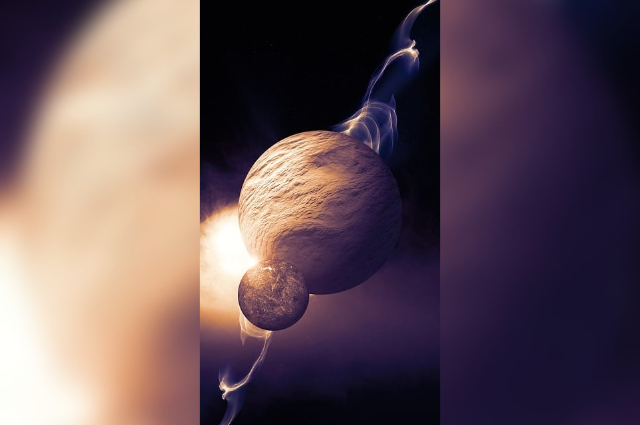
Image by ds-grafikdesign from Pixabay
One Name, Two Worlds
Few names in science carry the weight, complexity, and continuity of Mercury. It is a word that belongs simultaneously to the depths of the Earth and the far reaches of space, designating both a dangerous, shimmering metal and the innermost planet of the solar system. This dual identity is not accidental. For more than five millennia, human civilisations have associated Mercury with speed, transformation, mystery, and power—qualities that unite the liquid metal drawn from the Earth and the small, fast-moving planet circling closest to the Sun.
On Earth, Mercury is known as a chemical element—hydrargyrum, or “liquid silver”—extracted primarily from the vivid red mineral cinnabar. Its unusual physical state, flowing like water while remaining a metal, set it apart from all known substances in the ancient world. Alchemists, physicians, and miners viewed mercury as a substance of paradox: medicinal yet poisonous, solid yet liquid, useful yet deadly. Civilisations from China and India to Rome and the Andes mined and used mercury for pigments, metallurgy, ritual practices, and early scientific experiments, often without understanding the severe health consequences. Its danger only deepened its mystique.
In the sky, Mercury, the planet, embodied similar contradictions. It was bright yet elusive, visible only briefly at dawn or dusk, never far from the Sun. Ancient astronomers struggled to track it, at times believing it to be two separate celestial objects. The Greeks associated it with Apollo in the morning and Hermes in the evening—both gods of movement and communication—while the Romans unified it under the name Mercury, the swift messenger of the gods. The planet’s rapid motion across the sky and its refusal to linger mirrored the restless, mobile nature of the liquid metal below.
The symbolic connection between these two Mercurys endured as science advanced. The same symbol (☿) came to represent both the planet and the element, linking astronomy, alchemy, and early chemistry into a single intellectual tradition. In the modern era, Mercury continues to challenge understanding. The planet’s extreme temperatures, massive iron core, and role in confirming Einstein’s theory of relativity make it one of the most scientifically significant worlds in the solar system. Meanwhile, mercury as an element remains a central concern in environmental science, public health, and industrial regulation.
This article explores Mercury in its full, dual meaning—tracing the geological origins of cinnabar, the chemical nature and consequences of elemental mercury, and the astronomical extremes of the planet Mercury. Together, these two worlds reveal how a single name can bridge Earth and space, history and modern science, myth and measurement.
Cinnabar: The Mineral That Gave Humanity Mercury
Cinnabar is the starting point of humanity’s long and complicated relationship with mercury. Long before mercury was understood as a chemical element, it was encountered as a striking red mineral that seemed almost alive when heated, releasing shimmering liquid metal. This transformation—from solid red stone to flowing silver liquid—captured human imagination and laid the foundation for mercury’s scientific, cultural, and symbolic importance.
Chemical and Physical Nature of Cinnabar
Cinnabar is mercury sulfide, with the chemical formula HgS, and it is the primary natural source of mercury on Earth. Chemically, it is a sulfide mineral in which mercury atoms are tightly bonded to sulfur. This strong bond explains both cinnabar’s relative stability in nature and the need to heat (roast) it to extract elemental mercury.
Physically, cinnabar is best known for its intense red to reddish-brown colour, one of the brightest among naturally occurring minerals. This colouration results from the electronic structure of mercury and sulfur and made cinnabar highly valued as a pigment. Its density is exceptionally high—around 8.1 g/cm³—reflecting the presence of mercury, one of the heaviest naturally occurring metals. Despite its vivid appearance, cinnabar has a relatively low hardness (about 2–2.5 on the Mohs scale), making it easy to grind into powder but also fragile.
Cinnabar crystallises in the trigonal (hexagonal) crystal system, forming prismatic or tabular crystals, though it is more commonly found in massive or granular forms. It is generally stable under surface conditions but becomes unstable when heated. At temperatures between roughly 400°C and 550°C, cinnabar decomposes, releasing sulfur dioxide and leaving behind liquid mercury. This property made it especially important to early metallurgists.
A closely related mineral, metacinnabar, is also mercury sulfide but differs in structure. Metacinnabar has a cubic (isometric) crystal structure and is typically dark grey or black rather than red. It forms at higher temperatures and can transform into cinnabar under certain geological conditions. Although chemically identical, metacinnabar is less visually distinctive and historically less important as a pigment, but it can still serve as a mercury ore.
Cinnabar’s abundance, vivid colour, and relatively straightforward mercury extraction process explain why it became—and remains—the chief ore of mercury, despite the element’s toxicity.
Geological Formation and Distribution
Cinnabar forms primarily in hydrothermal and volcanic environments, where hot, mineral-rich fluids circulate through fractures in the Earth’s crust. These fluids, often associated with relatively recent volcanic activity, transport mercury in dissolved form. When conditions such as temperature, pressure, or chemical composition change, mercury combines with sulfur and precipitates as cinnabar.
As a result, cinnabar is commonly found in veins and impregnations within sedimentary, metamorphic, or volcanic rocks, particularly near faults and fractures. It frequently occurs alongside other sulfide minerals, including pyrite (iron sulfide), marcasite, and stibnite (antimony sulfide). This association reflects the shared hydrothermal origin of these minerals and has often complicated mining, as mercury extraction required separating cinnabar from other sulfides.
Several regions of the world became historically significant due to large cinnabar deposits. The most famous is Almadén in Spain, home to the largest known mercury deposit on Earth. Almadén’s cinnabar veins are linked to ancient volcanic activity, and the site has been mined almost continuously for more than two millennia. For centuries, it supplied the majority of the world’s mercury.
In South America, Huancavelica in Peru emerged as a major mercury source during the Spanish colonial period. Its mercury was essential for silver extraction in Potosí, making cinnabar indirectly responsible for one of the largest transfers of wealth—and human suffering—in early modern history.
Europe also hosted important deposits at Idrija (in present-day Slovenia, historically linked to Italian and Austro-Hungarian regions), another long-lived mercury mining centre. In North America, cinnabar deposits in the California Coast Ranges supported mercury production during the 19th century, particularly during the Gold Rush, when mercury was used extensively to extract gold.
Historical Mining and Cultural Uses
Cinnabar has been mined and used for at least 5,000 years, making it one of the earliest exploited minerals. Ancient Chinese texts describe cinnabar mining and its use in medicine and Daoist alchemy, where it was believed to grant longevity or immortality—often with fatal consequences. In the Andes, pre-Columbian civilisations mined cinnabar and used it in ritual contexts, body decoration, and burial practices, associating its blood-red colour with life, power, and the afterlife.
The Romans expanded cinnabar mining on an industrial scale, especially at Almadén. Roman prisoners and enslaved labourers worked the mines under brutal conditions, as mercury vapours caused neurological damage and early death. Despite this, cinnabar remained essential for producing vermilion, a brilliant red pigment used in frescoes, manuscripts, official seals, and elite decoration across Europe and Asia.
Almadén’s significance only grew after the 16th century, when mercury became indispensable for silver amalgamation in the Americas. The global mercury trade connected Spanish mines to Peruvian and Mexican silver operations, reshaping the world economy while devastating local populations and environments.
In intellectual history, cinnabar and mercury played central roles in alchemy and early medicine. Alchemists viewed mercury as a fundamental substance capable of transformation, reflecting its ability to shift between solid, liquid, and vapour. Physicians prescribed mercury compounds for ailments ranging from skin diseases to syphilis, long before understanding their toxicity.
Thus, cinnabar is more than a mineral. It is the geological root of mercury’s power—scientific, economic, symbolic, and destructive. Through cinnabar, mercury entered human history, leaving a legacy that spans art, empire, science, and suffering.
Mercury the Element: Properties, Uses, and Dangers
Elemental mercury occupies a unique and troubling position in the history of science. Its extraordinary physical behaviour fascinated early observers, while its hidden toxicity caused widespread suffering long before its dangers were fully understood. Mercury’s story is therefore inseparable from both scientific progress and human cost.
Unique Physical and Chemical Properties
Mercury is the only metal that is liquid at standard room temperature, a property that immediately distinguishes it from all other metallic elements. With a melting point of –38.8°C and a boiling point of 356.7°C, mercury remains liquid across a wide temperature range encountered in daily environments. This unusual state results from relativistic effects on mercury’s electrons, which weaken metallic bonding and prevent the atoms from locking into a solid lattice at room temperature.
The metal is extremely dense, with a density of approximately 13.5 g/cm³, meaning it is more than thirteen times heavier than water. Objects that would normally sink in liquids can float on mercury, a property that intrigued early scientists and contributed to its use in precision instruments. Mercury is also a good conductor of electricity, though it conducts heat less efficiently than many solid metals.
Despite its stability as a liquid, mercury is highly volatile. Even at room temperature, it slowly evaporates, releasing invisible, odourless vapour. This vapour can be easily inhaled and readily absorbed into the bloodstream, making elemental mercury particularly dangerous in enclosed spaces.
The chemical symbol Hg derives from the Latin and Greek term hydrargyrum, meaning “liquid silver.” This name reflects both mercury’s silvery appearance and its flowing nature. Historically, mercury’s ability to change between liquid, solid, and gaseous states reinforced its reputation as a substance of transformation, influencing alchemical theories that viewed it as a fundamental component of all metals.
Industrial and Scientific Applications
For centuries, mercury’s unique properties made it indispensable in science and industry. One of its most familiar uses was in thermometers and barometers, where its uniform expansion and high density allowed for precise measurement of temperature and atmospheric pressure. Mercury-filled devices became standard in laboratories, hospitals, and weather stations worldwide.
Mercury was also widely used in fluorescent lamps, electrical switches, and rectifiers, where its conductive and vapour-forming properties were advantageous. In dentistry, mercury-based amalgams—mixtures of mercury with silver, tin, and other metals—were used extensively for tooth fillings due to their durability and ease of application.
In mining, mercury played a critical role in gold and silver extraction. Through amalgamation, mercury binds to precious metals, allowing them to be separated from ore. This technique was central to gold rush economies but released enormous quantities of mercury into soils and waterways.
Mercury compounds were also important in chemical manufacturing, including the production of chlorine and caustic soda. However, as awareness of mercury’s toxicity grew during the 20th century, these applications steadily declined. Many traditional uses have now been replaced by safer alternatives, and mercury-based devices have been largely phased out in developed countries.
Toxicity, Environmental Impact, and Regulation
Mercury is now recognised as one of the most dangerous environmental pollutants. Exposure to mercury—especially through inhalation of vapour or consumption of contaminated food—can cause severe neurological damage. Symptoms of mercury poisoning include tremors, memory loss, cognitive impairment, mood disturbances, and, in extreme cases, paralysis or death. Fetuses and young children are particularly vulnerable, as mercury interferes with brain development.
One of the most infamous examples of mercury toxicity is Minamata disease, first identified in Japan in the 1950s. Industrial discharge of mercury into Minamata Bay led to widespread contamination of fish and shellfish. Residents who relied on seafood developed severe neurological disorders, and congenital mercury poisoning caused lifelong disabilities in children. Similar incidents have occurred elsewhere, highlighting mercury’s global threat.
Mercury’s danger is magnified by its tendency to bioaccumulate. In aquatic environments, microorganisms convert mercury into methylmercury, a highly toxic form that builds up in the food chain. Predatory fish such as tuna and swordfish often contain mercury concentrations high enough to pose risks to human health.
In response, international efforts have sought to control mercury pollution. The Minamata Convention on Mercury, adopted in 2013, aims to reduce mercury emissions, phase out certain uses, and protect human health and the environment. Today, mercury is closely monitored, regulated, and increasingly restricted, symbolising a hard-earned lesson about the hidden costs of scientific and industrial progress.
Mercury the Planet: The Elusive World Near the Sun
Among the planets visible from Earth, Mercury has always been the most difficult to know. Never far from the Sun and visible only briefly at dawn or dusk, it challenged ancient observers and resisted detailed study until the space age. Yet this small, scorched world holds outsized importance for understanding planetary motion, internal structure, and the early history of the solar system.
Discovery, Naming, and Early Observation
Mercury is the oldest known planet, recorded in astronomical texts dating back more than 5,000 years. The Sumerians were among the first to document their motion, associating it with the god Nabu, the divine messenger. The Babylonians later tracked Mercury’s erratic path with remarkable precision, recognising its rapid movement relative to the fixed stars and incorporating it into early planetary models.
In ancient Greece, Mercury’s behaviour created confusion. Because it appears alternately in the morning sky before sunrise and in the evening sky after sunset, Greek astronomers initially believed they were observing two different objects. They named the morning apparition Apollo and the evening apparition Hermes, reflecting the planet’s dual nature and swift motion. Only later was it understood that these were the same celestial body.
The Romans unified this identity under the name Mercury, after the fleet-footed messenger of the gods. The name was a natural fit: no other planet moves so quickly across the sky or changes position so dramatically from night to night. The same symbol (☿) later came to represent both the planet and the metallic element, reinforcing the conceptual link between celestial speed and material transformation.
Mercury’s proximity to the Sun makes it extremely difficult to observe from Earth. It never strays more than about 28 degrees from the Sun, meaning it is visible only during twilight and never in a fully dark sky. Atmospheric turbulence near the horizon further complicates observation, which explains why even renowned astronomers such as Nicolaus Copernicus reportedly never saw Mercury with their own eyes. This observational challenge delayed accurate measurements of Mercury’s rotation, surface features, and physical properties until the 20th century.
Orbital and Rotational Extremes
Mercury occupies the innermost orbit of the solar system, with an average distance of about 58 million kilometres from the Sun. Its orbit is the most eccentric of all the major planets, meaning its distance from the Sun varies dramatically—from roughly 46 million kilometres at perihelion to about 70 million kilometres at aphelion. This eccentricity plays a major role in Mercury’s unusual rotational behaviour.
A year on Mercury—the time it takes to complete one orbit around the Sun—lasts only 88 Earth days, making it the shortest planetary year. However, Mercury’s rotation is unexpectedly slow. It completes one rotation on its axis every 58.6 Earth days. Rather than being tidally locked, Mercury exists in a 3:2 spin–orbit resonance, rotating exactly three times for every two orbits around the Sun.
This resonance produces one of Mercury’s most striking temporal paradoxes: a Mercurian solar day, measured from one sunrise to the next, lasts about 176 Earth days, longer than its year. As a result, a single location on Mercury experiences extremely long periods of daylight followed by equally long nights.
Mercury’s orbital dynamics have also played a critical role in physics. The planet’s orbit exhibits a small but measurable precession of its perihelion that could not be fully explained by Newtonian mechanics. In 1915, Albert Einstein’s theory of general relativity accounted precisely for this discrepancy, making Mercury a key testing ground for modern gravitational theory.
Size, Mass, and Density
Mercury is the smallest of the eight planets, with a radius of approximately 2,440 kilometres, only slightly larger than Earth’s Moon. Its surface area is actually smaller than that of Jupiter’s moon Ganymede, although Mercury remains more massive. In mass, Mercury is about 5.5 percent of Earth’s mass, placing it firmly among the terrestrial, or rocky, planets.
Despite its small size, Mercury has an unusually high density, about 5.43 g/cm³, nearly equal to Earth’s and far greater than the Moon’s. This density indicates that Mercury is composed largely of metal. Scientific evidence suggests that an enormous iron-rich core occupies roughly 60 percent of the planet’s volume, compared to about 16 percent for Earth.
Several theories attempt to explain this extreme structure. One proposes that Mercury originally formed as a larger rocky planet but lost much of its outer mantle after a massive early collision. Another suggests that intense solar radiation near the young Sun stripped lighter materials away, leaving behind a metal-dominated body. Regardless of the mechanism, Mercury’s composition challenges standard models of planetary formation.
Understanding Mercury’s size, mass, and density provides crucial insight into how rocky planets evolve under extreme conditions. In this sense, Mercury is not merely a small, scorched world—it is a surviving relic of the solar system’s violent beginnings.
Surface and Interior: A Planet of Fire, Ice, and Iron
Mercury’s small size and proximity to the Sun once led scientists to assume it was a simple, inactive world. Spacecraft exploration has overturned that view. Beneath its battered surface lies a planet shaped by intense impacts, internal contraction, and thermal extremes so severe that fire and ice coexist on the same world. Mercury is now recognized as one of the most geologically revealing planets in the solar system.
Surface Features and Impact History
Mercury’s surface is dominated by impact craters, recording a history of collisions that stretches back more than four billion years. Like the Moon, Mercury preserves the scars of the early solar system, when debris was abundant and planetary surfaces were frequently struck by asteroids and comets. Craters range from small bowl-shaped depressions to massive multi-ring basins hundreds of kkilometresacross.
Between these craters lie intercrater plains, smoother regions that partially bury older impacts. For decades, scientists debated whether these plains were formed by lava flows or by impact ejecta. Data from the MESSENGER spacecraft confirmed that much of Mercury’s smooth terrain is volcanic in origin, produced by widespread lava eruptions early in the planet’s history. However, unlike the Moon, Mercury lacks extensive dark lava seas known as maria. This absence reflects differences in crustal composition, volcanic chemistry, and internal evolution.
The most dramatic surface feature on Mercury is the Caloris Basin, one of the largest known impact structures in the solar system, measuring about 1,550 kilometres in diameter. Formed by an enormous collision early in Mercury’s history, Caloris reshaped the planet on a global scale. The impact generated concentric rings, extensive lava flooding within the basin, and a strange region of chaotic, fractured terrain on the opposite side of the planet—likely created by seismic shock waves travelling through Mercury’s interior.
Mercury’s surface also displays vast networks of lobate scarps, long, cliff-like ridges formed as the planet’s interior cooled and contracted. These features indicate that Mercury has shrunk by several kikilometresn radius, a process far more extensive than on the Moon or Mars. Together, craters, plains, basins, and scarps reveal a world shaped by both violent external impacts and profound internal change.
Interior Structure and Magnetic Field
Beneath Mercury’s ancient crust lies one of the most unusual interiors of any rocky planet. Measurements of the planet’s mass, density, and gravity field show that Mercury possesses an oversized iron-rich core that accounts for roughly 61 percent of its total volume. This is proportionally the largest core of any planet in the solar system.
The core is thought to consist primarily of iron, with smaller amounts of nickel and lighter elements such as sulfur. Surrounding it is a relatively thin silicate mantle and crust. This structure explains Mercury’s high density and suggests a violent early history. Leading theories propose that Mercury either lost much of its rocky mantle during a massive collision or formed in a region of the solar nebula where lighter materials were depleted by intense solar heat.
Evidence from spacecraft observations indicates that Mercury’s core is at least partially molten. One of the strongest clues is the planet’s global magnetic field, first detected by Mariner 10 and later mapped in detail by MESSENGER. Although Mercury’s magnetic field is weak—about 1 percent as strong as Earth’s—it is coherent and dipolar, meaning it resembles the field of a rotating magnet.
Such a field can only be generated by a dynamo mechanism, which requires the movement of electrically conductive liquid inside the planet. Mercury’s molten outer core likely convects slowly, producing the observed magnetic field. This discovery was unexpected, as scientists had assumed Mercury was too small to retain enough internal heat for long-term core melting.
Mercury’s magnetic field also creates a small magnetosphere that interacts with the solar wind. Although much weaker than Earth’s, it plays an important role in shaping the planet’s surface and exosphere by guiding charged particles toward the poles.
Temperature Extremes and Polar Ice
Mercury experiences the most extreme temperature variations of any planet. During the long Mercurian day, equatorial surface temperatures can exceed 430°C (800°F), hot enough to melt lead. At night, with no substantial atmosphere to retain heat, temperatures can plunge below –180°C (–300°F). This dramatic contrast is driven by Mercury’s slow rotation and lack of insulating air.
Despite this intense heat, Mercury harbours water ice. Near the planet’s poles, the axis of rotation is nearly upright, causing some crater floors to remain in permanent shadow. These regions never receive direct sunlight and can maintain temperatures below –170°C, cold enough to trap ice for billions of years.
Radar observations from Earth first hinted at the presence of polar ice in the 1990s. This discovery was later confirmed by MESSENGER, which detected strong hydrogen signatures consistent with thick deposits of water ice, sometimes buried beneath a thin layer of dark organic material. These organics may have been delivered by comets or carbon-rich asteroids.
The coexistence of extreme heat and persistent ice underscores Mercury’s complexity. It is a planet where proximity to the Sun does not guarantee uniform desolation. Instead, Mercury preserves a record of ancient impacts, internal dynamics, and volatile delivery—making it a world of fire, ice, and iron, shaped by both cosmic violence and delicate thermal balance.
Atmosphere, Magnetosphere, and Space Environment
Mercury exists in one of the most extreme space environments in the solar system. Lacking a substantial atmosphere and orbiting close to the Sun, the planet is continuously exposed to intense solar radiation and charged particles. Rather than a true atmosphere, Mercury possesses a fragile, constantly changing outer envelope that reflects an ongoing interaction between the planet’s surface and space.
Mercury’s outer gaseous layer is known as an exosphere, an ultra-thin collection of atoms and molecules so sparse that they rarely collide with one another. Unlike Earth’s atmosphere, Mercury’s exosphere has no stable layers, no weather, and no capacity to trap heat. Its composition is transient, with atoms continually being added and lost. These particles either escape into space or fall back onto the surface, creating a dynamic system driven by external forces rather than internal circulation.
Several elements have been detected in Mercury’s exosphere, most notably sodium, potassium, calcium, oxygen, and hydrogen. Sodium and potassium are particularly prominent, producing faint glowing clouds that can be observed from Earth using specialised telescopes. Their distribution varies with Mercury’s position in its orbit, revealing how solar activity and surface composition influence exospheric behaviour. Calcium, often concentrated at higher altitudes, suggests energetic processes capable of ejecting heavier atoms from the surface.
Mercury’s interaction with the solar wind—a continuous stream of charged particles emitted by the Sun—is especially intense due to the planet’s close proximity. Although Mercury has a global magnetic field, it is much weaker than Earth’s and provides limited protection. Solar wind particles frequently penetrate the magnetosphere, striking the surface directly in some regions. These impacts knock atoms loose from surface minerals, feeding the exosphere in a process known as sputtering.
One of the most striking consequences of this interaction is the formation of Mercury’s comet-like tail. As solar radiation pressure and solar wind forces push exospheric atoms away from the planet, long streams of sodium extend millions of kilometers into space, trailing behind Mercury as it orbits the Sun. This tail changes shape and intensity depending on Mercury’s distance from the Sun and the level of solar activity, making it a visible marker of space–surface interaction.
In addition to solar wind sputtering, micrometeoroid impacts play a crucial role in shaping Mercury’s space environment. Tiny dust particles constantly bombard the planet at high velocities, vaporizing small amounts of surface material upon impact. This vapour contributes additional atoms to the exosphere, particularly during periods when Mercury passes through dense streams of interplanetary debris.
Together, sputtering, micrometeoroid bombardment, and solar radiation create a delicate balance in Mercury’s exosphere. Atoms are continually liberated, transported, and lost, making the planet’s interaction with space a dynamic and ongoing process. Studying this environment has helped scientists understand how airless bodies evolve and how planetary surfaces respond to the harsh conditions near a star.
Exploration of Mercury: From Earth to Orbit
For most of human history, Mercury remained a point of light—bright, fleeting, and unreachable. Its proximity to the Sun frustrated observation, leaving its true nature hidden until the space age. Only with robotic exploration did Mercury transform from a mysterious dot into a complex, geologically active world.
Mariner 10: First Close Encounter
The first spacecraft to visit Mercury was Mariner 10, launched by NASA in 1973. Using an innovative gravity-assist maneuver with Venus, Mariner 10 flew past Mercury three times between 1974 and 1975. These flybys marked humanity’s first close look at the planet.
Mariner 10 mapped approximately 45 percent of Mercury’s surface, revealing a heavily cratered world reminiscent of the Moon. The images showed vast impact basins, intercrater plains, and large cliffs, suggesting a long history of bombardment and internal contraction. However, because the spacecraft encountered the same hemisphere during each flyby, nearly half the planet remained unseen.
One of Mariner 10’s most unexpected discoveries was the detection of a global magnetic field. Before this, scientists believed Mercury was too small and too cold to sustain a magnetic dynamo. This finding immediately challenged assumptions about Mercury’s interior and hinted at a partially molten core. Although limited in scope, Mariner 10 fundamentally altered scientific perceptions of the planet.
MESSENGER Mission
A far more complete picture of Mercury emerged with NASA’s MESSENGER (Mercury Surface, Space Environment, Geochemistry, and Ranging) mission. Launched in 2004, MESSENGER executed multiple flybys of Earth, Venus, and Mercury before entering orbit around Mercury in 2011. It remained in orbit until 2015, when it intentionally impacted the planet’s surface.
MESSENGER became the first spacecraft to map 100 pper centof Mercury’s surface, providing high-resolution images and detailed measurements of its composition, gravity field, and magnetic environment. The mission confirmed Mercury’s enormous iron-rich core, refined estimates of its internal structure, and demonstrated that the planet had undergone extensive volcanic activity early in its history.
One of MESSENGER’s most significant discoveries was the confirmation of water ice at Mercury’s poles, trapped in permanently shadowed craters. The spacecraft also detected organic-rich material covering some ice deposits, suggesting delivery by comets or carbon-rich asteroids. Additionally, MESSENGER revealed the global extent of Mercury’s tectonic scarps, showing that the planet has shrunk as it cooled.
Future Exploration
Mercury exploration is set to continue with BepiColombo, a joint mission by the European Space Agency and the Japan Aerospace Exploration Agency. Launched in 2018, BepiColombo is designed to study Mercury’s surface, interior, magnetic field, and exosphere in unprecedented detail after entering orbit in the mid-2020s.
Scientists hope BepiColombo will resolve lingering questions about Mercury’s formation, the precise structure of its core, the evolution of its magnetic field, and how intense solar radiation shapes airless worlds. Together, these missions have transformed Mercury from an observational challenge into a cornerstone of planetary science.
Scientific Significance of Mercury
Mercury’s importance in science extends far beyond its small size. Its orbit, composition, and environment have made it a crucial natural laboratory for testing fundamental physical theories and for understanding how rocky planets form and survive under extreme conditions.
One of Mercury’s most profound scientific contributions lies in its role in testing Einstein’s theory of general relativity. For centuries, astronomers observed a small but unexplained shift in Mercury’s orbital path known as the precession of its perihelion—the slow rotation of the point in its orbit closest to the Sun. Classical Newtonian mechanics could account for most of this motion, but a residual discrepancy remained. In 1915, Einstein demonstrated that the curvature of spacetime caused by the Sun’s mass fully explained the anomaly. This precise match between theory and observation provided one of the earliest and strongest confirmations of general relativity, elevating Mercury from a troublesome orbital oddity to a cornerstone of modern physics.
Mercury also offers critical insights into rocky planet formation. Its disproportionately large iron core challenges standard models of planetary differentiation, which predict a more balanced distribution of metal and silicate material. By studying Mercury’s structure, scientists test competing hypotheses involving early giant impacts, solar-driven material loss, and unusual chemical conditions in the inner solar nebula. Understanding how Mercury formed helps refine theories that explain not only the terrestrial planets of our own system but also rocky worlds elsewhere.
In the era of exoplanet discovery, Mercury has gained renewed relevance. Many exoplanets detected around other stars orbit extremely close to their suns, experiencing intense heat and radiation. Mercury serves as a nearby analogue for these close-in rocky exoplanets, allowing scientists to study how solid planets behave when exposed to extreme stellar environments. Observations of Mercury’s surface, magnetic field, and exosphere provide valuable clues about atmospheric loss, surface erosion, and long-term planetary survival.
Finally, Mercury functions as a model for extreme planetary environments. Its dramatic temperature swings, weak magnetosphere, and constant exposure to solar wind make it an ideal test case for understanding space weathering processes. Insights gained from Mercury inform studies of airless bodies such as the Moon and asteroids, as well as the interpretation of remote observations of distant worlds.
Through its unique characteristics, Mercury bridges physics, planetary science, and astrophysics. It demonstrates how even the smallest planet can yield some of the largest insights into how the universe works.
Conclusion: Mercury’s Dual Legacy
Mercury’s story is unlike that of any other name in science. Rooted in both Earth and sky, it embodies a dual legacy that spans mineral veins deep underground and a scorched world racing around the Sun. Through cinnabar, mercury entered human history as a substance of extraordinary promise and peril. Its vivid red ore fueled pigments that colored art, ritual, and authority, while the liquid metal extracted from it reshaped mining, medicine, and early science. Yet this same material inflicted immense human and environmental costs, reminding societies—often too late—that nature’s most powerful substances demand respect as well as curiosity.
Cinnabar-driven mercury production helped build empires and global trade networks. From Roman Spain to colonial Peru, mercury enabled silver extraction on a scale that transformed economies and connected continents. At the same time, exposure to mercury poisoned miners, communities, and ecosystems, leaving a legacy of suffering that still informs modern environmental policy. In this sense, mercury on Earth stands as a cautionary symbol of technological advancement unchecked by understanding.
In the heavens, Mercury, the planet, played a similarly transformative role in science, though with far different consequences. Its elusive orbit challenged astronomers for centuries, pushing observational techniques and theoretical models to their limits. Ultimately, Mercury became the proving ground for one of the greatest scientific revolutions in history: Einstein’s theory of general relativity. The planet’s peculiar motion helped redefine humanity’s understanding of gravity, space, and time, cementing Mercury’s place in the foundations of modern physics.
Despite their differences, the mineral and the planet share a powerful symbolic thread. Both forms of Mercury represent speed, danger, and transformation. The metal flows and vaporises with ease; the planet races across the sky and endures extremes of heat and cold. Both resisted simple explanation and forced humans to confront the limits of their knowledge. The shared symbol (☿) is more than a historical curiosity—it reflects a deep intuition that the natural world is interconnected across scales.
Today, Mercury remains central to scientific inquiry. On Earth, understanding mercury pollution is essential for protecting ecosystems and human health. In space, ongoing and future missions continue to uncover Mercury’s secrets, offering insight into planetary formation, extreme environments, and worlds beyond our solar system. Together, Mercury’s two identities remind us that science is a continuous dialogue between past and future, Earth and cosmos—a dialogue shaped by curiosity, caution, and the enduring power of discovery.
References
- https://www.britannica.com
- https://www.britannica.com
- https://www.usgs.gov
- https://www.who.int
- https://www.britannica.com
- https://solarsystem.nasa.gov
- https://www.nasa.gov
- https://sci.esa.int
- https://www.scientificamerican.com
- https://www.nationalgeographic.com