
Introduction: Why Michael Dell Matters Today
Michael Dell stands as one of the most consequential figures in the history of modern computing, not because he invented a new technology, but because he fundamentally changed how technology is built, sold, and scaled. In an industry often defined by rapid innovation and relentless disruption, Dell’s impact lies in its ability to recognise inefficiencies and convert them into enduring business advantages. From a college dorm room in Texas to the helm of a global technology empire, his career reflects the transformation of personal computing from a niche product into an everyday necessity.
The founding of Dell Computer Corporation in 1984 marked a decisive break from traditional manufacturing and retail models. By selling computers directly to customers and building systems only after orders were placed, Dell eliminated costly intermediaries and inventory waste. This approach not only lowered prices but also empowered consumers with customisation—an idea that reshaped the PC industry and forced competitors to rethink their operations. By the late 1990s and early 2000s, Dell had become the world’s largest PC manufacturer, a testament to the strength of its data-driven, customer-focused strategy.
Yet Michael Dell’s relevance today extends far beyond personal computers. His decision to take Dell private in 2013, followed by the landmark acquisition of EMC in 2016, repositioned Dell Technologies as a dominant force in enterprise infrastructure, cloud computing, and data management. These moves demonstrated long-term strategic thinking in an era increasingly dominated by short-term market pressures.
Equally significant is Dell’s expanding role as a global philanthropist. Through the Michael and Susan Dell Foundation and a historic multibillion-dollar commitment to children’s financial security in 2025, Dell has applied the same scale-driven logic of his business career to social impact. Together, these achievements make Michael Dell not just a successful entrepreneur but a defining architect of how technology, capital, and responsibility intersect in the 21st century.
Early Life and the Seeds of Entrepreneurship
Michael Saul Dell was born on February 23, 1965, in Houston, Texas, into a middle-class family that valued education and professional achievement. His father was an orthodontist, and his mother worked as a stockbroker, exposing Dell early to both analytical thinking and financial awareness. From a young age, he demonstrated a curiosity about how things worked—particularly systems that combined logic, numbers, and problem-solving. While technology would later become his chosen field, Dell’s earliest interests were rooted less in machines and more in understanding how value could be created and delivered efficiently.
As a teenager, Dell showed an unusual instinct for recognising patterns in consumer behaviour. One of the most telling examples came during high school, when he began selling newspaper subscriptions. Rather than approaching random households, Dell identified that newly married couples and new homeowners were far more likely to subscribe. He compiled mailing lists, targeted this specific demographic, and tailored his sales pitch accordingly. The result was remarkable: he earned roughly $18,000 in a single year, far exceeding what most teenagers could imagine. More importantly, the experience taught him enduring lessons about market segmentation, data-driven decision-making, and customer psychology—principles that would later define Dell’s business philosophy.
Around the same time, Dell developed an interest in computers, which were just beginning to enter mainstream awareness in the early 1980s. He began taking apart and upgrading personal computers, fascinated by the idea that technology could be improved and personalised. This hands-on engagement reinforced another core belief: efficiency mattered. Dell saw that many consumers were paying more than necessary for systems that did not meet their actual needs, a realisation that would later inspire his direct-to-customer model.
In 1983, Dell enrolled at the University of Texas at Austin as a pre-med student, following a conventional academic path that aligned with family expectations. However, his attention increasingly shifted away from biology and chemistry toward business opportunities emerging around campus. While still a student, he began assembling and selling computer upgrades from his dorm room, earning far more than he could from traditional part-time work. Within months, it became clear that his entrepreneurial pursuits offered both intellectual fulfilment and tangible results. This realisation marked a turning point, setting the stage for his decision to leave university and pursue business full-time—an unconventional choice that would soon redefine the personal computing industry.
The Dorm Room Startup: Birth of PC’s Limited
The origins of Dell’s global technology empire can be traced to a modest dorm room at the University of Texas at Austin in the early 1980s. While still enrolled as a student, Michael Dell began buying IBM-compatible personal computers, disassembling them, and upgrading their components—particularly memory and storage—before reselling them to customers. At a time when most consumers purchased computers through retail outlets at fixed prices, Dell recognised that many buyers wanted better performance without paying for unnecessary features. His dorm room became a small but efficient workshop, where technical curiosity intersected with an emerging business vision.
What truly set Dell apart was not merely his technical skill, but a strategic insight that challenged the dominant industry model. Dell observed that traditional PC manufacturers relied heavily on distributors and retail stores, which added cost, slowed delivery, and distanced companies from their customers. By selling directly to users and building systems only after receiving orders, Dell could offer lower prices, faster upgrades, and products tailored to individual needs. This direct-to-customer approach eliminated middlemen and provided immediate feedback from buyers, allowing Dell to refine offerings in real time. The idea was simple, but its implications for efficiency and scalability were profound.
By 1984, the business had outgrown the confines of dormitory life. At just 19 years old, Dell made the decisive—and controversial—choice to leave university and formalise his venture. With $1,000 in startup capital, he registered the company as PC’s Limited and moved operations to a small apartment in Austin. The early organisational structure was deliberately lean: a handful of employees, minimal overhead, and a relentless focus on speed and cost control. Computers were assembled on demand, orders were processed quickly, and customer service was handled directly, reinforcing trust and loyalty.
Customisation became a defining feature of PC’s Limited. Customers could choose specific components based on their needs, an uncommon option in an era dominated by standardised, prepackaged systems. This flexibility, combined with competitive pricing, gave the company an immediate edge over established competitors. Within its first year, PC’s Limited generated hundreds of thousands of dollars in revenue—an extraordinary achievement for a startup run by a teenager with no formal business degree.
The rapid growth of PC’s Limited soon attracted media attention and industry curiosity. Dell’s unconventional approach challenged long-standing assumptions about manufacturing and retail in the technology sector. What began as a dorm room experiment quickly evolved into a scalable business model, laying the foundation for what would become Dell Computer Corporation and signalling the arrival of a new force in personal computing.
Building Dell Computer Corporation: An Unconventional Rise
As PC’s Limited continued its rapid growth in the mid-1980s, it became clear that Michael Dell’s business was no longer a small entrepreneurial experiment but an emerging technology company with national ambitions. In 1987, the firm was renamed Dell Computer Corporation, a move that reflected both its expanding product range and the growing recognition of Dell’s brand. The name change also signalled a transition from a scrappy startup into a structured organisation capable of competing with established computer manufacturers.
Central to Dell’s expansion was its mastery of supply chain efficiency and cost control. Rather than maintaining large inventories, Dell refined a just-in-time manufacturing system in which components were ordered only after a customer placed an order. This approach minimised storage costs, reduced the risk of technological obsolescence, and allowed the company to incorporate the latest components almost immediately. Close relationships with suppliers enabled rapid turnaround times, while data from customer orders guided production decisions. At a time when competitors were burdened by excess inventory and slow response cycles, Dell’s model proved both agile and resilient.
In 1988, just four years after its founding, Dell Computer Corporation went public. The initial public offering raised approximately $30 million and provided the capital needed for international expansion, research and development, and infrastructure growth. The IPO also marked Dell’s arrival as a serious contender in the global PC market. Over the next few years, the company expanded into Europe and Asia, steadily increasing market share by offering competitively priced, customizable systems directly to businesses and consumers.
By 1992, Michael Dell had become the youngest chief executive officer of a Fortune 500 company at the age of 27. This milestone underscored both the speed of Dell’s rise and the effectiveness of its unconventional strategy. Under his leadership, revenue grew into the billions, and Dell established itself as a trusted supplier for corporate clients, government agencies, and educational institutions.
However, the early years were not without challenges. Rapid expansion strained internal systems, and Dell faced growing pains related to management experience and operational complexity. The company also encountered quality control issues and increasing competition from firms attempting to replicate its direct-sales model. Yet these obstacles reinforced Dell’s commitment to process discipline and continuous improvement. By confronting these challenges head-on, Dell Computer Corporation strengthened its foundations, positioning itself for sustained growth and eventual dominance in the personal computer industry.
The Internet Boom and Dell’s Path to Global Dominance
The mid-1990s marked a pivotal phase in Dell’s ascent, as the rapid expansion of the internet aligned perfectly with the company’s direct-sales philosophy. In 1996, Dell launched Dell.com, becoming one of the first major technology companies to sell computers online at scale. This move eliminated even more friction from the purchasing process and brought Dell closer to its customers than ever before. Within a year, the website was generating millions of dollars in daily revenue, demonstrating that e-commerce could be both efficient and profitable. The internet became a powerful extension of Dell’s existing model, enabling faster order processing, real-time customisation, and deeper insight into consumer demand.
As online sales surged, Dell entered intense market share battles with established rivals such as Compaq and Hewlett-Packard (HP). These competitors relied heavily on retail distribution and were slower to adapt to the speed and flexibility demanded by the digital marketplace. Dell’s ability to price aggressively, update configurations quickly, and respond directly to customer needs allowed it to gain ground rapidly. By focusing on operational efficiency rather than flashy marketing, Dell positioned itself as a practical and reliable choice for both individual consumers and large corporate clients.
During this period, Dell also expanded its product portfolio beyond desktop computers. The company invested heavily in laptops, recognising the growing demand for mobility among professionals and students. It entered the server market, targeting enterprise customers that required scalable and cost-effective infrastructure. Dell’s servers, built using industry-standard components, appealed to businesses seeking reliable performance without the premium pricing associated with proprietary systems. Over time, Dell further broadened its reach into storage and networking, laying the groundwork for its future transformation into an enterprise technology powerhouse.
By 2001, these strategies culminated in a major milestone: Dell became the world’s largest PC manufacturer, surpassing Compaq in global market share. This achievement was not driven by a single innovation, but by a tightly integrated system of strengths. Dell’s efficiency kept costs low, its customisation options met diverse customer needs, and its direct feedback loops provided valuable data to guide product development and supply chain decisions. Few competitors could match this combination of speed, scale, and responsiveness.
However, Dell’s dominance also revealed vulnerabilities. The company’s heavy reliance on the PC market made it sensitive to fluctuations in consumer demand, particularly as smartphones and tablets began to emerge in the mid-2000s. Additionally, rapid growth sometimes came at the expense of quality control and customer service, leading to public criticism and reputational challenges. These weaknesses underscored the limits of Dell’s model in a changing technological landscape and foreshadowed the strategic shifts that would soon become necessary to sustain long-term leadership.
Leadership Evolution and the Return as CEO
By the early 2000s, Dell Computer Corporation had reached a level of maturity that prompted changes in its leadership structure. In 2004, Michael Dell stepped down from the role of chief executive officer, choosing to remain as chairman of the board while professional managers assumed day-to-day operations. The decision reflected a common belief at the time that Dell, now a global corporation, required seasoned executives to manage its growing complexity. However, this transition soon revealed underlying vulnerabilities within the organisation.
In the years following Dell’s departure as CEO, the company began to lose momentum. Competitive pressures intensified as rivals such as Hewlett-Packard adapted more quickly to consumer trends, invested heavily in design and branding, and expanded their retail presence. Internally, Dell struggled with organisational rigidity, declining product quality, and customer service issues that damaged its reputation. The once-lean and responsive culture that had driven Dell’s success appeared increasingly constrained by bureaucracy and slow decision-making. Market share eroded, and investor confidence weakened.
Recognising the seriousness of these challenges, Dell’s board of directors urged Michael Dell to return as CEO in 2007. His comeback was widely viewed as a turning point, signalling the need for decisive leadership rooted in the company’s founding principles. Upon reassuming control, Dell moved quickly to assess operational weaknesses and restore accountability across the organisation. He initiated sweeping restructuring efforts aimed at simplifying management layers, improving execution, and realigning the company around customer needs.
Central to this transformation was a cultural shift. Michael Dell emphasised innovation, responsiveness, and operational discipline—values that had defined the company in its early years. Investment increased in product development and customer support, while performance metrics were tightened to ensure consistency and quality. Dell also encouraged more direct engagement with customers, using feedback to guide improvements and rebuild trust.
Although the turnaround was neither immediate nor effortless, Dell’s return stabilised the company during a critical period. By reasserting hands-on leadership and reinforcing a results-driven culture, Michael Dell laid the groundwork for the strategic reinvention that would follow—one that would ultimately reshape the company into a diversified technology enterprise capable of competing beyond the PC market.
Going Private and Reinventing Dell Technologies
By the early 2010s, Michael Dell had reached a strategic crossroads. While Dell remained a major global PC manufacturer, the market was slowing, margins were tightening, and the company’s quarterly earnings were under relentless scrutiny from Wall Street. Michael Dell believed that meaningful transformation—especially a shift toward enterprise infrastructure and long-term innovation—could not be achieved under the constant pressure of public-market expectations. In 2013, he made one of the boldest decisions of his career: taking Dell private.
The $24.4 billion leveraged buyout, backed by private equity firm Silver Lake, was among the largest technology buyouts ever attempted at the time. The move was controversial, facing resistance from some shareholders and analysts who questioned both the valuation and the risks involved. Yet for Michael Dell, the logic was clear. By removing the company from public markets, he could pursue a long-term strategy without the constraints of quarterly earnings targets, short-term investor sentiment, or public scrutiny over transitional losses.
Operating as a private company gave Dell greater flexibility to restructure operations, invest heavily in research and development, and reposition itself beyond consumer PCs. Costly but necessary changes—such as exiting low-margin businesses, reorganising product lines, and investing in enterprise solutions—could be executed more decisively. This period marked a fundamental shift in Dell’s identity, from a PC-centric manufacturer to a diversified technology solutions provider.
That transformation reached its peak with the acquisition of EMC Corporation in 2015, completed in 2016, for approximately $67 billion, making it the largest technology acquisition in history. The EMC deal brought together Dell’s strengths in servers and hardware with EMC’s leadership in data storage, virtualisation, and enterprise software—including a controlling stake in VMware. The acquisition was widely viewed as a high-risk gamble due to its size and complexity, but it reflected Michael Dell’s conviction that the future of computing lay in integrated infrastructure rather than standalone devices.
The result was the creation of Dell Technologies, a broad-based technology group offering end-to-end IT solutions. Under this new structure, Dell could serve enterprise customers across cloud infrastructure, data centres, cybersecurity, networking, and software, positioning itself as a comprehensive partner in digital transformation. The company became a key player in hybrid cloud environments, helping organisations manage data across on-premises systems and cloud platforms—a critical capability in an increasingly data-driven economy.
By 2018, with much of the integration complete and debt levels more manageable, Dell Technologies returned to public markets. The relisting was not a simple reversal but a reintroduction of a fundamentally different company. No longer defined solely by PCs, Dell now competes with the likes of IBM, Hewlett-Packard Enterprise, and cloud-native firms in enterprise IT. Navigating this new competitive landscape required balancing legacy strengths with innovation in areas such as artificial intelligence, edge computing, and cybersecurity.
Ultimately, the decision to go private—and the audacity of the EMC acquisition—reshaped Dell’s future. It demonstrated Michael Dell’s willingness to make long-term, high-stakes bets in pursuit of relevance and resilience, reinforcing his reputation not just as a founder, but as a strategist capable of reinventing a global technology giant.
Wealth, Investments, and the Broader Dell Empire
Michael Dell’s transformation from a college entrepreneur into one of the world’s wealthiest individuals mirrors the extraordinary scale of the business he built. As Dell Technologies expanded beyond personal computers into enterprise infrastructure, cloud solutions, and software, Dell’s personal fortune grew in parallel. By the mid-2020s, he ranked among the richest people globally, with wealth driven not only by his ownership stake in Dell Technologies but also by a diversified portfolio of long-term investments.
Central to this financial ecosystem is MSD Capital, the private investment firm that manages Michael Dell’s personal wealth. Established in 1998, MSD Capital was designed to operate independently of traditional hedge fund pressures, allowing for patient, value-oriented investments. Over time, its operations expanded through MSD Partners, which manages external capital alongside Dell’s own. Together, these entities invest across public equities, private companies, real estate, credit, and alternative assets, giving Dell significant influence across global financial markets.
One of the most consequential assets within the Dell empire was its stake in VMware, a company central to enterprise virtualisation and cloud infrastructure. Acquired as part of the EMC deal, VMware became a cornerstone of Dell Technologies’ enterprise strategy. In 2023, VMware was sold to Broadcom in a multibillion-dollar transaction, generating substantial cash and equity returns for Dell. The deal not only strengthened Dell’s balance sheet but also provided Michael Dell with additional capital to reinvest across technology and philanthropic initiatives.
Beyond finance, Dell’s influence spans technology innovation, business leadership, and global philanthropy. His investment activities reinforce emerging technologies and infrastructure, while his charitable initiatives apply similar scale and strategic discipline to social challenges. Together, these interconnected ventures form a broader Dell empire—one that extends well beyond a single corporation and positions Michael Dell as a powerful, enduring figure at the intersection of capital, technology, and global impact.
Public Presence: SXSW 2024 and Dell’s Ongoing Influence
Even after four decades in business, Michael Dell remains an active and visible presence in global conversations about technology and innovation. Rather than retreating into the background as a legacy founder, he continues to engage directly with entrepreneurs, policymakers, and industry leaders through major conferences and public forums. His appearances are not ceremonial; they are opportunities to shape discussion around where technology and business are headed next.
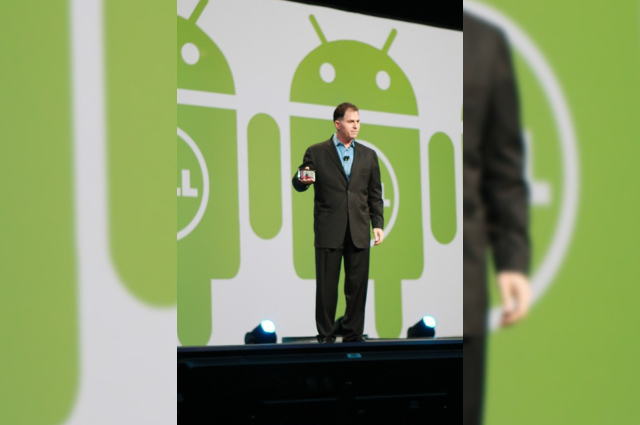
A notable example was his participation in SXSW 2024 in Austin, Texas—a fitting venue given Dell’s deep ties to the city and its startup culture. At SXSW, Dell spoke candidly about the accelerating pace of technological change, particularly in artificial intelligence, data infrastructure, and enterprise transformation. He emphasised that AI’s true value lies not only in algorithms but in the quality, security, and accessibility of data—areas where robust infrastructure remains essential. This perspective aligned closely with Dell Technologies’ strategic focus on hybrid cloud systems, edge computing, and enterprise AI readiness.
Dell also addressed entrepreneurship, drawing on his own early experiences to stress the importance of long-term thinking, operational discipline, and adaptability. He cautioned against chasing hype without fundamentals, arguing that sustainable innovation comes from solving real problems at scale. His remarks resonated with both early-stage founders and established executives navigating uncertainty in a rapidly evolving digital economy.
Through such appearances, Michael Dell has solidified his role as a thought leader and pragmatic futurist. Unlike figures who focus solely on vision, Dell bridges foresight with execution, grounding future possibilities in infrastructure, systems, and measurable outcomes. His ongoing public engagement reinforces his influence not just as the founder of a major technology company, but as a steady, credible voice shaping how innovation is understood and applied in the modern world.
Philanthropy: The Michael & Susan Dell Foundation
Michael Dell’s approach to philanthropy reflects the same strategic rigour and long-term thinking that define his business career. In 1999, he and his wife, Susan Dell, founded the Michael & Susan Dell Foundation with a clear mission: to transform the lives of children living in urban poverty through scalable, evidence-based solutions. From its inception, the foundation rejected symbolic giving in favour of measurable impact, positioning itself as a results-oriented institution rather than a traditional charitable organisation.
The foundation’s work is organised around four core focus areas: education, health, financial inclusion, and community development. In education, it concentrates on improving access, quality, and postsecondary success for students from underserved backgrounds. The foundation has invested heavily in public education reform, college readiness programs, and student support initiatives designed to increase graduation rates and long-term economic mobility. Its efforts extend beyond access to emphasise persistence and completion, addressing systemic barriers that prevent students from translating opportunity into outcomes.
In healthcare, the foundation focuses on strengthening systems that serve vulnerable populations. This includes improving access to primary care, maternal and child health services, and mental health support. Rather than funding isolated interventions, the foundation often works at the systems level—supporting data infrastructure, care coordination, and policy reforms that improve efficiency and equity across healthcare networks.
Financial inclusion has become an increasingly important pillar of the foundation’s work. Recognising that long-term opportunity depends on economic stability, the foundation supports initiatives that help families build assets, manage risk, and plan for the future. These efforts align closely with broader national discussions around children’s savings accounts and generational wealth-building, areas where the Dells have taken a leadership role.
Geographically, the foundation’s impact spans the United States, India, and South Africa, reflecting both global reach and targeted focus. In the U.S., it concentrates on urban communities facing persistent inequality. In India and South Africa, the foundation supports education and health initiatives that address structural gaps in access and quality, often partnering with local organisations to ensure cultural relevance and sustainability.
Over more than two decades, the Michael & Susan Dell Foundation has committed billions of dollars to philanthropic causes. Its projects are notable not only for their scale but also for their emphasis on measurable outcomes. Programs are routinely evaluated using data to assess effectiveness, guide adjustments, and inform future investments. This evidence-driven approach has enabled the foundation to scale successful models and discontinue those that fail to deliver results.
At its core, the foundation’s philosophy centres on opportunity equity—the belief that a child’s future should not be determined by geography, income, or circumstance. By combining capital with data, partnerships, and long-term commitment, Michael and Susan Dell have built a philanthropic institution that seeks not just to alleviate symptoms but to reshape systems. In doing so, they have redefined what large-scale, modern philanthropy can achieve.
The Landmark $6.25 Billion Donation in 2025
In December 2025, Michael and Susan Dell announced one of the most significant philanthropic commitments in modern American history: a $6.25 billion donation to support a new federal initiative commonly referred to as the “Trump Accounts” or “Invest America” accounts. The program represents a major policy effort to promote long-term financial security and asset-building for children, and the Dells’ contribution instantly elevated it from a legislative concept to a large-scale national experiment in economic opportunity.
The federal program establishes government-backed savings accounts for children born between 2025 and 2028. Each eligible child automatically receives a federally funded seed deposit at birth, designed to grow over time and be used later in life for approved purposes such as education, homeownership, or starting a business. Eligibility is broad, but the structure is intentionally progressive, with enhanced benefits aimed at children from low- and middle-income families. The accounts are invested rather than held as static cash, allowing compound growth to play a central role in wealth creation.
The Dells’ $6.25 billion pledge was structured to supplement these federal accounts by contributing $250 per child for families earning up to 150 per cent of the median income. This design ensures that the donation reaches millions of children who are most likely to benefit from early asset accumulation but least likely to receive intergenerational wealth transfers. By aligning private philanthropy with public infrastructure, the Dells amplified the reach of the program without duplicating or replacing government support.
The motivations behind the donation reflect a convergence of the Dells’ philanthropic priorities: data-driven intervention, scalability, and long-term impact. Rather than funding short-term relief, the initiative addresses a structural challenge—the widening wealth gap—by intervening at the earliest possible stage of life. The model assumes that modest investments made early, when paired with time and market growth, can produce meaningful financial resources by adulthood. This approach mirrors the Dells’ broader belief that systems-level solutions are more effective than isolated charitable acts.
The scale of the contribution is historic. At $6.25 billion, it stands as the largest private donation ever made to a children’s savings or asset-building program, surpassing previous philanthropic benchmarks by a wide margin. It also signals a shift in how major donors engage with public policy—not as replacements for government, but as catalytic partners capable of accelerating adoption and impact.
The long-term implications of the initiative could be substantial. If successful, the program may improve educational attainment, reduce student debt reliance, encourage entrepreneurship, and narrow racial and income-based wealth disparities. It could also reshape national conversations around financial inclusion by demonstrating that universal, early investment is both feasible and transformative. For Michael and Susan Dell, the donation represents more than generosity—it is a calculated, future-oriented bet that opportunity, when backed by capital and time, can fundamentally change life trajectories at scale.
Leadership Philosophy, Mindset, and Management Style
Michael Dell’s leadership philosophy is rooted in a set of principles that have remained remarkably consistent throughout his career: customer obsession, operational efficiency, and adaptability. From the earliest days of selling computers directly to buyers, Dell has believed that understanding customer needs—often before customers articulate them themselves—is the foundation of sustainable advantage. This focus has driven everything from Dell’s build-to-order model to its emphasis on feedback loops that inform product design, pricing, and service.
At the core of Dell’s strategic mindset is a simple but powerful idea: find inefficiency and create value by eliminating it. Whether dismantling the traditional PC retail chain or restructuring a global technology company, Dell has repeatedly identified systems burdened by cost, delay, or complexity and redesigned them for speed and clarity. This approach is not disruptive for its own sake; it is pragmatic, analytical, and tightly aligned with measurable outcomes. Dell’s success demonstrates that innovation can emerge from process optimisation as much as from breakthrough inventions.
As a leader, Dell is known for his calm, disciplined demeanour. He favours data-driven decision-making over instinct alone, relying on metrics, scenario analysis, and long-term modelling to guide strategy. This methodical style has enabled him to navigate periods of volatility—from intense competition in the PC market to the high-risk integration of EMC—without overreacting to short-term setbacks. Long-term planning, rather than rapid tactical shifts, defines his approach to leadership.
These themes are articulated clearly in his memoir, Play Nice But Win, where Dell reflects on the importance of resilience, accountability, and ethical competition. He emphasises that success does not require aggression or recklessness, but persistence, clarity of purpose, and a willingness to learn from failure. The book underscores a central lesson of Dell’s career: enduring leadership is not about dominance, but about building systems that improve over time.
Criticisms, Controversies, and Lessons Learned
Despite its success, Dell’s rise was not without controversy, and several high-profile challenges tested both the company and Michael Dell’s leadership. One of the most notable incidents occurred in 2010, when Dell agreed to a settlement with the U.S. Securities and Exchange Commission over its failure to disclose substantial rebate payments received from Intel. While the company neither admitted nor denied wrongdoing, the case raised concerns about transparency and corporate governance, highlighting the risks of aggressive cost and margin strategies.
Earlier, in the mid-2000s, Dell faced growing criticism over product quality and customer service, particularly related to laptop reliability. Rapid expansion and an intense focus on cost efficiency sometimes resulted in inconsistent manufacturing standards and delayed support responses. These issues damaged customer trust and contributed to Dell’s loss of market share during that period, especially as competitors emphasised design, reliability, and user experience.
These episodes exposed a fundamental tension in Dell’s model: the challenge of maintaining low costs while continuing to innovate and deliver consistent quality. Michael Dell responded by acknowledging shortcomings rather than deflecting blame. Following his return as CEO, the company invested in quality control, streamlined support systems, and placed renewed emphasis on customer satisfaction metrics.
Over time, these lessons shaped Dell’s evolution into a more balanced organisation—one that continues to value efficiency, but not at the expense of trust or long-term competitiveness. The controversies ultimately reinforced a core principle of Dell’s leadership: operational excellence must be matched by accountability and continuous improvement.
Michael Dell’s Legacy and the Future of Dell Technologies
Michael Dell’s legacy is deeply embedded in the structure of the modern technology industry. His most enduring contribution lies in reshaping the global PC market through direct sales, build-to-order manufacturing, and just-in-time supply chains. These innovations redefined efficiency and responsiveness, influencing not only computer manufacturers but also broader industries that adopted similar operational models. What began as a cost advantage evolved into a blueprint for scalable, customer-driven production in the digital age.
Beyond personal computing, Dell played a decisive role in transforming enterprise IT infrastructure. Through strategic acquisitions and long-term investment, particularly the EMC merger, Dell Technologies emerged as a comprehensive provider of servers, storage, networking, and software solutions. This shift allowed enterprises to manage increasingly complex data environments and positioned Dell as a key partner in digital transformation, hybrid cloud deployment, and secure data management.
Equally significant is Dell’s philanthropic legacy, which reflects a commitment to systemic change rather than short-term relief. Through multibillion-dollar investments in education, health, and financial inclusion, Dell has extended its influence far beyond business. His landmark 2025 donation to children’s savings accounts further underscores a belief in early, scalable interventions as tools for long-term economic mobility and social stability.
Looking ahead, Dell Technologies is positioned to play a critical role in the AI-driven era. As artificial intelligence increases demand for high-performance computing, secure data infrastructure, and edge solutions, Dell’s integrated portfolio offers the foundational systems required to support these technologies. Guided by Michael Dell’s long-term vision, the company is well placed to remain relevant—not by chasing trends, but by enabling the infrastructure on which the future of innovation depends.
Conclusion: The Enduring Significance of Michael Dell
Michael Dell’s journey from a university dorm room to the leadership of a global technology enterprise illustrates how disciplined thinking, operational clarity, and long-term vision can reshape entire industries. His contributions to technology extend beyond the personal computer itself, encompassing the systems of production, distribution, and customer engagement that made computing more accessible and efficient worldwide. By transforming Dell Technologies into a diversified enterprise infrastructure leader, he demonstrated that reinvention is not only possible but essential for longevity.
In business, Dell’s career offers a blueprint for modern entrepreneurship. His success was not driven by momentary disruption, but by sustained execution—finding inefficiencies, eliminating waste, and building scalable models rooted in real customer needs. Equally important is his willingness to confront setbacks, learn from criticism, and make bold decisions, including taking his company private to enable long-term transformation.
Beyond commerce, Dell’s expanding philanthropic footprint reflects a broader sense of responsibility. By applying strategic discipline to social challenges, he has shown that capital, when paired with purpose, can produce lasting societal change. As technology enters an era defined by artificial intelligence and data-driven systems, Michael Dell’s legacy endures as a reminder that true impact arises from resilience, adaptability, and a commitment to building for the future rather than reacting to the present.
References
Biography, Career, and Business Achievements
- Michael Dell profile — Encyclopaedia Britannica (founder of Dell Inc., leadership history, philanthropy)
- Michael & Susan Dell Foundation official biography (founding of his company, take-private, EMC deal, foundation work)
2025 $6.25 Billion Donation & Trump/Invest America Accounts
- Associated Press on the $6.25B donation to encourage families to claim Trump accounts
- NBC New York on details of the Trump Accounts and investment structure
- Times of India report on the Dell pledge supporting Trump Accounts’ rollout
- Reuters on Michael & Susan Dell’s pledge details and Invest America initiative
Additional Context on ‘Trump Accounts’
- MarketWatch article explaining federal “Trump accounts” background and structure
- Guardian on how accounts are designed and how families can use them