
Introduction: Life at the Edge of Survival
Death Valley is a place where survival itself becomes an act of defiance. Stretching across eastern California, this unforgiving landscape holds the record as the hottest place on Earth. In summer, temperatures routinely soar above 120 degrees Fahrenheit, and on some days the air shimmers at levels capable of melting asphalt. Rainfall is almost nonexistent—typically less than two inches a year—leaving the soil bone-dry, mineral-crusted, and hostile to life. For most plants, these conditions are a clear death sentence. Leaves scorch, cellular machinery collapses, and photosynthesis—the process that sustains plant life—shuts down long before the thermometer reaches such extremes. Under these circumstances, vegetation usually disappears, leaving behind bare stretches of desert where even the hardiest species struggle.
And yet, amid this furnace-like environment, a pale-green desert shrub quietly performs a remarkable feat of endurance. Tidestromia oblongifolia, commonly known as the Arizona honeysweet, doesn’t simply survive in Death Valley—it thrives. While other plants wilt, this small, unassuming member of the amaranth family pushes out fresh leaves, accelerates its growth, and carries on photosynthesising at temperatures that would kill most crop species. Its very presence raises an extraordinary scientific question: how does a plant not only tolerate but actually prefer temperatures approaching 120 degrees Fahrenheit?
This mystery drew the attention of plant biologists, who suspected that T. oblongifolia might hold secrets locked within its cells—secrets that could reshape our understanding of heat tolerance in plants. In November 2025, a groundbreaking study published in Current Biology revealed that the shrub possesses unique physiological, cellular, and genetic adaptations that allow it to function in extreme heat. The research shows that this desert native adjusts its internal machinery in ways no major crop plant can currently match.
As climate change drives global temperatures upward and heatwaves become more frequent and intense, the resilience of T. oblongifolia offers more than scientific curiosity. It presents a potential blueprint for safeguarding the future of food crops in a warming world. In a time when heat threatens agricultural stability, this desert survivor may point the way forward.
Death Valley: An Environment Designed to Kill Plants
Death Valley occupies a stark, sun-scorched basin along the eastern edge of California, bordered by the towering Panamint and Amargosa mountain ranges. It sits more than 280 feet below sea level—the lowest point in North America—and this unusual topography traps heat with astonishing efficiency. Classified as an “extreme desert,” Death Valley experiences some of the highest sustained temperatures on the planet. Summers regularly see daytime highs above 120°F, and in 1913, the valley set a still-debated world record of 134°F at Furnace Creek. Even nightfall brings little relief, as temperatures often remain above 90°F until dawn. Average annual precipitation rarely reaches two inches, making the region not only blisteringly hot but relentlessly dry.
Such conditions create a landscape where survival is nearly impossible for most plants. The soil, baked by decades of heat and shaped by the valley’s geology, is often crusted with salt deposits and minerals left behind by evaporated water. This salinity, coupled with the scarcity of moisture, drastically reduces the availability of nutrients and makes water uptake extraordinarily difficult. Roots encounter not just dryness but chemical stress, forcing plants to expend immense energy to draw in even small amounts of moisture.
Even if water were abundant, the physiological challenges of Death Valley’s heat would overwhelm most species. Extreme temperatures accelerate evaporation, rapidly dehydrating tissues and causing leaves to wilt or burn. Cellular proteins begin to denature, losing their structure and function. Photosynthesis, the process that fuels plant growth, collapses as enzymes fail and chloroplasts sustain heat injury. At the microscopic level, cell membranes—normally flexible and selective—become destabilised under intense heat, leaking essential molecules or allowing harmful ions to flood in. These combined pressures push most plants beyond their biological limits long before the valley reaches its daily temperature peak.
This is why true heat tolerance is incredibly rare in the plant kingdom. It demands a complex orchestration of protective mechanisms, energy-efficient adaptations, and molecular defences that few species naturally possess. In an environment designed to destroy plant life, evolution rarely has the opportunity—or the time—to shape such extreme resilience.
And yet, amid this harsh terrain stands Tidestromia oblongifolia, a pale-green shrub that breaks every rule of plant biology. While other species perish, this one thrives—growing faster, photosynthesising more efficiently, and expanding its biomass in the very temperatures that kill most vegetation. Understanding how it accomplishes this extraordinary feat becomes the next question.
Meet Tidestromia oblongifolia: A Desert Specialist
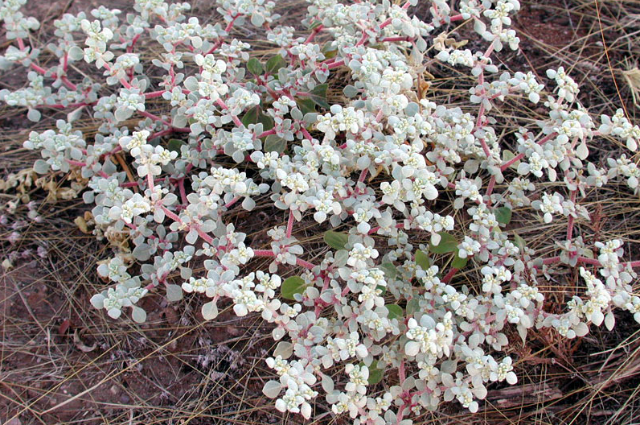
Amid the sun-baked valleys and rocky plains of the American Southwest thrives a modest but remarkable plant: Tidestromia oblongifolia. Commonly known as the Arizona honeysweet, this pale-green shrub exhibits a low, spreading growth habit that allows it to hug the desert floor, reducing exposure to intense winds and conserving moisture. Its slender, elongated leaves are slightly succulent, helping the plant retain water while minimising heat absorption. In bloom, it produces tiny, inconspicuous flowers, yet its understated appearance belies its extraordinary survival abilities.
Belonging to the Amaranthaceae family, T. oblongifolia shares lineage with several crops of global importance, including quinoa, amaranth, spinach, and sugar beet. These relatives highlight the family’s agricultural relevance: many are valued for their nutritional content, resilience, and adaptability to harsh growing conditions. The connection raises an intriguing possibility: the mechanisms that enable T. oblongifolia to flourish under extreme heat could one day inform breeding strategies or biotechnological innovations for its cultivated cousins.
Historically, T. oblongifolia has been observed in the hottest and driest regions of the southwestern United States. Beyond Death Valley, it appears in scattered pockets of southern and eastern California, northern Arizona, and parts of Nevada. Early botanists noted its tendency to thrive where other vegetation could not, often flourishing in salt- and mineral-rich soils that deter most plants. Its presence in these marginal habitats sparked curiosity among researchers, prompting questions about what unique adaptations enabled its survival.
For decades, the plant’s extreme heat preference remained largely anecdotal. Observers remarked on its vigorous growth during the summer months, when neighbouring species would shrivel or remain dormant. These patterns suggested that T. oblongifolia possessed intrinsic biological mechanisms allowing it to tolerate—and even thrive in—temperatures well above what most plants can withstand. Such natural resilience has made it a focus of modern botanical research, as scientists seek to uncover the physiological and genetic secrets that underlie its remarkable endurance.
By examining the Arizona honeysweet in its native environment and under controlled conditions, researchers hope not only to understand its survival strategies but also to explore their potential applications. In a warming world where heat stress increasingly threatens global agriculture, this unassuming desert shrub may hold lessons crucial for sustaining food security.
The Study: How Scientists Tested the Plant’s Heat Limits
To understand how Tidestromia oblongifolia withstands extreme heat, scientists began by collecting seeds from populations thriving in some of the hottest regions of the southwestern United States. Many samples came directly from Death Valley National Park, where summer temperatures regularly exceed 120°F. Additional seeds were gathered from southern and eastern California, ensuring a representative sample across the plant’s natural range. These seeds were carefully transported back to Michigan State University for controlled laboratory experiments, preserving their viability while allowing precise environmental monitoring.
In the lab, researchers first nurtured the seedlings under moderate conditions, maintaining a base temperature of 88°F (31°C). This initial phase allowed the plants to germinate and establish normal growth patterns before subjecting them to desert-level stress. Once the seedlings were healthy, the team simulated the harsh conditions of Death Valley, gradually increasing the daytime temperatures to approximately 117°F (47°C), closely matching the intense July heat these plants naturally encounter. The setup ensured the plants experienced not only high heat but also the sudden thermal fluctuations characteristic of desert environments.
To comprehensively analyse the plants’ responses, researchers employed a combination of physiological, cellular, and genetic techniques. Photosynthesis rates, growth speed, and water-use efficiency were monitored using specialised instruments capable of measuring gas exchange and energy production. Microscopy allowed scientists to examine the cellular structure of leaves, revealing changes in organelle arrangement, chloroplast morphology, and leaf anatomy. At the molecular level, RNA sequencing provided insights into which genes were activated or suppressed under heat stress, highlighting the plant’s genetic strategies for survival.
Observations were recorded over a carefully planned timeline. Within two days of exposure to desert-level heat, the seedlings began to accelerate their photosynthetic activity, a response that contrasts sharply with most other plants under similar stress. By ten days, the plants had noticeably increased their biomass, producing many small, heat-adapted leaves. Over the course of several weeks, researchers documented shifts in cellular structure, including mitochondria repositioning and cup-shaped chloroplast formation, alongside significant changes in gene expression related to heat tolerance and energy metabolism.
The uniqueness of this study lies in its ability to replicate Death Valley conditions under controlled laboratory settings, a feat rarely achieved in plant research. By precisely controlling temperature, light, and water availability, the team could isolate the plant’s intrinsic heat responses from environmental noise. This meticulous approach allowed scientists not only to observe how T. oblongifolia survives extreme heat but also to quantify and dissect the physiological and molecular mechanisms that make this desert specialist extraordinary.
Through these experiments, the researchers laid the groundwork for understanding the interplay between cellular architecture, genetic regulation, and physiological performance—insights that may ultimately guide efforts to develop heat-resilient crops for a warming world.
Physiological Superpowers: How the Plant Speeds Up at 117°F
Most plants experience stress when temperatures rise above 104°F (40°C), slowing growth, reducing photosynthesis, and sometimes ceasing metabolic activity altogether. High heat typically disrupts enzymatic functions, damages proteins, and causes water loss that forces the plant to close its stomata, limiting carbon dioxide intake. In stark contrast, Tidestromia oblongifolia exhibits a remarkable physiological reversal: rather than shutting down, its metabolic processes accelerate under extreme heat.
Laboratory experiments revealed that when exposed to 117°F (47°C), the Arizona honeysweet not only maintained photosynthesis but actually increased its photosynthetic rate. Within just a few days, the plant’s energy-production machinery operated more efficiently than it had under moderate temperatures. Researchers determined that the plant’s optimal photosynthetic temperature rises to approximately 113°F (45°C)—a level far above the tolerance of nearly all other studied desert or crop plants. This adjustment allows the plant to continue capturing sunlight and fixing carbon even under conditions that would incapacitate conventional vegetation.
The accelerated metabolism has tangible effects on growth. Within ten days of heat exposure, T. oblongifolia tripled its biomass, producing an abundance of new leaves. Interestingly, these leaves are smaller and more numerous than those grown under moderate temperatures. This leaf morphology provides multiple advantages: smaller leaves reduce the surface area exposed to heat and minimise water loss through transpiration, while a higher number of leaves increases overall photosynthetic capacity, effectively compensating for the smaller size. In combination, these traits allow the plant to maximise energy capture while mitigating heat stress—a rare dual benefit.
What makes T. oblongifolia’s response so extraordinary is that it fundamentally defies the rules observed in most plants. For almost all species, exceeding 104°F triggers a metabolic slowdown to conserve water and prevent protein damage. Photosynthetic enzymes denature at higher temperatures, chloroplast membranes destabilise, and growth stalls. By contrast, the Arizona honeysweet appears to have evolved a system that not only protects these critical structures under heat but also enhances their function, turning extreme conditions into a trigger for growth rather than a constraint.
This “speed up under heat” mechanism is revolutionary for plant biology and agricultural science. It demonstrates that plants can achieve a thermally adaptive acceleration of metabolism, effectively converting extreme environmental stress into a growth advantage. Understanding the physiological and molecular basis for this phenomenon could inform efforts to engineer heat-tolerant crops, potentially enabling food production in regions increasingly affected by climate change. In this way, Tidestromia oblongifolia serves not only as a model of resilience but as a blueprint for what may be possible in the next generation of agriculture.
Cellular Engineering: What Microscopes Reveal
While Tidestromia oblongifolia’s remarkable growth and accelerated photosynthesis are striking at the whole-plant level, the true marvel lies within its cells. Under extreme heat, this desert shrub orchestrates a series of micro-level transformations that safeguard energy production and allow it to thrive where most plants would fail. Advanced microscopy has revealed several key adaptations that form the foundation of its heat tolerance.
One of the most significant observations is the increase in mitochondria—the cell’s energy factories—within leaf cells. Not only do the mitochondria multiply, but they also migrate toward the chloroplasts, the specialised organelles responsible for photosynthesis. In most plants, mitochondria are dispersed throughout the cytoplasm, producing energy somewhat independently of chloroplast activity. In T. oblongifolia, the close proximity allows mitochondria to efficiently supply ATP and other metabolites directly to chloroplasts during periods of high photosynthetic demand. This spatial arrangement is especially critical under heat stress, when photosynthetic reactions accelerate and energy demand spikes. By clustering around chloroplasts, mitochondria help maintain a stable supply of energy and reduce the risk of metabolic bottlenecks that can halt growth in other species.
Microscopy also revealed an extraordinary transformation of the chloroplasts themselves. Many chloroplasts adopt cup-shaped structures, a morphology previously observed only in certain algae. These unusual shapes may provide multiple advantages. The concave architecture could enhance the capture and retention of CO₂, improving carbon fixation efficiency even when stomata partially close to conserve water. The cup shape may also facilitate heat dissipation, allowing the chloroplasts to operate safely at temperatures that would normally cause protein denaturation and membrane collapse. By optimising both CO₂ capture and thermal management, these specialised chloroplasts contribute directly to the plant’s ability to maintain photosynthesis under extreme desert heat.
Leaf cell architecture undergoes additional remodelling. Cells become smaller and more tightly packed, creating a dense yet highly organised internal structure. Smaller cells reduce the distance over which nutrients and signalling molecules must diffuse, allowing metabolic processes to continue efficiently even under thermal stress. Tightly packed cells also minimise the volume of water lost through evaporation, an essential adaptation in Death Valley’s near-arid environment. Together, these structural adjustments ensure that photosynthesis continues uninterrupted, even when temperatures reach levels that would destabilise the membranes and enzymes of most crops.
The interplay of these cellular strategies—mitochondrial clustering, cup-shaped chloroplasts, and compact cell organisation—creates a synergistic effect. Each adaptation alone provides some advantage, but in combination they form a robust internal system capable of sustaining high rates of energy production under extreme stress. While typical plants experience rapid collapse of photosynthetic machinery at high temperatures, T. oblongifolia maintains both the integrity and efficiency of its cellular operations. In essence, the plant “engineers” its own survival, rewiring its cells to convert extreme heat from a threat into an opportunity for growth.
These cellular insights underscore the complexity of heat tolerance in nature. Rather than relying on a single gene or structural change, T. oblongifolia coordinates multiple layers of adaptation, from organelle behaviour to cell geometry. This sophisticated internal architecture provides a blueprint for future research: understanding how these micro-level changes work together could inform efforts to design heat-resilient crops, translating lessons from desert specialists to plants that sustain global food systems. By studying these cellular innovations, scientists are uncovering the remarkable ways that life adapts to some of Earth’s most hostile environments.
The Genetic Story: Thousands of Genes Switch On During Heat Stress
While Tidestromia oblongifolia’s physiological and cellular adaptations are remarkable, its genetic response to extreme heat is equally extraordinary. Within the first 24 hours of exposure to Death Valley–level temperatures, the plant initiates a sweeping reprogramming of its transcriptome—the complete set of RNA molecules produced by its genes. Thousands of genes are either upregulated or downregulated in a coordinated response, forming a complex network that preserves cellular integrity and maintains photosynthetic efficiency under conditions that would quickly overwhelm most species.
A central feature of this response is the activation of heat-shock proteins (HSPs). These molecular chaperones prevent the denaturation of essential proteins and assist in refolding damaged ones, effectively protecting cellular machinery from heat-induced collapse. Concurrently, genes responsible for membrane stabilisation are turned on, ensuring that cell walls and organelle membranes retain their structure despite extreme temperatures. This dual protection safeguards both the mechanical and biochemical components of the cell, allowing metabolism to continue when typical plants would begin to fail.
Equally critical is the upregulation of Rubisco activase, a key enzyme that enables Rubisco—the central protein responsible for carbon fixation during photosynthesis—to function at high temperatures. In most plants, Rubisco becomes inefficient or inactive as temperatures rise above 104°F (40°C), causing photosynthesis to decline. In T. oblongifolia, however, enhanced Rubisco activase expression ensures that carbon assimilation remains robust, directly supporting the plant’s accelerated growth and biomass accumulation under heat stress. This single molecular adjustment, when combined with heat-shock proteins and structural gene activation, illustrates how multiple genetic pathways converge to maintain plant function under extreme conditions.
These networks do not operate in isolation. Genes controlling energy metabolism, stress signalling, and organelle organisation are activated in precise coordination, creating a system-wide protective effect. For example, genes regulating mitochondrial proliferation and chloroplast morphology work in concert with photosynthetic genes, linking cellular structure to energy production at the molecular level. This orchestration demonstrates that T. oblongifolia’s heat tolerance is not the result of a single mutation or isolated gene, but rather a multi-gene, multi-system adaptation honed by evolution over millions of years.
External experts have emphasised the significance of these findings. Ive De Smet, a plant biologist at Ghent University who was not involved in the study, notes that “the plant’s ability to coordinate so many genetic and cellular systems simultaneously is remarkable. It highlights that engineering heat tolerance in crops will require more than a few targeted gene edits—it demands an integrated approach that respects the complexity of plant biology.”
The discovery of T. oblongifolia’s transcriptomic flexibility offers both insight and inspiration. By decoding how thousands of genes switch on in response to heat, researchers gain a blueprint for developing heat-resilient crops capable of sustaining photosynthesis and growth under increasingly extreme conditions. Understanding these mechanisms may help scientists design interventions that mimic or transfer these multi-layered adaptations, offering hope for agriculture in a warming world where heat stress threatens global food security.
In sum, the plant’s genetic story reveals the power of coordinated, system-wide adaptation, demonstrating that survival in the world’s hottest deserts is achieved not through a single trick, but through the orchestrated efforts of thousands of genes working together. Tidestromia oblongifolia shows that heat tolerance is a symphony of molecular processes—an elegant natural solution to one of the most pressing challenges of our time.
Why This Plant May Hold the Key to Future Agriculture
As global temperatures continue to rise, the resilience of our food systems faces unprecedented pressure. Heatwaves are becoming more frequent and severe, threatening crops that have evolved under relatively moderate climates. In many regions, staple crops such as wheat, maize, and rice are already experiencing reduced yields due to temperature stress, while even traditionally heat-tolerant plants like quinoa or sugar beet have upper limits beyond which growth and reproduction decline. Against this backdrop, the extraordinary heat tolerance of Tidestromia oblongifolia offers a potential blueprint for safeguarding agriculture in a warming world.
The Arizona honeysweet possesses a suite of traits—accelerated photosynthesis at extreme temperatures, micro-level cellular adaptations, and a coordinated network of heat-responsive genes—that allow it to thrive where nearly all other plants falter. Scientists envision transferring these adaptations into crops within the same botanical family, including quinoa, spinach, amaranth, and sugar beet. Doing so could extend the temperature tolerance of these species, enabling them to maintain productivity even during prolonged heat stress and extreme summer conditions.
Several biotechnological approaches are under consideration. Gene editing techniques such as CRISPR could be used to directly modify key heat-tolerance genes, such as those controlling Rubisco activase or heat-shock protein production, in crop plants. Introgression breeding might allow traditional crops to incorporate traits from heat-tolerant relatives, leveraging natural genetic diversity. Synthetic biology approaches could recreate or enhance the organelle-level adaptations seen in T. oblongifolia, such as mitochondrial clustering near chloroplasts, while metabolic engineering could optimise photosynthetic efficiency and energy production under thermal stress. Each of these methods offers a potential pathway to developing crops capable of thriving in increasingly hostile environments.
However, the path from desert shrub to resilient crop is not without challenges. Heat tolerance in T. oblongifolia relies on complex, multi-gene networks and finely coordinated cellular systems. Replicating these features in crops is far from straightforward. Regulatory frameworks for genetically modified organisms, ecological concerns about introducing modified traits, and ethical considerations around altering staple foods all require careful deliberation. Moreover, ensuring that heat-tolerant crops maintain their nutritional value, yield, and resilience to other stresses like drought or salinity adds further complexity.
Despite these challenges, researchers remain optimistic. Study co-authors Seung Yon “Sue” Rhee and Karine Prado emphasise that nature itself provides a powerful model for adaptation. “Desert plants have spent millions of years solving the challenges we’re only beginning to face,” Rhee explains. Prado adds, “By studying these specialists, we can learn not just which genes are important, but how entire systems interact to protect plants under extreme conditions. This knowledge could transform how we think about crop resilience in the 21st century.”
In essence, T. oblongifolia represents more than a biological curiosity; it is a natural blueprint for the future of agriculture. By understanding and leveraging its adaptations, scientists may develop crops that withstand rising temperatures, helping to secure food production in an era of climate uncertainty. The Arizona honeysweet shows that the solutions to some of humanity’s most pressing agricultural challenges may already exist in the deserts of our planet, waiting to be understood and applied.
What We Still Don’t Know: Unanswered Questions and Future Research
Despite the remarkable insights into Tidestromia oblongifolia’s heat tolerance, many questions remain unanswered. One of the most compelling mysteries is how these adaptations evolved over millions of years. Did incremental changes in leaf morphology, organelle arrangement, and gene regulation gradually accumulate, or were there periods of rapid evolutionary innovation triggered by extreme environmental pressures? Understanding the evolutionary timeline could provide critical context for how complex, multi-gene traits arise and persist in nature.
Another area of uncertainty lies in translating these traits into crops. While T. oblongifolia offers a blueprint for heat resilience, it is not yet clear whether the same adaptations can be integrated into food plants without unintended consequences. Could enhancing heat tolerance inadvertently compromise yield, nutritional quality, or resistance to pests and diseases? These trade-offs are common in plant breeding and must be carefully considered before widespread agricultural application.
The balance between rapid growth and long-term survival is another unknown. In the lab, T. oblongifolia accelerates photosynthesis and biomass accumulation under extreme heat. But in natural conditions, might this fast growth come at a cost to longevity, reproductive success, or resource allocation? Understanding potential trade-offs is essential to ensure that introducing similar traits into crops does not lead to instability under field conditions.
Beyond heat tolerance, questions remain about the plant’s drought and salinity resilience. While the species thrives in some of the driest, most saline soils in North America, the specific mechanisms behind its water-use efficiency, salt tolerance, and nutrient uptake are not fully understood. Research into these additional stress adaptations could further expand the plant’s value as a model for resilient agriculture.
Finally, addressing these questions requires substantial global collaboration and investment. Interdisciplinary research spanning molecular biology, plant physiology, genetics, ecology, and agronomy is needed to fully decode the plant’s adaptations and responsibly translate them into crops. Funding is critical not only for advanced laboratory studies and field trials but also for building partnerships across universities, research institutes, and agricultural stakeholders worldwide.
In short, while T. oblongifolia has already provided extraordinary insights into heat tolerance, it represents just the beginning of a broader journey. Unlocking its full potential—both scientifically and for practical agriculture—will require careful, collaborative, and sustained research. The plant’s survival strategies may hold the key to helping humanity face the challenges of a hotter, drier, and more unpredictable world, but the path from discovery to application is still unfolding.
Conclusion: Desert Lessons for a Warming Planet
Tidestromia oblongifolia stands as a testament to the remarkable ingenuity of nature. In the searing heat of Death Valley, where most plants wither and die, this unassuming desert shrub thrives, orchestrating a suite of physiological, cellular, and genetic adaptations that allow it to flourish under conditions that would overwhelm conventional crops. Its resilience is more than a biological curiosity; it is a living blueprint for survival in extreme environments.
The plant exemplifies how life, over millions of years, has solved challenges that humans are only beginning to face. Its ability to accelerate photosynthesis, reorganise cellular structures, and switch on complex genetic networks demonstrates nature’s long-term strategies for coping with heat, water scarcity, and environmental stress. These adaptations are not isolated tricks but interconnected solutions that work in harmony, revealing the depth of adaptive intelligence inherent in plant systems.
As global temperatures rise and heatwaves become more frequent, the lessons from T. oblongifolia acquire urgent relevance. Understanding its strategies offers a pathway to developing crops capable of withstanding extreme heat, helping to secure food production for a warming world. Yet, the shrub’s story also serves as a broader reminder: the answers to some of our most pressing environmental challenges may already exist in the natural world, patiently refined over millennia.
In studying and learning from such desert specialists, scientists gain both practical insights and inspiration. Tidestromia oblongifolia embodies the resilience, ingenuity, and adaptability of life itself—a small plant with a powerful message: survival is possible, even in the harshest conditions, when evolution has had time to perfect its solutions.
Main Research & Reporting Sources
- “Photosynthetic acclimation is a key contributor to exponential growth of a desert plant in Death Valley summer” — Current Biology (2025) DOI: 10.1016/j.cub.2025.10.004
- “Meet the desert survivor that grows faster the hotter it gets” — ScienceDaily summary of the Current Biology study.
- “Death Valley plant reveals blueprint for building heat‑resilient crops” — MSU Today (Michigan State University) article about the research.
- “This Shrub Thrives in Death Valley’s Scorching Temperatures. Where Do Its Heat‑Tolerant Superpowers Come From?” — Smithsonian Magazine science‑feature summarising the findings.
- “Death Valley shrub rearranges its insides to thrive in one of the hottest places on Earth” — LiveScience coverage of the study.
- “A special shape shift helps a shrub thrive in blistering heat” — Science News article describing the novel cellular adaptations.