
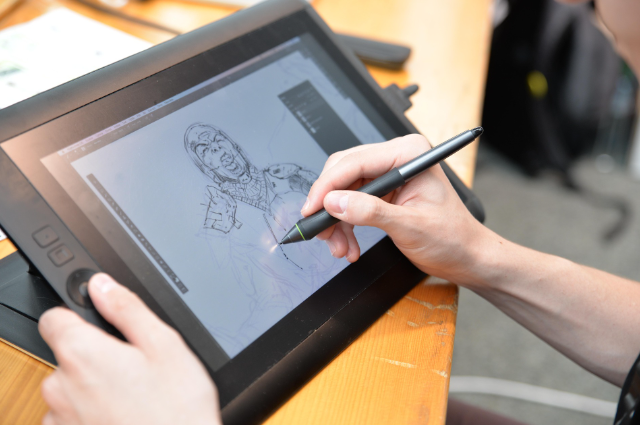
For centuries, creativity has been regarded as one of humanity's most remarkable qualities. From the paintings of ancient civilisations to the symphonies of great composers, from groundbreaking scientific discoveries to bestselling novels, creative expression has shaped cultures, inspired revolutions, and driven human progress. Creativity has long been considered a uniquely human ability—one that combines imagination, emotion, experience, and intuition to produce something original and meaningful.
Today, however, this long-held belief is being challenged by one of the most transformative technologies of the twenty-first century: Artificial Intelligence (AI).
In just a few years, AI has evolved from performing simple computational tasks to generating paintings, composing music, writing stories, designing buildings, creating videos, and even assisting in scientific research. What once seemed like science fiction has become part of everyday life. Students use AI to brainstorm ideas, designers create digital artwork with AI-powered tools, musicians experiment with AI-generated melodies, filmmakers produce visual effects more efficiently, and researchers rely on AI to accelerate discoveries.
The rapid advancement of generative AI has sparked a global conversation. Some people see AI as a revolutionary partner that enhances human imagination and opens new possibilities for innovation. Others worry that it may reduce originality, replace creative professionals, or blur the line between human-made and machine-generated work. These differing perspectives raise an important question: Can a machine truly be creative, or is it simply imitating patterns created by humans?
The answer is far more complex than a simple "yes" or "no." AI does not experience emotions, dreams, or personal memories in the way humans do. It does not create out of love, grief, hope, or curiosity. Instead, it learns from enormous amounts of data, identifies patterns, and generates new outputs based on those patterns. Yet despite these limitations, AI has become an extraordinary creative assistant, enabling people to work faster, explore ideas more freely, and bring ambitious projects to life with fewer technical barriers.
History shows that every major technological breakthrough—from the invention of the printing press to the arrival of photography, computers, and the internet—initially sparked fear that human creativity would diminish. Instead, these innovations expanded the possibilities for artistic expression and inspired entirely new forms of creativity. Artificial Intelligence appears to be following a similar path, though at an unprecedented speed and scale.
Rather than asking whether AI will replace human creativity, a more meaningful question is how it will reshape the creative process itself. Will future artists, writers, musicians, filmmakers, architects, and inventors compete against intelligent machines, or will they collaborate with them? What skills will remain uniquely human, and what new opportunities will emerge in an AI-driven world?
This article explores how Artificial Intelligence is transforming creativity across different fields, examines its benefits and challenges, discusses the ethical questions surrounding AI-generated content, and considers what the future may hold for the evolving relationship between human imagination and intelligent machines. Together, these insights reveal that the future of creativity is unlikely to belong solely to humans or to AI—but to the powerful partnership between the two.
What Is Creativity? Understanding the Human Spark
Before exploring how Artificial Intelligence is transforming creativity, it is essential to understand what creativity actually means. Although the word is commonly associated with painting, music, or writing, creativity extends far beyond the arts. It is the ability to produce ideas, solutions, or expressions that are both original and valuable. Whether an engineer designing a sustainable bridge, a doctor developing a new treatment, an entrepreneur launching an innovative business, or a teacher creating engaging lessons, creativity lies at the heart of progress.
Unlike routine thinking, creativity requires the ability to connect seemingly unrelated ideas, challenge existing assumptions, and imagine possibilities that do not yet exist. It is driven not only by knowledge but also by curiosity, emotion, experience, and the willingness to take risks. Every creative achievement reflects a unique combination of observation, imagination, and perseverance.
Human creativity is deeply influenced by personal experiences. A poet may write moving verses inspired by love or loss, while a painter may capture emotions through colour and form. A scientist's breakthrough often emerges from years of curiosity, experimentation, and unexpected discoveries. These creative works carry the imprint of human life—our memories, struggles, cultures, values, and emotions. This personal dimension is what gives creativity its authenticity and emotional power.
Modern psychology offers several perspectives on how creativity develops. Researchers generally agree that creativity involves four key elements:
- Knowledge: A deep understanding of a subject provides the foundation for innovation.
- Imagination: The ability to envision possibilities beyond existing reality.
- Critical Thinking: Evaluating ideas, refining them, and solving problems effectively.
- Persistence: Great creative achievements rarely emerge instantly; they require continuous effort, revision, and learning from failure.
These elements work together in a dynamic process. A novelist may spend months revising a manuscript, a composer may experiment with hundreds of melodies before finding the perfect one, and an inventor may build countless prototypes before achieving success. Creativity is therefore not merely a moment of inspiration but a disciplined process of exploration and improvement.
Artificial Intelligence approaches creativity in a fundamentally different way. AI systems do not possess consciousness, emotions, beliefs, or personal experiences. Instead, they analyse enormous datasets, recognise patterns, and generate outputs based on statistical relationships within the information they have learned. An AI image generator can produce stunning artwork because it has seen millions of visual examples. A language model can write essays because it has learned patterns from vast collections of text.
This distinction is important. Human creativity is experience-driven, while AI-generated creativity is data-driven. Humans create because they feel, imagine, and interpret the world around them. AI creates because it calculates probabilities and predicts what content is most likely to fit a given prompt.
Nevertheless, the boundary between these two forms of creativity is becoming increasingly blurred. When a designer uses AI to generate multiple concepts before refining one into a final masterpiece, who deserves credit for the creative outcome? When a musician uses AI to compose background melodies but adds personal lyrics and emotion, is the music the product of human creativity, artificial intelligence, or both?
These questions illustrate that creativity is no longer a purely human endeavour nor a purely technological one. Instead, it is evolving into a collaborative process in which human imagination and machine intelligence complement each other. AI excels at speed, pattern recognition, and generating countless possibilities, while humans provide purpose, emotion, ethical judgment, and the ability to assign meaning to creative work.
Understanding this distinction is essential because it reveals a crucial truth: Artificial Intelligence is not changing the definition of creativity—it is changing how creativity is practised. The creative process is shifting from one in which humans work alone to one in which intelligent machines increasingly serve as partners, assistants, and sources of inspiration.
The Rise of Generative AI: A New Era of Creative Innovation
The history of Artificial Intelligence is marked by decades of steady progress, but the past few years have witnessed an unprecedented leap forward. While earlier AI systems were primarily designed to perform specific tasks—such as recognising faces, translating languages, or recommending products—modern AI has entered a new phase known as generative AI. Instead of merely analysing existing information, generative AI can produce entirely new content, including text, images, music, videos, computer code, and even scientific hypotheses.
This transformation has fundamentally changed the relationship between technology and creativity. AI is no longer just a tool for automation; it has become an active participant in the creative process.
Generative AI operates by learning patterns from massive collections of data. During training, these systems analyse billions of words, images, sounds, and other forms of digital content. Rather than memorising every piece of information, they learn the relationships between ideas, styles, structures, and concepts. When given a prompt, the AI predicts and generates content that aligns with those learned patterns, often producing results that appear remarkably original and sophisticated.
One of the most significant developments has been the emergence of large language models (LLMs). These AI systems can write essays, summarise complex documents, translate languages, answer questions, draft business reports, create poetry, and assist with programming. Writers often use them to overcome writer's block, brainstorm ideas, o outlines, or refine their drafts. Instead of replacing authors, these tools frequently serve as collaborative assistants that accelerate the writing process while leaving final creative decisions in human hands.
At the same time, AI-powered image generation has transformed visual design. With only a short text description, artists and designers can create illustrations, digital paintings, concept art, architectural visualisations, fashion prototypes, and marketing graphics within minutes. Tasks that once required hours or even days of manual work can now be completed much more efficiently, allowing creators to focus on refining their ideas rather than starting from a blank canvas.
The influence of generative AI extends into music as well. AI can compose melodies, generate instrumental tracks, suggest harmonies, and even imitate different musical styles. While these systems cannot genuinely experience joy, sorrow, or inspiration, they provide musicians with fresh creative possibilities and help them experiment with sounds that might never have occurred to them independently.
Filmmaking has also entered a new era through AI-assisted production. Modern AI tools support scriptwriting, storyboard creation, video editing, voice generation, subtitle translation, visual effects, and animation. Independent creators who previously lacked large production budgets can now produce professional-quality content using AI-powered software. This democratisation of creativity enables talented individuals to compete with much larger organisations.
Beyond the creative arts, generative AI is revolutionising scientific and technical innovation. Researchers use AI to analyse enormous datasets, predict molecular structures, assist in drug discovery, design engineering solutions, and identify patterns that would be nearly impossible for humans to detect manually. In these fields, creativity often means finding new solutions to complex problems, and AI has become an invaluable partner in accelerating discovery.
However, the rapid rise of generative AI has also sparked important debates. Because these systems learn from vast amounts of existing human-created content, questions have emerged about copyright, intellectual property, originality, and ethical responsibility. Artists worry that their work may be used to train AI models without permission. Educators are concerned about plagiarism and academic integrity. Journalists fear the spread of AI-generated misinformation. These concerns demonstrate that technological innovation must be accompanied by thoughtful ethical standards and responsible governance.
Despite these challenges, the adoption of generative AI continues to accelerate across industries. Businesses use AI to create marketing campaigns, educators develop personalised learning materials, healthcare professionals generate medical documentation, software engineers receive coding assistance, and entrepreneurs rapidly prototype new ideas. What once required specialised expertise is becoming increasingly accessible to people with limited technical backgrounds.
Perhaps the greatest significance of generative AI is not that it creates content independently, but that it expands what humans can achieve. By handling repetitive tasks, generating multiple alternatives, and accelerating experimentation, AI gives creators more time to focus on imagination, critical thinking, emotional storytelling, and meaningful innovation. In many cases, the most impressive results emerge not from humans or AI working alone, but from their collaboration.
The rise of generative AI therefore represents more than a technological breakthrough—it marks the beginning of a new creative era. As these systems become more capable, the role of human creators is evolving from producing every detail manually to directing, refining, evaluating, and adding the uniquely human qualities that machines cannot replicate. Creativity is no longer defined solely by the ability to make something from scratch; it is increasingly defined by the ability to guide intelligent tools toward meaningful and impactful outcomes.
How AI Is Transforming Creative Industries
The influence of Artificial Intelligence is no longer confined to research laboratories or technology companies. Today, AI has become an integral part of nearly every creative industry, changing not only how professionals work but also how ideas are conceived, developed, and shared. From journalism and graphic design to filmmaking, education, software development, and scientific research, AI is redefining traditional workflows while opening doors to entirely new forms of innovation.
Rather than eliminating human creativity, AI is reshaping the creative process. It performs repetitive and time-consuming tasks with remarkable speed, allowing professionals to devote more attention to strategic thinking, storytelling, emotional expression, and innovation. The result is a new model of collaboration in which humans provide vision and judgment while AI contributes efficiency and technical assistance.
AI in Writing and Journalism
Writing has always been one of the most intellectually demanding forms of creative expression. Authors, journalists, researchers, and content creators spend countless hours gathering information, organising ideas, editing drafts, and refining language. Artificial Intelligence has significantly streamlined many of these processes.
Modern AI writing assistants can generate outlines, summarise lengthy reports, suggest headlines, improve grammar, translate content into multiple languages, and even recommend alternative styles for different audiences. For journalists, AI can quickly analyse large datasets, identify trends, and draft reports on topics such as sports results, financial markets, and weather updates. These capabilities allow reporters to spend more time on investigative journalism, interviews, and in-depth analysis.
However, responsible journalism still depends on human judgment. AI cannot independently verify facts, understand complex political contexts, or make ethical editorial decisions. Human editors remain essential for ensuring accuracy, fairness, and credibility. The most successful news organisations increasingly view AI not as a replacement for journalists but as a productivity-enhancing tool.
AI in Graphic Design and Visual Arts
The world of visual design has experienced one of the most dramatic transformations through AI. Graphic designers can now generate multiple design concepts within minutes, experiment with different artistic styles, remove backgrounds automatically, enhance image quality, and create realistic digital illustrations using simple text prompts.
For professional designers, AI serves as a powerful brainstorming partner. Instead of spending hours creating rough sketches, they can rapidly explore numerous possibilities before selecting and refining the most promising concepts. This accelerates the design process while encouraging greater experimentation and innovation.
At the same time, AI has made creative design more accessible to beginners. Individuals with little formal artistic training can now produce visually appealing graphics for presentations, marketing campaigns, social media, and educational materials. While this democratisation expands creative opportunities, it also increases competition and raises questions about originality and artistic ownership.
AI in Music and Audio Production
Music is often regarded as one of the deepest expressions of human emotion. Nevertheless, AI has begun playing an increasingly important role in music production. Modern AI systems can compose melodies, generate background music, suggest harmonies, remove unwanted noise from recordings, and assist in audio mixing and mastering.
Professional musicians frequently use AI as a creative companion rather than a substitute. A composer may ask AI to generate several melodic variations before selecting one to develop further. Producers can experiment with different musical styles more efficiently, while independent artists can create high-quality soundtracks without expensive recording studios.
Despite these advances, emotional authenticity remains a uniquely human contribution. The life experiences, cultural influences, and personal emotions that shape meaningful music cannot simply be replicated through algorithms. AI may generate notes and rhythms, but humans give music its soul and emotional resonance.
AI in Film, Animation, and Content Creation
The film industry has embraced AI across multiple stages of production. Scriptwriters use AI to brainstorm story ideas, editors automate repetitive editing tasks, visual effects artists accelerate complex rendering processes, and animators create realistic character movements more efficiently than ever before.
AI-powered voice synthesis and language translation have also expanded global accessibility. Films, documentaries, and educational videos can now be translated and dubbed into multiple languages while preserving natural speech patterns, allowing creators to reach international audiences with greater ease.
Independent filmmakers and online content creators have benefited enormously from these technologies. Tasks that once required large production teams and substantial budgets can now be completed using AI-assisted software, enabling individuals and small studios to compete in an increasingly digital marketplace.
AI in Education and Learning
Education is another field where creativity is being transformed by Artificial Intelligence. Teachers use AI to prepare lesson plans, create quizzes, generate visual learning materials, and personalise educational content for students with different learning needs.
Students benefit from AI-powered tutoring systems that explain difficult concepts, provide instant feedback, and recommend additional learning resources. Instead of replacing teachers, AI reduces administrative workloads and allows educators to focus on mentoring, inspiring curiosity, and developing critical thinking skills.
Creative learning is also evolving. Students can experiment with AI-generated simulations, interactive storytelling, and virtual laboratories that make education more engaging and accessible than traditional methods alone.
AI in Software Development
Programming has traditionally required years of technical expertise, but AI has significantly accelerated software development. Intelligent coding assistants can generate code snippets, identify programming errors, suggest improvements, automate testing, and explain complex algorithms.
This does not eliminate the need for skilled software engineers. Rather, developers spend less time writing repetitive code and more time designing software architecture, solving complex problems, and creating innovative applications. As a result, AI enhances productivity while encouraging more ambitious software projects.
AI in Scientific Research and Innovation
Perhaps one of the most profound impacts of AI can be seen in scientific discovery. Researchers across medicine, biology, astronomy, engineering, and environmental science rely on AI to process enormous datasets that would take humans years to analyse manually.
AI assists scientists in identifying hidden patterns, predicting molecular interactions, modelling climate systems, discovering potential medicines, and accelerating engineering design. During recent years, AI has contributed to breakthroughs in protein structure prediction, disease diagnosis, and materials science, demonstrating that creativity in science often involves finding entirely new solutions to previously unsolved problems.
Yet even in these highly technical fields, human researchers remain indispensable. Scientists formulate research questions, interpret findings, design experiments, and evaluate ethical implications—responsibilities that require reasoning, intuition, and moral judgment beyond the capabilities of current AI systems.
A New Model of Collaboration
Across every creative industry, a common pattern has emerged. Artificial Intelligence is not replacing human creativity; it is transforming the way creative work is performed. AI excels at speed, automation, pattern recognition, and generating multiple possibilities, while humans contribute imagination, emotional intelligence, ethical responsibility, cultural understanding, and purposeful decision-making.
The future of creative industries is therefore unlikely to be dominated by either humans or machines alone. Instead, success will belong to individuals and organisations capable of combining the computational power of AI with the originality, empathy, and vision that remain uniquely human. This partnership represents one of the most significant shifts in the history of creativity, offering opportunities that were unimaginable only a decade ago.
Benefits of AI for Creators: Expanding Human Potential Through Intelligent Collaboration
Artificial Intelligence has become much more than a technological innovation; it has evolved into a powerful creative partner. While debates often focus on whether AI will replace human creativity, the more immediate reality is that AI is helping millions of people create faster, experiment more freely, and transform ideas into reality with unprecedented efficiency. When used responsibly, AI does not diminish human creativity—it amplifies it.
The greatest strength of AI lies in its ability to handle repetitive, time-consuming, and data-intensive tasks. By automating these processes, it allows creators to dedicate more time to imagination, critical thinking, and meaningful innovation. Across industries, AI is increasing productivity while expanding opportunities for both experienced professionals and beginners.
Enhancing Productivity and Saving Time
One of AI's most significant advantages is its ability to accelerate the creative process. Writers can generate outlines within seconds, designers can instantly explore multiple visual concepts, musicians can experiment with different melodies, and programmers can automate routine coding tasks. Work that once required several days can often be completed within a few hours.
This increase in efficiency does not necessarily reduce the quality of creative work. Instead, it enables creators to spend more time refining ideas, improving quality, and exploring alternative approaches. Rather than replacing effort, AI shifts human effort toward higher-level thinking and creative decision-making.
For professionals working under tight deadlines, this productivity boost can be transformative. Journalists covering breaking news, marketers preparing campaigns, architects designing proposals, and educators creating teaching materials all benefit from AI's ability to reduce repetitive workloads.
Breaking Creative Blocks
Every creator occasionally encounters moments when inspiration seems impossible to find. Writers struggle with blank pages, artists search for fresh visual ideas, and composers may spend days searching for the right melody. AI has emerged as an effective tool for overcoming these creative obstacles.
Instead of providing a final answer, AI can generate multiple possibilities that stimulate human imagination. A novelist might ask AI to suggest plot directions, while a designer may explore dozens of visual concepts before selecting one to refine. These suggestions often inspire ideas that the creator had not previously considered.
Importantly, AI does not replace originality in this process. The creator remains responsible for selecting, modifying, combining, and improving the generated ideas, ensuring that the final work reflects personal vision rather than automated output.
Making Creativity Accessible to Everyone
Historically, many creative professions required years of specialised training and access to expensive tools. Professional graphic design software, recording studios, animation equipment, and advanced programming skills often created significant barriers for aspiring creators.
Artificial Intelligence is lowering many of these barriers. Today, students, entrepreneurs, teachers, and small business owners can produce professional-quality presentations, illustrations, videos, websites, and written content using AI-powered tools without extensive technical expertise.
This democratisation of creativity allows talented individuals from diverse backgrounds to express their ideas, build businesses, and share knowledge with global audiences. People who previously lacked financial resources or formal education now have greater opportunities to participate in creative industries.
Supporting Learning and Skill Development
AI also functions as a personalised learning assistant. Students can receive explanations tailored to their level of understanding, language learners can practice conversations with AI, aspiring programmers receive coding guidance, and artists can study different artistic techniques through AI-generated demonstrations.
Unlike traditional educational resources, AI provides immediate feedback and adapts to individual learning needs. This personalised support encourages experimentation and continuous improvement while helping learners develop confidence in their creative abilities.
Nevertheless, AI should complement—not replace—the learning process. Genuine expertise still requires practice, critical thinking, and real-world experience. AI can accelerate learning, but it cannot substitute for human dedication and perseverance.
Encouraging Experimentation and Innovation
Creativity flourishes when individuals feel free to explore unconventional ideas. Because AI can generate countless alternatives within seconds, creators can experiment with styles, formats, and concepts that might otherwise be too time-consuming or expensive to pursue.
A filmmaker can visualise multiple scenes before production begins. An architect can compare different building designs. A fashion designer can test new patterns and colour combinations. Scientists can simulate experimental outcomes before conducting costly laboratory research.
This ability to explore numerous possibilities encourages innovation by reducing the fear of failure. Creators become more willing to test bold ideas because AI allows rapid experimentation with minimal additional cost.
Improving Collaboration Across Disciplines
Modern innovation increasingly depends on collaboration between experts from different fields. AI facilitates this collaboration by making specialised knowledge more accessible. Designers can better understand programming concepts, engineers can communicate more effectively with marketers, and researchers from different scientific disciplines can analyse shared datasets more efficiently.
AI-powered translation tools also break language barriers, enabling creators from different countries to work together on international projects. This global exchange of knowledge enriches creativity by exposing individuals to diverse perspectives, cultures, and problem-solving approaches.
Accelerating Scientific and Medical Innovation
The benefits of AI extend beyond traditional artistic creativity into scientific discovery. Researchers use AI to analyse vast datasets, identify hidden relationships, predict molecular structures, and accelerate drug development. These capabilities have contributed to significant advances in medicine, climate science, engineering, and biotechnology.
Although AI performs much of the computational work, human scientists remain responsible for designing experiments, interpreting results, and ensuring that discoveries are applied ethically and responsibly. Here again, creativity emerges from collaboration rather than competition between humans and machines.
Empowering Small Businesses and Independent Creators
One of AI's most socially significant contributions is its ability to level the playing field. Small businesses, independent artists, freelance writers, and startup entrepreneurs now have access to tools that were once available only to large corporations with substantial financial resources.
An entrepreneur can design a company logo, write marketing content, create promotional videos, analyse customer feedback, and develop business strategies using AI-powered applications. Independent authors can edit manuscripts, designers can create portfolios, and educators can produce online courses without large production teams.
This increased accessibility fosters innovation by allowing ideas—not merely financial resources—to determine success.
The Human Role Remains Central
Despite these remarkable benefits, AI's effectiveness depends entirely on human guidance. AI can generate countless ideas, but it cannot determine which ideas carry emotional significance, cultural relevance, or ethical value. It cannot understand the deeper purpose behind a work of art or appreciate the lived experiences that shape human expression.
The most successful creators of the future will therefore not be those who simply rely on AI, but those who learn to collaborate with it intelligently. They will combine technological efficiency with imagination, empathy, critical thinking, and moral responsibility—qualities that remain fundamentally human.
Artificial Intelligence is best understood not as a substitute for creativity, but as a catalyst that expands human potential. By removing technical barriers, accelerating experimentation, and supporting innovation, AI empowers people to focus on what they do best: imagining new possibilities, telling meaningful stories, solving complex problems, and creating works that inspire others.
Challenges and Ethical Concerns: The Complex Side of AI-Driven Creativity
While Artificial Intelligence has unlocked extraordinary opportunities for creators across the world, its rapid growth has also introduced a range of ethical, legal, and social challenges. Every major technological revolution has brought both benefits and risks, and AI is no exception. The same technology that empowers artists, writers, educators, and researchers can also be misused, raising difficult questions about originality, ownership, fairness, and responsibility.
Understanding these challenges is essential because the future of creativity depends not only on technological advancement but also on how society chooses to govern and use these powerful tools.
The Question of Originality
One of the most debated issues surrounding AI-generated content is originality. Human creativity is often rooted in personal experiences, emotions, cultural backgrounds, and individual perspectives. A novelist draws from life experiences, a painter expresses personal emotions through colour, and a songwriter transforms memories into melodies.
Artificial Intelligence operates differently. It generates content by recognising patterns in vast amounts of existing data rather than by living through experiences or expressing genuine emotions. As a result, many critics argue that AI does not truly create in the human sense; instead, it recombines existing knowledge into new forms.
This raises an important philosophical question: Can creativity exist without consciousness or lived experience?
Although AI-generated works may appear original, they are fundamentally different from creations born out of human imagination and emotion. This distinction continues to shape ongoing debates among artists, educators, philosophers, and technology experts.
Copyright and Intellectual Property
Copyright has become one of the most controversial legal issues in the age of generative AI. Many AI systems are trained using enormous collections of books, articles, paintings, photographs, music, and other creative works that were originally produced by human creators.
Some artists and writers argue that their work has been used to train AI models without their permission or compensation. They believe that if AI systems benefit from decades of human creativity, the original creators deserve recognition and fair treatment.
On the other hand, AI developers argue that machine learning often involves analysing patterns rather than copying complete works. Courts and lawmakers around the world are still determining how existing copyright laws should apply to AI-generated content.
As AI technology continues to evolve, governments will likely need to develop new legal frameworks that balance innovation with the protection of creators' rights.
Misinformation and Deepfakes
Artificial Intelligence has made it remarkably easy to create realistic images, videos, audio recordings, and written content. While these capabilities offer exciting creative opportunities, they also increase the risk of misinformation.
Deepfake technology can generate convincing videos or voices that appear authentic even though they are entirely fabricated. Such content may be used for entertainment or education, but it can also spread false information, manipulate public opinion, damage reputations, or influence elections.
Similarly, AI-generated articles and social media posts can circulate inaccurate or misleading information at an unprecedented speed. Without careful verification, readers may struggle to distinguish between authentic journalism and artificially generated misinformation.
This challenge highlights the growing importance of media literacy. As AI-generated content becomes more sophisticated, individuals must develop stronger critical thinking skills and verify information through reliable sources before accepting it as true.
Academic Integrity and Education
Educational institutions have also faced significant challenges following the widespread adoption of AI writing tools. Students can now generate essays, solve mathematical problems, summarise textbooks, and answer examination questions with minimal effort.
While AI can serve as an effective learning assistant, excessive dependence may discourage independent thinking, creativity, and problem-solving abilities. If students rely entirely on AI to complete assignments, they risk developing weaker analytical and communication skills.
Educators therefore face a delicate balance. Rather than banning AI entirely, many schools and universities are exploring ways to integrate it responsibly into education while emphasising originality, critical thinking, and ethical use.
The objective is not to prevent students from using AI, but to teach them how to use it as a learning tool rather than a shortcut.
Employment and the Future of Creative Careers
Perhaps the greatest concern among creative professionals is the possibility of job displacement. Graphic designers, writers, illustrators, translators, video editors, customer support specialists, and many other professionals worry that AI may automate tasks that previously required human expertise.
Indeed, some routine creative work has already become increasingly automated. Businesses may choose AI-generated marketing materials instead of hiring freelance designers, or use automated content generation for simple reports.
However, history suggests that technological revolutions rarely eliminate work. Instead, they transform the nature of work. The Industrial Revolution reduced certain manual jobs while creating entirely new industries. Similarly, the internet replaced some traditional occupations but generated millions of careers in digital media, software development, cybersecurity, and online commerce.
AI is likely to produce a similar transformation. While some routine tasks may disappear, new professions—such as AI trainers, prompt engineers, AI ethicists, human-AI collaboration specialists, digital content strategists, and AI governance experts—are already emerging.
The key challenge is ensuring that workers receive opportunities to develop new skills and adapt to changing technological environments.
Bias and Fairness
Artificial Intelligence learns from data created by humans. If that data contains historical biases, stereotypes, or unequal representation, AI systems may unintentionally reproduce or even amplify those biases.
For example, biased training data may influence hiring recommendations, facial recognition accuracy, translation systems, or content generation. Such biases can lead to unfair outcomes that disproportionately affect particular communities.
Developers therefore have a responsibility to build AI systems that are transparent, regularly tested, and continuously improved to minimise discrimination and promote fairness.
Human oversight remains essential because ethical judgment cannot be delegated entirely to algorithms.
Overdependence on AI
Another growing concern is the possibility that excessive reliance on AI may weaken human creativity itself. When AI instantly generates stories, artwork, presentations, or business ideas, some individuals may gradually lose the habit of brainstorming independently.
Creativity develops through practice, experimentation, failure, and reflection. If people consistently accept AI's first suggestion without questioning or improving it, they may become passive consumers rather than active creators.
Therefore, AI should be viewed as a starting point rather than a final destination. The most meaningful creative achievements will continue to emerge from individuals who challenge AI's suggestions, refine them, and add their own unique perspectives.
The Need for Responsible AI
The future of AI-driven creativity depends not only on technological innovation but also on responsible governance. Governments, technology companies, educators, researchers, artists, and ordinary citizens all share responsibility for ensuring that AI is used ethically.
Responsible AI includes:
- Respecting copyright and intellectual property.
- Protecting privacy and personal data.
- Reducing algorithmic bias.
- Clearly identifying AI-generated content when appropriate.
- Promoting transparency and accountability.
- Encouraging education about ethical AI use.
- Keeping humans responsible for important creative and social decisions.
- These principles can help society maximise AI's benefits while minimising its risks.
Balancing Innovation with Responsibility
Artificial Intelligence represents one of the most powerful creative technologies ever developed. Yet its true value will not be measured solely by the sophistication of its algorithms, but by the wisdom with which humanity chooses to use them.
Innovation without ethics can lead to exploitation, misinformation, and inequality. Ethics without innovation, however, may prevent society from benefiting from transformative discoveries. The challenge for the twenty-first century is therefore not choosing between technology and humanity, but ensuring that technological progress remains guided by human values.
As AI continues to reshape creative industries, the greatest responsibility rests not with machines but with the people who design, regulate, and use them. Only through responsible collaboration can society ensure that Artificial Intelligence becomes a force that expands human creativity while preserving the dignity, originality, and ethical principles that define truly meaningful creation.
The Future of Creativity: Human–AI Collaboration in the Decades Ahead
As Artificial Intelligence continues to evolve, one question dominates discussions across industries, classrooms, research laboratories, and creative communities: What will the future of creativity look like? Will AI eventually replace human creators, or will it become a trusted partner that expands human potential?
While no one can predict the future with complete certainty, current technological trends suggest that the most likely outcome is collaboration rather than competition. Human creativity and Artificial Intelligence possess fundamentally different strengths. Instead of competing for the same role, they are increasingly complementing one another.
The Rise of Human–AI Collaboration
The future creative process will not simply involve a person working alone or an AI generating content independently. Instead, it will involve continuous interaction between human imagination and machine intelligence.
A writer may use AI to generate ideas but rely on personal experiences to craft an emotionally compelling story. A filmmaker may employ AI to create visual effects while making artistic decisions about narrative, character development, and emotional impact. Scientists may use AI to analyse billions of data points but depend on human curiosity and reasoning to formulate research questions and interpret discoveries.
In this collaborative model, AI becomes an intelligent assistant rather than an autonomous creator. Humans remain responsible for defining goals, making ethical decisions, evaluating quality, and giving creative work meaning.
The Skills That Will Matter Most
As AI automates many technical and repetitive tasks, the value of uniquely human abilities will continue to grow. Success in the future workplace will depend less on memorising information and more on skills that machines cannot easily replicate.
Among the most important future skills are:
- Critical thinking, which enables people to evaluate information, question assumptions, and make informed decisions.
- Creativity and imagination, allowing individuals to generate original ideas that go beyond statistical prediction.
- Emotional intelligence, including empathy, communication, and understanding human relationships.
- Ethical reasoning, ensuring that technology is used responsibly and fairly.
- Adaptability, helping individuals learn continuously as technology evolves.
- Collaboration, both with other people and increasingly with AI systems.
Education systems around the world are already recognising the importance of these competencies. Rather than preparing students for jobs that may become automated, schools and universities are beginning to emphasise lifelong learning, interdisciplinary thinking, and digital literacy.
New Careers in the AI Era
Every technological revolution creates new professions while transforming existing ones. Artificial Intelligence is following the same pattern.
Over the coming years, demand is expected to grow for professionals such as:
- AI ethics specialists who develop guidelines for responsible AI use.
- Prompt engineers who communicate effectively with generative AI systems.
- AI trainers who improve machine learning models using high-quality human feedback.
- Human-AI collaboration designers who integrate intelligent systems into workplaces.
- Digital content strategists who combine AI-generated material with human creativity.
- AI policy experts who develop legal and regulatory frameworks.
Many careers that do not yet exist today will likely emerge as AI continues to reshape industries. This demonstrates that technological progress often creates opportunities alongside disruption.
The Importance of Lifelong Learning
The rapid pace of AI development means that knowledge and technical skills will become outdated more quickly than ever before. Professionals across every field will need to update their skills continuously throughout their careers.
Lifelong learning will no longer be optional—it will become an essential part of professional success.
Fortunately, AI itself can support this process by providing personalised education, interactive tutoring, language learning assistance, coding guidance, and customised training materials. Ironically, the same technology that transforms the job market may also become one of the most effective tools for helping people adapt to it.
Creativity Beyond Technology
Despite its remarkable capabilities, AI cannot replace the deeply human qualities that give creative work lasting significance.
A novel resonates because readers recognise genuine human emotions within its pages. A painting inspires because it reflects an artist's unique perspective. A piece of music moves audiences because it expresses feelings that transcend words. Scientific discoveries change the world because curious individuals ask questions that have never been asked before.
Artificial Intelligence can assist in producing these works, but it cannot experience love, grief, hope, fear, compassion, or wonder. It cannot dream of a better future or understand the moral consequences of its actions. Those qualities remain uniquely human.
Therefore, the future of creativity is unlikely to belong to machines alone. It will belong to people who understand how to combine technological capabilities with human values, imagination, and purpose.
Building a Responsible Creative Future
As AI becomes increasingly integrated into society, governments, educational institutions, technology companies, and individual creators must work together to establish clear ethical standards.
Responsible collaboration between humans and AI should be guided by several principles:
- Technology should enhance rather than diminish human creativity.
- AI-generated content should be transparent when appropriate.
- Intellectual property rights should be respected.
- Education should teach both technical skills and ethical responsibility.
- Human oversight should remain central in decisions with significant social impact.
- Innovation should always serve the broader well-being of humanity.
These principles will help ensure that AI strengthens society rather than creating unnecessary inequality or mistrust.
Conclusion
Artificial Intelligence is transforming one of humanity's oldest and most treasured abilities—creativity. It is changing how stories are written, music is composed, artwork is designed, films are produced, software is developed, and scientific discoveries are made. By automating repetitive tasks, accelerating idea generation, and expanding access to powerful creative tools, AI has opened opportunities that were unimaginable only a decade ago.
Yet the rise of AI does not signal the end of human creativity. Instead, it marks the beginning of a new chapter in which humans and intelligent machines work together to solve problems, tell stories, and imagine possibilities beyond the reach of either alone.
Human creativity is rooted in consciousness, emotion, experience, empathy, and purpose—qualities that no algorithm can truly possess. Artificial Intelligence contributes speed, efficiency, pattern recognition, and computational power. Together, these strengths create a partnership capable of producing innovations that neither humans nor machines could achieve independently.
The greatest challenge is not whether AI will become more powerful; it almost certainly will. The real challenge is ensuring that this power is guided by wisdom, ethical responsibility, and respect for human dignity. Society must encourage innovation while protecting originality, intellectual property, privacy, fairness, and truth.
History has shown that every major technological revolution reshapes civilisation. The printing press expanded knowledge, electricity transformed industry, computers revolutionised communication, and the internet connected the world. Artificial Intelligence now stands as the next great milestone in that journey. Like every transformative technology before it, its ultimate impact will depend not only on what it can do, but on how humanity chooses to use it.
The future of creativity is therefore neither purely human nor purely artificial. It is collaborative. It belongs to those who embrace technology without surrendering imagination, who use intelligent tools without abandoning critical thinking, and who recognise that the most meaningful creations will always combine innovation with humanity.
In the years ahead, the creators who thrive will not be those who fear Artificial Intelligence or rely on it blindly. They will be those who learn to work alongside it—using machines to expand possibilities while preserving the curiosity, compassion, originality, and vision that define what it truly means to be human.
References
- Brynjolfsson, E., & McAfee, A. (2014). The Second Machine Age: Work, Progress, and Prosperity in a Time of Brilliant Technologies. W. W. Norton & Company.
- Goodfellow, I., Bengio, Y., & Courville, A. (2016). Deep Learning. MIT Press.
- Kaplan, A., & Haenlein, M. (2019). Siri, Siri, in my hand: Who's the fairest in the land? On the interpretations, illustrations, and implications of artificial intelligence. Business Horizons, 62(1), 15–25.
- McKinsey Global Institute. (2023). The Economic Potential of Generative AI: The Next Productivity Frontier.
- Russell, S., & Norvig, P. (2021). Artificial Intelligence: A Modern Approach (4th ed.). Pearson.
- UNESCO. (2021). Recommendation on the Ethics of Artificial Intelligence.
- World Economic Forum. (2025). The Future of Jobs Report 2025.
- OpenAI. (2025). GPT-4.1 and GPT-4.5 Technical Reports.
- European Commission. (2024). Artificial Intelligence Act.
- OECD. (2024). OECD Artificial Intelligence Policy Observatory.
- Stanford University. (2025). AI Index Report 2025. Stanford Institute for Human-Centered Artificial Intelligence (HAI).
- World Intellectual Property Organisation (WIPO). (2024). Generative Artificial Intelligence and Intellectual Property Issues.
- Bubeck, S., et al. (2023). Sparks of Artificial General Intelligence: Early Experiments with GPT-4. Microsoft Research.
- Amabile, T. M. (1996). Creativity in Context. Westview Press.
- Boden, M. A. (2004). The Creative Mind: Myths and Mechanisms (2nd ed.). Routledge.
- Florida, R. (2014). The Rise of the Creative Class—Revisited. Basic Books.
- Sawyer, R. K. (2012). Explaining Creativity: The Science of Human Innovation (2nd ed.). Oxford University Press.
- World Bank. (2024). World Development Report 2024: The Middle-Income Trap.
- IBM. (2024). Global AI Adoption Index.
- Harvard Business Review. (2023). How Generative AI Changes Creative Work.