
“A Heart That Chooses"
Part 1: The Dream of a Delicate Heart
From her earliest years, she had lived in comfort and grace. Her home was filled with laughter, her family well respected, and her parents kind and protective. Everyone said she was blessed to be born into ease, intelligence, and beauty. But deep inside her heart, she carried a dream beyond wealth: a dream of love. Not just any love — the kind of love that lifts a woman’s soul, where a man would look at her as if she were the most precious creation of Allah.
She grew up praying for that one person who would hold her heart gently and make her feel safe. And as she stepped into her academic life, her prayers never left her lips. She was brilliant and determined, earning a place in a prestigious PhD program, her parents’ pride, and her teachers’ admiration.
It was during these years that he came into her life, a colleague, older than her, calm, charming, respected, and from a good family. He wasn’t wealthy, but he carried himself with quiet dignity. He had kind eyes and a way of speaking that drew her toward him. For the first time, she felt what she had always dreamed of, affection that made her feel seen.
Her heart believed this was her destiny. Her parents hesitated; they saw uncertainty in his career, his lack of a permanent position, and the gap in their ages. But she, in her innocence and faith, insisted, “He may not have everything now, but he has a heart, and I will stand by him until he finds his place.”
Moved by her determination, her family agreed. And so began her chapter of love.
Part 2: A Home of Hope
Their wedding was simple yet beautiful. She glowed with dreams, believing Allah had written this man as her blessing. The first months were filled with laughter and discovery. They prayed together, ate together, and spoke of their plans, his career, her research, and their shared hopes of building a small house filled with love and light.
Soon, Allah blessed them with a beautiful daughter, a tiny miracle that deepened their bond. She became the light of their home. Her in-laws were kind and respectful, and for the first time, life felt complete.
But as the Qur’an reminds us, “Do people think that they will be left alone because they say: ‘We believe,’ and will not be tested?”
After two years of contentment, her husband lost his job. At first, she consoled him. “It’s alright, love. Allah tests those He wishes to strengthen. You’ll find something better, insha’Allah.”
But months turned into a year. His confidence faded, and so did his gentleness. The family’s finances tightened. Relatives who once praised them now whispered. She tried everything ....encouraging him, managing expenses, even smiling when her heart trembled. Eventually, he got another job, and she completed her doctorate. It felt like a new beginning .....until small sparks began to rise within the joint family.
Jealousy, comparison, and misunderstandings turned peace into tension. She bore a second child, a baby boy — a blessing, yet also a new challenge. With no one to care for the baby, she left her job, believing her family needed her more.
Days turned into nights filled with endless chores, crying children, and an absence of appreciation. She had once been a scholar, a thinker, a woman of ambition — now, she was invisible, buried beneath the duties of a housewife. Yet she stayed silent, whispering, “Ya Allah, make me among those who are patient.”
Part 3: The Test of Silence
After a year and a half, a call came from her old office. They wanted her back. Her heart fluttered with hope. Maybe this was Allah’s way of helping her rise again. She decided to return, placing her baby in a nearby childcare centre.
But when her husband found out, he was furious.
“You want to leave your child for your career? What kind of mother are you?”
His words pierced her, but she did not give up. She knew her family’s survival depended on her effort, too.
So she worked from dawn to dusk. She cared for her home, cooked, cleaned, helped her daughter study, and worked at the office. Yet, instead of gratitude, she received taunts and suspicion. Family members mocked her for leaving the child in someone else’s care. She bore it all with quiet bravery, believing Allah was watching.
Then came another blow, and both she and her husband lost their jobs due to government changes. They had spent everything on buying a small piece of land .........her dream of owning a home. Now they had nothing but faith.
In that time of darkness, she prayed more, cried more, but complained less. Her husband grew distant, frustrated, and lost in self-pity. She supported him emotionally, never blaming him. To support the children, she began working small jobs for mere wages, tutoring at private schools, and part-time tasks.
Instead of thanking her, he accused her. “You go out to enjoy yourself! You’re not a good woman!”
She was beaten, humiliated, and blamed. But she stayed silent. She feared that telling anyone would destroy what was left of his pride, and she still believed that perhaps, one day, Allah would soften his heart.
Her silence became her shield, her prayers became her home.
Part 4: The Storm Within Walls
The small family decided to move to the land they had bought years ago — the one she dreamed would become their own house. It was an empty piece of earth, but she saw it as a promise. “In two years,” she whispered to her children, “we will build something beautiful here, insha’Allah.”
They shifted to a modest rented house nearby. Life was hard, but her spirit remained gentle. Her husband, however, changed. He grew bitter and distant. Jobless again, he spent his days scrolling through his phone, drowning in his own sense of failure.
She never complained. She worked tirelessly ...doing housework, managing children, and earning small amounts wherever she could. Sometimes she ironed clothes for neighbours, sometimes she took care of others’ homes, all while her own hands trembled with exhaustion.
Yet she smiled. Because she knew Allah was watching.
But no one appreciated her. No one saw her as the woman she truly was, the scholar who once dreamed of changing the world, the mother who carried the weight of a home alone. Her husband began taunting her every day. “You go out for fun,” he sneered. “You enjoy working outside. You’re not a good woman.”
Each word felt like a dagger.
Each silence, like a bruise, she hid under her smile.
He started raising his hand toward her. The first time, she cried in silence. The second time, she just lowered her eyes and whispered, “Ya Allah, guide him.”
Her children began to notice the tension, the fights, the broken plates, the silence after the storm. They grew quiet, too, sensing their mother’s pain but unable to understand it.
Still, she didn’t give up. She didn’t fight back. She knew her husband’s anger came from his helplessness, his wounded pride. If she spoke the truth, he might crumble completely. And so she bore the weight of both, his failure and his fury, alone.
Neighbours would sometimes hear raised voices, and then a silence so deep it could break the heart. She would wipe her tears, dress her children for school, and continue as if nothing had happened.
The Qur’an echoed in her heart:
“And We will surely test you with something of fear and hunger and a loss of wealth and lives and fruits, but give good tidings to the patient.”
And she would whisper after every heartbreak: “Indeed, my reward is with Allah.”
Part 5: The Fall and the Faith
One day, a call came from her old workplace. They needed her again — not for prestige, not for high pay, but for honest work. She accepted with trembling hope. It was her chance to stand on her feet again, not for pride, but for survival.
She began working quietly, saving every small coin she could. She didn’t buy new clothes or jewellery, didn’t eat out, and didn’t even tell anyone how hard she was trying. Her only dream was to complete the construction of their home, a safe space for her children.
But her husband’s suspicion only deepened.
If a colleague called, he would rage.
If she was late, he accused her of betrayal.
If she smiled, he called her “cheap.”
His words tore at her dignity, yet she remained silent. She had learned that sometimes silence speaks louder than arguments.
What was more painful was that he said, “My threshold stone was not good, it was unlucky for me, that means his wife was unfortunate for him”.
She patiently listened every everything. That clinched her heart, but she remained silent just for the sake of her family.
One afternoon, while returning from work, she accepted a lift from a colleague to save time. He saw them and furiously reacted on the roadside. The pathetic trauma began there.
A helpless, speechless and frightened woman can’t save her dignity because it was a nightmare, her husband always taunted her, and blamed her for no reason. Now this was the time when no excuses and discussions couldn’t save her from his frustration.
That night, the house turned into a battlefield.
He shouted.
He broke things.
He threw her out, calling her names that no believer should utter.
She stood outside her home, clutching her son’s hand, shivering in disbelief. The same man she once believed was her destiny now treated her as if she had no honour. She was helpless to defend herself because it was her own choice to marry this man. So she remains quiet not to allow anyone to accuse or curse him because she loved him more than anything.
She prayed day and night for her family.
Days later, after relatives intervened, she returned not out of love, but for her children. But the trust was gone. Her husband continued to humiliate her. Her in-laws stopped defending her. Even her own family began blaming her.
“You spoiled him,” her mother said. “You made him dependent. You never told him to stand up for himself. You protected him too much.”
“You are responsible for all this .... He is not able to tk cr of his family, do something for his kids, sitting idle will not make any change. He was a good position holder, but now he isn’t. Why isn’t he doing some work if he can’t get a job suitable for him? He has to work either on mere wages for the sake of his family, kids, their future, no one will help you ...” said her sister.
But she tried her best to motivate him; he, in return, humiliated her for no reason.
She gave up now and made her efforts to feed her kids, but still she was not welcome and a single word of application was not said in her favour. She was on a survival. She was fighting a war within herself and with the social norms, too. Where it was the husband’s responsibility to work hard for his family, but it was she doing it instead of him and getting nothing in return ..... Humiliated, abused, harassed, suppressed, and under-estimated. He was dominating by nature. He wants to move her on his fingertips, but unfortunately, he was good for nothing. He was not able to come out of his past life decorum, past position, his gone reputation. That maketh their lives more purturbed. He, too, was not bad but harsh and a narcissist.
His self-love and high aspirations make him fall. In stages of his frustration, he released his pent-up tension and frustration on her.
She challenged her circumstances with silence and patience. Everyone taunted her for being so kind to him. Her family now left her on her own.
His family felt them now as a burden. There was no one to care for her and help her. And so, she was alone — truly alone.
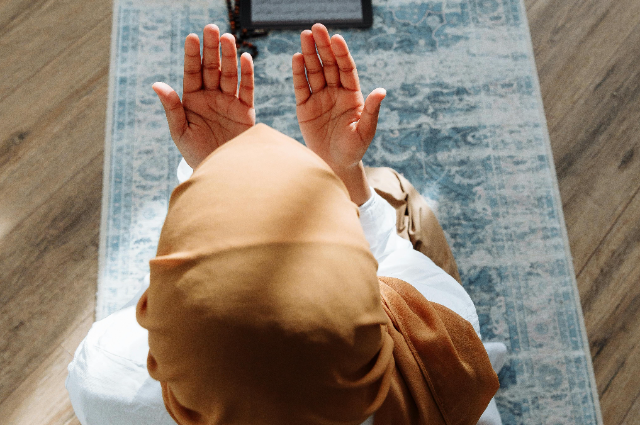
But in her loneliness, something divine happened. She stopped crying to people. She started crying only to Allah. Every night, after the world slept, she would rise for tahajjud, her tears falling onto her prayer mat like pearls.
She whispered, “Ya Allah, I have no one but You. You know my heart, my truth, my pain. I do not seek revenge. I only seek peace.”
The more she spoke to her Lord, the calmer she became. The Qur’an became her companion, her comfort, her light.
She read: “And whoever is patient and forgives, indeed, that is of the matters requiring determination.”
Slowly, her heart softened. The world had taken everything respect, love, comfort, but Allah gave her something greater: contentment.
Part 6: The Reward of Silence
Years passed. They finally completed their home, a simple house, small but strong. It was supposed to be her dream house, but by the time they moved in, she was just a shadow of her old self.
Her husband had grown cold. He no longer smiled, no longer cared. To him, she was a burden, a “disposed item,” as he once said in anger.
But she didn’t reply. She just looked at him and thought, You may see me as weak, but Allah sees me as steadfast.
Her children grew up watching her resilience. They didn’t have toys or luxury, but they had the living example of a woman who never stopped believing.
Every night, she still cried not out of despair, but out of longing for Allah.
She whispered, “I don’t want the world to see my worth anymore, Ya Allah. I just want you to be pleased with me.”
Her family still blamed her, society still judged her, but she no longer cared. Her heart belonged to Allah now.
And that was her true victory — the peace that comes after the storm.
She felt that the strength in her is .... The Garden of Gratitude
In the end, her story wasn’t about loss.
It was about discovering what remains when everything else is taken away.
She lost her love.
She lost her respect.
She lost her dreams.
But she found her faith, and through it, she found herself.
In the eyes of people, she was broken.
But in the eyes of Allah, she was a woman of sabr — one whose silence, tears, and sacrifices were being recorded by angels every single day. And one day, when this world ends, she will hear a voice far greater than any praise on earth.
“Peace be upon you for what you patiently endured. And excellent is the final home.”
Moral Reflection: Gratitude in the Midst of Pain
In every trial, Allah writes a hidden mercy. When He takes something away, He replaces it with something deeper — imaan (faith), tawakkul (trust), and sabr (patience).
The woman in this story walked through every shade of loss — she was unappreciated, misunderstood, insulted, and left alone by those she loved. Yet, she never stopped doing good, never stopped forgiving, and never stopped believing that Allah sees all.
Her silence was not weakness — it was strength born from faith.
Her tears were not defeat — they were dua in disguise.
Islam teaches us that gratitude is not only saying Alhamdulillah when life is easy, but also whispering it when your heart is breaking.
The Prophet ﷺ said:
“The affair of the believer is amazing, for there is good for him in every matter, and this is not the case with anyone except the believer. If he is happy, he thanks Allah, and that is good for him; if he is harmed, he shows patience, and that is good for him.” — (Sahih Muslim 2999)
So, when the world turns away from you, remember: Allah never does.
When no one values your efforts, know that the angels are recording them. And when you feel unworthy, remind yourself — Allah Himself calls the patient ones “beloved.”
Every wound she endured became a doorway to Jannah,
Every tear became a seed of forgiveness,
And every moment of silence became a verse of her faith.
Because sometimes, the closest you can be to Allah is when you have nothing left — but Him.