
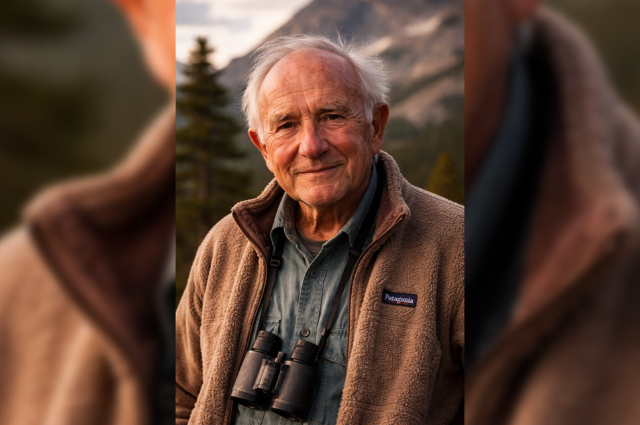
If you are reading this, you are likely seeking a story that transcends the ordinary—a narrative that challenges the accepted rules of business and society and offers a glimpse of what is truly possible when conviction outweighs convention. This is not a tale of a start-up’s meteoric rise or a business titan’s relentless pursuit of profit. Instead, it is the story of a reluctant billionaire who, in the ultimate act of corporate rebellion, gave away his entire company, valued at $3 billion, to save the only shareholder that truly mattered: Planet Earth.
The man at the centre of this extraordinary case study is Yvon Chouinard, the founder of the outdoor apparel company Patagonia. His journey is a profound meditation on wealth, purpose, and the moral responsibility of a successful enterprise in the age of the climate crisis. It is a story that should make every reader, consumer, and business leader pause and reconsider the very definition of success.
The Reluctant Capitalist: A Climber’s Philosophy
Yvon Chouinard never set out to be a businessman. He was, and remains, a “dirtbag” climber, a term he wears as a badge of honour, signifying a life dedicated to the pursuit of adventure and simplicity. In the 1950s, frustrated with the soft iron pitons that climbers used, he began hand-forging his own reusable steel hardware. This small act of necessity, born in a backyard shed, was the accidental genesis of a global corporation.
His philosophy was simple: build the best product, cause no unnecessary harm, and use business to inspire and implement solutions to the environmental crisis. This mission statement is not a marketing slogan; it is the company’s legal charter.
For decades, Patagonia operated on the fringes of traditional capitalism. They were pioneers in using organic cotton, implementing repair programs to extend product life, and famously committing 1% of all sales to environmental causes through the “1% for the Planet” initiative, a model Chouinard co-founded. These were not mere corporate social responsibility initiatives; they were foundational business practices, often implemented at a high cost to the bottom line.
The Paradox of the “Don’t Buy This Jacket” Campaign
The tension between Patagonia’s anti-consumerist ethos and its commercial success reached a dramatic peak in 2011 with the launch of the “Don’t Buy This Jacket” campaign. On Black Friday, the quintessential American day of hyper-consumption, Patagonia ran a full-page advertisement in The New York Times featuring one of their best-selling jackets with the bold, counter-intuitive headline: “Don’t Buy This Jacket.”
The ad copy was a powerful call to action, urging consumers to think before they buy, to repair what they own, and to consider the environmental cost of their purchases. It directly challenged the prevailing retail culture.
The campaign was a masterstroke of authentic marketing, but for Chouinard, the growing revenue was a source of discomfort. He had created a billion-dollar company, and with that wealth came the inescapable moral dilemma: how could he reconcile his deep environmentalism with the immense, planet-consuming machine that his business had become? The profits, no matter how ethically generated, were still profits, and they were still accumulating in the hands of a single family.
A Revolutionary Transition: Earth Becomes the Shareholder
To resolve this growing conflict between mission and money, Patagonia took a revolutionary step. In September 2022, Yvon Chouinard, his wife Malinda, and their two adult children—Fletcher and Claire—transferred 100% of the company’s ownership to a specially designed structure. This was not a sale, nor a simple donation. It was a complete and permanent restructuring of the company’s governance and financial flow, ensuring that every dollar not reinvested in the business would be used to fight the climate crisis.
In a letter to employees and customers, Chouinard explained:
“Instead of ‘going public,’ you could say we’re ‘going purpose.’ Instead of extracting value from nature and transforming it into wealth for investors, we’ll use the wealth Patagonia creates to protect the source of all wealth.”
The New Ownership Structure
The ownership was divided between two new entities: the Patagonia Purpose Trust and the Holdfast Collective.
1. The Patagonia Purpose Trust (PPT)
- Ownership: Holds 2% of total stock but 100% of the voting stock.
- Purpose: Protect Patagonia’s mission and values. The family guides the Trust but receives no financial benefit from it.
2. The Holdfast Collective
- Ownership: Holds 98% of non-voting stock.
- Purpose: Receive all profits and deploy them to fight the climate emergency. Because it is a 501(c)(4), it can fund political advocacy and lobbying—far more powerful than a traditional charity.
The Chouinard family effectively forfeited their entire stake, worth an estimated $3 billion, without pursuing major tax benefits. Their decision prioritised long-term planetary impact over generational wealth.
The Impact and a Challenge to Capitalism
Since the restructuring, Patagonia has already directed $180 million in dividends to the Holdfast Collective, supporting grassroots environmental groups and climate activism on a large scale. This is a direct, measurable transfer of corporate wealth into planetary protection.
Patagonia’s model challenges the long-standing doctrine of shareholder primacy—the belief that a corporation’s duty is to maximise profit for shareholders.
Purpose primacy, Patagonia’s approach, asserts that the company exists to fulfil its mission: saving the home planet. Profit becomes the tool, not the purpose.
This bold move forces an urgent question: Can a company be truly successful if its success harms the planet? Chouinard’s answer is a resounding no.
A New Definition of Success
The Patagonia story offers a powerful antidote to the cynicism that often surrounds modern business. In a world where success is usually measured by profit, power, and expansion, this story reminds us that true wealth lies not in accumulation but in contribution. Yvon Chouinard, the reluctant billionaire, never chased the spotlight or the status that came with his achievements. Instead, he discovered his ultimate purpose in choosing to let go of a fortune that most people can only dream of. His decision wasn’t an impulsive act of charity—it was a deeply personal reflection of what he believed mattered most. By relinquishing ownership of the company he built, Chouinard redefined what it means to succeed: it’s not about how much we gain, but how much good we create. His journey challenges us to rethink our own values and consider the legacy we want to leave behind.
Patagonia didn’t change its business—it changed business itself.