
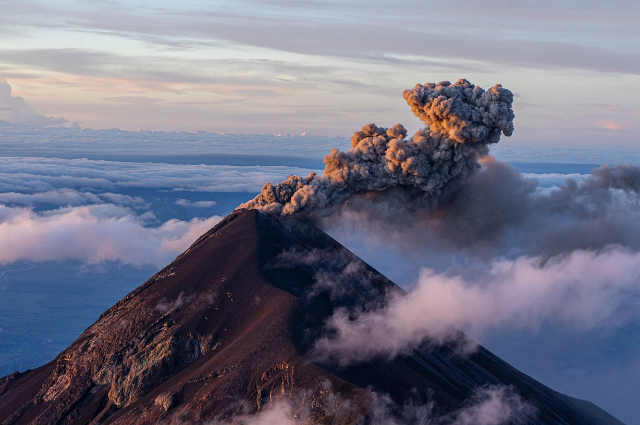
When Hayli Gubbi roared back to life on November 23, 2025, the world’s attention briefly swung toward a remote corner of Ethiopia where few stories ever reach global headlines. For people living along the Afar Depression, the eruption wasn’t just a dramatic display of nature—it was a reminder that life on this land has always been a negotiation with forces far beneath their feet. Ash drifted over villages and grazing grounds, settling on the backs of animals and the roofs of simple homes, turning their everyday routines into a scramble for survival.
The Afar region has long depended on pastoralism. Families move with their herds across a landscape that is as beautiful as it is unforgiving. When the eruption darkened the sky, it covered the grasses that kept their goats, sheep, and camels alive. Local officials warned that livestock had little left to eat, and many pastoralists were forced to move before they were ready, adding one more displacement to a life defined by unpredictability.
For many, this disaster didn’t arrive in isolation. The Afar Depression sits at the meeting point of three tectonic plates, a place where the land is literally tearing apart. Over time, cracks split the earth, earthquakes unsettle wells and grazing paths, and heat seeps toward the surface. Add drought, rising temperatures, and the shrinking availability of pasture, and the eruption becomes just the latest burden in a long list of quiet emergencies.
Yet within that same volatile geology lies Ethiopia’s hopes for a more stable future. It’s a paradox that defines the Rift Valley: the same forces that disrupt life here also power one of the country’s boldest ambitions—geothermal energy.
Just a few hundred kilometres from Hayli Gubbi, drilling rigs are rising over projects like Tulu Moye and Aluto-Langano. These aren’t ordinary power plants. They tap into the deep heat beneath the Rift, aiming to produce clean, steady electricity in a country still trying to break free from its dependence on diesel and seasonal hydropower. High-temperature wells, some reaching more than 2,000 meters underground, have shown enough promise to draw international investment. Engineers and geologists talk about megawatts the way farmers talk about rainfall—something that could change everything, if it comes as hoped.
But big promises do not erase the complexities on the ground. Geothermal projects require land, infrastructure, and political decisions that often leave pastoralists with little say. Some communities worry that development will shrink their grazing routes or push them off historically shared land. Others fear that profits will flow upward while the risks—noise, land loss, or even small-scale seismic disturbances—fall on them. Ethiopia’s recent history shows that any attempt to reshape the Rift Valley must consider the people whose lives have always been intertwined with it.
Still, the idea of “volcanic diplomacy”—an attempt to balance hazard and opportunity—is not without hope. In neighbouring regions, small pilot projects have shown how geothermal heat can serve entire communities, providing water, small-scale power, or even climate-resilient agriculture. These models hint at a future where the Rift’s energy is not only extracted but shared.
Beyond Ethiopia, the eruption sent ripples far beyond the Afar plains. When Hayli Gubbi’s ash plume shot nearly 45,000 feet into the air, airlines rerouted flights and ash advisories spread across aviation networks. It was a clear reminder that what happens in this pocket of the Horn of Africa can ripple into global systems, whether through energy, climate, or sudden geological surprises.
The challenge now is learning from this moment. Hayli Gubbi exposed both the vulnerability and the potential of the Rift Valley. Pastoralists face immediate losses—ash-covered grasslands, weakened herds, and uncertain months ahead. At the same time, Ethiopia’s geothermal future rests on turning this same volcanic landscape into a pillar of clean energy.
The eruption forces a deeper question: Can development and tradition survive side by side on a fault line? The answer will depend on how Ethiopia chooses to move forward—whether energy projects make room for the people who know this land best, whether early-warning systems improve, and whether pastoral communities are included not just as bystanders but as partners.
Hayli Gubbi may have awakened suddenly, but the story it revealed has been unfolding for generations. The Rift Valley is a place of fire and opportunity, of disruption and possibility. Ethiopia now stands at a moment where it must decide how to live not against the Rift, but with it.
References:
- https://www.aljazeera.com
- https://www.scientificamerican.com
- https://www.africanews.com
- https://www.frontiersin.org
- https://www.frontiersin.org
- https://www.worldgeothermal.org
- https://downloads.unido.org
- https://pastoralismjournal.springeropen.com
- https://www.sciencedirect.com
- https://pmc.ncbi.nlm.nih.gov