
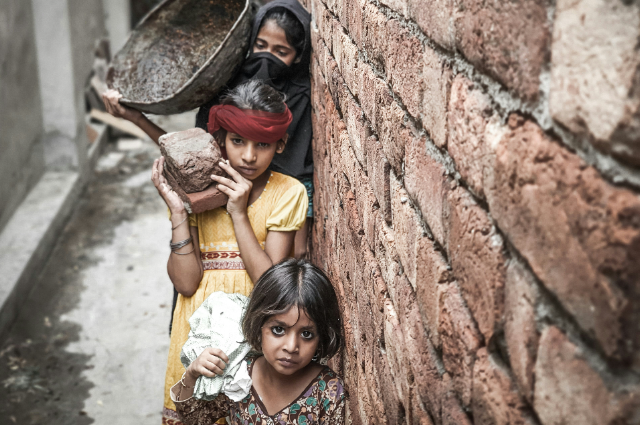
In 2015, governments agreed to end child labor by 2025. The goal was written into global development plans and repeated in speeches, reports, and corporate commitments. When 2025 arrived, the target had been missed. More than 138 million children were still working. Many were doing work that interfered with schooling or placed them in unsafe conditions. This did not happen because the problem was misunderstood. It happened because the systems that rely on child labor were never seriously changed.
Most child labor today does not happen in places that are easy to identify or inspect. It is not concentrated in large factories with signs on the gate. It takes place in small farms, family workshops, informal production sites, and illegal or semi-legal mines. Children often work where there are no employment records and no inspectors. In many cases, their work is described as “helping” rather than employment, even when it involves long hours or hazardous tasks.
Global supply chains make this type of labor difficult to trace. Large companies usually buy from direct suppliers that appear compliant with labor laws. These suppliers are the ones that get audited. What happens further down the chain receives far less attention. Raw materials and labor-intensive tasks are often outsourced to smaller operators who are not formally registered and are rarely monitored. This is where children are most likely to be involved.
The cocoa industry shows how this works in practice. In parts of West Africa, children continue to harvest cocoa despite years of international agreements aimed at stopping the practice. Cocoa from different farms is pooled together at local markets. Once mixed, there is no practical way to separate beans produced with child labor from those that were not. When the cocoa is exported, it is treated as a single product. By that stage, companies can claim ignorance, even though the problem is well known.
Mining follows the same pattern. In areas where minerals like cobalt and mica are extracted, children often work alongside adults. The materials move through traders, processors, and exporters before reaching manufacturers. Each step increases the distance from the source. By the time the minerals are used in batteries, electronics, or cosmetics, the conditions under which they were mined are no longer visible.
Economic pressure keeps families trapped in this cycle. Suppliers are paid low prices and given tight deadlines. To meet production targets, they reduce labor costs. In communities where adult wages are not enough to cover basic needs, families depend on every possible income source. Children work because the household cannot afford for them not to. This is not a cultural preference. It is a response to poverty and limited options.
Audits have not solved the problem. Inspections are usually announced ahead of time and focus on formal workplaces. Child labor is more common in informal settings that audits do not reach. When inspections do happen, suppliers know how to hide violations temporarily. The process produces reports that suggest compliance while leaving actual working conditions unchanged.
Recent crises made the situation worse. During the COVID-19 pandemic, many children left school and never returned. Climate-related disasters reduced incomes in farming communities. Conflict and displacement increased vulnerability. Each of these factors raised the likelihood that children would enter the workforce and remain there.
For years, the main response relied on voluntary corporate commitments. Companies published codes of conduct and sustainability reports. These measures improved public messaging but did not create consequences for failure. When child labor was exposed, responsibility was often shifted to suppliers or local conditions. There was little legal risk for companies at the top of the chain.
New regulations introduced in 2025, particularly in the European Union, aim to change this by making companies legally responsible for labor conditions throughout their supply chains. These laws allow for penalties and legal action when abuses are ignored. Whether they will be enforced consistently remains uncertain.
Ending child labor requires more than new rules. It requires paying prices that allow adults to earn enough to support their families. It requires education systems that are accessible and reliable. It requires supply chain transparency that goes beyond paperwork. Most of all, it requires acknowledging that child labor is not an isolated failure but a predictable result of how global production is organized.
The failure to meet the 2025 goal reflects a lack of willingness to change systems that benefit from cheap and hidden labor. Until that changes, child labor will continue, even when the promises say otherwise.
. . .
References
- International Labour Organization (ILO) https://www.ilo.org
- UNICEF – Child Labour Data https://www.unicef.org
- European Commission – Corporate Sustainability Due Diligence Directive https://commission.europa.eu
- ILO & UNICEF Joint Estimates on Child Labour https://www.ilo.org