
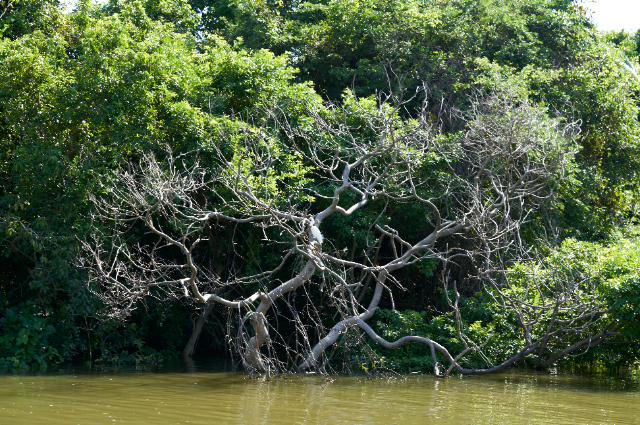
Living in a coastal area in the Philippines teaches you things no textbook ever could. You learn to read the tides before you learn to tell time. You wake up to the sound of boats instead of traffic. You watch mangroves sway like old friends keeping the shoreline steady, even when the storms come. These places are more than scenery; they’re part of the rhythm of everyday life. But lately, the rest of the world has discovered their value too, and suddenly the waters and forests we grew up with have price tags attached.
This is the strange reality of the blue carbon economy. Mangroves, seagrass beds, and other coastal ecosystems can store staggering amounts of carbon, sometimes four times more than forests on land. On paper, protecting them or restoring what has been lost means governments and private companies can generate carbon credits and sell them on international markets. It sounds like an easy win for climate mitigation. But here at home, where people’s daily lives are tied to these ecosystems, nothing about it feels simple.
A few years back, a proposal in Palawan showed just how complicated this new path can be. A group of foreign investors approached local officials, hoping to restore nearly 5,000 hectares of mangrove forest that had been damaged by decades of logging and fishpond expansion. The restored forest, they said, could generate carbon credits worth millions over the years.
To outsiders, it looked like a generous offer. But for people living along the coast, fishermen, families, and indigenous communities, the news didn’t sit smoothly. Many of them had already lived through conservation projects that restricted their access to waters they relied on. Some older residents remembered the early days of protected areas, when fishing zones were suddenly off-limits. Others had seen promises of livelihood assistance fade away once projects were completed.
So when this new proposal started using words like “exclusive carbon rights” and “controlled access,” people became wary. Living by the water shapes a certain instinct you learn when something feels off. And to the coastal communities, the idea of outsiders managing the very ecosystems they depended on felt like history repeating itself.
Environmental groups didn’t agree with one another either. Some pushed hard for the project, seeing it as a chance to protect a coastline constantly battered by typhoons and illegal logging. Others argued that turning mangroves into carbon commodities was risky and could easily end up sidelining the people who’d lived there for generations. Scientists raised concerns about whether carbon stored in such dynamic landscapes could even be measured accurately enough for global markets. One strong typhoon, after all, could uproot years of restoration work.
But the biggest hurdle wasn’t emotional; it was legal.
At that time, the Philippines still didn’t have a clear national policy defining who owned carbon rights, how credits could be sold, or how benefits should be shared. Without these rules, even local officials admitted they could only do so much. Agreements made too early could be overturned later. Developers didn’t want to risk millions without clarity. Communities didn’t want to risk their livelihoods. Both sides had valid fears, and no law existed to settle them.
Meetings were held, but every meeting revealed new problems. Fishermen wanted written assurances that channels would remain open. Indigenous groups asked for recognition of ancestral domains mapped long before modern boundaries existed. Scientists explained that Planting mangroves in the wrong hydrological conditions could cause more harm than good. Lawyers warned that contracts signed prematurely could be invalidated once national rules were finalized.
The Palawan project didn’t fail loudly. It simply faded, stuck between good intentions and shaky foundations. And if you grew up near the water, it wasn’t surprising. Coastal life teaches you that everything must be built on something solid, or the tide will take it away.
The Philippines isn’t alone in this struggle. Kenya, Indonesia, and even Australia have gone through similar tense moments where carbon projects collided with unclear land rights, questionable measurements, and community mistrust. Countries everywhere are learning the same lesson: climate solutions sound perfect until they meet real people and real places.
But even with these challenges, blue carbon remains a powerful opportunity, especially for a country like ours. Mangroves protect us from storm surges. They nurture fish that feed thousands of families. They stabilize our coastlines and keep erosion at bay. They clean our air and water. And yes, they store enormous amounts of carbon.
The question isn’t whether blue carbon is good. It’s how to build an economy around it without pushing away the people who’ve lived beside these ecosystems their entire lives.
If blue carbon is going to work in the Philippines, it needs to start from the shoreline, not the boardroom. Carbon rights must be clearly defined. Revenue-sharing must be transparent. Monitoring must be honest and long-term. And most importantly, coastal communities must be treated as partners, not obstacles. They are the first guardians of these ecosystems, long before investors, regulators, and auditors arrived.
Living in a coastal area teaches you resilience, patience, and an understanding of cycles. These don’t rush, but they shape everything. Maybe the future of the blue carbon economy depends on learning that same rhythm, careful, grounded, rooted in the people who know these waters best.
The coastline remembers every storm and every promise. The question now is whether the world will finally listen to the people who’ve been listening to the coastline all their lives.
References
- United Nations Environment Programme, Blue Carbon Reports: https://www.unep.org
- IPCC, 2013 Wetlands Supplement on carbon storage in mangroves and seagrass ecosystems: https://www.ipcc.ch
- Smithsonian Environmental Research Center, Mangrove restoration case studies in Southeast Asia: https://serc.si.edu
- Rappler, coverage on carbon market and environmental policy issues in the Philippines: https://rappler.com
- Philippine Daily Inquirer reports on coastal management and conservation policies: https://inquirer.net
- Climate Home News, articles on Kenya’s carbon market and regulatory developments: https://climatechangenews.com
- Mongabay, reporting on Indonesia’s blue carbon initiatives and carbon trading regulations: https://mongabay.com