
For years, the tech industry has repeated a familiar belief: software scales easily. Write good code, move it to the cloud, and growth follows. Generative AI has quietly broken that idea. As these systems move from experiments to everyday tools, the real limits are no longer technical in the abstract. They are physical, expensive, and increasingly hard to ignore.
Every AI response looks simple. A question appears on a screen, and an answer comes back a moment later. What is hidden is the work happening underneath. Each request sets off thousands of calculations across specialised chips running near their limits. This is not like serving a webpage or syncing a file. Each interaction costs something real: electricity, cooling, and hardware time. When usage scales into the millions or billions of prompts, those costs stop being theoretical.
That reality has changed how AI is built. The biggest obstacles are no longer about clever model design alone. They are about whether enough chips can be sourced, whether enough power can be delivered, and whether new data centres can be permitted and constructed in time. What is often described as a software revolution increasingly looks like a race to build physical infrastructure.
This shift shows up clearly in hardware strategy. General-purpose processors were never designed for the kind of parallel work modern AI demands. GPUs filled the gap, but dependence on a small number of suppliers created new problems: supply shortages, rising prices, and long lead times. Chips became a bottleneck rather than a commodity. Google’s response was to treat hardware as a first-order concern. Its Tensor Processing Units were designed with a narrow focus: run AI workloads efficiently at scale. By limiting what the chip needed to do, Google reduced energy use per task and gained more predictable performance. More importantly, it reduced reliance on outside vendors. Hardware stopped being something you bought and became something you built.
Microsoft has taken a similar path. While it still relies heavily on GPUs, it has steadily expanded its own silicon efforts for networking, storage, and security. These components rarely get public attention, but they shape how much AI actually costs to run. Together, these choices reflect a broader shift. Control over hardware is now inseparable from control over AI economics.
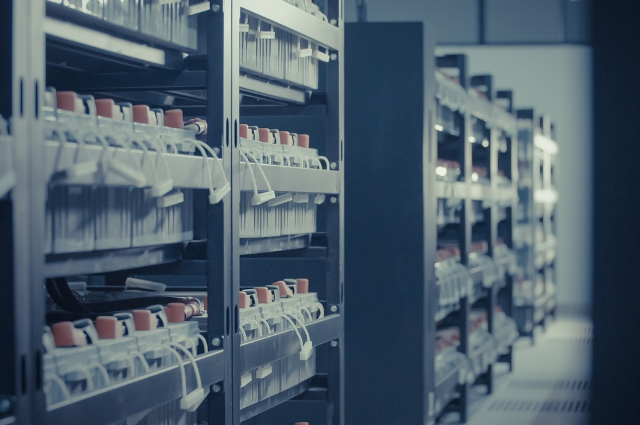
The pressure extends beyond chips. Data centres themselves have become a constraint. Facilities designed a decade ago were not built for racks that draw several times more power than before. Retrofitting them is slow and expensive. New facilities require custom cooling systems, reinforced electrical infrastructure, and careful site selection. In some regions, projects sit idle not because of software delays, but because power connections or permits are not ready.
Energy use has become the most visible point of friction. Large AI data centres can consume as much electricity as a small city. Utilities are being asked to deliver power at a pace they were never designed for. In response, some projects are delayed or scaled back. Others move to regions where power is cheaper or regulation is lighter, shifting the burden rather than reducing it.
Water use adds another complication. High-density hardware generates heat, and heat has to go somewhere. Cooling systems rely heavily on water, often drawn from local supplies. In areas already facing shortages, this has sparked opposition from residents who see data centres as competing with everyday needs. These concerns are no longer hypothetical. They are shaping planning decisions in real time.
Industry leaders have started to speak more cautiously about growth. The idea that AI must justify its resource use reflects a change in tone. It suggests recognition that technical progress alone is not enough. Without efficiency gains and public acceptance, the physical demands of AI could slow adoption as much as any algorithmic limit.
From a business perspective, this shift challenges long-held assumptions. AI does not scale like traditional software. Costs rise with usage, not just during development. Running large models looks less like selling an app and more like operating infrastructure. Success depends on efficiency, long-term planning, and the ability to absorb heavy upfront investment.
Google Cloud and Microsoft Azure illustrate how far this transformation has gone. Their investments in custom chips and data centres are not short-term responses to hype. They are structural commitments to owning the backbone of AI delivery. Smaller companies, lacking the capital to do the same, may find themselves increasingly dependent on these platforms, concentrating power in a few hands.
There is no single fix for this problem. Improvements will come slowly, through better chip design, more efficient cooling, smarter scheduling of workloads, and cleaner energy sources. Policy and regulation will also play a role, whether by limiting expansion or guiding it more carefully.
The broader point is straightforward. Scaling AI is no longer just about better models or smarter code. It is about land, power, water, and hardware. The future of generative AI will be shaped as much by infrastructure decisions as by software breakthroughs. In the end, this is not just a digital story. It is a physical one.
References:
- Reuters. “AI Boom Is Infrastructure Masquerading as Software.”
https://www.reuters.com - Reuters. “Google Names New Chief for AI Infrastructure Build-Out.” https://www.reuters.com
- AInvest. “Alphabet’s TPU Ecosystem Is Reshaping AI Infrastructure Economics.” https://www.ainvest.com
- Congressional Research Service. “Data Centres and Electricity Demand.” https://www.congress.gov
- LinkedIn. “AI Chips and Data Centre Power Density Trends.” https://www.linkedin.com
- Wikipedia. “Data Centre.” https://en.wikipedia.org
- The Verge. “Lawmakers Asked to Pause Data Centre Construction.” https://www.theverge.com
- Politico. “Microsoft’s Nadella Says AI Must Earn Social Permission to Use Energy.” https://www.politico.com
- Business Daily Press. “Microsoft’s $110 Billion AI Data Centre Investment.” https://business.smdailypress.com