
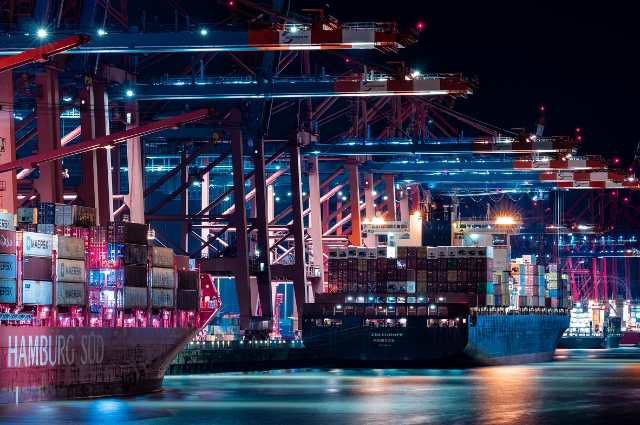
Not long ago, globalisation felt permanent. Factories spanned continents, goods moved freely, and trade disputes were handled quietly through institutions most people never thought about. That sense of permanence is gone. In 2025, the global economy feels tense, brittle, and increasingly political. What was once cooperation now looks more like competition, and in some cases, outright confrontation.
Much of that shift begins in Washington. President Donald Trump’s proposal to impose tariffs of 10 to 20 percent on a wide range of imports has reopened old trade wounds and created new ones. Supporters see it as a long-overdue correction, a way to protect American jobs and bring production home. Others see something more dangerous: a move that invites retaliation and pushes the global economy closer to fracture. Either way, the signal is unmistakable. The rules that once governed trade are no longer assumed to hold.
That uncertainty is already shaping decisions far from political headlines. Companies that once mapped supply chains years in advance are now hesitating. Investments are being delayed. Contracts are rewritten. The cost of doing business across borders is no longer just financial—it’s political. For global markets, predictability has become a luxury.
China has adjusted quickly, though not quietly. With U.S. demand under threat, Chinese exporters have shifted focus toward Europe, Southeast Asia, and developing markets. The move makes economic sense, but it has unsettled European officials. There is growing concern that European industries—especially in areas like electric vehicles, steel, and clean energy—could be undercut by a flood of low-cost imports. As a result, conversations once dismissed as protectionist are now being taken seriously in Brussels.
The pressure is not limited to major powers. Countries caught in between are being forced into difficult choices. Mexico’s decision to impose high tariffs on hundreds of Chinese products reflects that reality. Officially, the move is about protecting domestic industry. Unofficially, it also keeps Mexico aligned with U.S. trade expectations. Similar calculations are playing out across Asia and Latin America, where governments are weighing economic self-interest against geopolitical risk.
Currency markets tell the same story in quieter terms. Trade disputes shake confidence, and confidence moves money. India’s unresolved trade tensions with the United States have coincided with ongoing pressure on the rupee, complicating everything from imports to investment planning. These are not dramatic collapses, but slow, grinding pressures that add up over time.
The economic costs of this shift are not hard to predict. Tariffs raise prices. Consumers pay more. Businesses lose efficiency. The more serious damage, however, comes from hesitation. When companies are unsure which markets will stay open, they stop expanding. Innovation slows. Jobs are postponed or lost. Export-dependent economies feel it first, but no country is immune.
What makes this moment especially fragile is how normal economic pressure has become as a political tool. Tariffs are now joined by export bans, subsidies, investment restrictions, and financial screening. These measures are often justified individually, but together they mark a clear departure from cooperation. Institutions designed to manage disputes are struggling to keep pace, and trust in shared rules is wearing thin.
None of this guarantees an economic war. Governments still have room to pull back, negotiate, and compromise. China continues to build alternative trade relationships. European leaders talk about protecting strategic industries without closing markets entirely. The question is whether restraint can survive domestic political pressure.
The retreat from globalism is no longer an abstract idea discussed at conferences. It is happening now, shaped by choices made in capitals rather than markets. What happens next depends less on economic logic than on political judgment. The risk is not sudden collapse, but a slow slide into a world where trade is weaponized and cooperation becomes the exception rather than the rule.
References:
- Think Tank Journal, The Price of Protectionism: U.S. Tariffs Fuel Global Inflation Woes
- https://thinktank.pk
- European Council, Economic Prospects and Global Fragmentation Report 2025
- https://www.consilium.europa.eu
- Institute of Geoeconomics, Global Trade Fragmentation and Strategic Responses
- https://instituteofgeoeconomics.org
- S&P Global Market Intelligence, The Economic Impact of a U.S.–China Trade War
- https://www.spglobal.com
- Council on Foreign Relations, Trump’s Economic Disruption and Global Adaptation
- https://www.cfr.org
- Financial Times, Mexico Imposes Tariffs on Chinese Imports Amid Global Trade Tensions
- https://www.ft.com
- Reuters, India’s Trade Impasse With the U.S. Keeps Pressure on the Rupee
- https://www.reuters.com