
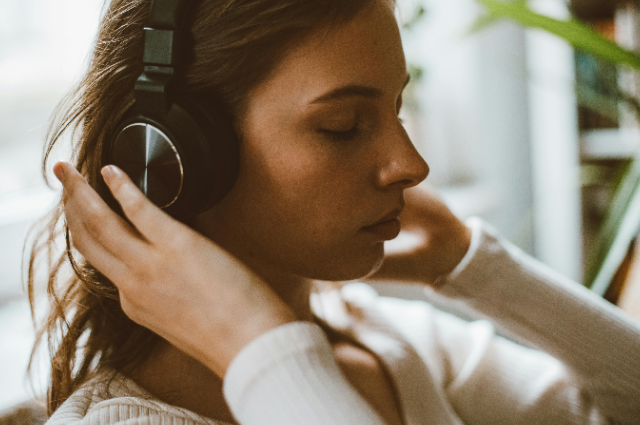
There are days when the world simply feels too loud—when responsibilities stack up faster than your breathing can keep up, when you carry thoughts you can’t explain, when everything feels heavier than it should. And somehow, in the middle of all that noise, music becomes the one place where everything softens. It’s strange when you think about it. A song is just sound, just vibration—but for so many of us, it’s home. We return to certain melodies the same way we return to people who make us feel understood.
What science says about this is interesting, sure—but most of us felt it long before any research existed. Long before brain scans and neural pathways, there was already that one song you played at 2 a.m. because nothing else made sense. There was already that one playlist you kept sacred. There was already that one artist who somehow spoke the language of your heart better than you ever could.
Everyone has their own story of how music became their safe place. For some, it starts with indie music—quiet, fragile, honest. The kind of songs that sound like someone whispering truths you weren’t brave enough to admit. Movements is one of those bands for a lot of people. Their music doesn’t sugarcoat anything. It talks about mental health, loneliness, and trying to stay afloat. I’ve heard people say that listening to “Daylily” felt like having someone sit beside them in their worst moment—not trying to fix them, not throwing clichés at them—just staying. Sometimes, that’s all you really need.
And then there’s pop punk—the lifeline for the kids who grew up pretending everything was fine. The ones who wore humour like armour. The ones who felt too much but didn’t know how to say it. If you grew up with All Time Low, State Champs, Pierce the Veil, Mayday Parade, NeckDeep, or 5 Seconds of Summer, you know exactly what I mean. There’s a reason why hearing “Therapy,” “Caraphernelia,” “Miserable at Best,” or “December” can still rip open something inside you. Those songs weren’t “just songs.” They were the place you went when your chest felt too tight, and you didn’t have the words for why. They were the soundtrack to days when you swore nobody understood—but the music did.
It’s funny how those bands became emotional first aid for an entire generation. Fast drums, loud guitars, raw voices—it looked like chaos, but for a lot of us, it was structure. It gave shape to feelings that didn’t make sense. It turned pain into something you could scream out loud instead of carrying alone.
But the safe place doesn’t always come from loud guitars. Sometimes it’s found in the softest places—like the world of K-drama OSTs. Anyone who loves K-dramas knows exactly how powerful these songs can be. A single piano melody can pull out emotions you buried years ago. A swelling chorus can make you feel understood in a way that everyday life rarely does. Songs like “Sweet Night,” “Say Yes,” “Here I Am,” or “Love Me Like That” have comforted people through heartbreaks, quiet loneliness, and nights when overthinking doesn’t let you sleep. These OSTs carry a very specific kind of warmth—the kind that feels like being hugged gently, without being asked to explain yourself.
And then there are the bands like One OK Rock or coldrain—the ones who don’t just express emotion but explode with it. Their songs feel like storms, but the kind that wash you clean instead of tearing you apart. “Wherever You Are” has carried couples across oceans. “The Beginning” has helped people push through moments when they wanted to give up. This doesn’t just sit with your sadness—it fights with you.
I think part of what makes music such a powerful, safe place is how closely it ties itself to memory. The brain clings to songs the same way it clings to moments. You can hear an old track and suddenly remember the smell of a certain street, or the way the air felt the night you first fell in love, or the exact feeling of sitting in the passenger seat of someone you miss. Music is the closest thing we have to time travel. One chorus and you’re 16 again. One verseand you’re back in your childhood home. One intro riff and your heart breaks or heals all over again.
I once heard a seafarer say that the only thing keeping him grounded during months alone at sea was his old Sunday playlist—the same one he used to play with his family back home. He said the songs made him feel like time didn’t move so far away from him. That’s the thing about music: even when life displaces you, it pulls you back to yourself.
And it’s not just individuals. Music creates shared safety, too. If you’ve ever sat inside a Manilajeepney while an old OPM love song plays through the speakers, you know how the atmosphere shifts. Traffic suddenly feels lighter. Strangers seem less distant. During Typhoon Ulysses, videos circulated of neighbours singing in the dark—trying to comfort each other the only way they could. Music becomes a bridge when everything else collapses.
In therapy rooms, music becomes another kind of refuge. People who can’t talk about their trauma can sometimes sing it, or write it, or let a certain song say it for them. Music gives shape to emotions that words can’t carry alone. It makes the unbearable feel survivable.
And then there are the small, everyday rituals—the playlists we build for ourselves. Everyone has one. Some people have a late-night playlist to quiet the mind. Some have a heartbreak playlist they only play when their chest feels too tight. Some have a “keep going” playlist for days when life feels heavier than usual. These playlists become personal sanctuaries—little rooms inside your heart that you step into when the outside world feels too sharp.
In relationships, music becomes a kind of emotional thread. Couples have “our song” not because it’s cute but because it grounds them. It reminds them of softness even when they’re fighting. Families have lullabies that become memories long before a child can speak. Friends bond over bands that feel like shared secrets.
In the end, music becomes a safe place not because it saves us from the world, but because it stays with us through every version of ourselves. It grows with us. It breaks with us. It heals with us. It marks the chapters of our lives in ways nothing else can.
Long after people leave, long after memories fade, long after the world moves on, the songs remain—quiet, steady, familiar. A safe place tucked inside the noise.
References
- UC Berkeley News – “How Music Moves Us”: https://news.berkeley.edu
- Psychology of Music Journal: https://journals.sagepub.com
- Harvard Medical School – “Sounds and Memory”: https://hms.harvard.edu
- Spotify Newsroom – Global Listening Trends: https://newsroom.spotify.com
- American Music Therapy Association: https://www.musictherapy.org