
Every storyteller has a landscape that defines them. For me, that landscape is Begusarai, Bihar. I grew up in a house where luxury wasn’t defined by material possessions, but by the quiet gift of time. Our terrace was unencumbered, rough underfoot, and the floors lacked the shiny tiles of modern apartments. There was no air conditioning to cool the intense summers of the plains. We had one table fan that ran on a modest inverter, and its cool breeze was strictly, almost sacredly, reserved for my homework hours.
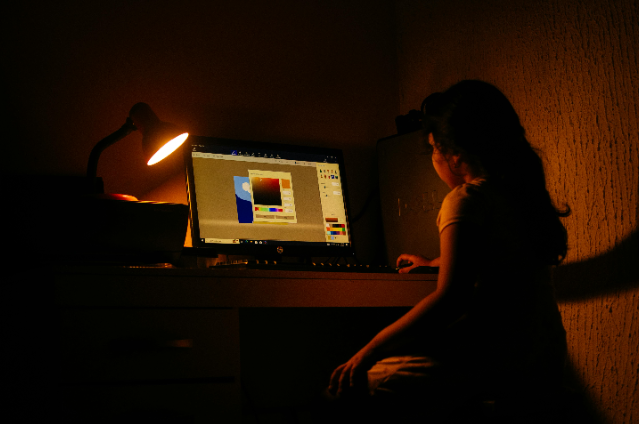
I spent my childhood sleeping on a simple wooden chauki. Under the dim light, I would study my books while my parents poured every single bit of their energy, savings, and hope into my education. They looked at me and saw a future that stretched far beyond the boundaries of our small town. Because of their immense sacrifices, I made a leap that felt almost cosmic at the time—from the dusty, unpaved roads of Bihar to the manicured, historic halls of Welham Girls’ School in Dehradun.
That foundation set off a chain of academic milestones. I moved on to study medicine, earning distinctions during my MBBS at KMC Manipal and my MD at KMC Mangalore. Eventually, I achieved what once seemed an impossible dream: a Fellowship from the Royal College of Radiologists (FRCR) in the United Kingdom. On paper, I was the ultimate success story. I was Dr Niharika Prasad, the girl who had conquered the world, a brilliant radiologist and an Associate Professor ready to shape the next generation of doctors.
But life has a very specific, ruthless way of humbling you in ways a classroom never can. While my career reached dizzying heights, my personal life felt like it was silently, systematically crumbling into dust.
The Weight of the "Broken" Label
Behind the glittering resume and the professional accolades, I went through the profound heartbreak of two failed marriages. My response to these endings did not fit the conventional script of grief. There are several ways in which people mourn a loss; rarely does a person not cry, but instead acts entirely indifferent to the tragedy. My reaction to the collapse of my marriage was exactly that—a numbing indifference. For a long time, I continued to wear my ring, even though the stone had long failed to symbolise any genuine bond. Perhaps, in a subconscious way, it gave me a false sense of protection in a senseless, judgmental society. If I looked married, the world asked fewer questions.
The silence of my apartments in bustling metros like Delhi and Pune was deafening. It was a sharp, painful contrast to the rigid, deep-rooted expectations of the place I call home. I belong to a part of rural India where the institution of marriage is treated not just as a partnership, but as a woman’s entire identity. In these towns, women complete 108 arduous circles around a banyan tree during Vat Savitri to enhance their nuptial bliss. They order customised bangles online to display lac-encased pictures of their husbands. It is a traditional landscape where a husband is often worshipped blindly, and where married women proudly mark themselves with deep orange vermillion streaked generously from their forehead to the very tip of their nose during festivals.
To be a twice-separated woman in that cultural landscape was to carry a heavy, invisible stigma. It meant walking around with a "broken" label that society tried to pin on my chest every single day. The world can be incredibly cruel to a woman who chooses her own peace over a suffocating arrangement.
Healing Through the Written Word
In those moments of deep, isolating darkness, when the title of "Doctor" or "Professor" couldn't shield me from the emotional winter, I turned back to my first, most enduring love: words.
I began to write to survive. Writing became my sanctuary, my therapy, and my quiet rebellion. By night, I would pour my soul into poetry, capturing the bittersweet nuances of love, longing, and letting go. By day, I channelled my structured, analytical mind into medical authorship. Over time, I established myself as a bestselling Amazon author, a milestone that brought an entirely different kind of validation.
Seeing my name on the covers of books that topped the charts was a reminder that my voice mattered outside the clinic walls. I solo-authored and co-authored multiple academic textbooks, including my prominent series, Radiology Without Tears, designed to strip away the intimidation of complex imaging for young MD students. Alongside these medical volumes, my published poetry books became a bridge to thousands of readers online who found pieces of their own unexpressed grief in my verses. Watching my community of readers grow to over 4,000 followers on social media filled the quiet spaces that medicine couldn't reach.
Through this creative outpouring, a profound realisation washed over me: even a "Juliet without a Romeo" is still the absolute lead character in her own story. Her narrative does not cease to exist just because the romantic co-star has exited the stage.
I remembered that fierce little girl in Begusarai sitting on the wooden chauki. She hadn't survived the intense academic rigours, the lonely nights of training, and the daunting exams of the Royal College only to come this far and give up. I looked at my life through a broader lens. I had checked off 45 cities in my travel log, explored the length and breadth of India, published nearly a hundred research papers, and taught countless students. Yet, as I stood in my quiet apartment, I realised that my greatest achievement wasn't a degree, a destination, or a bestseller badge. It was finally becoming genuinely comfortable in my own company.
Moving Back is Not Moving Backwards
Recently, I made a major decision that surprised many of my peers in the medical community. I resigned from my comfortable faculty position at the medical college in Pune, packed up my life, shipped my luggage across states, and returned to my roots in Bihar.
A Lesson in Perspective: Returning home to assume family responsibilities and be close to my ageing parents isn't a retreat. It is a conscious, empowered choice. It is proof that moving back is never the same thing as moving backwards.
Today, I stand as a proud, independent, and whole woman. I haven't closed my heart to the world. I still dance—losing myself in the intricate, expressive rhythms of Salsa, Bachata, and ladies' styling workshops. I still try my hand at crafts, finding joy in creating beautiful things from raw clay. I still believe deeply in the beauty of finding love again, and I still hold onto the dream of a quiet, beautiful future.
But there is a monumental difference in my perspective now: I am no longer waiting for someone else to arrive and complete my story. I am already the author of it.
Forging the Steel
If you are reading this from a dark room today, feeling overwhelmed by a transition, a heartbreak, or the suffocating weight of societal judgment, I want my journey to serve as a gentle reminder: your current chapter is not your whole book.
Life will test you, bend you, and sometimes feel like it is breaking you into a thousand pieces. But the narrative is entirely yours to write. Do not let society hold the pen.
There is an old, profound saying that I carry with me every day: “The same hammer that breaks glass forges steel.”
Choose to be the steel. Let the fires of your seasons of struggle shape you into someone unbreakable, brilliant, and entirely your own.