
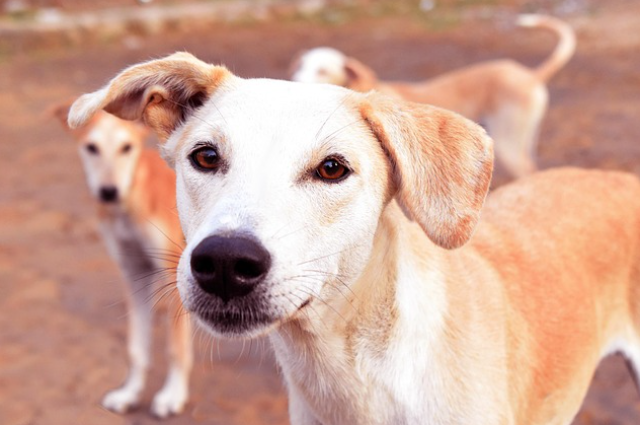
Image by PSD Gang from Pixabay
At the dawn of the 21st century, as India positions itself as a global economic powerhouse and a "Vishwa Guru" (World Teacher), a silent and violent crisis is unfolding in its urban and rural streets. The stray dog menace, once dismissed as a minor civic nuisance, has escalated into a national public health emergency and a significant constitutional dilemma. With India accounting for nearly 36% of global rabies deaths and recording a staggering 3.7 million dog bite cases in 2024 alone, the sanctity of public spaces is under threat.
The crisis reached a tipping point in January 2026, when the Supreme Court of India observed that the recurring reports of mauling incidents particularly those involving children and foreign tourists are "tarnishing the country’s image in the global perspective." This judicial acknowledgment shifts the debate from a simple matter of animal welfare to a complex issue of national reputation and international diplomacy.
At the heart of this conflict is a profound legal tension. On one side stands Article 21 of the Constitution, which guarantees every citizen the fundamental "Right to Life" and the right to inhabit safe public environments. On the other hand, Article 51A(g) mandates "compassion for living creatures." For too long, administrative paralysis and the stringent Animal Birth Control (ABC) Rules of 2023 have left local bodies "handcuffed," unable to prioritize human safety over the presence of aggressive packs. This information provides an exhaustive analysis of the stray dog crisis, examining the failure of current sterilization models, the recent landmark judicial mandates for state compensation, and the urgent need for a "Human First" policy. It argues that for India to achieve its 2030 developmental goals, it must first reclaim its streets, ensuring that compassion for animals does not become a suicide pact for the safety of its citizens.
The Sociological Dimension: The "Shared Space" Paradox
India is unique globally for its culture of "co existence." Unlike the West, where stray animals are either sheltered or euthanized, Indian streets have traditionally functioned as a shared ecosystem. However, rapid urbanization has fractured this relationship. As cities expand, the "buffer zones" between human habitats and animal territories have vanished. High-rise apartments now stand where packs once roamed freely. This leads to Territorial Aggression, where dogs, stressed by lack of space and consistent food sources, view pedestrians particularly children as intruders.
The Constitutional Battleground: A Hierarchy of Rights
The core of the legal debate lies in how the Indian Constitution balances the "Right to Life" with the "Duty of Compassion."
- Article 21 vs. Article 51A(g)
This is the most significant judicial tension in modern Indian history.
The Humanist Interpretation: Argues that Article 21 (Right to Life) is the "Mother of all Rights." If a citizen cannot walk to a grocery store without fear of a life-threatening attack, the Social Contract between the State and the Citizen is broken.
The Animalist Interpretation: Relies on Article 51A(g), which makes it a fundamental duty to have "compassion for all living creatures." They argue that dogs are "biological residents" of the street and that human encroachment is the primary cause of aggression.
- Article 14 and the Arbitrariness of the Law
Legal scholars are increasingly invoking Article 14 (Right to Equality). They argue that current laws which prohibit the removal of aggressive dogs are "arbitrary" because they provide more protection to a stray animal than to a human victim. Why should a victim have no legal recourse to remove a threat from their doorstep?
The Public Health Crisis: The Rabies Capital
India carries a disproportionate global burden of rabies. This is not just a medical failure but a systemic one.
The Economics of Bites: A single "Category 3" bite (skin-breaking) requires Rabies Immunoglobulin (RIG) and a series of vaccinations. For a daily wage laborer, the loss of wages combined with the cost of travel to a government hospital is devastating.
The Failure of "One Health": The global "One Health" approach suggests that human health is linked to animal health. In India, however, human vaccination and dog vaccination are managed by two different, often non-communicating, ministries (Health vs. Animal Husbandry), leading to massive gaps in coverage.
The "Image Crisis": India on the Global Stage
In 2026, as India positions itself as a global tourism and investment hub, the stray dog issue has become a "soft power" liability.
International Perception: Global media outlets often use images of stray dogs in Indian airports or tourist landmarks to signify "under-development."
Diplomatic Friction: When foreign diplomats or tourists are bitten, it becomes a diplomatic embarrassment. The Supreme Court's January 2026 observation that this "damages the country's image" is a recognition that India cannot be a "Global Superpower" if it cannot manage basic urban safety.
The ABC Rules 2023: A Critique of "Catch and Release"
The Animal Birth Control (ABC) Rules, 2023, are the most controversial regulations in recent years.
The Scientific Gap: ABC aims to stabilize the population over 10–15 years. It does nothing to address the biting behavior of the dogs currently on the street. A sterilized dog can still bite and transmit rabies if its vaccination has lapsed.
The "Vacuum Effect" Myth: Activists claim removing dogs leads to more dogs coming in. However, urban planners argue that if waste management is improved, there is no "carrying capacity" for new dogs.
The Implementation Nightmare: Most Indian municipalities do not have the budget for the high tech surgery centers mandated by the 2023 rules, leading to a total halt in sterilization programs in many states.
Recent Judicial Milestones (2025-2026)
The courts have finally begun to prioritise human safety.
Compensation as Accountability: The Supreme Court’s 2026 ruling that States must pay "Heavy Compensation" for bites is a game-changer. It shifts the burden from the victim to the State, creating a financial incentive for Municipalities to act.
The "Primary Caretaker" Rule: Courts are now moving toward holding "feeders" legally and financially responsible for the actions of the dogs they feed. This aims to prevent the "feeding-induced aggression" seen in many residential colonies.
The Way Forward: A 4 Point Strategy
To resolve this crisis and restore the national image, India must adopt a "Modern Urban Model":
Categorization of Dogs: Differentiate between "community friendly" dogs and "dangerous/feral" packs. Dangerous packs must be removed to permanent shelters or humanely euthanized.
Centralized Waste Management: Stray dog populations are a symptom of "garbage mismanagement." No garbage on the streets means no food for strays.
Mandatory Microchipping: All "community dogs" should be microchipped and tracked to ensure their vaccinations are up to date.
Legislative Reform: Amend the ABC Rules 2023 to give local authorities the power to prioritize "Public Safety" over "Release to the same spot."
Compassion is not a license for chaos. For India to achieve its 2030 goals of being a developed nation (Viksit Bharat), it must ensure that its public spaces are safe for all. The "image" of the country is not just about skyscrapers and GDP; it is about the safety of a child walking to school. The judiciary’s recent shift toward "Human First" jurisprudence is a necessary correction in a system that has, for too long, ignored the screams of bite victims in favor of theoretical compassion.
Key Statistics for Reference (2024-2026)
- Annual Bites: ~3.8 Million (Projected 2025).
- Daily Average: 10,400 cases.
- Child Mortality: Children aged 5–12 remain the highest risk group for fatal attacks.
- Rabies Incidence: India remains responsible for 1 in 3 rabies deaths globally.