
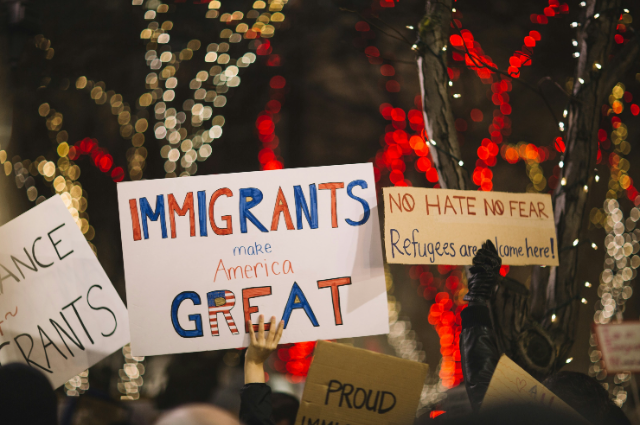
Photo by Nitish Meena on Unsplash
The intensified immigration crackdown launched in early 2025 under President Donald Trump’s second administration marks one of the most far-reaching restrictive shifts in U.S. immigration history. Sparked partly by incidents such as the alleged involvement of an Afghan migrant in the November 26, 2025, shooting of two National Guard members, the administration imposed sweeping policies: freezing asylum adjudications, expanding travel bans to more than 30 countries, and accelerating mass deportations, including of non-criminal immigrants. Although framed as necessary for national security, these measures represent a severe ethical failing. They violate human rights, fracture communities, undermine the U.S. economy, and damage the nation’s global standing. Ultimately, the crackdown is both morally indefensible and strategically self-defeating.
Human Rights Violations: Erosion of Due Process and Legal Protections
The administration’s strategy, heavily influenced by Project 2025, dramatically expands expedited removal procedures. These allow deportations without access to legal counsel or review by an immigration judge, effectively collapsing the due-process protections central to American constitutional tradition. Civil rights groups report enforcement raids in historically protected spaces—schools, hospitals, and churches—raising profound concerns about governmental overreach and civil liberties. This approach prioritizes speed over justice and recalls past abuses where marginalized communities were denied basic legal protections.
Abusive Detention Conditions
Florida detention facilities—including Krome, Broward, and Miami—report severe overcrowding, unsanitary living conditions, inadequate medical care, and retaliation against detainees who file complaints. Human Rights Watch (HRW) describes these sites as locations of “systemic abuse,” where detention functions less as administrative processing and more as punitive confinement. Such conditions fuel the spread of infectious diseases and intensify physical and psychological suffering, amounting to a form of collective punishment.
Breakdown of Asylum Protections
Amnesty International reports that the U.S.–Mexico border has become a “hostile zone” where asylum rights are routinely denied, in clear violation of the 1951 Refugee Convention. Interior enforcement data shows that more than 70% of the 59,000 people apprehended in early 2025 were non-criminals. Even more concerning, ICE custody deaths rose to ten in six months—triple the rate during the Biden administration—many linked to inadequate medical care. These failures reveal a stark disregard for human life and dignity.
Mental Health Consequences
Family separation, indefinite detention, and fear of raids have generated a widespread mental-health crisis. Children exhibit rising levels of PTSD, anxiety, depression, and developmental delays. Activists and community leaders report threats and retaliation, suppressing advocacy efforts. Research identifies a “silent trauma” epidemic with long-term social costs, including weakened community cohesion and increased demand for mental health services.
Humanitarian and Social Costs:
Suspension of Asylum Processing
More than 2.2 million asylum-seekers remain in limbo due to the freeze on adjudications for “enhanced vetting,” which now includes intrusive social-media screenings and foreign intelligence checks. This indefinite waiting period forces families into precarious living conditions without stable income, legal work authorization, or access to essential services. The uncertainty deepens psychological distress and drives many into poverty.
Impact on Legal Immigrants
The crackdown extends even to lawful permanent residents. Green-card holders, students, and professionals report intrusive questioning at ports of entry, particularly those who have criticized government policy publicly. In response, several allies—including Germany—issued travel advisories warning their citizens of increased scrutiny. These practices threaten free expression, academic exchange, and global business networks, weakening the U.S.’s reputation as an open, democratic society.
Fear and Social Fragmentation
A 2025 KFF (Kaiser Family Foundation) survey documents widespread anxiety:
- 41% of immigrants fear their families will be targeted.
- 35% avoid essential services, including medical care.
- Financial hardship among immigrants has doubled since 2023.
“Secret-police-style” arrests by masked, unmarked agents further erode trust in law enforcement. These tactics sow division, reduce civic participation, and destabilize communities where immigrants have long been social and economic contributors.
Economic Fallout
Mass deportations would have severe economic consequences, as millions of undocumented workers play a crucial role in sustaining essential sectors of the U.S. economy. The construction industry alone stands to lose 1.5 million workers, leading to higher building costs and extensive delays in infrastructure projects. Agriculture could lose 225,000 workers, which would drive food prices upward, while the hospitality sector risks losing 1 million workers, reducing service capacity nationwide.
Manufacturing may face the loss of 870,000 workers, causing widespread disruptions across supply chains, and the transportation sector could see 461,000 job losses, resulting in significant logistical delays. These combined shortages would ripple through the broader economy, slowing national productivity and pushing consumer prices higher across multiple industries.
Macroeconomic Damage
Deporting 1.3–8.3 million immigrants could shrink GDP by up to 7% by 2028, while reducing labor supply and increasing inflationary pressures. Immigrants contribute $237,000 more in taxes than the benefits they use across their lifetimes, confirming that they are net economic contributors. Past crackdowns also show that removing undocumented workers depresses—not increases—wages for U.S.-born low-skill workers.
Threats to Innovation and Skilled Sectors
Restrictions on H-1B visas and narrow definitions of “specialty occupation” reduce the flow of global talent into technology, medicine, and research. These policies undermine innovation and competitiveness, leading U.S. companies to expand operations abroad. Notably, agricultural businesses enjoy exemptions, exposing the political inconsistency of the crackdown.
Escalating Enforcement Costs
The administration seeks to detain up to 100,000 people per day—an expansion costing a billion annually. These expenditures divert funds from infrastructure, healthcare, education, and innovation. The opportunity cost is enormous: money spent on detention could instead fuel economic growth or modernize the immigration system.
Ethical and International Repercussions
Moral and Social Ethics
The prioritization of non-criminals for deportation violates principles of proportionality and non-discrimination. Even Republican lawmakers criticize the policy as “immoral scapegoating of entire nationalities." These sweeping actions undermine America’s foundational identity as a nation built by immigrants.
Global Reputation and Legal Violations
Ending TPS for over 700,000 people—including Venezuelans and Haitians facing humanitarian crises—violates the spirit of international protection norms. Deporting individuals to dangerous environments such as El Salvador contravenes non-refoulement obligations. These choices erode U.S. diplomacy and weaken its ability to advocate for human rights abroad.
How Migration Has Benefited the United States
Immigration has long been a cornerstone of American prosperity and global leadership. Key contributions include:
Economic Growth
Immigrants start businesses at higher rates than native-born citizens. They power key industries—construction, agriculture, technology, and healthcare—and fill labor shortages that enable economic expansion.
Innovation and Scientific Advancement
Over 40% of Fortune 500 companies were founded by immigrants or their children. Immigrant scientists and engineers drive breakthroughs in AI, medicine, and space exploration.
Demographic Renewal
With declining birth rates, immigrants sustain the workforce, support Social Security and Medicare, and maintain population stability.
Cultural and Social Enrichment
Immigration strengthens American society through cultural diversity, artistic contributions, and global perspectives.
Without immigration, the U.S. workforce would shrink, innovation would slow, and economic vitality would decline.
How the 2025 Crackdown Will Ultimately Hurt the United States
The 2025 immigration crackdown ultimately harms the United States by undermining its economic, diplomatic, and social foundations. By removing millions of workers, the policy disrupts essential industries, raises prices, and slows economic growth, placing businesses that depend on immigrant labor at risk of collapse. At the same time, restrictions on skilled migration drive innovators and entrepreneurs toward more welcoming countries like Canada, Australia, and Germany, weakening America’s global competitiveness.
Diplomatically, expanded travel bans, the termination of Temporary Protection Status protections, and documented rights violations invite international criticism and erode the nation’s credibility among allies. On the domestic front, fear-based enforcement deepens social divisions, fostering mistrust between communities and law enforcement. Moreover, overextended enforcement agencies divert attention and resources from genuine security threats, reducing overall effectiveness. In this way, the crackdown ultimately damages the very national security and economic stability it claims to defend.
The 2025 immigration crackdown embodies the dangers of governance guided by fear, political rhetoric, and isolated violent incidents. It violates human rights, destabilizes communities, suppresses economic growth, and damages U.S. global leadership. A sustainable policy must integrate ethical responsibility with strategic pragmatism—recognizing that immigration is not a threat but a historical engine of American strength. The future of U.S. prosperity depends not on exclusion, but on humane and effective reform that honors both security and dignity.
. . .
References:
- AILA. 2025. Sweeping Immigration Restrictions in the Aftermath of the National Guard Shooting. American Immigration Lawyers Association, May 11, 2025.
- Amnesty International. 2025. The Right to Seek Asylum Does Not Exist at the U.S.–Mexico Border. February 26, 2025.
- AJMC. 2025. “Trump’s Immigration Crackdown Fuels Health Crisis: Detention, Depression, Deportation, and Disease.” American Journal of Managed Care, March 4, 2025.
- Baker Institute for Public Policy. 2025. Social and Economic Effects of Expanded Deportation Measures. March 25, 2025.
- CNN. 2025. “How Trump Is Intensifying His Crackdown on Every Form of Immigration to the US.” December 3, 2025.
- CFR. 2024. How Does Immigration Affect the U.S. Economy? Council on Foreign Relations, October 29, 2024.
- Human Rights Watch. 2025. “You Feel Like Your Life Is Over”: Abusive Practices at Three Florida Immigration Detention Centers. July 20, 2025.
- Kaiser Family Foundation. 2025. 2025 Survey of Immigrants: Worries and Experiences Amid Immigration Policies. November 17, 2025.
- New York Times. 2025. “As Trump Broadens Crackdown, Focus Expands to Legal Immigrants and Tourists.” March 21, 2025.
- The Hill. 2025. “Trump’s Treatment of Immigrants Is Harmful, Immoral, Un-American.” July 6, 2025.