
.JPG)
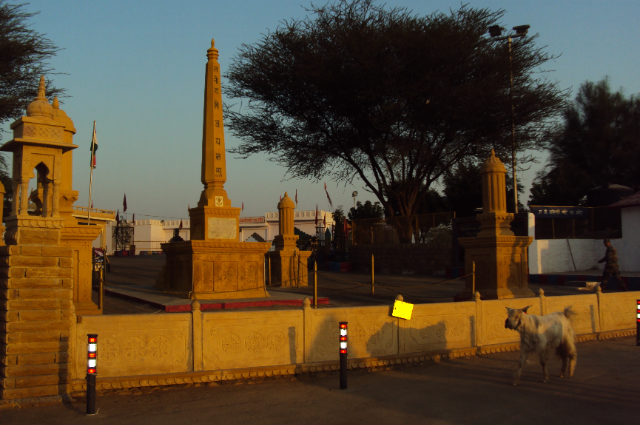
Out here in the desert near Jaisalmer, close to where India meets Pakistan, sits Tanot Mata Temple - quiet, still standing, untouched by blasts that should have torn it apart. During battles in 1965 and again in 1971, shells rained down on its grounds, yet none went off, not even one. Though right in the middle of gunfire and explosions, walls stayed whole, roofs didn’t collapse, and nothing burned. Locals speak of protection, soldiers noted odd luck, and records show rounds fell but never detonated. Some call it belief, others check fuse failures or sand moisture, while stories keep growing around what happened there. A place like any other suddenly became hard to explain through facts alone.
That stretch of sand saw fierce fighting when the 1965 conflict broke out between India and Pakistan. The outpost at Tanot mattered deeply to Indian troops stationed there. On one edge of the desert, Pakistani forces opened fire with relentless shelling. Records from soldiers describe how thousands of explosive rounds targeted the zone. About three thousand projectiles were sent flying into that territory. Almost four hundred landed inside the temple's enclosed yard. Not one explosion triggered a blast - each shell just sat silent in the dust. A single blast under regular battle circumstances could level everything nearby. Still, here, every shell stayed silent - no detonations at all. The temple stood untouched, and not even a crack appeared anywhere. Soldiers on both sides stared in disbelief when they saw it.
Stories spread fast when times get tough. Soldiers posted at Tanot began speaking of dreams where a presence showed up - Tanot Mata, some called her. Not everyone saw it the same way, yet many felt something unseen was watching over them. Instead of doubt, trust grew quietly through nights under fire. One vision led to another, shared in whispers between shifts near the temple grounds. Whether real or imagined, the feeling gave strength when fatigue set in. Confidence built not from orders, but from what people carried inside. Some found courage simply by remembering those moments before battle. Faith doesn’t prove facts, true - but it shapes actions just the same. What matters most? People acted differently because they believed someone stood beside them.
Strange things happened again in 1971 when India and Pakistan fought near Longewala. Heavy fighting broke out - tanks rolled, shells flew, planes dove through smoke-heavy skies. All around, dunes bore scars of battle, wrecked vehicles scattered like broken toys. Through it all, the temple at Tanot stood whole. Not a wall cracked, not a roof split. First in one war, now another - same place, same outcome. Luck? Maybe. But twice feels less like chance, more like something else holding steady beneath the chaos.
A single room inside the Tanot Mata Temple holds rusted war relics - left behind after battles long ended. Among them sit unused shells from conflicts decades past, silent yet sharp in their presence. These fragments once flew through the air during 1965, then again in 1971. Real metal, real damage avoided. Seeing them up close shifts perception; stories gain weight when proven by cold steel. What could seem like a myth suddenly stands solid, visible, and undeniable. Pilgrims arrive for faith. Others come drawn by facts buried in sand and time. Historians pause here. So do those who study odd turns of combat fate. The site pulls many kinds - not just believers, but seekers of what actually happened.
What stands out is how deeply some take the story of Tanot. Not long after the conflict ended, Brigadier Shaukat Ali from Pakistan shifted his view entirely. A man once on the opposite front came forward, drawn by something beyond strategy or duty. His visit to the temple carried weight - he left behind a silver umbrella, an offering few saw coming. Locals, along with border guards, see this moment as more than a gesture; it fits into a larger sense of unseen forces at play. Soldiers now serving nearby often keep a bit of soil from around the shrine, tucked away like a quiet reminder. Oversight of the sacred building remains in the hands of the Border Security Force. For them, presence there feels less like an assignment and more like a guardianship.
One idea comes from science, trying to make sense of what happened. The thick, loose sand in the Thar Desert might soak up shock, so shells hit without setting off their triggers. A different view says faulty ammo could be the cause - worn parts happen when wars go on too long. How a shell lands matters just as much; tilt can decide explosion or quiet burial. Each reason stands fine alone, yet none stretch far enough to cover everything seen that day.
What makes this hard for science to explain is chance. It's highly unlikely that so many shells would fail to detonate in one spot during two separate conflicts. Even though experts can account for single duds, they find it tough to justify why it happened again and again in the same place. That mismatch - where logic meets real-world facts - keeps people talking about the Tanot Mata Temple.
Strange things happen where time, trust, and tools fall short. Calling it magic feels wrong, yet calling it luck seems too quick an answer. Now, the shrine watches over sand like a quiet guard of devotion, endurance, and uncertain truths. Some see prayer in its survival, others see only rust and chance spared by war. However, you look through sacred eyes or measured facts, the tale stays stubborn, refusing clean endings.
. . .
References:
- Wikipedia contributors. Tanot Mata Temple. Wikipedia, The Free Encyclopedia.
- Times of India. “This temple in Rajasthan stood against thousands of bombs during the Indo-Pak wars.”
- NDTV India. “Navratri Special: Tanot Rai temple that defied 3000 Pakistani bombs.”
- Times of India. “Jaisalmer was kept guarded by the miraculous shield of Tanot Mata.”