
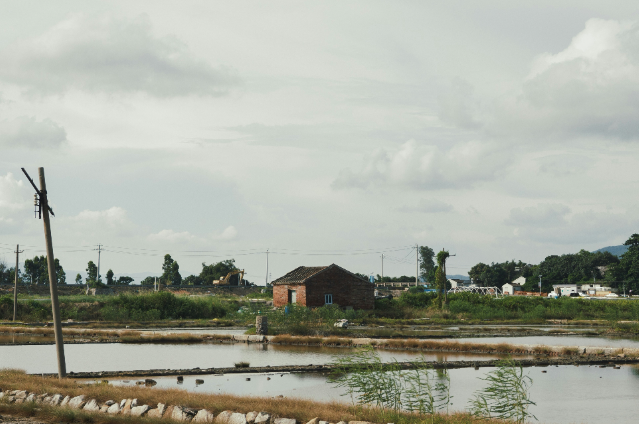
1972 was the D-Day of a small village somewhere in the western region of Maharashtra. Many village families migrated to nearby urban areas in search of work and livelihood.
You may wonder why.
This village, known as Hiware Bazar, was once a hotbed of poverty, crime, and neglect. It received little acknowledgment from government officials. Agriculture was the main occupation, but climate conditions proved a burden to the villagers.
Before 1989, the village suffered from extreme drought and overgrazing. Water-intensive crops such as sugarcane and bananas were grown in a region that could barely support them. Groundwater was extracted from tube wells every year, draining and even eroding underground aquifers.
The condition was so bad that men cut trees for firewood, and some brewed and sold country liquor made from a mixture of jaggery, rotten oranges, sweet lime, and some ammonium chloride, either to earn some money or to drown their sorrows.
Conflict became common. Drunken villagers entered schools and even assaulted forest officials, tying them to trees when they tried to stop cattle grazing on the remaining forested hills surrounding Hiware Bazar.
Surveying the conditions of this village, what could Popatrao Pawar, the newly-elected sarpanch, possibly do?
He was merely an educated man with a postgraduate degree in Commerce. Like many others, he aspired to pursue a career outside the village. But he stayed back. In 1989, he was elected sarpanch for a five-year term. His election would prove to be a transformative moment in the history of Hiware Bazar.
Small Steps Toward Success
“When we started, it seemed impossible. For us, it’s paradise regained.”
How does one move from a paradise that was lost to one that is regained?
After his election, Pawar began by listening to the villagers. Hiware Bazar lacked basic amenities such as water, electricity, food, toilets, and even education. The village was declining.
Education, in particular, had been abandoned. In 1990, the literacy rate stood at just 30 percent. As of 2020, the literacy rate of Hiware Bazar would rise to 95 percent, with well-maintained schools providing quality education, something even the older generation could never have imagined.
Through effective leadership, Pawar established a village council and introduced a five-year development plan, placing education at its core.
One of his key initiatives was shramdaan, or labor donation. He encouraged villagers to contribute their time and effort to rebuild their own village. Many were inspired by Pawar and joined his journey. Others resisted, even hiring goats to graze on the leaves of newly planted tamarind orchards, chosen specifically because they were among the least water-intensive crops.
Of course, Pawar did not let a few villagers impede his progress to a flourishing village.
Pawar then approached state agencies, particularly forestry, agriculture, and animal husbandry, for support. Given the villagers’ past hostility, officials initially refused. After persistent persuasion, they agreed.
Hiware Bazar entered the Joint Forest Management program, which enabled communities to restore and manage degraded forest land. Afforestation initiatives were followed. Less water-intensive crops were grown - vegetables, mango, arjun, and tamarind trees. Saplings were gifted to newlyweds. Tree-planting campaigns were organized for children.
The watershed was restored in 1994, and Hiware Bazar joined the state government’s Ideal Village Program. The initiative promoted sustainable and resilient villages by ensuring safe drinking water, generating employment, and strengthening education and healthcare.
Water holes were built for wildlife. Firewood usage was gradually replaced with biogas generated from cattle dung.
Villagers built small dams, restored groundwater, and stored excess water on the surface. The same techniques were used to harvest rainwater. The water table rose steadily, and the area under irrigation expanded.
The Path to Prosperity
Popatrao and his team brought back a paradise that had long been lost.
Droughts no longer ruled the village.
Farming improved. Irrigation became reliable. Liquor stores were shut down. In the 1990s, something unexpected happened - reverse migration occurred. Families began to return to their villages from the cities.
Many farmers prospered. Surprisingly, some of them became millionaires in their own village.
Imagine that - villagers becoming millionaires in rural India.
In 1995, only a tenth of the village’s land was arable, and out of 182 families, 168 of them were below the poverty line. A few decades later, 50 of the villagers had become Indian millionaires, and only three families were estimated to be below the poverty line.
Milk production rose from 150 liters a day in the 1990s to 4,000 liters in 2010. Thanks to the widespread growth of grass and greenery for the cows to graze.
Hiware Bazar was awarded the National Water Award by the Government of India in 2007 for its efforts in water conservation.
Such were the efforts of Popatrao Pawar in transforming a barren village into a prosperous one where people returned and finally reaped the fruits of their labor.
The story of Hiware Bazar is rarely documented in MBA classrooms or leadership courses that discuss rural development and governance. The leadership of Popatrao Pawar stands as a powerful example of what community-driven leadership can achieve, an inspiration to rural social entrepreneurs across India.
The story reminds us that power and extravagance are not enough. What one needs is a burning desire to take on challenges that appear impossible. Ambition guided by purpose is where the future of India lies.
References: