
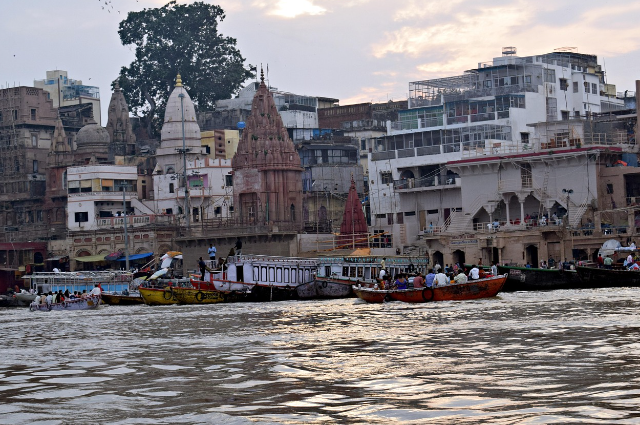
“Why, I am talking of Mother Ganga, daughter of the Vedas, river of illumination, protector of us all, breaker of the chain of birth and rebirth. Everywhere this river flows, that area is the Darkness.” - Aravind Adiga, The White Tiger
Varanasi, known by different names as Benares or Kashi, is home to one of the holiest rivers in the world, the Ganges (or Mother Ganga). It is also a spot where one achieves moksha (salvation) and goes through life, death, and eventually, rebirth. Owing to the Hindu traditions of salvation and liberation from evil, it is referred to as the City of Death.
As you walk out from a soothing bath in the Ganges and explore the surroundings of Varanasi, one speaks of Mukti Bhavan, a guesthouse where people go to pass away. “Take a private tour to the Mukti Bhavan, or Death Hotel, where people [sic] Hindu worshippers come to die and achieve salvation,” reads the TripAdvisor description of the Mukti Bhavan.
It’s this kind of straightforward invitation that pulls you in, making you pause amid the crowds and the smoke from the ghats. Situated right in the heart of Varanasi, on Geeta Mandir Road near Girja Ghar Road in the Misir Pokhra area, walking distance from the railway station. But the purpose is clear - it’s for those who feel their time is near, who want to face the end in a place believed to guarantee one's freedom from the cycle.
One wonders why Hindu worshippers come to Mukti Bhavan expecting death to come and embrace them in the holy land, expecting some form of rebirth or an afterlife that could be good or bad depending on their actions in the earthly world.
In Hinduism, the idea is rooted deep in the scriptures. The river Ganga is a purifier, a mother who carries away the weight of karma. Dying here, with the last breath taken while gazing at her waters, is said to grant moksha, the release from samsara, that endless loop of birth, life, death, and rebirth.
Let’s look into the history of why is Mukti Bhavan considered the death hotel of Varanasi.
The History of Mukti Bhavan
Mukti is derived from the combination of the root word मुक्त(muct) + -ति (ti), which means “to loosen, let loose, free.” Its alternative, Moksha, means final liberation or emancipation from the cycle of life and death. According to Hindu scriptures, one must be reborn millions of times, according to most people, 8.4 million cycles across different forms to escape the endless cycle of death and rebirth or samsara.
Founded by the Dalmia family in 1958, Mukti Bhavan (aka Kashi Labh Mukti Bhavan) holds the path for liberation for all the elderly Hindu worshippers who visit this guesthouse to seek liberation and moksha from the repetitive cycle of life and death.
They set it up as a simple guest house for seekers of salvation, a place where the dying could come without worry about where to lay their heads. It is traditional, complete with no air conditioning and no room service. They house simple rooms with cots, fans, and maybe a small altar for prayers.
According to Varanasi Guru, over 14,000 people have visited this Bhavan to attain death by salvation. It holds 10 rooms and shelters elderly people who wish to die here. They are given a limit of 15 days to stay, and if they exceed the time limit, they are requested to leave or come back later, depending on their health conditions. If their health is improving, they must leave immediately.
Helpers keep an eye on things, checking pulses and temperatures. Only one person per room is allowed for the actual seeker, but family can tag along to help with meals or just to be there for them. It’s open to anyone. It costs an additional 20 rupees for electricity. Some pass within hours of arriving, while some pass in a matter of two weeks, reciting mantras or listening to readings from texts like the Garuda Purana, which guides the soul through what comes next. When their time finally comes, the body is cremated, and the ashes are scattered into the river.
My Thoughts on This
The concept of Mukti Bhavan reminds me of Durkheim’s book on Suicide. In his book, he explores the concept of suicide through 4 types: egoistic, altruistic, anomic, and fatalistic suicide. For now, I’ll be exploring the second type, altruistic suicide.
According to Durkheim, altruistic suicide occurs when people choose to die because of societal expectations. They die out of honor and respect for the community, and if they refuse to do so, they are dishonoured in their community. To them, it’s a form of self-sacrifice, a benefit that could break them from the repetitive cycle of life and death.
Altruistic suicide comes in three forms: obligatory, optional, and acute. While obligatory is highly forced upon by society and acute is more emotionally-driven, optional altruistic suicide is the one that fits the definition of this phenomenon. It is heroic or noble, even to the parents who those dying, but it is not important.
Let me put it this way: coming to Mukti Bhavan was a voluntary choice driven by faith. Nobody was forced to perform this act. For them, it’s a praised sacrifice. Imagine an old man from a village, she travels to Kashi for different reasons: she feels she is being a burden to her family, or maybe she feels that by undergoing this journey would provide her with a better life that the earthly world won’t provide.
This is deeply shocking, but compelling to know that such hotels, deemed as Death Hotels, exist paradoxically in a city where rebirth is a common thread woven between Hindu scriptures and bathing in Maa Ganga.
Whether we call it the City of Death or Benares, Varanasi holds a place where the elderly worshippers seek a liberation that feels both intimate and infinite. That means leaving our loved ones for the better or starting a new chapter after death. Sometimes, to live fully is to prepare well for the act of letting go.
. . .
References: