
The Internet is a huge database of information, thanks to rapid technological developments and the proliferation of social media apps to help people connect with those who live far and wide.
The best part of the Internet is its immortality, but the bad news: we are not. When our loved ones pass away due to illness or mental health issues, social media becomes an assemblage of memories that we can access and look back on the times we had with the people we loved long ago.
But the question remains: what happens to your online identity after death? Who gets control over what is ours and what belongs to the platforms? Do social media platforms have the right to preserve personal photos without the permission of grieving loved ones?
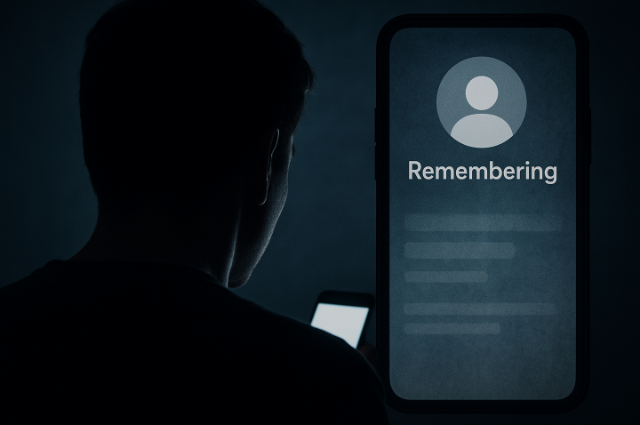
On Facebook and Instagram, when someone passes away, their account goes into “memorialized” mode. This happens automatically and usually includes a “Remembering” tag. Loved ones of the deceased may also have the ability to delete all the personal data and the account completely.
However, there are many instances where families cannot access their loved one’s accounts. Parents, especially, struggle to access their child’s social media accounts in hopes of understanding the other side of their child which lies hidden from their parents.
The Case of the Girl on the Train: A Fight Against Facebook
In a 2018 Guardian article, a German high court appealed to Facebook to grant a grieving mother access to her deceased daughter’s account. This came after years and years of filing lawsuit after lawsuit against the company, which repeatedly prioritized privacy over the mother’s concern for her child.
In 2012, a 15-year-old girl was found dead in a train accident. The police were unable to determine whether it was a suicide or an accident.
The daughter had a Facebook account and had even shared her password with her mother. But when the mother attempted to log in, she discovered the account had been switched to “memorialised” mode. Once that happens, no one, not even someone with the password, can access the account or the private messages within it.
Because of this, the mother could not read her daughter’s chats with friends or strangers, making it impossible to understand what the girl was going through before her death.
Facebook, following its own data protection policies, refused to grant access even after a Berlin court initially ruled in the mother’s favor.
Two years later, after an appeal, the Berlin court sided with Facebook, making us question whether we, the users, can truly access their loved one’s account after death without being blocked by privacy policies.
A spokesperson for Facebook in Germany discussed the complexity of data protection laws of Facebook. The person acknowledged the family’s pain but they insisted that personal interactions between users must remain protected, even after one user passes away.
This raises an unsettling question: who really owns that data?
It is still unclear whether the German woman was ever given full access to her deceased child’s account. The circumstances of the girl’s death remain shrouded in mystery.
Losing a Friend
Arun lost his best friend Arav to suicide. Longing for the memories, Arun logged into Arav’s Instagram account only to face the same situation: the dreaded “memorialized” status.
He wanted to revisit their memories together, but he couldn’t.
Arun had to file complaint after complaint with Instagram’s help center. After months of persistence and grieving, he was finally granted access to his friend’s account six months later.
Such is the problem with social media privacy, showing how difficult it can be to access even a loved one’s account as the lines between “privacy” and “ownership” are blurred in the social media age.
So What Can We Do About It?
When a loved one passes away, we are overwhelmed by sadness, mourning, regret, and a longing for moments we can no longer recreate.
Social media becomes an outlet to view the good old memories of our loved ones when they were alive.
However, precautions must be taken to ensure you protect your digital afterlife:
- A digital will whether on your notepad (PC or old-school) that details who gets to access the account of the individual before they pass away.
- Decide whether their accounts be memorialized, preserved, or deleted. This is the main issue here. The social media platforms with all their ownership and privacy policies, often treat personal information as public information. Decide whether to keep the account active, download memories, or delete everything.
- Tell your family what matters to you. Is it the childhood photos? Graduation memories? Personal conversations between a mother and son? Decide what should stay online or be saved elsewhere.
The Internet is here to stay.
New accounts are created every second.
Yet privacy remains a major issue on social media platforms.
Who keeps the data? Who owns the memories?
Platforms ultimately control that information, which teaches us a hard lesson: never rely solely on social media to store your most precious, personal moments.
Ownership shifts the moment it is uploaded. And once the creator is gone, control becomes even more complicated.
Follow the above steps, and you can surely preserve your digital afterlife.
. . .
References: