
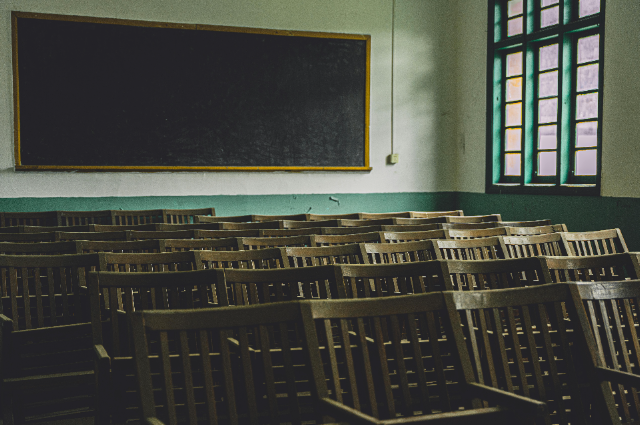
Commercialisation of education has silently transformed classrooms all over the globe, even in the pretext of progress, innovation and modernisation. A place formerly of inquiry, argument, and exploration is slowly turning into a marketplace, with students being tested in grades and qualifications instead of insight and ability. Technology is promising to bring personalised learning, immediate feedback and adaptive content, yet it endangers the human face of teaching and supports social separation in insidious but significant ways.
The contemporary schools are moving to a non-cultivation of critical thinking. The curriculum is crafted as a means of not comprehending something, but passing tests and having a great resume. It urges the students to think of outcomes instead of studying and become consumers of the information. A student may learn the formula by heart, but he may not know how to use it in a practical context. Knowledge, which has been used in the past as a means of solving problems and self-development, is now becoming a commodity to be accumulated, shown and exchanged as a means of getting opportunities. The labour that comes out of this system might seem competent on paper, but not agile and creative enough to address complex challenges in society or even the workplace.
Meanwhile, an informal layer of education has also developed beyond conventional institutions in the shape of personal tutoring, coaching institutions, and AI-based learning platforms. In most middle-income families, the expenditure on such ancillary facilities has surpassed the normal school-related expenses. Even intelligent students with disadvantaged backgrounds are finding it difficult to compete with those who have 24-hour availability to tutors and special exam-prep websites. This has given rise to a two-sided phenomenon, formal education on the one hand, and a shadow economy of learning on the other, where opportunity is largely dictated by financial ability. It not only leads to an academic gap, but also a social divide, as the future of the students is becoming more reliant upon how the family can afford to purchase improved educational equipment.
Commercialisation of education is not just inside the classroom, but there is the school administration as well. Principals and administrators are becoming more like corporate managers; they have been judged not by the growth of students and intellectual development but by the enrollment numbers, reputation and revenue. Marketability has often dictated decisions on what should or should not be taught or even what teachers should be hired based on their value to education and not marketability. Other courses like philosophy, social ethics, and arts with a huge intrinsic value are often set aside since they are not associated with the financial benefits in the short run. Nowadays, teachers who were previously lauded because of their capacity to make students curious and free to think independently are judged because of their efficiency and quantifiable results. The classroom turns into a place of productivity and not exploration, and education becomes deficient in some of its qualities.
Technology promises efficiency, scale and the ability to deliver personalised experiences of learning. AI tutors can personalise the content to each student, deliver immediate feedback and monitor performance. However, it is impossible to find an algorithm that can substitute the mentorship, moral guidance, and emotional support that a human teacher can offer. Students do not only require the knowledge, but they require the context, encouragement and critical thinking that is possible only through human contact. Schools are also eager to replace teachers with AI tutors as they are enticed by the dream of measurable success and reduction of costs. Through this, they are exposing themselves to the danger of dealing with a classroom of the relational aspect that enables students to develop intellectually, socially and morally. Education is a commodity; learning is a process; teachers are unnecessary.
These effects of this trend go well beyond the classrooms. The generation that is trained to think mainly in terms of grades and test results can become cautious, conformist and homogenised. There is neglect of critical thought, creativity and ethical thought. The problem of social inequality increases, with the accessibility of advanced learning tools being based on money instead of merit. Education that is meant to be the great equaliser is the reflection and magnification of the difference that it was supposed to heal. Unless there is immediate action, there is the risk of having students who are highly credentialed but ill-equipped to operate in a complex world, innovate, or lead with empathy.
This is the contraption of contemporary education. Technology and commercialisation are on the way, but they jeopardise the same features on which learning important. Researchers, politicians, and the general public are confronted with some pressing questions: What is to be done to save the human heart of education in the age of algorithms, brands and profit margins? What can we do to guarantee that schools are being developed as centres of thinkers, problem-solvers and ethical individuals, other than mere certificate holders? The solutions are found in creating a balance between efficiency and empathy, technology, and mentorship, as well as profitability and purpose.
The human teacher, the teacher, mentor, guide, moral compass of the classroom, can not be totally substituted. They cannot be substituted in terms of their contribution to the formation of curious, resilient, and ethical minds. With the ever-increasing intrusion of AI and commercialisation, the nature of education of learning as a human, relational and transformative process needs to be safeguarded and preserved consciously by society. Otherwise, we will be selling wonderment in place of adherence, instruction in place of programs, understanding in place of diplomas.
Learning must not be a product, but rather a process. It must be a discussion, a place to fantasise, challenge and develop. It is now our task to make sure that in the battle of efficiency, scalability, and profit, we are not losing that which makes education really human. When this lesson is not adhered to, then the future classrooms of tomorrow will have technically competent yet emotionally and creatively poor students. The role of teachers and the richness of the learning experience are a part of the future of society and must not be sacrificed.
References
- Carnoy, M., & Levin, H. M. (1985). Schooling and work in the democratic state. Stanford University Press.
- Darling-Hammond, L. (2010). The flat world and education: How America’s commitment to equity will determine our future. Teachers College Press.
- OECD. (2023). Education at a glance 2023: OECD indicators. OECD Publishing.
- Selwyn, N. (2016). Education and technology: Key issues and debates (2nd ed.). Bloomsbury Academic.
- Spring, J. (2015). The American school: A global context from the Puritans to the Obama era (8th ed.). McGraw-Hill Education.
- UNESCO. (2021). Global education monitoring report 2021: Non-state actors in education. UNESCO Publishing. https://unesdoc.unesco.org