
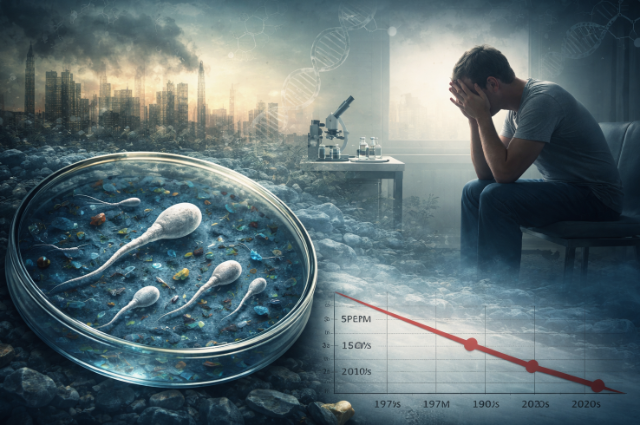
In order to comprehend the modern fertility crisis in a globalised context, there is a need to transcend the social shame and moral judgment and consider biological and economic facts. The world is undergoing what scientists are increasingly calling a male fertility crisis, across continents as well as cultures. This crisis is often called a silent pandemic because it is not that dramatic or sudden, but its long-term effects are tremendous. Reproductive health issues in males have threatened the stability of the population, family setups, and health systems in the world population.
The problem of infertility is often positioned as a female problem, yet the medical science easily demonstrates that this belief is a misconception. Considering the couples that have challenges conceiving, infertility is not often solely of one partner. Worldwide, studies have shown that about a third of infertility is female, a third is male, and the rest, one-third, is a mixture of both spouses, and the rest is unexplored medically. Such a fair representation highlights the need to appreciate the fact that male fertility is an equally important element of reproductive health.
Three main biological factors, such as sPerm count, sperm morphology and sperm motility, are important in male fertility. The number of sperm produced is called sperm count, the shape and structural integrity of the sperm are referred to as morphology, and the effectiveness of the movement of the sperm to the egg is known as motility. Any malfunction of one of these areas is likely to lessen the chances of conception considerably. Notably, infertility in males does not mean sexual dysfunction. A man can be having normal libido and sexual performance but generate few or no viable sperm, a condition referred to as azoospermia.
In the past 40 years, researchers have seen a drastic and steady drop in sperm count throughout the world. The findings provided by large-scale studies across North America, Europe, Asia and Australia indicate that average sperm concentrations have dropped by over 50 per cent since the 1970s, with the change in trend increasing in pace in recent years. This so-called spermageddon is not limited to a particular place or social stratum. It is a biological trend that has implications that are far-reaching in the world.
Exposure to endocrine-disrupting chemicals is one of the greatest causes of this decrease. These chemicals are present in most plastics, food wrappings, cosmetics, pesticides, and personal care products and disrupt the hormonal processes of the body. Phthalates and parabens are chemicals that mimic or counteract hormones that are produced naturally, which interfere with the production of testosterone and alter the development of sperm. Even at low levels, incessant exposure may accumulate in the reproductive health of males.
Besides the chemical exposure, recent studies have also brought into the limelight the astounding existence of microplastics in the human body. Research that was carried out in 20242025 found microplastic particles present in 100 per cent of analysed human testicular tissue samples. These particles are mainly polyethene and PVC that have been found to reduce the production of sperm and the weight of the testicles. This finding not only makes environmental pollution an ecological problem but a direct menace to the fertility and survival of human beings in the long run.
The biological factors that lead to the decrease in male fertility are worldwide; however, the social reaction differs greatly across cultures. In most Western cultures, male fertility is becoming a health indicator as opposed to something to be ashamed about. Male patients freely talk about hormone concentrations, lifestyle optimisation, nutrition, and physical activities to enhance reproductive health. Fertility is treated like a science, like cardiovascular fitness or muscle performance.
However, the opposite happens in other countries like India, where the infertility of men is so stigmatised. There is a generalisation that cultural discourses equate fertility with masculinity and sexual potency, thus giving an illusion that an infertile man is sexually incompetent. This false belief causes men to feel reluctant to pursue medical consultation and places too much blame on women. Consequently, female partners often become the emotional, social, and medical caregiver of infertility, even though it has been proven that male factors equally contribute to infertility.
The contemporary way of life only increases the decline of fertility in the world. When people sit a lot, in offices and during long-distance driving, the temperature of the scrotum is elevated, thereby adversely affecting the production of sperm. The use of laptops on the lap and mobile phones in trouser pockets has also been associated with a decrease in sperm motility, which is probably a result of heat and exposure to electromagnetic radiation. As the research continues to develop, the relationship between the use of technology and the poor quality of sperm cells is becoming harder to overlook.
Another factor that is important yet very easily ignored is age. Despite the fact that men are more fertile than women, the fertility of men also decreases as they grow older. Old age of the father has been linked with low sperm quality, genetic mutations, and developmental disorders of children. The age of paternal marriage is becoming one of the most important issues of public health as late marriage and delayed parenthood become more widespread throughout the world.
The problem is further exacerbated by lifestyle issues like smoking, alcohol use, obesity, chronic stress and sleep deprivation. Smoking harms the sperm DNA, obesity raises the concentration of estrogen in the male, and chronic stress raises cortisol, which suppresses reproductive hormones. These are combined with environmental exposures, which pose a cumulative impact on male reproductive health.
To sum up, the global, biological and social problem of male fertility crisis requires immediate action. It does not belong to a particular country, culture or social strata, and it is not a failure or a drawback of a person or their moral incompetence. The solution to this silent pandemic needs scientific awareness, cultural change and action in the form of public health. As long as the topic of male fertility is not openly discussed and approached as a collective responsibility, the crisis will only continue to expand quietly, dictating the future of humanity.
References
World Health Organisation (WHO)
- WHO explains that infertility affects about 1 in 6 people worldwide and that male factors contribute to almost half of all infertility cases.
- Source: WHO Infertility Fact Sheet
Shanna Swan (2017; 2022)
- Research led by Professor Shanna Swan shows that sperm counts in men have dropped by more than 50% globally over the last 40 years.
- Source: Human Reproduction Update and the book Count Down
Harvard Health Publishing
- Harvard reports that heat, prolonged sitting, tight clothing, laptops on laps, smoking, and lifestyle habits can reduce sperm quality and production.
- Source: Harvard Health – Male Fertility
Toxicological Sciences Journal (2024–2025)
- Recent studies found microplastics in 100% of human testicular samples tested, linking environmental pollution to reduced sperm production.
- Source: Toxicological Sciences (Oxford Academic)
- Reports show that 10–15% of Indian couples face infertility, with male infertility increasing due to pollution, heat, and lifestyle factors in urban areas.
- Source: The Lancet Regional Health – Southeast Asia and ICMR Reproductive Health Guidelines