
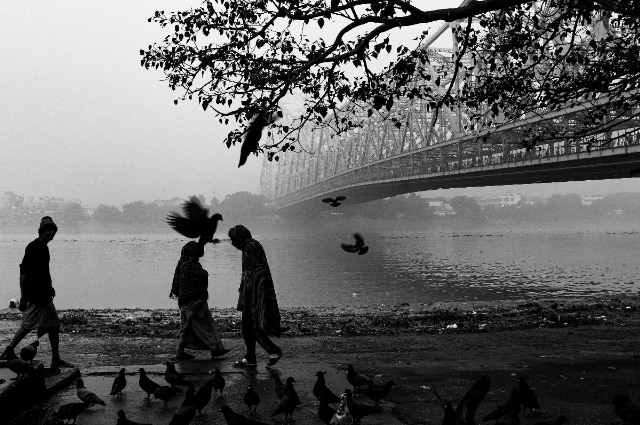
Hotel room is easy to get in most places. You check the availability, make the payment, and you are in. In Varanasi, it is totally different. This is where there are areas that you cannot go regardless of the amount of money you have, regardless of how early you come, and regardless of how significant you are. They are termed as death hotels yet the name does not adequately represent what these places are. The only rule is that you can only remain when it is suspected that you are near to death. That’s it. Nothing else matters. And to rent a room here in a place like this is as difficult as securing a reservation in the most expensive five-star hotel.
Varanasi, otherwise known as Kashi or Banaras, is not any city. It is among the oldest existing cities in the globe and has a holy status among the Hindus. Over the centuries, Hindus have held the belief that death in this world allows moksha, or an escape of the perpetual birth, death and rebirth. There is nothing tragic about dying in Kashi. It is thought to be the final spiritual objective. It is an opportunity to abandon the routine of life and eventually get liberated. This ideology totally alters the attitude towards death in the city. Here, death is not feared. It’s awaited. It’s even celebrated.
Due to this fact, thousands of terminally ill and old folks visit Varanasi during their last days. Families carry their loved ones there hoping that they will die within the sacred territories of the city. To these families, death in Varanasi is not a loss, but a win. It is the fulfillment of a life-cycle and the beginning of another one. It is no longer about survival, but it is about liberation. That is why, people are ready to wait, travel and even suffer to be here.
That is where the guesthouses such as Kashi Labh Mukti Bhawan are needed. They are also known as death hotels though they do not qualify to be hotels in the conventional meaning of the word. They are earthtones, unspoken locations that are meant to receive individuals who are presumed to be close to death. Admission is strict. The people who qualify are determined by the caretakers and money does not buy a spot. You might have thousands of rupees in your hand yet you can not go near death without being rejected. This is why, oddly enough, it is difficult to find an empty room in this place than in the five-star hotel.
The time limit is one such rule in one of these guesthouses which stands out more than the rest. The allowance of the guests is usually two weeks. Failure to die in that time implies that one is politely requested to leave. It would sound inhuman to people outside. In a city where spiritual liberation is the aim, however, it is needed. There is not much space and hundreds of other people are also waiting to get the same opportunity. All beds represent possibilities which allow one to achieve moksha and no one can possess it forever.
The ones that do not succumb within the two weeks usually get back home or visit other medical care facilities. Others reoccur when they get back to their ill state. People have stories of how they have been visiting the place several times over the years hoping that the last time was the stay. Death here isn’t sudden. It is expected, it is something you wait and believe in. It is a weird beat of life and death and the city dances.
The life in the death hotels is not as people imagine. It’s calm, quiet, and spiritual. No confusion, no panic, no general rush to rescue. There is no frantic humming of machines, and no running around staff. Rather, days are spent in prayer, chanting, reading scriptures, meditating or sitting without saying anything. The members of the family are near, they give comfort and memories that are good, there is nothing to be scared of, nothing to be desperate. Death is as natural and even welcome as a natural part of existence.
The restoration here is ironical. In the majority of societies, improvement is good. In this case it may be anxiety-inducing. In case one begins to get better, this may imply that he or she will be requested to go away before attaining moksha. Existing excessively is a challenge. This turns the concept of life and existence the other way around. Varanasi is a lesson in a world where everyone is obsessed with extending life, but death is equally important as life is.
When death is eventually experienced, it is not a shock and a disorder. There is mourning, all right, but relief. It is believed that the soul has succeeded, that it has broken the cycle of rebirth. The body is promptly transported to one of the cremation ghats along the River Ganges where funeral ceremonies are carried out in a few hours. Cremation is not hidden. It’s public. It does not completely stop life going round it. Death in this case is an element of the city rhythm rather than the end of the city.
This is a sharp contrast with the practices in modern societies, where death is secreted in hospitals, it is a matter of failure and is talked about quietly. Most destinations are merely concerned with postponing death, at times at any cost. This is not the case in Varanasi. It does not matter how many years you may live, but are you prepared to give it up? It does not mean that you should fight death, but should welcome it in the correct location.
Luxury hotels are comfort, luxury, and get away. On the other hand, death hotels are the reverse. They do not provide any luxury, no fancy beds, no entertainment, no pleasure. But demand is unceasing since they can not purchase or counterfeit what they sell. They offer peace. They provide the hope of emancipation. It is fear of recovery, waiting to get into such rooms and accepting of strict rules all because of the chance to die in a place that is thought to bring freedom. The most difficult room to secure in Varanasi is not the one that has the most beautiful view, or the softest bed. It is the one that belongs to a person who is willing to abandon life and rest in peace.
References
- Alter, Joseph S. Gujarat, India: Sacred Death and Cremation Practices. University of California Press, 1999.
- “Kashi Labh Mukti Bhawan: The Hotel for the Dying in Varanasi.” BBC Travel, 2019.
- “Varanasi: City of Death and Liberation.” National Geographic, 2018.