
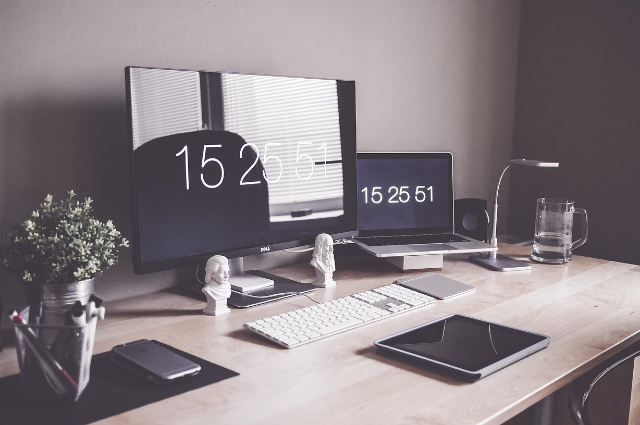
This new era of AI based on digital minimalism is a trade-off between the productivity, creativity and mental health.
The modern digital world has become a challenge and a tool of the rapidly evolving technology. The factor that has changed the way we work, learn and communicate is the emergence of artificial intelligence (AI). The potentials also seem to have no limits with AI-based productivity software and intelligent content generating solutions. Nonetheless, there is a cost to this digital proliferation. Most of them experience the feeling of being overwhelmed, distracted and having no concentration. The digital world can become a liability and not an asset with endless notifications, algorithmic feeds and the pressure to always be connected. This is where digital minimalism is appropriate, which provides an alternative way of eating technology and self-care. Users can be in control of their digital world and not the other way around by being conscious and selective.
Digital minimalism can be viewed as a deliberate use of technology in attaining significant values, and eliminating needless digital debris. Digital minimalism promotes intentional and thoughtful use as opposed to full digital detoxes which demand complete disconnection. It is not the denial of technology but the application of the technology in a manner that enhances life as opposed to upsetting it. In the era of AI, it translates to the wise adoption of the AI tools to improve efficiency and learning and productivity without falling into the trap of overstimulation, continuous notifications and reliance on automation. It enables individuals to have access to the advantages of AI without losing their time, attention or purpose.
Digital minimalism has provided one of the biggest benefits in better productivity. The monotonous tasks, scheduling, summarising, and even writing and research are now the tasks that an AI can perform. With the help of an AI-based calendar, it is possible to prioritise the tasks according to their urgency, whereas writing assistants can be used to create emails, reports or presentations quicker. By utilizing them intentionally, it cleans the mind and enables people to spend time on the activities that have high impact. Excess can do just the reverse, though. Over automation, using many productivity applications, or multitasking between AI applications may divide the attention and decrease productivity. Digital minimalism suggests that humans need to keep only the tools that really matter and get rid of those that cause more noise than utility.
Another field that digital minimalism has a significant role to play is creativity. AI may be helpful in brainstorming, proposing designs, or the prompts, but not an imagination of humans. Having a distinct scope, creators can rely on AI as an assistance tool without taking away the originality and voice. Authors can go through AI to brainstorm their plot but the story still relies on human expression. In a similar way, visual artists have an opportunity to work with AI-assisted designs but make their work in the style of their personal vision and style. By keeping it minimalistic, minimalism promotes healthy engagement between the AI and technology, which makes it complementary rather than dominating.
This balance is well demonstrated by a real-life scenario in Nigeria. In 2024, a Lagos-based content creator that had more than 100,000 followers was fighting digital overload. She relied on several AI applications to edit, script and brainstorm. Rather than getting creative, she was pressurized, anxious and unable to connect with her natural ideas. The presence of constant notifications and content comparison based on the algorithm aggravated her stress. She used the advice to get back to control, which means going digital minimalist: uninstalling unnecessary applications, disabling alerts, using AI-based tools in the role of editors, and spending three hours offline each morning to write by hand to get ideas in her mind. In several weeks, she regained her creative momentum. One of her scripts that she wrote in her offline times went viral and had more than 700,000 views. She also claimed to have had improved sleep, a lack of anxiety and an improved feeling of originality. This example demonstrates that the mind and creative abilities can be rejuvenated by deliberate AI application and being minimalistic.
The most delicate area that has been impacted by digital minimalism is probably the mental health. Several studies have shown that too much time spending on the screen, continuous notifications and comparing oneself to others through social media are the reasons why people experience anxiety, stress and low self-esteem. In the absence of mindfulness, the effects of AI-driven algorithms are exacerbated through the promotion of highly engaging, addictive content. Digital minimalism is a possible solution as it invites users to repossess their digital space. These basic practices like turning off the unnecessary notifications, setting tech-free time and having well-structured working time can go a long way towards enhancing the psychological health. Mental health can even be supported through the use of AI through meditation apps, habit trackers and cognitive wellness sites.
Minimalism in digital practice is an intentional process of planning and thought in an AI-driven world. The initial one is to audit his/her digital habits, i.e., to understand what sources of digital value one really has and what sources of time and energy loss the latter represent. Having priorities in place, users may impose some limits, like restricting the time spent on social media, establishing a technological-free zone at home, or simply devoting certain hours to uninterrupted deep work. The other principle that has worked is the emphasis on quality instead of quantity in online communication. It is also worthwhile to be mindful of fewer tools or fewer people than divided focus on a myriad of applications. The constant self-reflection can also assist people to change their habits with the change in technology and personal needs.
Digital minimalism also enhances associations and socialization. Less mindless scrolling will enable individuals to be more present in life. When applied with purpose, AI is able to increase the communication process, such as structuring information, language translation, and content simplification, without taking away the human relation. This mediated methodology will mean that technology does not destroy relationships, rather, it sustains them. To students, professionals and creatives, minimalism enhances concentration, work-life balance and more healthy relationships with individuals and with the web world.
To sum up, digital minimalism is not anti-AI and anti-technology. It can be described as a mindful and sensible use of electronic tools. Intentionally used, AI can boost productivity, widen creativity and shield mental health. Digital minimalism offers an orientation on the world of digital options, assisting people in being active users of technology but not passive consumers. The future is in the hands of people who will approach AI as the means of further development, clarity and efficiency rather than distraction or stress. Digital minimalism enables individuals to embrace the strength of AI and at the same time maintain balance, control and well-being.
References:
- Newport, C. (2019). Digital Minimalism: Choosing a Focused Life in a Noisy World. Penguin Publishing.
- American Psychological Association (2023). Technology and Mental Health: The Impact of Screen Time and Digital Overload. APA Press.Pew Research Center (2024). AI, Productivity, and the Future of Work.