
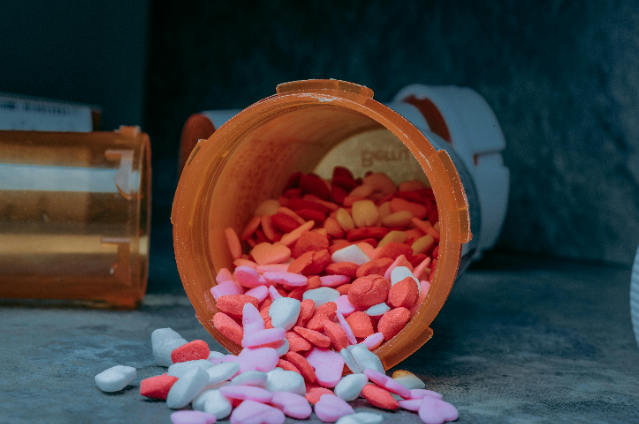
On a frosty morning in December in Washington, the language of war found its way into the vocabulary of addiction. The President of the United States set illicit fentanyl and its precursor chemicals as Weapons of Mass Destruction with the stroke of a pen, through an executive order. The word, traditionally used in reference to nuclear bombs and chemical substances, was now used in reference to a man-made opioid that has led to the silent killing of hundreds of thousands of individuals in North America. At that point, fentanyl was no longer a question of a purely public health crisis or a criminal justice problem. It turned into the issue of national and international security, officially.
The announcement had great emotional weight for the families of fentanyl victims. In the United States and Canada, bedrooms in the towns are not occupied, there are unread messages on the phones, and dinner tables are one seat short. Parents talk about children who tried it once and failed to get up. Friends remember the nights that were not spent laughing but ended with silence. Such deaths often go without warning. The power of Fentanyl is uncompromising, and its existence in fake pills and street drugs has made the users play a lethal roll of the dice. Families knew how destructive it was long before policymakers referred to it as a weapon.
That destruction was re-framed in harsh terms by the executive order. It asserted that the lethality of fentanyl, which is quantified in terms of micrograms, is similar to chemical agents that are used to kill in bulk. The administration states that the distribution of the drug is not only accidental or criminal, but also strategic. The rhetoric implied that the mass poisoning of Americans by illicit fentanyl reflects the goal and the outcome of weapons that are conventionally employed in war. Such framing was dramatic and a massive intensification of the understanding of the crisis on the highest levels of government.
The administration opened the door to extraordinary measures by calling on the notion of weapons of mass destruction. The equipment that is normally used in counterterrorism and fighting chemical weapons may now find application in drug trafficking networks. Even military resources, financial crime units, and intelligence agencies were put on alert. Traffickers were not just criminals anymore, but they were packaged as people who added to the mass casualty, destabilized the nation, and weakened the state structures.
Proponents of the action claim that this is long time coming. In previous years, the number of fatalities due to overdoses had been increasing, and the policy efforts were far behind the extent of the crisis. Communities were witnessing the influx of patients in emergency rooms, the foster care system grew, and the prison revolved the people in and out without resolving the sources of the addiction. The fact that, to most bereaved families, referring to fentanyl as a weapon justifies their loss. It is not in denial that the event did not only constitute personal tragedy, but also national damage.
The reclassification, however, is also a step towards no longer perceiving addiction as a medical and social problem. Considering fentanyl as a weapon, those who become a target of the weapon will be viewed more like collateral than the patients who require attention. Opponents express concerns that such framing puts more emphasis on punishment rather than prevention, enforcement rather than treatment, and borders rather than communities. History provides warning examples: the past experiences of wars on drugs have resulted in mass imprisonment, but with no impact on addiction or overdose fatalities.
The political impacts of the executive order are also very important geopolitically. The rhetoric of administration has been more and more outward-blaming of the foreign actors as the source of the fentanyl crisis. The foreign production of precursor chemicals, smuggling across countries, and transnational criminal networks have been positioned as the enemy. In this story, fentanyl is not only finding its way into the United States, but is being transported, knowingly or unintentionally, by the opponents who are interested in American pain.
This framing has bred bad diplomatic relations. The countries mentioned in the discussion have countered accusations of complicity by arguing that the issue is equally caused by the domestic demand and regulatory loopholes rather than global supply chains. They caution that the ease with which the epidemic is reduced to a narrative about external culpability is a danger to collaboration and the blurring of collective responsibility. The drug markets, they believe, not only flourish due to the production of the substances, but also when there is a need occasioned by desperation, inequality, and untreated pain.
There is an added concern among people in the field of public health. They warn that militarization of the response to fentanyl would take resources away from evidence-based actions like addiction treatment, harm reduction programs, mental health provision, and economic support of vulnerable populations. The most effective way to reduce overdose mortality, they observe, is to provide people with access to care, stability, and education rather than policies relying on force alone.
Nevertheless, it is also impossible to overlook the emotional appeal of the WMD label. It is a nation that is struggling to come to terms with the size of a loss and find words powerful enough to suit the damage. People in communities have been hollowed out because of Fentanyl in a manner that is indistinguishable from an attack. It has reduced life span, strained state structures, and left a generation of people grieving as a collective experience.
Fundamentally, the fentanyl classification issue raises a more fundamental issue: how can societies react to slow-moving crises that claim the lives of so many, as opposed to fast-moving acts of violence? Arriving not in explosions but in silent rooms, does death not require another language--or the most powerful that can be used?
Families mourn as the policymakers debate and develop strategies. Fentanyl may be perceived as a drug, a weapon, or both, but its victims are human beings with names, stories, and futures ended. Whether the policy will decrease the number of empty chairs left behind will be the ultimate measure of any policy.
References
- White House. Designating Fentanyl as a Weapon of Mass Destruction. Executive Order, December 2025.
- Reuters. U.S. President Signs Executive Order Classifying Fentanyl as a Weapon of Mass Destruction. December 2025.
- White House Fact Sheet. Administration Actions to Combat Illicit Fentanyl and Transnational Trafficking. December 2025.
- NPR / WRUR. Fentanyl WMD Designation Raises Concerns Over Militarization of Drug Policy. December 2025.
- CiberCuba. U.S. Declares Fentanyl a Weapon of Mass Destruction, Sparking International Debate. December 2025.